Skip to content

3

I met Dave K through blogging and it was a great privilege to preach at his wedding yesterday. True to form he wanted a law-gospel sermon on 1 Corinthians 13.  Here's what I came up with

Sermon text

Sermon audio

.

...1 Corinthians 13... taps into your highest longing and your deepest fear.

Your highest longing is in verse 12. It’s that little phrase “face to face.”  That’s your highest longing.  In the words of Mumford and Sons – You were made to meet your Maker.  And not to meet your Maker face to floor – to meet Him face to face.  This speaks of intimacy, friendship, relationship, love.  You were made for face to face with Jesus your Maker.  That’s what this whole third paragraph is about – the future is face to face.  In fact so was the past.  The Bible says that before there WAS a world, there was face-to-face.  Before there was a universe, there was Father, Son and Spirit “face to face” – united in love.  Wind back the clock into the depths of eternity and you don’t find mere chemistry – you find community.  That’s why the greatest things in life are a meeting of hearts and minds.  That’s why relationships are so precious.  That’s why we love weddings – we love face to face.

But every earthly experience of “face to face” is, in the words of verse 12 “a reflection in a mirror.”  The old King James Version rendered it “seeing through a glass, darkly.”  Every kiss you’ve ever wanted, every affirmation you’ve ever craved, every relationship you’ve ever pursued, every longing you’ve ever felt – it’s a reflection of the ultimate face to face.  This wedding – is an incredible reflection of the real face to face – Jesus and His people, united in love.  This reflects that – that’s why we love this so much.

Because our highest longing is love.  Not just earthly reflections: face to face with Jesus our Maker.  That’s the longing behind every other longing.

But this passage also tells you your deepest fear.  Your deepest fear is in verse 2.  It’s also a 3 word phrase.  Look at the last three words of verse 2. That’s what terrifies you. It terrifies me.  My deepest fear is that “I am nothing”.  Your deepest fear is that you are nothing.  You worry you don’t amount to anything, that you’re actually a nobody, you are pointless, you’re a zero, completely insignificant in the universe.  That’s the voice that whispers to you at 2 in the morning.  And it’s the fear that drives you to a relentless pursuit of performances and experiences and face-to-face relationships – some healthy, others unhealthy – but none of them dislodge the fear that you are nothing.

This passage explains your life.  You’re made for face to face, you’re terrified that you’re nothing.  And this passage can tell you how to answer your fears and fulfil your longing....

Sermon text

Sermon audio

2

Here's a seminar that Emma and I ran recently for a group of 20s and 30s.

Unfortunately the recorder ran out almost as soon as Emma began to speak!  Not to worry, soon we'll have a couple of different videos of Emma giving her testimony - I'll link as soon as we have them.

We began the seminar with perhaps the key verse on identity:

“Whoever finds his life will lose it, and whoever loses his life for my sake will find it.” Matthew 10:39

We then kicked things off with my favourite 4 minutes of stand-up ever!

[youtube=http://www.youtube.com/watch?v=NiUsfEkVRDY]

Death to the Me-Monster in Christ births a redeemed identity.

I speak a lot about Christ's baptism, His identity and our sharing in it.  The stories of Jacob and Esau are very illuminating.  And Luther nails it with this quote:

The Christian lives far above themselves in Christ through faith
and far beneath themselves in their neighbour through love.

The one place we don't live is in ourselves.  No we find our lives by losing them in and for Jesus.

Text

Audio

Powerpoint

1

We celebrate the victory of our Champions, though we haven't expended a calorie of effort ourselves.  They represent us - clothing themselves in our colours (and we in theirs).  Because of our connection, their victory is our victory.

Just so, Jesus takes on our condition, clothes Himself in our humanity.  And His victory is our victory.

Knowing Christ as Champion is the chief article and foundation of the gospel...

Martin Luther: “The chief article and foundation of the gospel is that before you take Christ as an example, you accept and recognize him as a gift, as a present that God has given you and that is your own. This means that when you see or hear of Christ doing or suffering something, you do not doubt that Christ himself, with his deeds and suffering, belongs to you. On this you may depend as surely as if you had done it yourself; indeed as if you were Christ himself. See, this is what it means to have a proper grasp of the gospel.”

Sermon audio

16

Recently I wrote about communion in marriage (i.e. sex).

Modern, western approaches to sex are essentially memorialist (if you don't know what that means, hang in there, explanation is on the way).

Our culture doesn't believe that real union is effected by sex.  A union of bodies is not considered to be a union of persons - not necessarily.  And a vast amount of the sex that does happen is a remembrance of the real thing (i.e. porn).

In this post I want to examine the negative effects of memorialism in preaching.  But let's just remind ourselves of what memorialism is.  Let's consider the clash between Luther and Zwingli in the 16th century.

As these two men discussed the Lord's Supper, Luther advocated the real presence of Christ "in, with and under" the elements of bread and wine.  "This is my body" Luther would quote.  In fact he scratched it onto his desk as the last word on the subject.  Zwingli considered Luther's position to be "a perverse and impious superstition."

Mike Reeves writes:

Luther believed that Christ's body and blood are really present in the bread and wine, making the Lord's Supper a gift of grace from God. Those who receive Christ in faith are blessed, those who take the Supper without faith face special judgement for despising Christ when offered to them.  Zwingli maintained that Christ's body cannot literally be present in the bread, but is instead symbolized by the bread.  The Lord's Supper for him was a mere symbol to help us commemorate Christ's sacrifice and to signify our membership of his body.  Luther was horrified.  It looked to him as though Zwingli was turning the Supper into an opportunity for us to do something (i.e. commemorate and signify something about us). This, surely, meant that the Lord's Supper would no longer be about grace but works.  Believing that Zwingli had fatally compromised the gospel, Luther refused to partner with him. (The Unquenchable Flame, p70)

Later in the same book, Mike makes the point that in the 16th and 17th centuries "there were no Lutherans among all the refugee theologians who came to England (something still felt today in the almost total lack of Lutheran flavour to English evangelicalism, which has always been much more Zwinglian and Calvinist)." (p129)

Now Calvin did believe in the real presence of Christ in the Supper, but I have to say, when it comes to the sacraments, modern evangelicalism, as I've encountered it, is decidedly memorialist.  I've met many who proudly maintain the real absence of Christ.

This kind of view tends to go hand in hand with a view of ministry that is not "word and sacrament" but almost self-consciously, word and not sacrament.  There is a deeply ingrained anti-ritualistic and, yes, even anti-physical streak to our evangelicalism.  I'm not sure I'll be able to displace such thinking in this post - it's not in my tiny stable of hobby-horses so I won't be riding it very far.  Instead, let me direct attention away from the Lord's table and onto ground that should be firmer for us: the pulpit.  Yet it's my contention that Zwingli rules here also.  Our churches are beset by memorialist preaching.

If you ask me, this is the malady afflicting conservative evangelical churches today.  I know, I know, I'm a 34 year old nobody pontificating about the state of evangelicalism.  Well... allow a younger guy to let off some younger-guy steam.  If it makes you feel better, favourite the page and read it in 30 years when my opinion is worth slightly more than zero.  But if you want to take my rants for what they're worth, here comes said rant...

Preachers simply do not believe that Christ is really present in the word that they speak.  How can I possibly judge that?  I listen.  I listen to their tone, their content, their manner, their prayers and to the preaching concerns they speak of out of the pulpit.  In all this, there seems to be very little confidence or expectation that they're in the business of speaking God's own word with His authority and power.  Modern preachers don't even consider themselves to be heralds - let alone attempt the feat.  They are bible experts, textual critics, near eastern historians, cultural and ecclesiastical commentators and discipleship coaches.  They are anything and everything but bearers of God's living word.  In short - they are memorialists.  They don't think they're doing anything to their hearers in the moment.  They seek merely to bring spiritual truths to the minds of the flock.

What is offered from the pulpit is like what's offered at the table - mere tokens of a far-off reality.  The dispenser of such lifeless things hopes that spiritual sentiments will, somehow, be awakened in their hearers.  But it's the hearers who will have to work at it because there's no real presence in the word.  The action doesn't happen in the gift of the words (either audible or visible).  For the Zwinglian, all the action happens between the ears of the recipient.

So memorialist preaching is aimed at educating, equipping and enthusing but not actually giving the hearer anything.  Christ is not handed over.  Not from the table and not from the pulpit.  Instead prompts, like post-it notes, are offered.  Little reminders.  Little to-do lists.  Little platitudes.  Little pep-talks.  "Now it's down to you.  Just remember what I taught you."

And perhaps the surest sign of memorialist preaching is a preacher who considers their job to be "explaining the Bible passage."  Like a mere dispenser of bread, the preacher moves through the verses, picking off interesting tit-bits along the way.  And somehow, by the end, we've been given a commentary and not Christ.  This is pure Zwingli.

As Mike notes in The Unquenchable Flame,

Where Luther opened the Bible to find Christ, Zwingli sought more simply to open the Bible. (p69)

What a tragedy.  The preacher's job is not to "preach Philippians".  The preacher's job is to preach Christ from Philippians.  So often the preacher just moves the bookmark forward, noting points of interest along the way. In so doing, they leave the listener to piece together whatever resolve or relief they can muster from the raw materials proffered.  This is not preaching.

Offer them Christ.  Hand Him over.  Placard Him from Scripture and say to the hearers "You want Him? He's yours, here He is."

You want to know what that sounds like?  I can't do any better than point you to Mike himself - preaching on Philippians as it happens.

Download Mike Reeves on Philippians.

And may his gospel preaching sweeten the after-taste of this here rant.
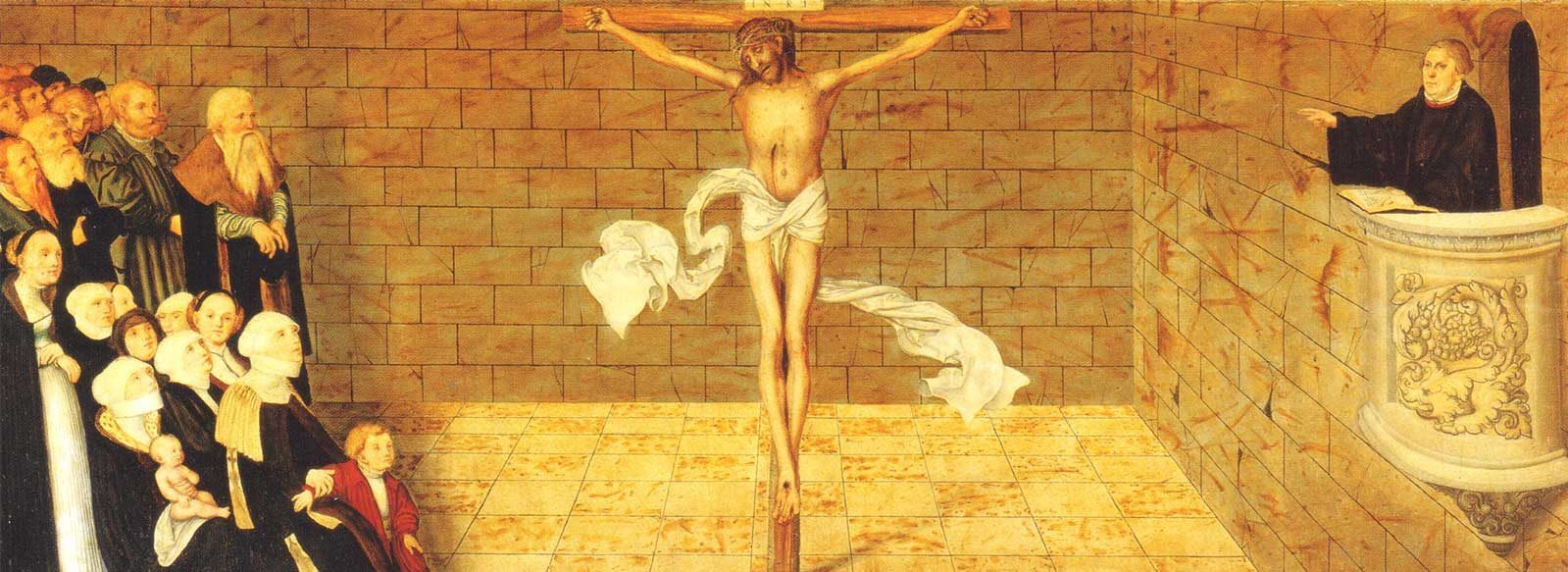
1


Audio of Talk to Youth

Powerpoint

Notes of talk...

Born in a shed... ruling the world…  How do you account for Jesus?

In the beginning… Christ was there.  John 1:1-3

God and His Son Christ decided to set a man – ADAM – as king over the world.

But the Eternal King was promised  to be born – Genesis 3:15

Offspring – Abraham… David

David – Made King, Crushes Oppressor

Solomon – Psalm 72

This King sounds a bit like Solomon – v8, 10

This King sounds much bigger than Solomon – v11, 5, 4, 6, 17

JUST (v1-3) and GENTLE (v4, 12-14)

Romans 10:9 - Who do you say Jesus is?

.

It's your parents' 40th wedding anniversary.  Your father's holding a big dinner as a surprise for Mum.  He wants the whole family there.  Everyone.  Including your wretched brother - a heroin addict who's been nothing but trouble.  Your father has been through hell trying to keep him alive and out of prison.  He's even had to pay off mobsters with extortionate sums to stop them killing him.

At every stage your brother has shamed the family.  And at every stage your parents have pursued the boy and bailed him out.  They've paid any price to bring him back.

You, on the other hand, have never been any trouble.  You've kept out of your parents' way, put your head down and worked hard.  You spent your teenage years hitting the books and keeping yourself to yourself.  The first chance you got, you left home and made your way in the world.  You didn't need any help and you never asked Dad for a penny.

Now your father wants the whole family to sit around the same table.  And, wouldn't you know it, your brother is actually keen on the whole idea!  It's unthinkable.  You can't go. You won't go.

First you avoid your brother's calls. Then your father rings: "Please son I want you all there."

Unbelievable.  You're being cast as the bad guy?  You're the sticking point?  How ridiculous!  Can't everyone see, it's your brother.

But Dad continues to press you.  "Son, I haven't seen you in so long, can we meet face to face?"  No we cannot, you think.  There was something deeply disturbing about your father's gaze.  He seemed to search your face for something that just wasn't there.  And you both knew it.  You'd been avoiding that gaze for as long as you could remember.

"Well then," he asks "would you do it for your mother?" Oh, now he's playing that card is he?  Fury grips you.  This is precisely the problem.  Some households have a little thing called family manners.  With yours it's all family and no manners.  It's all caring and no consequences.  Well no longer.

If it's a choice between brotherhood and behaviour, you pick behaviour.  And you hope they choke on their mercy meal.

.

Hell is not an equal opposite to heaven.

Hell is outer darkness, shut out from the Light.

Hell is the judgement flowing from God's mercy.

Hell is for good people.

Hell is getting what you want.

.

.

A sermon on the theme

[vimeo http://vimeo.com/39294854]

Audio  Video  Text  Powerpoint

.

...We don’t finish this service boldly resolving to keep God’s law.  We don’t finish by binding ourselves to the commandments and putting ourselves under curses.  No, we finish our service by acknowledging that we’re needy, weak beggars, desperate for the Bread of life.  And as we come forwards, Mark’s not going to press a To Do list into our hands.  He’s not going to give us a lecture or a pep-talk.  He’s going to give us Bread and Wine.  Because the Christian life is not about our commitment to Jesus, it’s about His commitment to us.

And how zealously Christ is committed to us.  He was torn apart like Bread for us.  He was poured out like wine for us.  He took on Himself ALL the curses that were ours.  And He bestows on us ALL the blessings that are His.  He’s given to us freely and completely, to be ours forever.

So as we go from here this morning, it’s not with resolutions to try harder.  If we leave church with resolutions we’ve failed already.  We leave with Christ Himself – Christ given to us, apart from our performance, apart from our commitment, apart from our resolutions.  He’s ours.  And we are His...

Sermon audio

Sermon text

Sermon Powerpoint

1

Recently we filmed some 1 minute videos for UCB.  Here's one:

http://vimeo.com/45630333

Contrary to that screen-shot, at no point do I say "Come and have a go if you think you're hard enough."

I didn't massively plan what I was going to say, but these were the topics that came out when a camera was pointed at me:

Trinity

Christ our High Priest

Christ our Sacrifice

Turn the other cheek

The glory of Jesus

How to picture God

True holiness

Heading for a happy ending

The King's Jubilee

The Lamb at the centre of the throne

Our marriage union to Jesus

God our Father

His arms are open to you

They can all be found here.

.

Coincidentally, on that page I just found some other sermon videos of me...

Big Questions: Does God even exist?

Big Questions: Why does God allow suffering?

Big Questions: Aren't all religions basically the same?

Big Questions: Why doesn't God accept all people in the end?

6

I stumbled across Don Fortner when I was preparing for my Isaiah talks.  I downloaded 20 random Isaiah sermons from sermonaudio.com.  19 of them ranged from the fairly helpful to the downright depressing.  Don Fortner's was pure glory from the very beginning.

I've only heard a handful of sermons from him since then but already I'm struck by certain things in evidence:

He PREACHES.  He actually believes in heralding the gospel, and does so with the tone and passion to match.

He preaches CHRIST.  He actually believes that the whole Bible is understood only when it's received as a proclamation of Christ.

He preaches Christ to the COMFORT OF SINNERS.  He's very much a faith alone, grace alone guy.

Other things might irk you about his preaching, but if you get that from a preacher, you're doing pretty well in this day and age!

Here's a few I've heard already, looking forward to more on the iPod...

Discovering Christ in Isaiah

The Message of Holy Scripture

Ten Words of Comfort for God's People (Exodus 3)

Christ is the End of the Law

.

10

Text

Audio

Powerpoint

.

...This was how the Galatian believer saw the history of God’s people from Adam onwards.

Now for them, Christ’s coming and dying was very important: We must realize that these Galatians were not denying the centrality of Christ or His cross. But, they thought, surely the law comes first – the law is foundational.

The default way in which God relates to His people has surely been law.  From the garden of Eden, surely – He commands and we are to obey.  And when Moses went up Mount Sinai surely he was given the law of laws – He was given the very commands of God, written by His finger on stone.  Surely these words, being God’s words, express His eternal will for the people of God.  Bottom line – there is a law, law is to be obeyed.

Now, in this timeline, the cross is important, and Jesus’ dying is central because we need His sacrificial death for all our failures at law-keeping.  So there is an understanding of Gospel here.

The Gospel comes and helps us out when we fail to live up to the law.  But, basically, what God wants is legal obedience.  That is the bottom line for being a Christian.

Now this view of history was a big problem for the Galatian church.  Because they thought like this, when preachers came and told them that they needed to obey the OT Law of circumcision to be a proper Christian, they fell for it.  Why? Because, they have gospel and law running along together, side-by-side, in their minds and hearts.  They have faith in Jesus AND legal obedience in their thinking about what makes someone a Christian.

If you have this understanding in your head about Law and Gospel then you will fall for false teaching time and again.  You will seek your Christian identity in duties and observances and not in Christ.

So we need to over-turn this telling of history.  And thankfully Paul does that for us in chapter 3, beginning at v6.

First thing he does is he under-cuts Moses.  Paul goes back in Israel’s history and leap-frogs over Moses and says ‘think about Abraham. Think about when there was no Mosaic law to be obeyed, not even the covenant of circumcision, think about the life of the people of God before there were any commandments at all.  What made Abraham a fully-fledged believer?'  Answer (v6):

"He believed God, and it was credited to him as righteousness."  Understand, then, that those who believe are children of Abraham.

In verse 8 Paul describes this faith as faith in the Gospel.  We are children of Abraham when we trust the Gospel, because that’s what Abraham trusted.

So the history of the people of God does not begin with law at all it begins with Gospel

Now the Gospel promises spoken to Abraham were about the Seed (v16) and that Seed, that promised offspring, was Christ.  That’s why I’ve got the Gospel stretching right back to the time of Adam because the Seed who was promised to Abraham was first promised to Adam and Eve in Genesis 3:15.  Right from the garden of Eden, Jesus was promised as the Seed of the woman.  He would crush Satan’s head but at great cost to Himself.  Right from the beginning, Christ’s incarnation and death and resurrection, His victory over Satan was preached.  And people trusted this gospel – people like Abraham – and they were saved.

So this Gospel is how God relates to people.  Gospel is God’s bottom line.

But if that’s true – where does the Law fit in? It begins 430 years after Abraham (v17) and it lasts until (v19) the Seed had come.

The Law begins at the mountain of Sinai and ends at the mountain of Golgotha.  That is the Law’s place....

Text

Audio

Powerpoint

.

Twitter widget by Rimon Habib - BuddyPress Expert Developer