Yesterday I posted a quotation by TF Torrance on the new birth. Essentially Torrance said he was born again when Jesus was born from the virgin womb and rose from the virgin tomb. What do you make of that?
As Dave commented, it only highlights the objective side of the new birth, and you've got to balance that with the subjective. That's absolutely right, we need both. By itself the quote is unbalanced and insufficient. But let me ask you - have you ever heard sermons/teaching/quotations about Jesus being born again? Where have you heard about Christ's objective achievement of the new birth through His Person and work? And how often have you heard about your need to subjectively appropriate it? Balance is indeed called for!
Recently I saw the "evangelical" episode of Diarmaid MacCulloch's "History of Christianity" (you can still watch it for the next 6 days on BBC iPlayer). He continually describes the distinctive focus of evangelicalism as "our choice for God." Of course every time he said it I howled at the tv screen. Theologically, "our choice for God" is the very reverse of the evangel. It's His choice for us. But the more I watched and the more I thought about evangelicalism the movement, I had to admit, it's a pretty apt description. How much of what passes for evangelicalism is actually "our choice for God"? "Be more committed, more devoted, more serious, more emotional - choose for God."
So what's the answer? Well let's think about John 3 a little bit.
"You must be born again (or 'born from above')", says Jesus (v7). Therefore it is not in your power - not of 'the will of the flesh' as John 1:12 puts it. Flesh only gives birth to flesh (v6) - it never gives rise to Spirit-life. Something needs to come down 'from above'.
Think about it - birth is something that happens to you. When you were born, someone else suffered (your mother), and you benefited. (cf John 16:21-22). You were entirely passive in your first birth. So it is with your second birth.
Or think of the wind (v8). You don't control it, you just get blown on. Again it's passive.
Well alright then - it's out of my hands. Does that mean it's just completely arbitrary? Is it just a case of drifting about hoping for a favourable wind??
Well let's look a little deeper. In verse 8 Jesus is using a play on words. 'Spirit' is the same word as 'wind' (or 'breath') and 'voice' is the same word as 'sound.' So Jesus is saying "The Spirit blows where He wills, you hear His voice."
That's interesting. The Spirit might be sovereign and invisible - but He is audible. He speaks. And the voice of His breath blows on us fleshy corpses to give us life. Ring any Old Testament bells? Jesus has just made an allusion to Ezekiel 36 - "born of water and the Spirit" (cf Ezek 36:25-27). And now it sounds like an allusion to Ezekiel 37 - the valley of dry bones. Remember?
Then He said to me, "Prophesy to these bones and say to them,`Dry bones, hear the word of the LORD! This is what the Sovereign LORD says to these bones: I will make breath (Spirit) enter you, and you will come to life. (Ezekiel 37:4-5)
Jesus says in John 3 that dead, fleshy people will hear the voice of the Spirit and receive new life. Proclamation will bring the new birth! And what is the content of this proclamation? What will the Spirit's voice be saying?
Well He won't be instructing you about your ascent into spiritual life (v13). Instead He'll tell you about the Son of Man's lifting up (v14ff). As Christ is lifted up so we look to Him and find new life (cf Num 21:8).
It's not something we achieve, it's a birth from above. It's given to us by the Father as we hear the voice of the Spirit and look to the Son. So the new birth is not our work. It's nothing that flesh can produce. But neither is it the arbitrary caprice of some abstract divine sovereignty.
You see commonly people teach that the new birth is outside ourselves - which is true. But to secure that truth they locate it in a hidden and inscrutable divine will. Others who find that hard to swallow draw attention to the way the chapter continues. They point to verses 14-16 and proclaim that this new life is in our power. After all, they say, we have the power to 'believe' don't we?
And so it becomes a fight between determinism and free will. One side finally locates the new birth in a hidden divine will, the other finally locates it in us. But neither side locates it in Christ. And Christ Himself is the One who makes good both verses 1-8 and verses 14-16.
Because Jesus was the Pioneer of the new birth.
He became flesh (John 1:14) and lifted up that old humanity to suffer its brazen judgement. Like a seed He took the Adamic ways down into the grave to die and be raised up new (John 12:24). And when He rose again, He rose into new Spirit-life.
[Christ was] put to death in the flesh but made alive in the Spirit (1 Peter 3:18)
At Christmas, Jesus assumed flesh-life. On Good Friday, Jesus destroyed flesh-life. On Easter Sunday, Jesus birthed Spirit-life. Jesus was born again.
The new birth was achieved completely apart from our own fleshly powers. But it was not done in a secluded corner of heaven. No, Jesus has been raised up for us in our midst, that the whole world might look to Him and find new Spirit-life. That's what John 3:14-16 is about. And it's completely of a piece with the first part of the chapter. Born-again Spirit-life is the eternal life of verses 14-16. Jesus is not switching between determinism and free will. Throughout this passage He's talking about the way new life comes. It comes from above - from the man of heaven who took the man of dust back into the ground to raise Him up new to become a Life-giving Spirit (1 Cor 15:45).
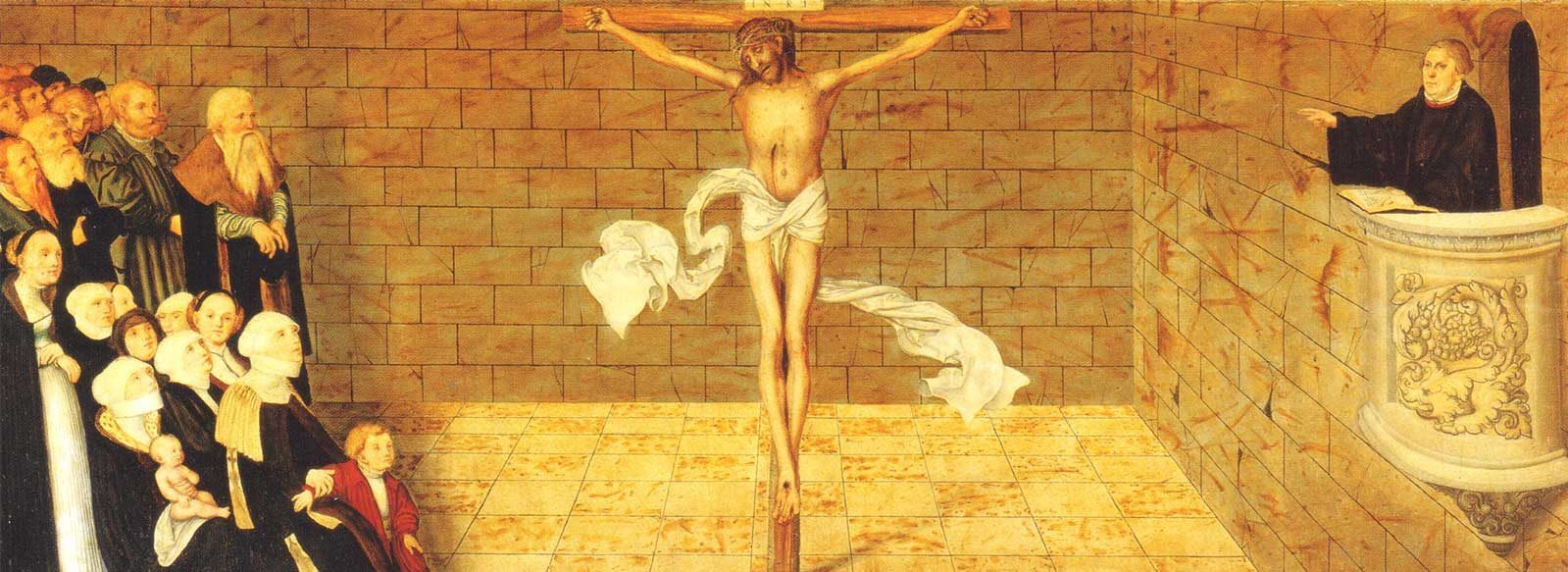
And so we have been born again through the resurrection of Jesus Christ (1 Pet 1:3). TF Torrance's answer is biblical. And it's helpful when it points us away from an obsession with our own 'choice for God'. So many John 3 sermons can make the congregation look within for signs of life. And all the while the chapter screams to us "Look to Christ!"
Torrance's objective emphasis guards us from thinking our regeneration lies in us - in some experience that we need to work up. The new birth doesn't lie in me - it lies in Christ. Look to yourself and all you'll find is flesh. Look to Christ and there you will find your new birth.
My recent sermon on John 3:1-15
.