Then get a load of this:
David Field on Genesis 16-20 - The Promised Seed.
More David Field sermons here.
.
Mor.
Jesus is the Word of God
Then get a load of this:
David Field on Genesis 16-20 - The Promised Seed.
More David Field sermons here.
.
Mor.
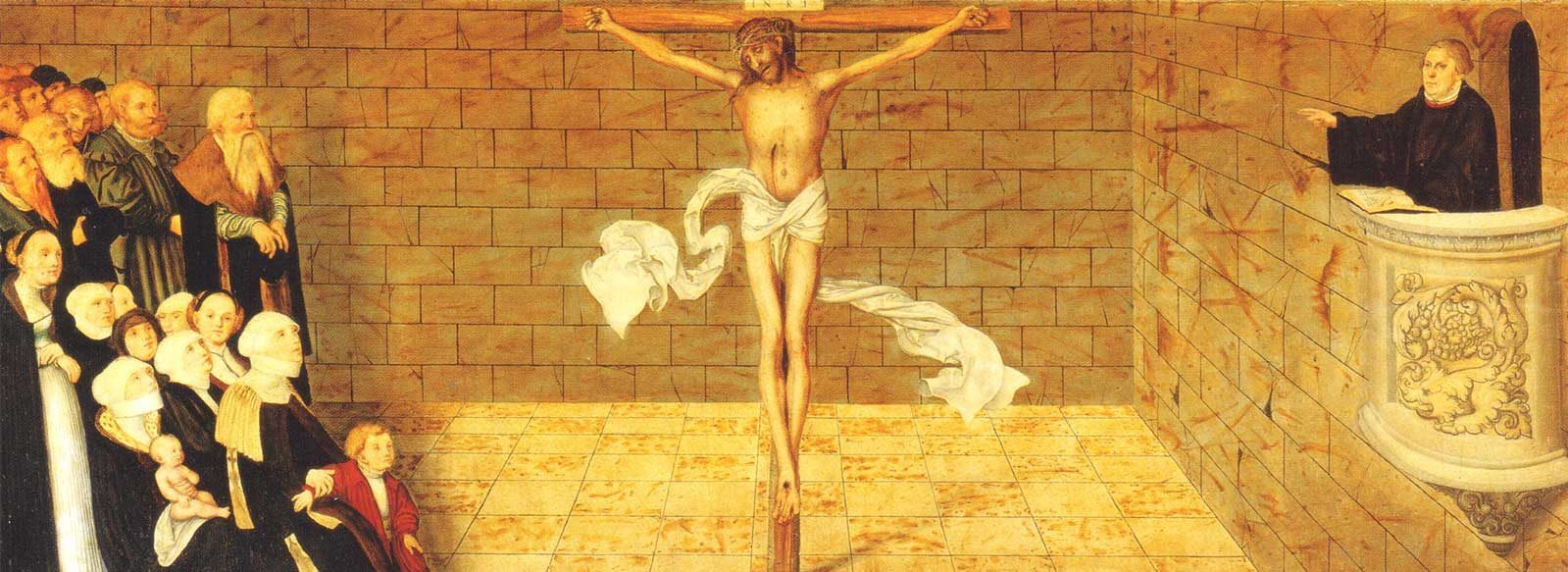
What do you see when you look up?
This?
http://www.youtube.com/watch?v=b0lxbzgwW7I
or this:
A theological revolution occured early last century when Karl Barth turned from his liberal protestant heritage to jump with both feet into "the strange new world of the bible" (the title of an early book of his).
Have you jumped in, or only dipped your toe? It's a very hard thing to do.
It's so hard, you might just need Mike Reeves, Michael Ward and CS Lewis as guides. So if you haven't listened to this brilliant podcast - do so forthwith.
.
This time they've got Mike Reeves and Stuart Olyott as well as Martin Downes.
Mike Reeves "The Trinity in the writings" and "The Trinity in the gospels"
Martin Downes "Fighting to keep the Trinity clear"
Please book with Jo Smallacoombe by calling the church office: 01792 412128
Crèche facilities and lunch provided. And if you need a place to stay, ask Steve Levy on the office number and tell em Glen sent ya. There might be some floor-space for you somewhere. (That's as close as you get on this blog to a freebie).
..
Heart warming sermon by Rich Owen on the Lord's Supper. The middle 20 minutes are pure gold!
Our old heart... invents, borrows and distorts logic... to fit our desires. You cannot reshape that distorted reason with more reason. It requires a changing of the heart from which our reason flows.
Ron Frost writes some very juicy stuff on affective theology.
The will and the mind are only instruments of the heart, never its directors, so that once a love for God is present in us our thinking is reoriented and our choices are redirected. It is in this affective primacy that spirituality takes a very different pathway to other spiritualities.
And if you like Ron Frost (which you do), you're gonna love this:

Ron Frost and Peter Mead have launched Cor Deo in the UK. They want to mentor and train Christian men in ministry (preaching, discipleship, leadership) who are 'gripped by God' and who want to 'share His heart'. Mike Reeves is a trustee and advisor. I think the whole thing looks an absolute winner. Go to the website to learn more.
.
Hiram opens up Numbers brilliantly here.
Three poles lifted up - Numbers 13-14 (the pole carrying the firstfruits); Numbers 16-17 (Aaron's budding staff) and Numbers 21 (the bronze serpent) - all types of Christ.
Read the whole thing, it's wonderful, nourishing stuff.
.
He's also got a great post on Christ's temptations here.
Which is good cos I'm preaching on them on Sunday.
Two crackers of sermons on Christ in the Wilderness are Mike Reeves' and Dan Cruvers'.
Both of them take seriously the vicarious humanity of Christ. He is in the wilderness not to show us how we can defeat Satan but to actually do it for us, in our place, as our Representative. Check them out - very highly recommended!
.
.
Ron Frost has written a cracker on some of the domesticated gods we Christians buy into:
...There is the fire insurance God. His greatest concern is to find as many policy holders as possible. His premiums vary, depending on the Christian community that sells his policies, but the payments are usually behavioral: mainly church attendance, a monthly tithe, and a midweek Christian book discussion or prayer group are the cash he requires. This is a pragmatic God, with pragmatic followers. For policy holders the real ambition is to avoid the fires of hell—a negative goal—rather than to know and enjoy God above all else. What God gets out of this arrangement isn’t clear but he seems to be a bit needy, looking for as large a following as possible. Lower premiums are always possible if an additional follower or two can be coaxed into the community that way.
Another much rarer version of God is the brainiac deity. His greatest capacity is intelligence so that his ideas and doctrines are great, complex puzzles. He invites chess champions, debaters, and logicians to compose and compare doctrinal statements about him. He is altogether different to the fire insurance version of God in that he is more interested in compelling ideas than in numbers of followers. His audiences are small but impressive, even if most of what they do is talk and write. Access to this God comes through Christian versions of the Mensa Society—churches, parachurch groups, and theological centers that elevate intellect over practice; a knowledge about God over a love for God and people.
Still another small version of God is the self-absorbed deity. He can think only of himself and wants everyone else to think only of him. The biggest fear for this God is what philosophers call “contingency”—that he is not fully in charge of everything but in some manner has a real involvement with his creation. If, for instance, he actually loves his creatures in a way that causes him to respond to them, he has somehow lost his mojo and is less than truly God. Instead he wants glory at any cost. Access to this God is virtually impossible because we are products of his will and live downstream from his first decrees and plans—a bit like dominoes that are now being tipped over by other dominoes, all started before the creation. He looks on with some sort of pleasure because everything is under his glorious control and control is his greatest ambition.
One additional, and final, version of a miniscule God is what we might call a stubborn Genie. He has a bag of tricks and powers to tease us—offering promises to heal us, to make us wealthy, to make us wise, to make us more powerful—but we first have to learn how to rub him right. What kind of rub is needed? At a minimum he looks for effort from his followers, real effort! Disciplines, devotions, tasks, duties, and best-efforts are needed. Accountability is the name of his game: the harder we work, the more likely it is that we can finally coax a benefit or two out of him. Some seem to get more out him than others, so he is not a very fair God, but ours is not to question him but to keep rubbing the jar of his being and to hope for the best...
Read the whole thing here.
I know I still have a couple of posts on the Piper quote to write. I'll get to that...
Have you noticed the recent addition to my sidebar? You can read some recommended posts I've found helpful or at least provocative.
They all seem to be by Peter Leithart. How did that happen? Simple. He writes far and away the most interesting stuff. And it makes me wonder what the rest of us are playing at...
Anyway - of particular interest to me recently has been his blogging on Athanasius and especially how we must conceive of the divine attributes in thoroughly Trinitarian ways. (e.g. here or here on 'the dependent God')
Athanasius argued that the Son was and is the Wisdom of the Father eternally so, such that the Father without the Son would not be wise. Athanasius is so sure of this logic that he uses it as an argument against the Arians. The argument goes like this - The Son is the Wisdom of the Father, the Father has never been without wisdom, therefore the Son is eternal. Good argument huh?
But do you see the assumptions? It does not assume that each Person has each attribute 'in Himself' considered apart from the Others. Rather they possess each attribute because they possess each other.
Leithart puts it like this:
Does the Father have wisdom “in Himself”? Yes, because the Wisdom that is the Son dwells in Him by the Spirit. Does the Father possess His being “in Himself”? Yes, because the Son is the fullness of His deity, and the Son indwells Him through the Spirit. Vice versa: Does the Son have wisdom considered in Himself? Yes, because what is “in Himself” is the fact that the Father dwells in Him in the Spirit, so that His existence “in Himself” is His existence as the Son indwelt by the Father.
And so on.
This allows us to speak of Father and Son distinctly; it also makes it clear that the Father is not Himself except as He has and is indwelt by His Son, nor is the Son Himself except as He has and is indwelt the Father.
Halden picks up on these thoughts in this stimulating post on Trinity and attributes.
It's stuff I tried to argue a while back in these two diagrams
Another brilliant Leithart post is here on Gethsemane - Christ crushed that the oil of His anointing Spirit might spread to the world.
And you can't beat the Old Adam doing what he does best here - offering the gospel in all its beautiful and stark freedom.
.
Leon Sim (sometime commenter here) has written a cracker of an essay on Irenaeus's understanding of the Old Testament. Of course that understanding is explicitly christocentric and Trinitarian.
Here are a couple of great quotes from the essay:
Not only does Irenaeus see Christ and the Trinitarian God to be the object of revelation, but he also sees Christ to be the subject or agent of God’s revelation. For Irenaeus, it is not merely incidental, but crucial, that it is the Word who spoke to the patriarchs and prophets, and “preach[ed] both Himself and the Father alike,” (Against Heresies 4.6.6.)...
...In one sense, Irenaeus reads the Old Testament Christologically and Trinitarianly because He sees that the Father does everything through the Son by the Holy Spirit. In another sense, he also does so because he holds creation, salvation and revelation together, that is, it is the Father’s purpose in creation to save and bring men to Himself through the revelation of His Word by the Spirit. Hence if there is to be salvation for humanity in the Old Testament, it must be through the revelation of the Spirit-anointed Son...
...According to Irenaeus, therefore, anyone who follows in the non-Christological interpretation of the Old Testament – assuming that the Father, Son and Holy Spirit were unknown or unrecognisable through the Old Testament itself – have followed unbelieving Jews in departing from the true God and any knowledge of Him: "Therefore have the Jews departed from God in not receiving His Word, but imagining that they could know the Father [apart] by Himself, without the Word, that is, without the Son; they being ignorant of that God who spake in human shape to Abraham, and again to Moses." (Against Heresies 4.7.4.)
Download an easier to read format here.
.
UPDATE: If you're going from London, can you give Josh VB a lift? See details in comments

How about a day of teaching on the Trinity from Paul Blackham, Richard Bewes and Martin Downes, hosted by Mount Pleasant Baptist Church, Swansea! Sounds good to me.
Saturday 14 November from 10am, £10 including lunch.
Paul Blackham will present two sessions on the Trinity in the Pentateuch. Richard Bewes will speak on the pastoral implications of the Trinity. Martin Downes will ask 'Whatever happened to the Angel of the LORD?'
If I could make it, I'd be there with bells on. Steve Levy, the pastor there, has assured me that they can provide accommodation for anyone travelling from a distance. You can contact Steve and the church via their website.
So if you're in the UK and free next Saturday - do yourself a favour and be encouraged and stimulated by the greatest of biblical themes and some wonderful teaching and fellowship.
