Do you like your preaching declarative, doctrinal and devotional? You'll love Luke Ijaz:
"I will not leave you as orphans"
More here.
Jesus is the Word of God
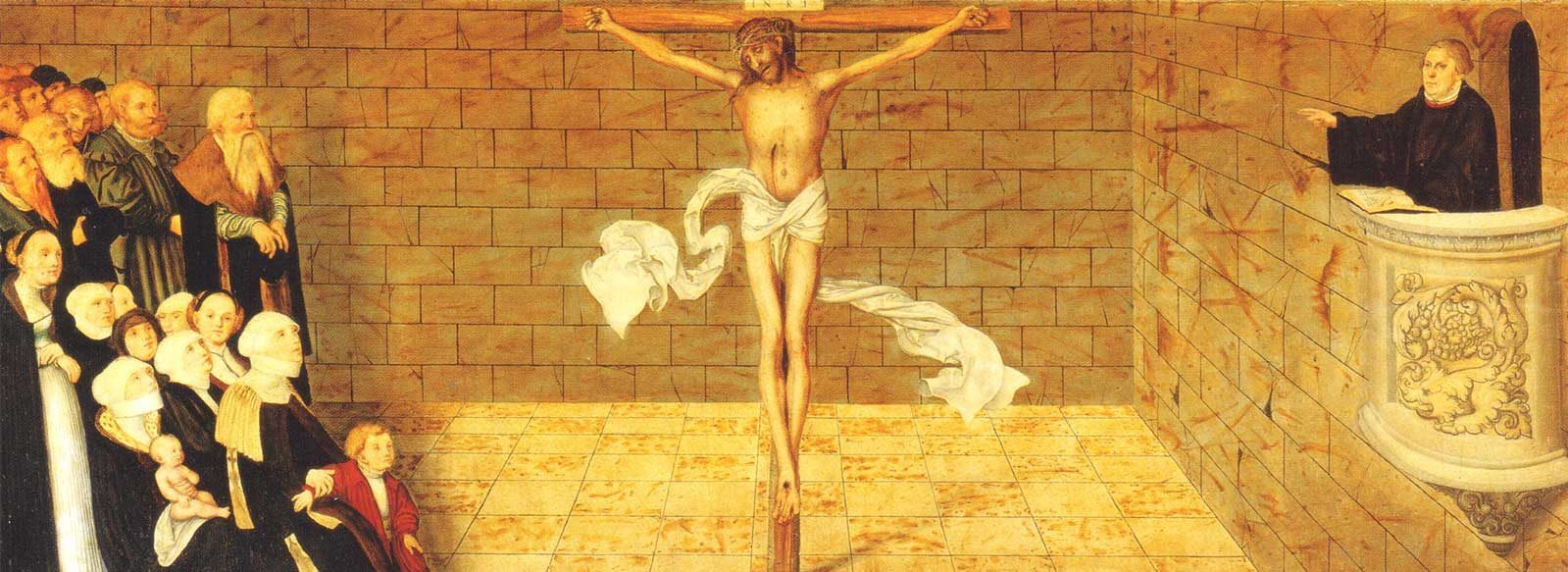
Do you like your preaching declarative, doctrinal and devotional? You'll love Luke Ijaz:
"I will not leave you as orphans"
More here.
Mike Reeves on Just Jesus - three talks on the incomparability of Christ. His self-giving sets Him apart!
Rich Owen on Colossians 1:3-14 - "We need Jesus more today than we did yesterday". Amen!
And I've just spotted Rich's Colossians 1:15-23 sermon. Haven't listened to it yet. But very much looking forward to it.
UPDATE: See also Michael Luerhmann's sermon on Colossians 1:1-2 (ht Dave K).
From Ben Myers' sermon here:
When we talk about God, when we write books and attend lectures, and read discussions about this question, “Does God exist”—as Christians when we talk about God we’re not talking about some kind of intellectual hypothesis. We’re not talking about a speculative idea that may or may not have certain arguments for or against it. We’re not talking about a psychological technique for coping with the difficulties of our lives. And when we talk about God, we’re certainly not talking about a supreme being that is so infinitely remote and distant from our world that all we can do is kind of look through our little theological telescopes and try to make a few connections.
As Christians—as followers of the Lord Jesus—when we talk about God, we are talking about one who has entered into the very fabric of our world, who has come as close to us as we are to ourselves, a God who has become incarnate. When we talk about God, ultimately, we are always talking about Jesus. For the God of the gospel is the God who has come among us in Jesus of Nazareth. We believe in God because of Jesus.
Jesus is the one who showed us the face of God—Jesus shows us the truth of God, Jesus shows us the love of God. Jesus is God’s smile beaming at us out of the depths of eternity. Jesus is God’s love wrapping around us, seizing us and not letting us go. Jesus is God’s grace, reaching into the darkest and most shameful dimensions of our experience. Jesus is God’s healing, binding up the wounded. Jesus is God’s goodness, in a world full of chaos and disaster and catastrophe. Jesus is God’s great strength for the weak. Jesus is water for the thirsty, and when you drink that water you will never thirst again. Jesus is bread for all those who are starved and hungry, famished for something good and something true. Jesus shows us God. He is not God’s explanation, he is not God’s argument, he is not God’s debate. He is God’s simple, great, loving act, showing us, Here I am, here you are. In Jesus, God shows us God. That I believe, is the whole secret of the Christian faith.
A heart-warming video interview on the love of Christ by Dave Bish. Go watch now!
Here are all 12 of Mike Reeves' "Great Theologians" - from the 2nd century to the 19th.
Lots of great sermons from Mockingbird - Anglican-y, Lutheran-y, pastorally sensitive, engaging with culture, what's not to like.
Stunning sermon (text) by Jason Goroncy on Matthew 15.
Jeremiah 39 and Jude 1 (now updated) by Rich Owen.
2 Corinthians 4 by Dev Menon.
And don't forget Paul Blackham's Jesus talks here.
Christ Alone: Luke 10 by Rich Owen
Trinity and Polyphony by Doug Jones
Psalm 22 by Steve Levy
Revelation 2 by Paul Mallard
Psalm 66 by Paul Mallard
.
Rich and Steve's sermons are some of my very favourites of this year.
I'd downloaded Dev's sermon on addiction last week, but I finally listened to it last night. Wonderful!
The church of God is not a gathering of the self-righteous, but the gathering of the broken well diggers around the Fountain of Life-Giving Waters. We are a community of grace, where mistakes are understood for what they are, because we are addicts too, addicts in rehabilitation. Together we fight the battle to stand firm in the grace of Jesus Christ, in the love of God, in the fellowship of the Holy Spirit – together we fight the battle against unbelief. We use every resource God has given us to proclaim the desirability, the beauty of Jesus to one another – that we may see Him, believe in Him and remain in the Light.
Read (or listen to) the whole thing.
A Sermon by Gerhard Forde
from the blog "Cross Alone"
(ht OldAdam)
On Death to Self
Matt. 17=22-27 and 26:47-56
We speak a good deal during Lent about that supreme mystery of our faith, the death to self. For, as we have heard, he who would save his life shall lose it, and he who loses his life for Jesus' sake shall find it. But what does that really mean -to die to self? Does it mean, perhaps. selling my car and going on foot or by bus? It might. We can't rule out the possibility. Does it mean, perhaps, selling my good clothes and furniture so that my wife and I should sit around in rags on orange crates? It might. Certainly we can't dismiss that possibility either. For the problem is that t!nless words like "dying to self" are translated into some kind of action, or something that actually happens -that is, some real change -they don't have any real meaning. So we certainly must try, eventually, to translate them into the language of action.
But before we get too hasty and impatient there are some things at which we should take a hard look. The first is that we have a rather incurable tendency always to refuse to really listen to the words of God and instead to translate them immediately into something we are going to do, indeed, can do. This is what we always do with the law. We take it and translate it into a do-it-yourself kit for salvation. It is as though we think we are going to do God a big favor by living up to what is demanded of us and even, possibly, put him out of the salvation business byaccomplishing all or at least some ofitourselves-evenifthatturns out to be just a teeny-weeny little bit. But when we do that we really come a-cropper when we come to this word about dying to self. For what can that possibly mean in a do-it-yourself religion? Here God has set a snare for us in our easy confidence that we are big enough to handle the job. For this is a word that we find difficult to handle. We find ourselves forced either to ignore it -which we mostly do -or to try to cut it down to size so we can handle it -maybe by selling our car or our furniture or our clothes. But even then we can't rest too easily with it, for we are never quite sure that that is enough. For however much discomfort such actions may cause us, is that really dying to self? They may be just another means of keeping myself in the business of doing God big -or little -favors, and thus ofprotecting myself from really hearing the words. The trouble is that the self keeps getting in the way.
But what then does it really mean? When considering this question, I was struck by some of the incidents recorded in our texts for today. For here we have the picture of Jesus on the way to his death. His disciples are with him, and are apparently figuring that they are going to have a hand in what is about to happen. They want to go along. They want to help out, to do their bit in the business of bringing in God's kingdom, even, as Peter says in Mark's account, if that means sacrificing their lives. But the really difficult thing for them to take, as I suspect it also is for us as "religious" people, is that in the final analysis there is absolutely and utterly nothing they can do. When Jesus sets his face to go to Jerusalem, Peter wants to do something about it. He sets himself in the way and says, "God forbid, Lord! Don't do it! Don't go!" Peter wants to do God a favor - to protect and preserve the Messiah and his kingdom. But Jesus looks at him and says, "Get thee behind me Satan! For you are hindrance to me, you are not on the side of God, but of men" (Mark 8:33)' This, Jesus says, is something that must happen; it is going to happen because God wants it, and there is absolutely nothing you can do about it.
And at the betrayal in the Garden of Gethsemane when the crowd comes out against Jesus with swords and clubs, they still want to do something. They still want to do their bit for God. They want to take up the sword and risk their lives, perhaps, and fight. One of them grasps a sword and cuts off the ear of one of the assailants. But Jesus will have none ofit: "Put up your sword," he says, "for there is absolutely nothing you can do!" In Luke's account, Jesus even stretches out his hand to undo what the disciples had tried to do -he heals the wounded man. At that point, no doubt, everything within us cries out in protest along with the disciples. Is there nothing we can do? Could we not at least perhaps stage a protest march on God's behalf? Could we not seek, perhaps, an interview with Pilate? Could we not try to influence the "power structures"? Something -however small? But the unrelenting answer comes back, "No, there is nothing you can do, absolutely nothing. If there were something to be done, my Father would send legions of angels to fight!" But there is nothing to be done. "For how then should the Scriptures be fulfilled, that it must be so?" And when it finally came to that last and bitter moment, when these good religious men finally realized that there was nothing they could do, they forsook him and fled.
Can you see it? Can you see that hidden in these very words, these very events, is that death itself which you fear so much coming to meet you? For there is nothing that the old man -the self which must die fears so much as having everythinB taken out ofhis hands. When they finally saw there was nothing they could do they forsook him and fled before the awesome truth. You, who presume to do business with God, canyou see it? Canyou see that this death of self is not, in the final analysis, something you can do? For the point is that God has once and for all reserved for himself the business ofyour salvation. There is nothing you can do now but, as the words of the old hymn have it, "climb Calvary's mournful mountain" and stand with your helpless arms at your side and tremble before "that miracle oftime, God's own sacrifice complete! It is finished; hear him cry; learn ofJesus Christ to die!"
Can you see it? Can you see that really the last, bitter death is there? That in that cross God has stormed the last bastion of the self, the last presumption that you really were going to do something for him? Can you see that the death of Jesus Christ is your death? He has died inyour place! He has done it. He made it. He created a salvation in the midst of time and his enemies. He is God happening to you. It is all over, finished, between you and God! He died in your place that death which you must die; he has done it insuchaway as to save you. He has borne the whole thing! The fact that there is nothing left for you to do is the death of self and new birth of the new creature. He died to make a new creature of you, and as he arose, to raise you up to trust God alone.
If you can see it, perhaps then you can see, or perhaps at least begin to see, what is the power of God's grace and rejoice. For that is the other side of the coin once you have gotten out of your self-enclosed system. Then perhaps you can turn away from yourself, maybe really for the first time, and look upon your neighbors. Maybe for the first time you can begin to receive creation as a gift, a sheer gift from God's hands. And who knows what might happen in the power ofthis grace? All possibilities are open. You might sell your car, or even give it away -for someone else. You might find even that you could swallow your pride and stage a protest march -for your neighbor -or begin to seek to influence the power structures! For in the power of his cross the way is open! The way is open to begin, at least, perhaps in faltering ways, in ~ountless little ways, to realize what it means to die to self. For that, in the final analysis, is his gift to you, the free gift ofthe new man, the new woman, the one who can live in faith and hope, for whom all possibilities are open!
Of course you do.
Check out the in-creh-di-bull Steeeve Leeevy at Mount Pleasant Baptist Church.
Perhaps begin with Revelation 5.
Glory!
...unfortunately, that’s how some people view and use the Old Testament. They see Christ emerge from the picture at the end of Old Testament history (and that’s good), but they do not see him in all the little pictures. ...For example, some see all the Old Testament priests as pointing forwards to Christ’s priestly work; and they do that. Some see all the Old Testament kings as pointing forwards to Christ as King of all kings; and He is that. But is Christ only seen at the end of these long lines of priests and kings? Does He only emerge from the picture when we look back with New Testament eyes? Sometimes that’s the impression that’s given. But where does that leave Old Testament believers? Did they simply put their trust in Moses' sacrifices, Aaron’s priesthood, and David’s monarchy? No! By faith they saw the coming Messiah pictured in the Mosaic sacrifices, Aaron’s priesthood, and David’s kingdom. They saw Christ in the small pictures. True, they only saw Him in shadow form; but shadow implies at least some light, doesn’t it!
From David Murray