If watching this for 7 minutes saves you from another 7 minutes of wasted web-surfing, it's done it's job.
http://www.youtube.com/watch?v=EzxmMvbBilM&feature=player_embedded
Full sermon here.
ht prognosis.
.
Jesus is the Word of God
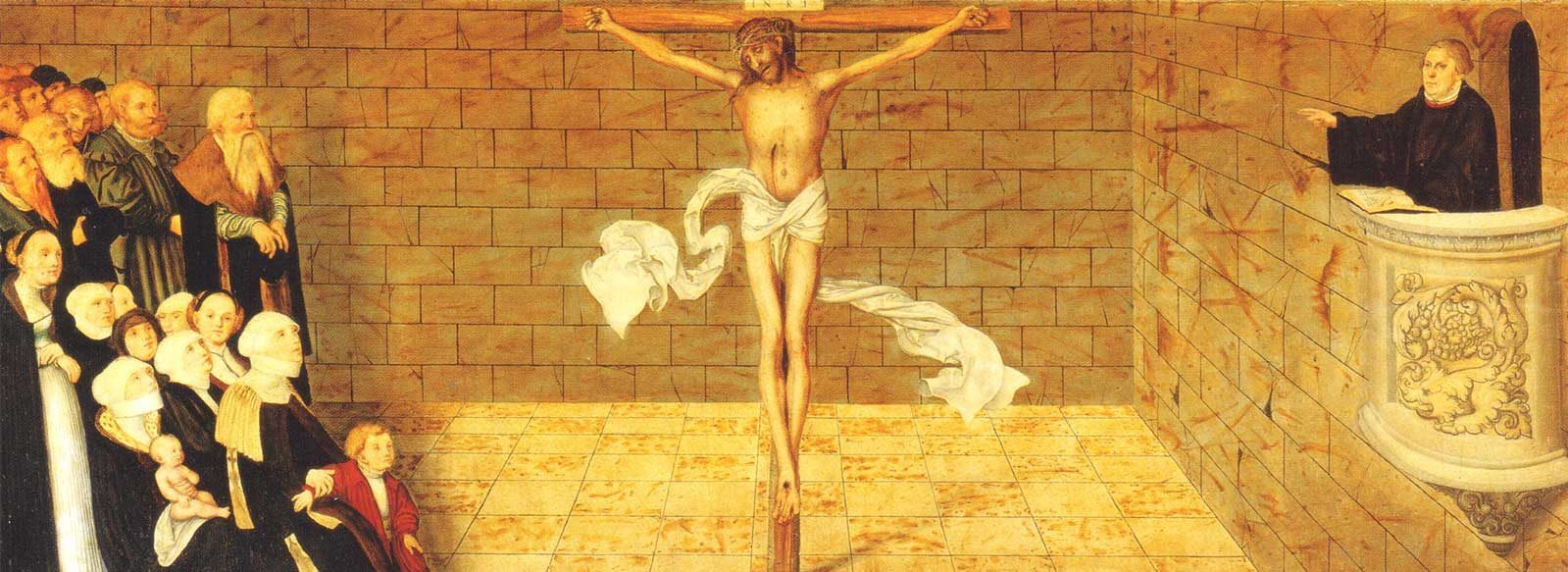
Hour long talk. Mike opens with the story of justification. Really, really good.
Here's an early stop along the road. The Epistle to Diognetus:
He himself took on Him the burden of our iniquities, He gave His own Son as a ransom for us, the holy One for transgressors, the blameless One for the wicked, the righteous One for the unrighteous, the incorruptible One for the corruptible, the immortal One for them that are mortal. For what other thing was capable of covering our sins than His righteousness? By what other one was it possible that we, the wicked and ungodly, could be justified, than by the only Son of God? O sweet exchange! O unsearchable operation! O benefits surpassing all expectation! that the wickedness of many should be hid in a single righteous One, and that the righteousness of One should justify many transgressors! (Epistle to Diognetus, ch9)
Sorry I'm only posting links at the moment. I've been wasting a lot of time trying to get my hands on workable video creating software. No joy yet.
We always imagine technology will side-step the curse. It's always a shock to realize technology just forces us to engage it all the deeper!
.
Here's my introductory talk to Christianity Explored <-- Check out their new edition.
Audio here.
Text below.
Basically a bit of Reeves' "Which God are you talking about?", a bit of Tice "Christianity is Christ" and a bit of Keller "Since it's a relationship, don't make Him into a Stepford Jesus."
66 minutes of the marvellous Menon on grace. He plunges us to the depths then takes us to the heights. Balm for the soul, as Will would say.
.
Not just Passover, but Red Sea crossing.
Not just saved by the blood, but delivered over to new life.
Not just baptised into His death, but sharing in His resurrection
That's the gist of this sermon on Exodus 13 and 14 - preached last night.
We looked at Passover last week. We rejoiced in the fact that we are saved by our Passover Lamb, Christ, apart from works. But commonly these are the kinds of responses people make to that message:
Great! He's handed me a blank cheque to sin
Well, maybe, but He doesn't love me now or He'd save me from these troubles
Fine, but I'm still stuck in sin. His salvation doesn't seem to help me today.
But as we look at Exodus 13-14 we see that each of these responses is faulty. Rather, we are SAVED... FROM THE OLD LIFE... THROUGH HARDSHIPS... WITH DIVINE POWER.
Sermons so far:
Church in the Wilderness 1 - Introduction
Church in the Wilderness 2 - Passover
Church in the Wilderness 3 - Crossing the Red Sea
.
I'm halfway through Mike Reeves' excellent lectures on a theology of revelation. Go and listen now if you haven't done already.
Maybe I should put them somewhere prominently and permanently on the blog because they explain much better than I can the thinking behind 'Christ the Truth'.
To be an evangelical theologian is to have your method entirely shaped by God's coming to us in Jesus. Just as we are saved through God's grace alone by Christ alone, so we know God by God's grace alone and through Christ alone. This being the case, we need to be saved from our 'wisdom' every bit as much as we need to be saved from our 'works.'
Anyway, all these sorts of thoughts were circling through my head when I came across this quote posted on Tony Reinke's blog. It's all about how we should 'restore the bridge' from classical literature to Christ!
“What then shall we say if we would restore the medieval bridge from Homer, Plato and Virgil to Christ, the Bible and the church? Shall we say that Christianity is not the only truth? Certainly not! But let us also not say that Christianity is the only truth. Let us say instead that Christianity is the only complete truth. The distinction here is vital. By saying that Christianity is the only complete truth, we leave open the possibility that other philosophies, religions and cultures have hit on certain aspects of the truth. The Christian need not reject the poetry of Homer, the teachings of Plato, or the myths of the pagans as one hundred percent false, as an amalgamation of darkness and lies (as Luther strongly suggests), but may affirm those moments when Plato and Homer leap past their human limitations and catch a glimpse of the true glory of the triune God.
I reject the all-or-nothing, darkness-or-light dualism that Luther at times embraced. But I also reject the modern relativist position that truth is like a hill and there are many ways around it. Yes, truth is like a hill, but the truth that stands atop that hill is Christ and him crucified. To arrive at the truth of Christ, the people of the world have pursued many, many different routes. Some have only scaled the bottom rim of the hill; others have made it halfway. But many have reached the top and experienced the unspeakable joy that comes only when the truth they have sought all their lives is revealed to them. …
If we are to accept these verses [Romans 2:14-15] in a manner that is in any way literal, we must confess that unregenerate pagans have an inborn capacity for grasping light and truth that was not totally depraved by the Fall. Indeed, though the pagan poets and philosophers of Greece and Rome did not have all the answers (they couldn’t, as they lacked the special revelation found only in Jesus), they knew how to ask the right questions—questions that build within the readers of their works a desire to know the higher truths about themselves and their Creator.”
—Louis Markos, From Achilles to Christ: Why Christians Should Read the Pagan Classics (IVP Academic 2007), pp. 13-14
How do you think your mild-mannered correspondent reacted?
Well - go and see. Here's a selection of my many comments!
I enjoy the blog. I hate this quote.
Christ and Him crucified does not sit atop a hill as though waiting for natural man to ascend! The Truth steps down to meet us in ignorance, just as the Life steps down to meet us in death. And besides, which natural mind has ever drawn near to the crucified God? Such truth has only ever appeared as folly to the world, yet this *is* the power and wisdom of God.
This quote is epistemological Pelagianism. Salvation and knowledge go together. We must oppose synergism in the one as strongly as we oppose it in the other. No wonder Luther shows the way. We’d do well to heed his cautions...
It is incontestably and trivially true that pagans can write meaningful novels, develop life-saving medicine, pursue world-enlightening science, make correct philosophical and moral observations. And it’s equally true that pagans can work for peace, give blood and generally be very, very nice people. No-one’s saying unbelievers can’t say true stuff, just as no-one’s saying unbelievers can’t do good stuff. The trouble comes when someone tries to co-ordinate nature and grace in either knowledge or salvation. Whenever the natural is seen as a stepping stone into grace alarm bells must go off. Whenever co-ordination, stepping-stones, bridges, spectrums, pilgrimmages, ascents up hills are discussed flags have to go up...
Truth is relative – relative to Christ, the Truth (good name for a blog I reckon). His subjectivity is the one objectivity. There are therefore whole worlds of understanding that make some kind of sense within their own terms of reference and which make some kind of sense of the world but are falsely related to the true Logos. Therefore in toto and at root they are utterly false. And there can be no bridge between these worlds and the world in which Christ crucified is central. There can only be redemption from these worlds. Such a redemption will require wholesale rethinking (metanoia – change of mind)... 2 Cor 10:5!...
I’m happy to call any number of pagan statements ‘true’ – just as I’m happy to call any number of pagan actions ‘good’. (For me this parallel between knowledge and salvation is key.)
It allows me to say:
1) such ‘truth’ or ‘goodness’ is of great benefit to the world.
2) such ‘truth’ or ‘goodness’ can be truly seen by the regenerate as evidences of common grace.
but,
3) such ‘truth’ or ‘goodness’, viewed from the pagan themselves, does not lead towards but away from Christ and Him crucified.
A pagan’s goodness leads them away from the grace of Christ, a pagan’s wisdom leads them away from the revelation of Christ...
I could tell you all sorts of propositions that surrounded my saving faith in Christ, but I’d be reflecting back on a miracle. I wouldn’t be telling you the natural steps that secured salvation any more than the servants at Cana would be telling you how *they* drew wine out of those stone jars.
Just as there are no discrete human deeds that add up to divine righteousness, so there are no discrete human understandings that add up to divine knowledge. All must be of grace, all must be of revelation.
So there. I also discuss Acts 17 and Romans 2 a bit. And there's even some good points made by other bloggers! Common grace really is astounding ;-)
.
.

Don't believe Satan's lie. It's not what's on the inside that counts. At the end of the Day what really matters is what's on the outside.
Take some of the blood and put it on the sides and tops of the door-frames... when I see the blood, I will pass over you. (Ex 12:7,12)
Christ our Passover Lamb has been sacrificed (1 Corinthians 5:7)
Your salvation lies entirely outside yourself.
.
Don't believe Satan's lie. It's not what's on the inside that counts. At the end of the Day what really matters is what's on the outside.
Take some of the blood and put it on the sides and tops of the door-frames... when I see the blood, I will pass over you. (Ex 12:7,12)
Christ our Passover Lamb has been sacrificed (1 Corinthians 5:7)
Your salvation lies entirely outside yourself.
.
 ... in the southern hemisphere anyway.
But as the weather turns decidedly Fall-en here, I'm still thinking about Spring cleaning. The reason being - I've just preached on Exodus 12 tonight. In preparation I was thinking about the Feast of Unleavened Bread (I speak about it some more in my 1 Corinthians 5 sermon).
Basically the Feast of Unleavened Bread begins with Passover and then continues with the purging of yeast from Israelite households. (see e.g. Exodus 12:15) What's wrong with yeast you might ask? Yeast kept a person in slavery. If, when the other Israelites were eating and fleeing in haste, you're waiting for your bread to rise, it's clear where your heart is. (Ex 12:33-34) You're not really committed to the LORD's deliverance. You'd rather live it up in Egypt.
So then every year after Passover, the Israelites were to purge their households of any sign of this compromise. It was a cleansing symbolic of a spiritual spring clean (see how Paul applies it in 1 Cor 5:7-8). Cupboard examination pointed to self-examination. Am I really on board with the LORD's redemption, or is my heart still in Egypt?
What's interesting to me is that we have a Christian festival of self-examination. It's called Lent. But when does it come? Not after Passover (Easter) - but before. Unfortunately in our calendar we have a spiritual spring clean before Jesus dies for us. In the Hebrew calendar - Passover was the very first thing (Ex 12:2).
In the bible, we are redeemed as helpless, enslaved sinners. In fact nothing can happen before the LORD's salvation. Later we consider compromise in our lives.
So much of our church experience teaches the Lent then Easter pattern. We clean ourselves up and then God helps those who help themselves.
Reminds me of the worst sermon I ever heard.
But maybe that's for another post...
.
I don't think I've updated 'My Sermons' since March.
Here's some sermons I've preached since then:
1 Corinthians 7 (for grown ups)
2 Samuel 21 (All age with slides)
2 Samuel 22 (All age song and slides)
Deut 8 (The Church in the Wilderness 1)
.
I've also got a question.
.
I'd love to be able to turn Powerpoint presentations into Youtube videos. Windows Movie Maker doesn't let me keep the animations from Powerpoint (only the images). Do any of you know a cheap way of making basic videos? I'd like to be able to use Powerpoint, but if converters from Powerpoint prove expensive perhaps someone could recommend an affordable video-making / animation program?
I just think little videos might be a great teaching tool. If any of you have any ideas, let me know.
.