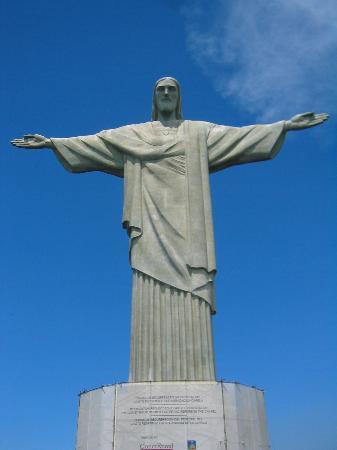
Do you get your words all mixed up when you speak of Jesus? That's so much better than being slick.

Jesus is the Word of God
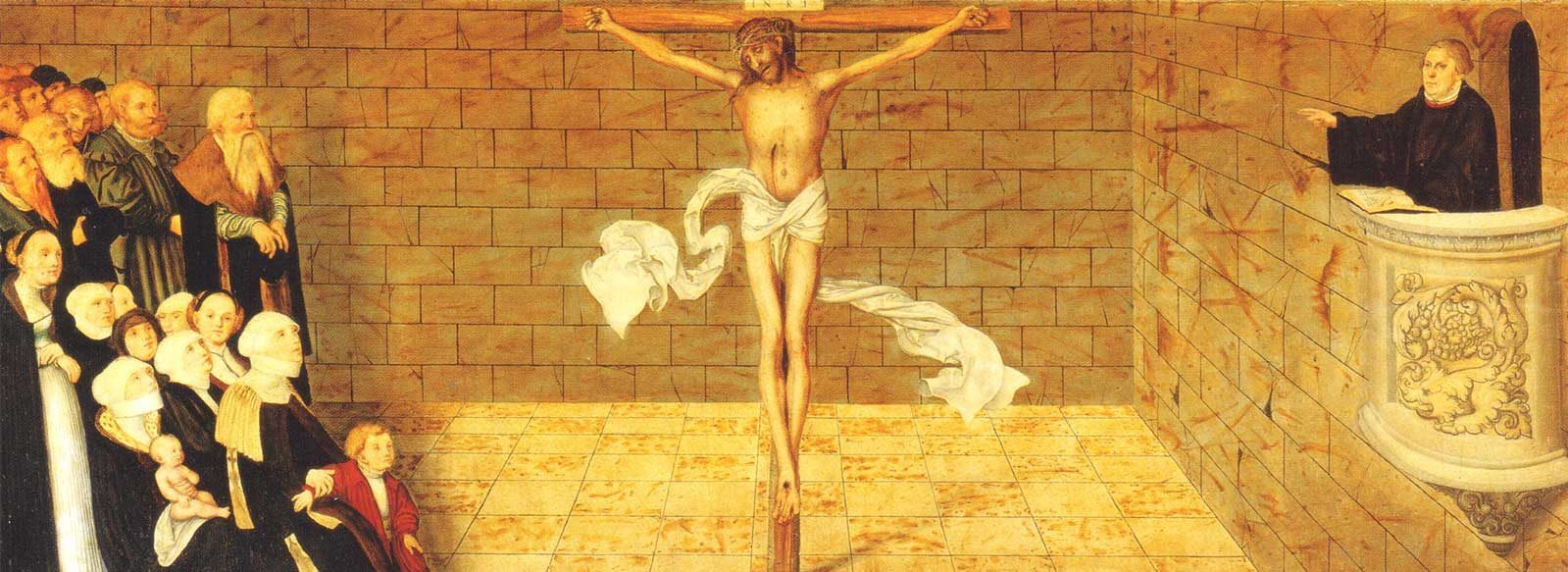
Do you get your words all mixed up when you speak of Jesus? That's so much better than being slick.
You'll have to rethink those drummer jokes. This is incredible:
https://www.youtube.com/watch?v=JHXNaYoguNU
Colour film of London in 1927 - including footage of an Ashes victory for England. Aint history something!
Pool trickshots

Pagan superstitions are always threatening to crowd in. Either Christ reigns or malign spirits will.
It was the gospel that supplanted pagan superstition in Europe. Through the spread of Christ's word freedom was offered from a bondage to enslaving beliefs. The world was awash with gods, demigods, and other spiritual forces. Fatalism ruled and the best you could hope for was some kind of propitiation of these spiritual slave-masters.
But as the gospel comes into this context, people are confronted with a good Lord who has shown Himself to be utterly for us. He has provided the propitiation. He has ransomed us from the devil's power. And He has brought us to the Most High God who reigns over (not within) this world with Fatherly power.
It was the gospel that enabled the West to be secular. The gospel drove out the spirits from this world and freed a people to become more prosperous than any who have lived before. It freed us to love the world and explore it. To experience some of that dominion which the Bible speaks of.
Yet, having rejected this gospel, the gods are flooding back in. The new priests are telling new myths, but these ones are like the pagan ones: bleak and bloody and utterly tragic. Impersonal, immoral and fatalistic to the bitter end.
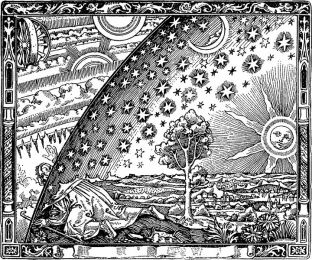
Of course we scoff at superstitions regarding earth. We feel as though science has dispelled the mysteries of this planet. Yet our latent paganism shows itself in our views of outer space. Go onto Youtube and search for any of the hundreds of videos offering a journey through the universe. Here's one, almost at random:
Notice the soundtrack. All the soundtracks are virtually identical: blasts of slow, austere, rhythm-less synth-brass. If you subtract the synthesizers it's precisely the kind of music that, in bygone days, made lowly subjects bow in fear to their king. But our new masters are the giants and supergiants. And this video literally does command us to bow to our lords.
It is a naked power-play. The heavenly bodies are presented purely in terms of their strength, blinding brilliance and sheer immensity. And as we listen to the music, how are we meant to feel about these monstrous powers? Small, insignificant, uneasy, fearful. They are the impersonal, uncaring forces and many of them are malign (think black holes). Ultimately, so the story goes, the powerful will win the day. Our fate is to be swallowed up by the strong and, in the meantime, all we can do is cower in their presence. The best we can hope for is to get on in our own corner of the universe with our insignificant little lives and await the inevitable.
It's the old paganism, this time with CGI.
In the Bible, "the morning stars sing together and the sons of God shout for joy" (Job 38:7). When the LORD asks us to consider the heavens He doesn't play Mahler's 5th. It's more like the Hallelujah Chorus. Joyous, personal, harmonious, rapturous.
Or consider how David viewed the sun: "Like a Bridegroom coming forth from his pavilion, like a Champion rejoicing to run his course." (Psalm 19:5) The sun speaks of the Light of the world who makes the journey from east (God's absence) to west (God's presence). And He does so not as a display of His own power, but as our rejoicing Champion and our loving Bridegroom. His power is for us. You see, when David looked up He saw love. He saw a Bridegroom who runs the race as our Champion, and joyfully so. What soundtrack is appropriate for that? Jean-Michel Jarre on morphine? Not likely.
But I wonder how much this latent paganism affects Christians. I wonder whether documentaries like the one above shape our reading of Psalm 19 and not the other way around. In fact on Youtube I've found Christian videos of Psalm 19 that use the same barren soundtracks. It's as though we think the "glory of God" is like the old pagan deities but with the trumpets turned up to eleven. May it not be!
In Out of the Silent Planet, CS Lewis imagines the first journey through "space" taken by his hero Ransom. He finds the reality of 'outer space' very different to the scientific mythology:
Ransom, as time wore on, became aware of another and more spiritual cause for his progressive lightening and exultation of heart. A nightmare, long engendered in the modern mind by the mythology that follows in the wake of science, was falling off him. He had read of 'Space': at the back of his thinking for years had lurked the dismal fancy of the black, cold vacuity, the utter deadness, which was supposed to separate the worlds. He had not known how much it affected him till now-now that the very name 'Space' seemed a blasphemous libel for this empyrean ocean of radiance in which they swam. He could not call it 'dead'; he felt life pouring into him from it every moment. How indeed should it be otherwise, since out of this ocean all the worlds and all their life had come? He had thought it barren: he now saw that it was the womb of worlds, whose blazing and innumerable offspring looked down nightly even upon the earth with so many eyes-and here, with how many more! No: Space was the wrong name.”
Don't think "space". Think "heavens".

I really need to settle down and write 321 the book before 2014 properly crowds in. Please pray for focus, inspiration, clarity of thought and expression. And pray God might use it to reach many.
I'll be blogging/tweeting infrequently for the next few weeks.
Talk among yourselves...

Over Christmas I eagerly clicked on a link warning all preachers: "Don't teach the Bible!" Good title. But the article disappointed. To summarize, it said:
Don't teach the Bible... teach people the Bible.
Oh, ok. Fine. A decent point as far as it goes. But I was hoping for something more along the lines of:
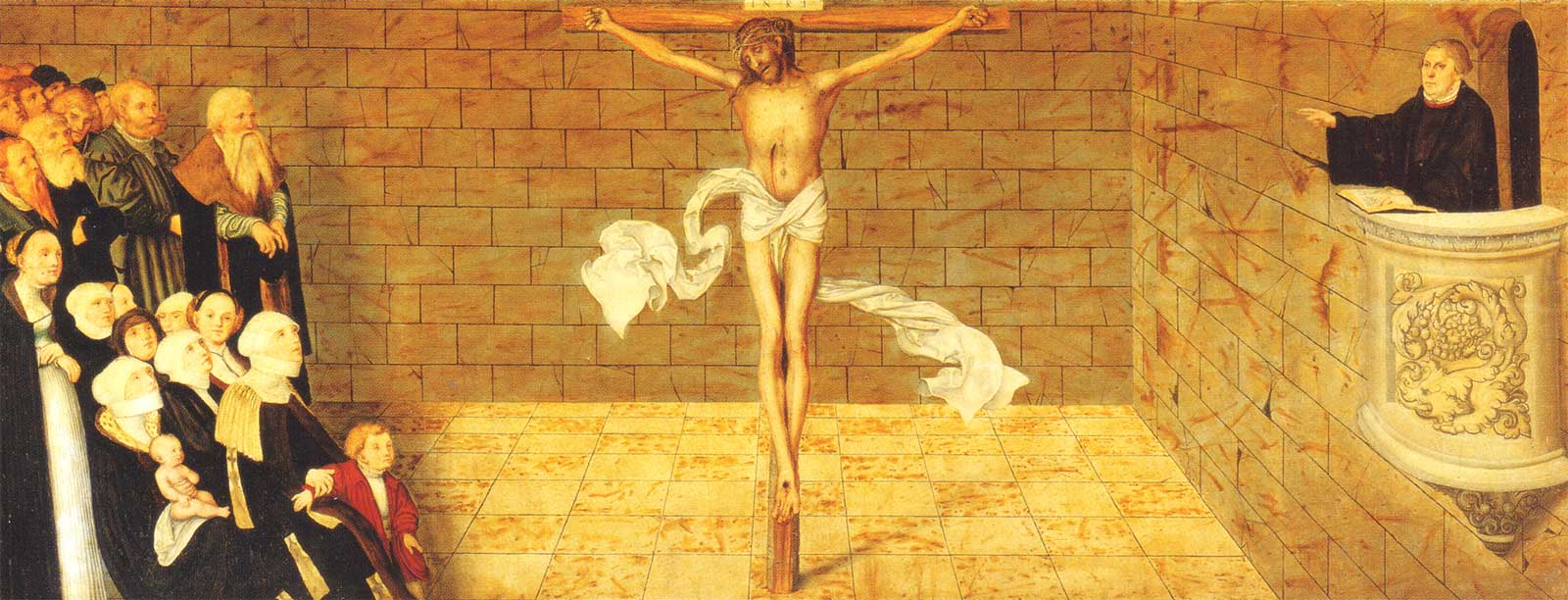
Don't teach the Bible... herald the living Word of God.
If you want to add "to people" to that sentiment, that's helpful. But the dominant thought should be the heralding of the Word of God. Yet this is a thought that is very muted, if not absent, in the preaching advice I hear.
I listened with interest to Carl Trueman's podcast the other day, The Mortification of Spin. He featured Martin Lloyd Jones' classic Preaching and Preachers and held it up as required reading for anyone regarding the theology and practice of preaching. I would agree 100%. And I enjoyed Carl's reflections that the preparation of preachers is often lacking a theology of preaching.
It's been my experience that would-be preachers are taught the mechanics of going from a biblical text to a Sunday sermon but they hear little or nothing about what the sermon is. We just take it for granted that preaching is "teaching the Bible". Oh, "to people". Don't forget the people. We need to focus on the human activity and the human recipients and that will prepare us, right?
No, no, says Trueman, there's more. And I'm really glad he regularly reminds us of the theological meaning of preaching. Pointing us to Lloyd-Jones' book, as he did in the podcast, is so necessary because, in my opinion, it is such a corrective to the John Stott approach which has dominated the kind of evangelicalism I've grown up in. (This is now my rant, not Trueman's - he recommends Stott in the podcast).
Stott's "I believe in preaching" was well summarized by its American title: "Between Two Worlds". On Stott's view the preacher valiantly stands between the world of the Bible and the world of 'the modern man'. Thus preaching is "Bridge Building" that surmounts a “Cultural Gulf”, a veritable "yawning chasm" (see I Believe in Preaching, Hodder & Stoughton, 1982, from p135ff). And Stott's great hope in the face of this gulf is: "that God will raise up a new generation of Christian communicators who are determined to bridge the chasm.” (p144)
Well if it's our job to bridge the chasm then the preacher really does need to be a communicator every bit as brilliant and insightful as John Stott. But what hope is there for the rest of us? And, let's hang on just a minute... If we begin with this "yawning chasm" and then look for a solution not in the Word itself but in us, aren't we building on a decidedly liberal foundation? With decidedly flesh-y tools?
It's the liberals who begin with the "foul wide ditch" between then and now (Lessing's famous phrase). It's just that they don't think we can bridge such a divide (hence, cultural relativism between the biblical then and the real-world now). On the other hand Stott does think we can bridge the gulf - but through the capabilities of the well-trained interpreter/communicator. All the while, Lloyd Jones is jumping up and down saying human beings have not changed, the Word is living and active and the Spirit is powerful! Lloyd Jones just has no time for the "foul wide ditch" thinking which is foundational for Stott and for those who have followed him.
But if Stott's chasm is taken for granted, then our preaching books and seminary education is going to look very different to Preaching and Preachers. Essentially we will try to equip preachers with a certain skill set, enabling them to bridge the divide. Such a paradigm will produce Bible teachers and there's every chance that not only will each sermon sound the same, but each preacher too (think sausage machine).
Don't get me wrong, there are skills for the preacher to learn. And Stott has said some incredibly helpful things about preaching and Scripture. He himself was a wonderful preacher. But this paradigm of bridge-building has been - in my opinion - a gargantuan mistake. But it's one that continues to define the way evangelicals think about preaching. I don't think we'll recover powerful preaching of the gospel in our circles without a repudiation of it and a return to something more like Lloyd-Jones' view.
Having said that, Carl Trueman mentions a word of caution about Preaching and Preachers:
"Half of it's brilliant. Half of it's bonkers."
Trueman takes issue with Lloyd-Jones' discussion of "unction" - a special anointing by the Spirit which empowers the preacher. Rightly he points out how this teaching has been taken in unhelpful directions. Trueman points out that MLJ might well be confusing an experience of the flesh with the work of the Spirit. I think that's a perceptive caution.
His guest Jonathan Masters says that he too was perplexed about Lloyd-Jones:
"I'd gotten wrapped up in my own mind in the mystical moment that Lloyd Jones talked about."
Those who have read the book know what he means. But then Masters says he was given relief when Jim Boice told him: "I don't look on it as preaching a sermon, I just see it as teaching the Bible."
Oh. Well, we're back to that then.
So are we doomed to bounce back and forth between MLJ's mysticism (which does get to be a problem) and Stott's bridge-building techniques?
Hopefully not. And I think Trueman's brief comments about MLJ's mysticism point us in the right direction. Is it possible that the dangers of Stott involve a one kind of carnality and the dangers of MLJ involve another? Preachers trying to traverse the foul wide ditch through their scholarship and oratory could be doing so as an achievement of the flesh. But so could preachers trying to "get wrapped up in a mystical moment". Those two kinds of carnality might look different, but both are characterized by looking to the nature of the preacher rather than the nature of the Word.
So what's the answer? Well read Preachers and Preaching. Be entertained - it's a terrific read. And be challenged about the bridge-building paradigm. Techniques are fine, but they're not what crosses the divide. Christ Himself speaks in His word as we herald it. So let's preach with all the entreaty and gravity appropriate for this word of the Spirit. Let's aim for what the Spirit aims for: faith - knowing that neither our mystical nor our rhetorical skills can bring it about.
But whatever our preaching style, let's ditch the ditch.
Help the Police. Help, Help, Help the Police
http://www.youtube.com/watch?v=4Kf4kyQabwQ
They don't do Hakas like this any more. #Fierce
http://www.youtube.com/watch?v=UsAPcKjz2aE
And some serious acrobatics from Damien Walters (ht Darrin Ball)
There are none so blind as those who will not see. And none so gullible as those who will not believe.
Exhibit A: Here's Stephen Fry spouting absolute bunkum for two and a half minutes:
He sets himself up as the sceptic to debunk the religious. In fact he is the sucker, falling for a completely discredited copy-cat theory with not an ounce of truth to it. Here's a good take-down by Lutheran Satire:
In a show that seeks to explode popular myths, why does Fry fall for one in such spectacular fashion? Might it be that he's not actually as sceptical as he likes to think? Might it be that the commitments of his heart do the "thinking" for him?
Exhibit B: This post, supposedly reporting new liberal views from the Pope, is from Diversity Chronicle, a site which claims "The original content on this blog is largely satirical." It's supposedly a statement from "Vatican 3" which declares all religions true, etc, etc.
It has been shared tens of thousands of times, very often by "sceptics" like Derren Brown.
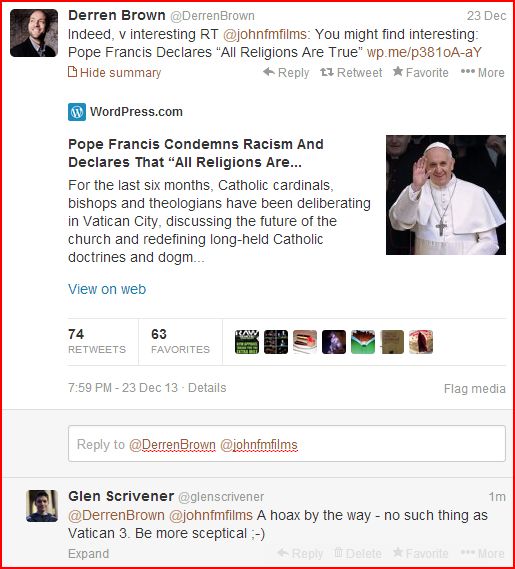
Conclusion: None of us are as rational as we like to imagine. We find ourselves able to justify any number of foolish beliefs if they line up with what we wish were true. Sometimes sceptics need to be more sceptical.
Update: Derren Brown tweeted a correction last night, good on him.
God in a manger, defenceless enfleshed
Immanuel crying&fighting4breath
God in a manger wriggling&raw
Spread on t wood, enthroned on t straw
God @ Golgotha pierced in His flesh
Immanuel crying&fighting4breath
God @ Golgotha forsaken&lost
Spread on the wood, enthroned on the cross
Nice moment in #TheBibleUK: by the empty tomb John says, "Jesus is gone" Peter replies "He's not gone, He's back!"
#ChristmasStarts before the world began with a Father, Son and Spirit who wanted to share.
Legislating bedroom behaviour is not so much a questionable view of sex as a questionable view of the state
The Virgin Birth: because man cannot make a Messiah
Adam: Man of earth, formed by God, made to rule but dust to dust
Jesus: Man of heaven, filled by God, reigning now from coast to coast
#Christmasmeans the release of Adam 2.0
He entered our family to bring us into His. #EnjoyYourChristmas
#Christmasmeans In Jesus, God has irreversibly pledged to us His life, His being and His future forevermore.
#christmasmeans God has made Himself ours
#Christmasmeans The Lord of the cosmos is my Brother - bone of my bones and flesh of my flesh
#Christmasmeans humanity has a future - God's!
#Ashes If ur looking for positives, that's a heck of a follow through pic.twitter.com/PzKYHZBSmN
— Glen Scrivener (@glenscrivener) December 27, 2013
How to have a good conversation: Don't be interesting. Be interested
The life of the #kingdom is the life of down-scaling, cheek-turning, rights-yielding, self-giving love. i.e. Christ's life.
Dan2: Christ is the small rock filling the world
Dan3: Christ is the co-sufferer in the furnace
Dan4: Christ is the Lowliest of men (v17)
<< Nebuchadnezzar's glory is contrasted with, and conquered by, a theology of the cross
I've finally ditched my Blackberry. Apple's my new jam.
Ryan Bell's gonna spend "a year without God", proving that he doesn't have a faith to lose, only a book deal to gain.
Fascinating to see outraged reaction to this next RT. What is the path to true joy...?
Oh Lord. RT @ClassicPixs: Girl praying in an orphanage, New York City, 1947 pic.twitter.com/KZUJLM9Lrj
— Derren Brown (@DerrenBrown) January 2, 2014
<< 'Self last' used to be the obviously moral position. Now it's the obviously immoral position. Last week a friend told me "I cant be a hypocrite, I need to put myself first." Nowadays "You Last" strikes the world as inauthentic & wrong If everyone's meant 2 put themselves last that is the *most* uplifting teaching for the downtrodden. They are clearly closest to the kingdom The only time we feel we are not worthy is in the presence of celebrities #ModernLife Investigating God? Before you ask "What kind of evidence will convince me?", ask "What kind of God am I considering here?" >>
<< Too many people say they've found no evidence for God when actually they've been looking for a Big Foot in the Sky. >>
<< But what if God is the Source of Being? Then *everything* is evidence. What if He showed up in the flesh? The Jesus is the place to start If there's no personal foundation to the universe, everything really is 'set in stone' Some are able to imagine a god just powerful enough to control everything but not powerful enough to liberate everything. Christians believe in the virgin birth of Jesus. Materialists believe in the virgin birth of the cosmos. Choose your miracle. "The whole order of things is as outrageous as any miracle which could presume to violate it." GK Chesterton Christianity is not an additional, extraordinary belief. It's the framework in which to grasp an extraordinary world. Don't tell me I MUST visit the Bayeux tapestry. I hate quilt trips
@MichaelVaughan BREAKING: ECB call for Ashes re-match after Johnson accused of "chucking" pic.twitter.com/CxUNIGgAnu
— Glen Scrivener (@glenscrivener) January 6, 2014

Emma and I produce a prayer letter every couple of months. If you want to join the mailing list just say so in comments.
Here's the opening...
This morning I read Jesus' words in Matthew 6:34:
"Do not worry about tomorrow, for tomorrow will worry about itself. Each day has enough trouble of its own."
That's a good verse for the start of a new year. Jesus does not counsel us to take on 2014 - only today. Today is hard enough to handle without fretting over 12 months worth of commitments. Therefore it's a great blessing that we never actually have to deal with 2014. In our Father's kindness, he feeds us this year in bite-sized chunks. This is something I'm sure I'll have to remind myself many times this year!
...
 If the God of the Bible exists then this God is the certain thing, we are the added thing, right?
"In the beginning" there was this God and we've come along later.
What's more, according to the Bible, this God: Father, Son and Holy Spirit, creates not out of need but out of generosity - not from emptiness but from fullness. Make sense?
If that's the case then we are entirely unnecessary, a profligate extravagance, a superfluous addendum, an embellishment, a flourish. We are not needed at all. We are wanted, which is nice, but it all puts us soundly in our place.
So that's the position if the God of the Bible actually exists. But... if such a God doesn't exist then, of course, we are the certain thing. The natural world (as Enlightenment people are wont to call it) is what's really real. The super-natural? Well that's, by definition, the extra thing isn't it? What we can see, hear, touch, taste and feel is rock solid. Anything beyond that is sinking sand, wouldn't you say?
Now... in a discussion between a Christian and an atheist, who has the burden of proof? Who must justify their position by bringing evidence that overwhelms the assumed 'default position' (the null hypothesis)?
If we were talking about the existence of Big Foot, we can probably all agree that those who believe in Big Foot's existence have the burden of proof. They need to bring convincing proofs or else we'll continue to hold our null hypothesis. Our null hypothesis is: Big Foot's existence is unproved and in serious doubt until further, convincing evidence is produced.
So then, why not say exactly the same about the Christian God? Why not say "The existence of God is in doubt until extraordinary evidence is produced"? Why not put the burden of proof on the Christians?
A couple of reasons off the top of my head:
1) God is not in any way like Big Foot. Big Foot (if he exists) is an extraordinary being within the created order. But God - despite how both atheists and some theists want to paint Him - is not just a super-being. The God of the Bible is the Source of Being. And the difference between a super-being and a source-of-being is not one of mere quantity. We're talking about a qualitative difference of infinite proportions.
According to Acts 17: "In Him we live and move and have our being." If Big Foot actually existed it would have no implications except for a small number of enthusiasts. God's existence changes everything for everyone. Who He is, fundamentally changes the universe we inhabit. It changes who we are - suddenly we are unnecessary-but-loved creatures of the living God. Therefore God's existence cannot be held at arm's length and discussed at a distance. When we talk about God we're talking about a reality-defining being. He defines us. And He also defines - must define - Himself.
That's the second reason why the burden of proof is not obviously with the Christian...
2) Anyone who claims that God must justify His existence is clearly not dealing with the Christian God. The great I AM is. Actually God must justify our existence! If that doesn't sound right it can only be because we're not considering the actual God of the Bible. To think of God as a potential addendum to reality is not to think of the living God.
If a person claims that God's existence is possible but requires additional proofs, they show that they are refusing to consider the reality of God. If the triune God exists then God is not the 'added thing' whose reality may or may not be granted. If the Christian God exists, we are the added thing. If the Christian God exists, He must be taken for granted as the certain reality or else we're just not talking about God, only a Big Foot in the Sky.
Who has the burden of proof? It all depends on whether God exists! If the triune God lives then of course it's our existence that must be justified, not His. The good news is that God the Son does justify our existence - He enters it, redeems it and binds it to His own existence forevermore. Jesus is not simply proof of God's existence - He's the guarantee that we exist - really and truly connected to the eternal life of Father, Son and Spirit.
But if the triune God of Scripture doesn't exist - if 'God' is merely a super-being somewhere or there is no god - then the burden of proof would lie with the theist. Because then our existence would be most fundamental and the extra thing - 'God' - would have to show itself.
So then, if someone insists that the burden of proof is with the believer, they may claim to be open-minded about the possibility of God but they have, in fact, decided the issue in advance. By setting things up in this way they have determined not to deal with the great I AM, only with a potential super-being (and only if that super-being passes the tests they set).
In other words:
No-one seeks God... Faith comes through hearing (Romans 3:10; 10:17)