Skip to content

Blog

... in any sense of the word.

Cindy Jacobs mobilised a Day of Prayer for the Global Economies on October 29th.

So these Christians went down to a Wall Street statue symbolic of the global financial system.  They laid hands on a metal image of a bull and prayed.


.

And they sang 'God Bless America.'

[youtube=http://uk.youtube.com/watch?v=yuSDQzJDB80]


Yikes!

.

Source Wonkette via Jesus Shaped Spirituality.

.

Previously on Christ the Truth...

We discussed the impossiblility of a humanistic account of freedom. To say 'I am who I am / I will be who I will be' is both idolatrous and, ironically, makes us slaves of our own desires.  Such "freedom" enthrones the self and simultaneously locks the self off from the claims of others in whom I find my true self.  Satan rules us precisely where we seek to rule ourselves.

So then, rather than begin with Adam in the garden exercising his will to disobey, we decided to think freedom from the perspective of Jesus - the Other Adam in the other garden. As the Son He is beloved, obedient and free.  And yet in Gethsemane He definitively proved that these things are not competing realities but perfectly expressed in Him.  The One who calls God 'Abba', submits Himself entirely to the unbound will of the Father and in so doing expresses supremely His identity as the Son.  The Son was never more gloriously Son-like than in this act of supreme obedience.  To have chosen disobedience would not have been the exercise of freedom but the abandonment of His own Self.  The decision for obedience was simultaneously the decision for freedom.

From this way of thinking we have a quite different definition of freedom.  Perhaps something like:  "The responsible use of the will in expression of ones true self."  Or perhaps "Keeping in step with your grace-given, relational identity."

When we have this kind of definition then the capacity for evil cannot create or increase freedom but only thwarts the responsible use of the will.  We realize that freedom is not expressed but forfeited in the choice of evil.  It is only mantained in obedience to God.

So then, "Am I free to sin?"  By no means!  Free to sin??  Such a statement should strike us as completely confused and confusing.  I'm free to be His slave, and in this way only is my freedom upheld!  (cf Romans 6!)

Once this understanding of freedom is in place then we can side-step a lot of unfruitful theological discussions.  We don't have to argue about the when, the how and the how much of our supposed 'freedom' to rebel against God.  How could we recognize disobedience as freedom or freedom in disobedience?  It can only ever be slavery.

And yet what does Ephesians 2 call us in our natural state?  'Sons of disobedience'  (Eph 2:2).  By nature our identity is given to us through our fallen head Adam.  We cannot please God (Rom 8:8) but can only live out our rebellious desires.

Into this situation Jesus comes as Redeemer.  And He purchases us for Himself.  More on that next time.

But here's the point for now: The Christian does not believe in free will.  Not in the abstract and certainly not by nature.  We believe in freed will.  (I got this phrase from Casey.)  We are not free to choose or not to choose Christ.  We are liberated by Christ now to be free in Him.  To walk in freedom we must begin from our redemption in Christ.  We simply cannot work towards this freedom but receive it from the outset.  Whatever else the doctrine of election is trying to uphold, this must be central - we do not choose ourselves into Christ but rather find ourselves chosen in Him.  We have not exercised our freedom to make Christ ours, He has accomplished our liberation to make us His.

So then Rousseau's famous statement, 'Man is born free but everywhere he is in chains' is exactly wrong.  Man is born a slave but everywhere he walks free since Jesus has loosed our chains.

Next time we'll consider what freedom means for the Christian.  How does this account of freedom help me to live out my discipleship day to day?

.

Eating with Jesus.  What a privilege!  And what danger!  There need to be warnings.

.

.

I preached this sermon at a service of Holy Communion in another church. 

It was essentially an extended warning to all would-be communicants: If you eat with Jesus you are confessing to Him and the world that you are a sinner.  Jesus eats with sinners.  Only with sinners - He has not come for the righteous.  The righteous must go hungry. Only the needy, the sick, the outsiders, the unclean, the powerless, the guilty will find Bread.  You are qualified by your unworthiness.  Entirely unfit and therefore welcome. 

So come.  And let your coming be your contrition, let it be your confession, let it be your repentance and your faith.  Come and eat with Jesus.

.

It's the kind of sermon I want to be preaching until I die.  Listen here - the text is Mark 1:40-2:17.

.

This is for everyone - both preachers and hearers of sermons.

.

.

Imagine you had three minutes with a young preacher to pass on advice.  And imagine that they would take to heart what you had to say for the rest of their ministry.  What, from your perspective, would be the most important things to say?

I'd be really glad to hear your comments - a) as a young preacher and b) I'm writing something on the topic.

.

6

.

Meditating on Mark 4 has made me think about genuine Christian growth.  Gospel transformation is not like manufacture.  It's agriculture.  It's the word planted deep - fragile but potent, internal but outgoing, gradual but multiplying beyond all expectation.   

Anyway I wrote this kids song on the theme.  Fake Plastic Trees (Country Hoedown) (again, recorded on handheld voice recorder with Yamaha keyboard late at night trying to keep it down!  Anyway, you get the idea.) 

(The underlined word is the first beat of the bar):

Years ago my daddy said
"You my son was born and bred
To grow the greatest fruit seen in the state."
He left me seeds and plenty land
Fertiliser, by the bag
But that just takes too long, and I can't wait (no sir)

Well - a short cut must be found
I aint diggin' in the ground
Maybe fruit trees I can make
Don't really matter if they're fake

I'm stapling fruit upon the tree
Apple, mango and kiwi
Folks are laughing but I don't know why
I'm glueing grapes onto the vine
Nailing up a clementine
While people laugh and holler, point and sigh.

Well - my fruit trees look okay
If you're standing half a mile away
But - it makes it hard to chew
When your fruit is dipped in superglue

Once I thought to "grow" a plum
Stuck it on a pole with some chewing gum
My daddy saw me and he shook his head
"Son you've gone and lost your mind
You're an apple short of a crumble pie
Your tryin to create life from what is dead."

Well - he looked me in the eye
He said "Son, I'll give it one more try
Here's my best advice to you
This is what you need to do"

Fruit takes time, leave it on the vine
Plant it deep, it grows up high
The life within will sprout, you can be sure
The seed has power, let it flower
Through the sun and through the shower
What you sow you'll reap and so much more

Well my Pa is kinda wise
So I heeded his advice
I took my time and planted all his seed
Six months on it grew up slow
A hundred fold of what I sowed
More than all the fruit I'd ever need

Well - success I'd never had
When I listened to my dad
These the words that made a hit
Learn them well and don't forgit

Fruit takes time, leave it on the vine
Plant it deep, it grows up high
The life within will sprout, you can be sure
The seed has power, let it flower
Through the sun and through the shower
What you sow you'll reap and so much more

Well Jesus spoke about His word
It's like a seed and when it's heard
It goes down deep, get's planted in our heart
Later on it sprouts up new
In joy and peace and goodness too
So listen to His word to play your part

Fruit so tender and so choice
When you listen to His voice
Learn the lesson from the seed
These the words that you should heed:

Fruit takes time, stay in the Vine
Plant it deep, it grows up high
The Life within will sprout, you can be sure
The Word has power, let it flower
Through the sun and through the shower
What you sow you'll reap and so much more

Fruit takes time, stay in the Vine
Plant it deep, it grows up high
The Life within will sprout, you can be sure
The Word has power, let it flower
Through the sun and through the shower
What you sow you'll reap and so much more

.

1

.

Do you believe these words from Jesus:

Others, like seed sown on good soil, hear the word, welcome it, and produce a crop--thirty, sixty or even a hundred times what was sown.  (Mark 4:20)

Christ's promise for Christian fruitfulness is out of this world.  3000%, 6000% or 10 000% is an incredible yield.

Do I dare believe in this kind of growth?  To put it another way, Will I hear and welcome this word?

We would believe Jesus if He said "five times what was sown!"  We marvel at 300% yield.  We settle for two-fold growth.  But Jesus promises something so supernaturally grand we must ask, If I believed Jesus' words about Jesus' words how would I treat Jesus' words? 

Well Mark 4:20 means I'd hear them and welcome them. 

Mark 4:10-12 means I'd hear them with Jesus at the centre - allowing them to draw me to Him.

Mark 4:15 means I'll hear them prayerfully, recognizing the spiritual battle undertaken every time they're heard.

Mark 4:16-17 means I'll cling to them when trouble comes - allowing the trouble to drive me deeper into Christ in His word.

and

Mark 4:18 means I'll be vigilant against wealth, worry and wanting as powers competing in my heart for attention.

But Jesus promises -- PROMISES -- that hearing and welcoming His word in this way will produce a transformation in our lives beyond belief.

How will the word produce transformation?  The way a seed produces growth.

.

It will be:

Weak Looking but Powerful

.

Internal but Outgoing

.

Gradual but Multiplying

 .

.

First, Weak Looking but Powerful

Tim Keller tells the story of a man from the middle ages who was so terrified of meeting Jesus at the judgement that he commanded a giant marble slab to be put over his grave.  Apparently he did this so that, when everyone else was resurrected, he would stay down.  Well before the burial was complete and the slab was laid, an acorn fell into the grave. Over the years, a great tree grew, split the slab in two and moved it off the grave.

You might have thought, What chance does a little acorn have against a giant marble slab?  No contest, the acorn wins.  It looks so weak but it is more powerful than a team of horses.  Weak but powerful. 

Just like the Word.  You say a few words about Jesus, you speak truth into another person's life and it looks pathetic.  And yet eternities are changed and lives are transformed. 

Second, Internal but Outgoing

Last week a friend of mine told me of the worst pain he'd ever felt in his life.  In the midst of it the words came to him: "My grace is sufficient for you for my power is made perfect in weakness." (2 Cor 12:9)  It enabled him to handle that pain with an astonishing peace.  Where did that word come from?  It had been planted there.  And it grew up later with an amazing power to comfort.  The word goes in and it comes out organically.  

This is not the parable of the Brick Supplier who drops off masonry to four different builders.  That would be a story about externals and effort and easily measurable growth.  But no, the word goes in like a seed and later, organically, it comes out.

Third, Gradual but Muliplying

Think of this: within a single acorn lies all the genetic information required to produce not only an oak, but from that oak will come scores of new acorns.  And from them more trees with hundreds of acorns and so on.  Given enough time a single acorn could cover the whole earth in wood.

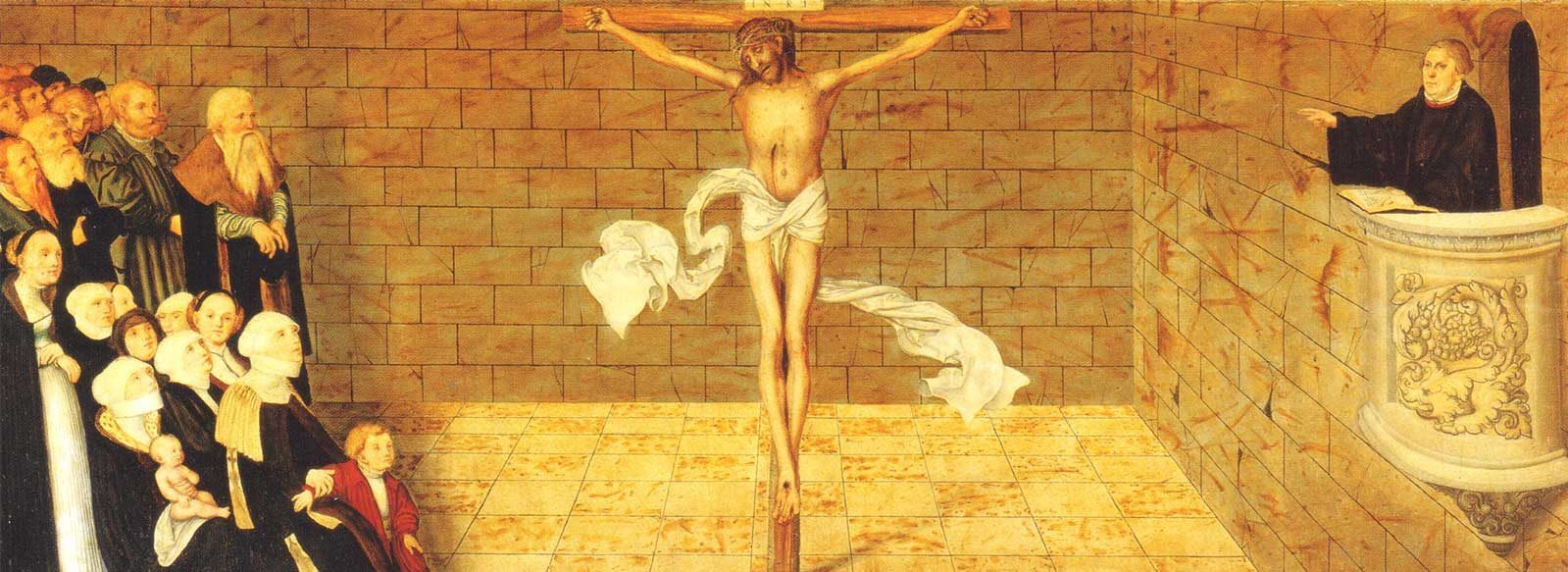
Luther knew this gradual but multiplying power.  When explaining how he opposed the whole Roman church he said this:

I simply taught, preached, and wrote God's Word; otherwise I did nothing. And while I slept or drank Wittenberg beer with my friends Philip and Amsdorf, the Word so greatly weakened the papacy that no prince or emperor ever inflicted such losses upon it. I did nothing; the Word did everything.

 That's the power of the word. 

So do we believe Jesus when He says, Thirty, Sixty, a Hundred-fold?

.

This is from a sermon I preached on Mark 4:1-34:

Listen here

Read here

.


Justin Taylor points us to a very helpful book review by Andy Naselli, whose blog looks great!  What follows is taken straight from Andy's blog - do check it out for yourself.

Three views on the New Testament use of the Old Testament outlines the following three positions:

Walter Kaiser Jr: “Single Meaning, Unified Referents: Accurate and Authoritative Citations of the Old Testament by the New Testament”

Darrell L Bock: “Single Meaning, Multiple Contexts and Referents: The New Testament’s Legitimate, Accurate, and Multifaceted Use of the Old”  

Peter Enns: “Fuller Meaning, Single Goal: A Christotelic Approach to the New Testament Use of the Old in Its First-Century Interpretive Environment”  


The book orbits around five key questions:

  1. Is sensus plenior an appropriate way of explaining the NT use of the OT?
  2. How is typology best understood?
  3. Do the NT writers take into account the context of the passages they cite?
  4. Does the NT writers’ use of Jewish exegetical methods explain the NT use of the OT?
  5. Are we able to replicate the exegetical and hermeneutical approaches to the OT that we find in the writings of the NT?

And the general editor, Kenneth Berding, helpfully tabulates a summary of their answers:


Kaiser

Bock

Enns

Sensus plenior?


No, the prophets knew where their prophecies were heading.


Yes, but only in the limited sense of acknowledging that the OT writers could not always see fulfillments that emerge later.


Yes, because Christ-as-telos holds it all together. This, however, is not the way to resolve the “hermeneutical tension.”

Typology?


Yes, but it must be seen ahead of time and possess “divine indication” that it is a type.


Yes, and fundamental for resolving difficult cases; can be either prospective or retrospective.


Yes, but again not the way to resolve the hermeneutical tension.

Context?


Yes, both the immediately literary context and the antecedent “promise-plan” context are important.


Yes, the immediate “exegetical context” is drawn upon but the “canonical context” is the key.


Sometimes yes and sometimes no.

Use of Second Temple exegetical methods?


No, such comparisons are misguided.


Sometimes yes, but constrained by the NT authors’ commitment to canonical reading.


Yes, and this is the central issue in the discussion.

Replication?

Yes, because the NT authors are careful interpreters just as we should be. Yes, but particularly in terms of their overall appeal to canonical themes. Yes, but less in terms of their exegetical methods and more in terms of their “Christotelic” goal.

.

Though I've not read the book, the first comment on Andy's blog puts well my gut reactions to this issue:


From Tom Keiser:

One thing consistently missing, or at best, minimalized, is the question of the proper exegesis of the OT texts. Kaiser seems to best deal with this idea, although not always directly. The tendency is to see OT exegesis as primarily historical. Little consideration seems to be given to the possibility that OT writers were speaking primarily theologically, and applying theological principles to historical situations. If that is the case, than proper exegesis should be focusing on the theological ideas presented rather than simply their historical application. This perspective has profound implications when trying to ascertain the NT writers’ understanding of the OT. If they understood the OT texts as presenting primarily theological principles, then many of their applications to Christ would no longer be problematic, but rather reflect accurate “historical-grammatical” exegesis. Of course, this consideration does not resolve all issues, but does alleviate many tensions.

.

Seriously, Happy Creation Day everybody.  Hope you've been enjoying the festivities.

The other day I started talking about freedom: Beginning with ourselves will never get us to a sustainable or satisfying account of freedom.

When we say: "I am who I am / I will be who I will be", it is both blasphemous (Exodus 3:6) and the very expression of our bondage.  We become trapped by an identity that can allow no foreign claims.  We simply become identified as one with a capacity to choose.  And yet in maintaining that capacity as an absolute sovereignty we are defined in abstraction from the relationships that form and direct us as choosers.  I'm a slave to my desires.  Ephesians 2:1-3.  In the very act of gratifying the cravings of my flesh, right then I am enslaved.

We can't begin our thinking about freedom with ourselves.

So where should we begin it?

Well it's very popular to begin with man choosing in the garden.

Yet if we begin in Eden, what account of freedom results?  We effectively define freedom as the ability to choose or not to choose certain paths.  The ability to act otherwise is seen as the very 'freedom' which the LORD grants humanity.  And so of course the decision to eat the forbidden fruit becomes an expression of free will (defined as a power of self-direction).  On this account Adam exercised freedom in disobeying the LORD even though it was a freedom with a cosmically heavy price tag.  And so in this very popular telling of the freedom story, "Freedom" (which is now almost by definition the ability to disobey!) is some unquestioned Good that is traded off against the consequences of its exercise - "Heck, the fall was bad, but that's the price of freedom!"

Hmmm.

What kind of "freedom" is this?

Well let's ask - how does it compare to divine freedom?  Is the freedom of the Father, Son or Holy Spirit a freedom that would be expressed in choosing evil?  Well the Scriptures continually tell us that the Almighty, who can do whatever He pleases (e.g. Psalm 115:3), cannot sin, lie, deny Himself.  He who is free does not define His freedom as the ability to do evil.  For the divine Persons to choose any course of action contrary to their Personhood would be an expression of slavery not freedom.  For the Trinity, freedom is not the ability to do wrong, nor is it enhanced by such opportunities.

This holds also for humanity in the new creation.

In the New Jerusalem the forbidden fruit is gone, the tree of life alone takes centre stage. (Rev 22:1-3).  Not only will humanity never fall, there won't even be the option for us to do so.  That's a wonderful thought (unless you're eye-ball deep in the humanist version of freedom!).  But more than this, the bible calls this new creation state of affairs freedom.  Galatians 4:26 says the Jerusalem above is free.  The saints in glory now and the redeemed earth then will be characterized by mind-blowing freedom (cf Romans 8:19-21).  So for glorified humanity, freedom is not the ability to do wrong, nor is freedom enhanced by such opportunities.  Freedom flourishes even (and especially!) when there is no option but to continually serve the Father in the Son and by the Spirit.

So then, we're going to have to get a different definition of freedom.  Where from?  Well perhaps our initial instinct wasn't so bad after all.  Maybe we do need to begin with man choosing in the garden.

Gethsemane is the garden.  And Jesus is the Man.  He will show us what true freedom looks like.

Think first of who He is - the Son.

This speaks of many things - let's highlight three:

  1. Christ's Sonship means He is loved.  He is the eternal Son of His Father's love (Colossians 1:13).  He is the Object of the overflowing love of the Father - the Original recipient and goal of all the Father's omnipotent grace.
  2. Christ's Sonship means He is obedient.  As Son, Jesus always does His Father's will (John 5:17ff).
  3. Christ's Sonship means He is free.  Sonship is consistently contrasted with slavery by Jesus and Paul (e.g. John 8:31-36; Galatians 4).  He is the Liberator who is Himself the True Free Man.

These three aspects of His Person are perfectly coordinated in Jesus.  We can never play off grace, obedience and freedom.  In our thinking we may consider them to be opposed but when we trace these things back to their centre in Jesus we see that they perfectly inform and explain one another.

And so how does this Man in this garden show us true freedom?

Let's consider Mark 14:36:

"Abba, Father," he said, "everything is possible for you. Take this cup from me. Yet not what I will, but what you will."

First He acknowledges His filial relationship with God - 'Abba, Father'.  All the shades of sonship we've just discussed should be in the forefront of our minds.

Next He acknowledges 'everything is possible for You.'  The Son doesn't go to the cross because the Father is 'all out of options.'  No-one is holding a gun to the Father's head - not the Son, not some necessary logic of redemption, nothing.  What happens happens in the Father's will - a will unbound by any forces beyond Him.  The Father is indeed free from compulsion (though this is not our final definition of freedom).

But finally, when Jesus says 'Take this cup from me, yet not what I will but what you will' He confesses a different will to that of the Father.  In all of history, in all of theology this is unparalleled.  It is stunning, shocking, scandalizing... I could go on.  The Son, even if only for a moment, is considering an option other than obedience to His Father's will.  Even though He is the obedient Son, even though He is the Lamb slain from the foundation of the world (Rev 13:8) and the Son of Man who must die (Mark 8:31), He contemplates another way.  It seems like no-one is holding a gun to the Son's head either.  He must die, because He will die.  And He will die voluntarily.  In a reversal of Eden, the last Adam submits His will to the Father's and in this submission expresses true freedom.

It is not rebellion that demonstrates freedom but obedience.  This is the great difference between popular notions of freedom and Christ's.  Choosing does not make us free - choosing submission (paradoxically!) does.  When we view things in the Son we see that obedience and freedom, rebellion and slavery are inextricably linked.  The only free choice is the one for obedience.

Ans so where Adam chose self-rule and brought slavery, Christ chose submission and brought redemption.  It's at Gethsemane that we see true freedom for there we see the true Son, truly loved by His Abba, Father and truly obedient to His will.  "Everything is possible" is not the definition of freedom.  It's the use of these possibilities that demonstrates true freedom.  And this use is only a liberated use when it is obedient.

From this we get a different defintion of freedom.  It's not about options, it's about responsible use of the will in expression of your grace-given, relational identity.  The capacity for disobedience is not a criterion for freedom and choosing to disobey can only be slavery.  Instead true freedom is found in Christ and by the power of the Spirit, living out your blood-bought sonship (daughtership) in obedience to the Father's will.  To choose anything else is the bondage of the will.

In future posts I'll look at the implications of this for the non-Christian and the Christian.

.
Love the song.  Love the animation (a finalist in a Radiohead competition)

[youtube=http://uk.youtube.com/watch?v=_3tu6iSx-F4]


.What verse springs to mind for you?  For me it's the curses for disobedience in Leviticus 26:36-39:

.

"`As for those of you who are left, I will make their hearts so fearful in the lands of their enemies that the sound of a wind-blown leaf will put them to flight. They will run as though fleeing from the sword, and they will fall, even though no-one is pursuing them. They will stumble over one another as though fleeing from the sword, even though no-one is pursuing them. So you will not be able to stand before your enemies.  You will perish among the nations; the land of your enemies will devour you. Those of you who are left will waste away in the lands of their enemies because of their sins; also because of their fathers' sins they will waste away.  (Lev 26:36-39)


.


Twitter widget by Rimon Habib - BuddyPress Expert Developer