Hilarious!
http://www.youtube.com/watch?v=R1ckoCBtXvU&feature=player_embedded
From Tony Reinke
.
Jesus is the Word of God
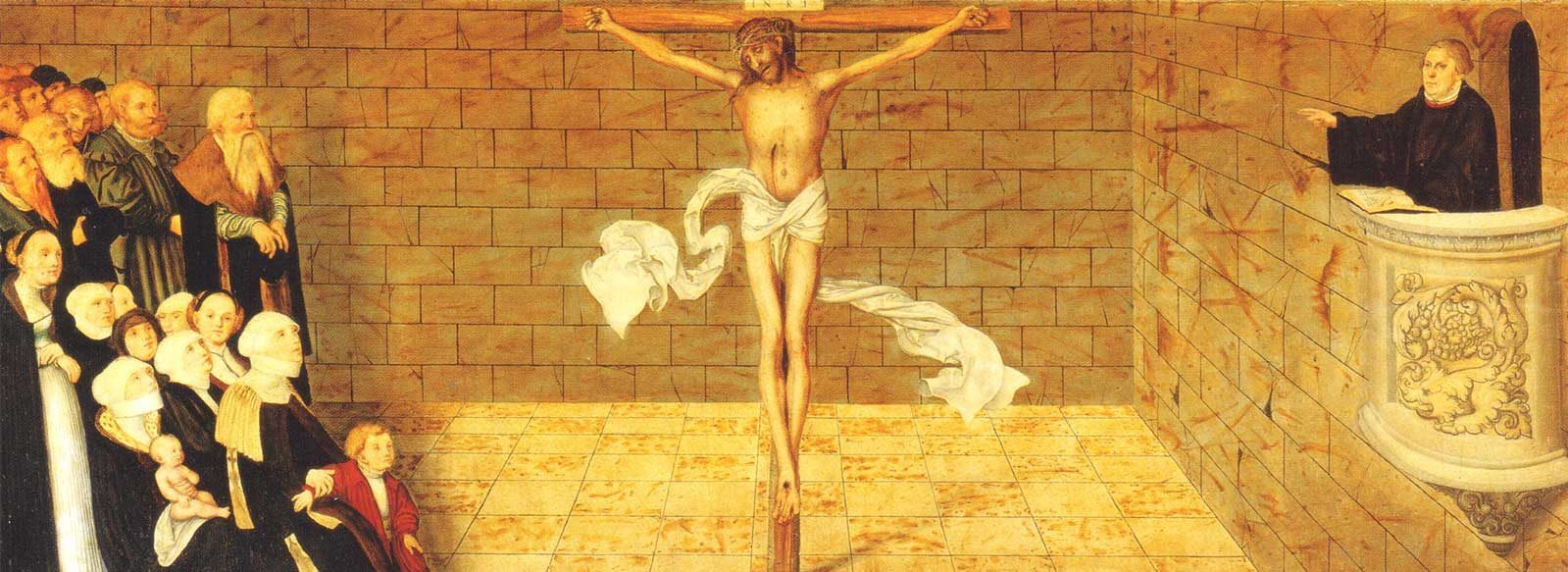
 We don't need better preaching, we need a better gospel.
Yes I'm being provocative and hyperbolous. Let me remind you that this is a blog.
What I mean is this: there's a lot of focus on becoming better preachers. The real need is to preach a better gospel.
These thoughts were prompted by a Spurgeon comment as quoted by CJ Mahaney at T4G 2008:
"Whitefield and Wesley might preach the gospel better but they cannot preach a better gospel."
Spurgeon's point is that the power is in the gospel, not the preacher. Amen. But if the gospel preached aint the gospel, then we need a better one.
'Better gospel?' you ask - how can you improve on the good news?
Well you can't improve on the biblical gospel. But you can darned well improve on the gospel preached by some. Here's a false one I hear around the traps (there are others, but this is the devil I know best):
'God is power. We must submit. Since we don't, God has a plan B. It's a wonderfully clever mechanism called penal substitutionary atonement. For those who profess faith in penal substitutionary atonement (and submit the whole of their lives and pass on this 'gospel' and persevere to the bitter end), then... well... they will avoid hell. Probably.'
Lord save us from well illustrated and applied, passionate, persuasive and prayerful preaching of this 'gospel'. Remember that the evangelism of the Pharisees made converts twice as much sons of hell as they were. (Matt 23:15)
What a thought! The perversion of your false gospel is multiplied in your converts. Preachers - don't work on your preaching, work on your gospel.
.
There's a lot of focus on becoming better preachers. The real need is to preach a better gospel.
These thoughts were prompted by a Spurgeon comment as quoted by CJ Mahaney at T4G 2008:
"Whitefield and Wesley might preach the gospel better but they cannot preach a better gospel."
Spurgeon's point is that the power is in the gospel, not the preacher. Amen. But if the gospel preached aint the gospel, then we need a better one.
'Better gospel?' you ask - how can you improve on the good news?
Well you can't improve on the biblical gospel. But you can darned well improve on the gospel preached by some. Here's a false one I hear around the traps (there are others, but this is the devil I know best):
'God is power. We must submit. Since we don't, God has a plan B. It's a wonderfully clever mechanism called penal substitutionary atonement. For those who profess faith in penal substitutionary atonement (and submit the whole of their lives and pass on this 'gospel' and persevere to the bitter end), then... well... they will avoid hell. Probably.'
Lord save us from well illustrated and applied, passionate, persuasive and prayerful preaching of this 'gospel'. Remember that the evangelism of the Pharisees made converts twice as much sons of hell as they were. (Matt 23:15)
What a thought! The perversion of your false gospel is multiplied in your converts. Preachers - don't work on your preaching, work on your gospel.
.
Christ Jesus came into the world to save sinners... (1 Timothy 1:15)
It's a wonderful motto for gospel ministry. Here is the heart of all Paul does. But when he relates it, he can't help but add his autobiography '...of whom I am the worst.'
Some ministries are good on the first half of the verse. That's absolutely crucial. But in my experience, few ally this to the second half.
Does our Christian ministry seek to build the appearance of correctness, togetherness, superiority? How much is dripping in repentance and broken-hearted humility? Are we just trying to speak out of strength to poor sinners over there? Or are we beggars showing other beggars where to find Bread?
I think I need to get this book by Paul Miller - A Praying Life:
Imagine that your prayer is a poorly dressed beggar reeking of alcohol and body odor, stumbling toward the palace of the great king. You have become your prayer. As you shuffle toward the barred gate, the guards stiffen. Your smell has preceded you. You stammer out a message for the great king: “I want to see the king.” Your words are barely intelligible, but you whisper one final word, “Jesus. I come in the name of Jesus.”
At the name of Jesus, as if by magic, the palace comes alive. The guards snap to attention, bowing low in front of you. Lights come on, and the door flies open. You are ushered into the palace and down a long hallway in to the throne room of the great king, who comes running to you and wraps you in his arms.
The name of Jesus gives my prayers royal access. They get through. Jesus isn’t just the Savior of my soul. He’s also the Savior of my prayers. My prayers come before the throne of God as the prayers of Jesus. “Asking in Jesus’ name” isn’t another thing I have to get right so my prayers are perfect. It is one more gift of God because my prayers are so imperfect.
.
In Mike Reeves' excellent talks on the reformation he speaks of Luther's great spiritual struggle.
Luther's perennial struggle was to believe that he had a gracious God.
In pondering that phrase this morning it occurred to me that we, in our settings, tend to frame our struggles in different language. We wonder whether we are saved. Luther wondered whether he had a gracious God.
I think the difference might be important.
.

Christocentrist has done a wonderful job of summarizing Edwards' views on the justifying faith of OT saints.
Here are some highlights of the highlights...
I. The person that in Jeremiah 2:2 and in many other places is spoken of as espousing that people Israel to himself, and that went before them in the wilderness, and brought ‘em into Canaan, and dwelt amongst them in the Holy of Holies in the tabernacle and temple, was the Son of God, as is most manifest by that, that he is often called the “angel of the Lord,” “the angel of God’s presence,” “the messenger of the covenant,” etc.
II. It was plainly and fully revealed to the church of Israel that this person was a different person from him in heaven that sustained the dignity and maintained the rights of the Godhead, and acted as first and head and chief in the affairs of God’s kingdom; and that this person, that had espoused the church of Israel to himself and dwelt amongst them as their spiritual husband, acted under him as a messenger from him. And as this was sufficiently revealed to that people, so the church of Israel all along understood it.
....
V. The church of Israel had it plainly signified to ‘em that God, the first person in the deity, had committed them to the care and charge of this angel of his presence, that he had set him over them to be in a peculiar manner their protector, guide and Savior, and head of their communication and supplies, and God’s people trusted in him as such.
VI. The people of Israel could not but understand that this person was transcendently dear to God, i.e. to the first person in the deity.
VII. The saints in Israel looked on this person as their Mediator, through whom they had acceptance with God in heaven and the forgiveness of their sins, and trusted in him as such.
...
X. God’s saints in Israel supposed that the Messiah, when he came, or the angel of the covenant, when he should come to dwell amongst men in the human nature, would make an end of their sins and wholly abolish the guilt of then by an atonement which he should make; and that the guilt of their sins, though removed from them and as it were laid upon that divine person who dwelt on the propitiatory in the temple, and was by him taken on himself, yet would not properly [be] abolished and made an end [of] till he should come.
XI. The saints in Israel understood that the way that the Messiah was to make a proper and true atonement for sin, and make an end of it, was by his own suffering and by offering up himself a sacrifice for sin.
...
XIII. Such a dependence on the divine Mediator as has been spoken [of] was the revealed and known condition of peace and acceptance with God.
And thus I suppose the saints under the old testament trusted in Christ and were justified by faith in him.
.
The original is here (it begins a third of the way down the page - p372 onwards). What's fascinating about all of Edwards' arguments is that he makes them exclusively from the OT texts themselves. He only quotes a NT text here or there to show that this has indeed been the correct interpretation. Wonderful!
Do go read Christocentrist's whole summary. And have a look around at his newish blog.
.
A video briefly existed here charting an alarming rate of decline in birth rates in the west combined with incredible Muslim birth and immigration rates.
Apparently the statistics are absolutely unreliable. See here. Thanks to Daniel Blanche for pointing this out.
Sorry to spread the error.
Anyway - it's still true to say that through immigration the unreached are reaching us. Therefore:
Rejoice that the Lord is sending the mission field to us
Believe the gospel
Preach the gospel
Understand Islam
Take up your cross
Have babies
Believe the gospel
Preach the gospel
.
http://www.youtube.com/watch?v=AZiMlwXU6fQ
Gospel for Asia (UK site here) sends native missionaries into the Asian harvest field at a fraction of the cost of sending westerners. 100% of your money goes to the field. You can sponsor a missionary for £20 a month. Think about it.
.
I was there eight years ago in Oak Hill chapel. Graeme Goldsworthy and Paul Blackham debating the object of faith in the Old Testament (yes that was the issue - I know these things get muddled up, but that really was the issue).
If you haven't heard of these names, sorry - this post won't make a lot of sense to you...
A little background. I had grown up and been converted in Sydney Anglican churches (my Canberra church, St Matthew's, was essentially a Sydney church plant and all its clergy have been Moore College educated).
On the other hand, I had been working at All Souls, Langham Place for the previous 9 months and, against all my background and initial protests, I had begun to lean towards Blackham's view on Christ in the OT. Nonetheless, my mind was not completely made up and I was extremely interested to hear Goldsworthy.
I can pinpoint the moment when I swung decisively against the Goldsworthy position. A young student I'd never heard of called Mike Reeves asked the first question from the floor:
"What exactly is faith? And what exactly is the proper object of faith? The importance of that is to do with whether it has changed or not."
Blackham answered:
"Faith is trusting, loving, knowledge of Jesus Christ. That is always the object of faith. From the beginning until the end. So Martin Luther, “All the promises of God lead back to the first promise concerning Christ of Genesis 3:15. The faith of the fathers in the Old Testament era, and our faith in the New Testament are one and the same faith in Christ Jesus… The faith of the fathers was directed at Christ… Time does not change the object of true faith, or the Holy Spirit. There has always been and always will be one mind, one impression, one faith concerning Christ among true believers whether they live in times past, now, or in times to come.” The object of faith is the person of Christ, explicitly so. A trusting knowledge of him."
Goldsworthy answered:
"How can I disagree? Faith is defined by its object. There are all kinds of faith that people have: the truckdriver has faith in his truck that it will get across the bridge; he has faith in the bridge that it will bear him up. A Christian has faith that God’s assurances in his word that what he has done in his Son Jesus is sufficient for his salvation. The point where we may disagree is that to me if God puts the person and work of Christ in the form of shadows and types and images in the OT and assures people that if they put their trust in that they are undoubtedly saved, then that is deemed to be faith in Christ. It is faith in Christ in the form in which he is given, and the work of the Spirit all through the Bible is with regard to Christ as he is presented."
It was hearing that question and those two answers that tipped me decisively towards Blackham on this question.
Goldsworthy rightly identifies the point of disagreement. For him, God puts Christ in the form of shadows etc such that Israelites who trusted the shadows and had no knowledge of the Person were deemed to have trusted in the Person.
Now to me that's a bad reading of the OT, a bad reading of the NT and a bad reading of systematics - doctrine of God and soteriology for starters.
But here's the point of this post. Eight years on it's very encouraging to hear more and more people who say that OT faith was in the Person of Christ. Wonderful. What intrigues me though is when they still identify themselves on the Goldsworthy side of the debate.
Now don't get me wrong. I'm not into drawing lines for no reason. And no-one wants to make it into some 'foul wide ditch' dividing evangelicalism. It's nothing of the sort. But there is a point of disagreement here. And Goldsworthy himself has identified it. He says God put Christ in the form of shadows, OT saints trusted the shadows only, God deemed it faith in Christ. Blackham says God presented Christ explicitly in the OT (shadows being one consciously understood means) and the OT saints explicitly trusted Him. That's the point of departure.
Now to me, a person who says 'OT saints hoped in the Messiah but were fuzzy on details' lies decisively on the Blackham side of this debate. But often they are an anonymous Blackhamite. And anonymous even to themselves.
Here's what tends to happen. It is assumed that the debate is merely a disagreement over the degree of progress in revelation. And so a person figures that they're with Goldsworthy because they acknowledge progress and Blackham doesn't so much.
But really, the debate is not about progress. It's about the object of faith. If you say they hoped in the Messiah, Goldsworthy has told you which side of this debate you're on. And it's not his.
We can still all be friends, brothers, sisters, co-workers in the gospel. But let's at least acknowledge that there are distinctions and on what side we stand.
Maybe you believe they trusted Christ, but still you identify as Goldsworthian. That's ok. I say you're speaking better than you know. I deem you to have trusted Blackham anyway.
.