Here's my Acts 6:1-7 sermon audio.
But this two and a half minute video from Walter Brueggemann says what my sermon says far better and more concisely.
My sermon text is below...
...continue reading "Acts 6:1-7 sermon (and Walter Brueggemann video)"
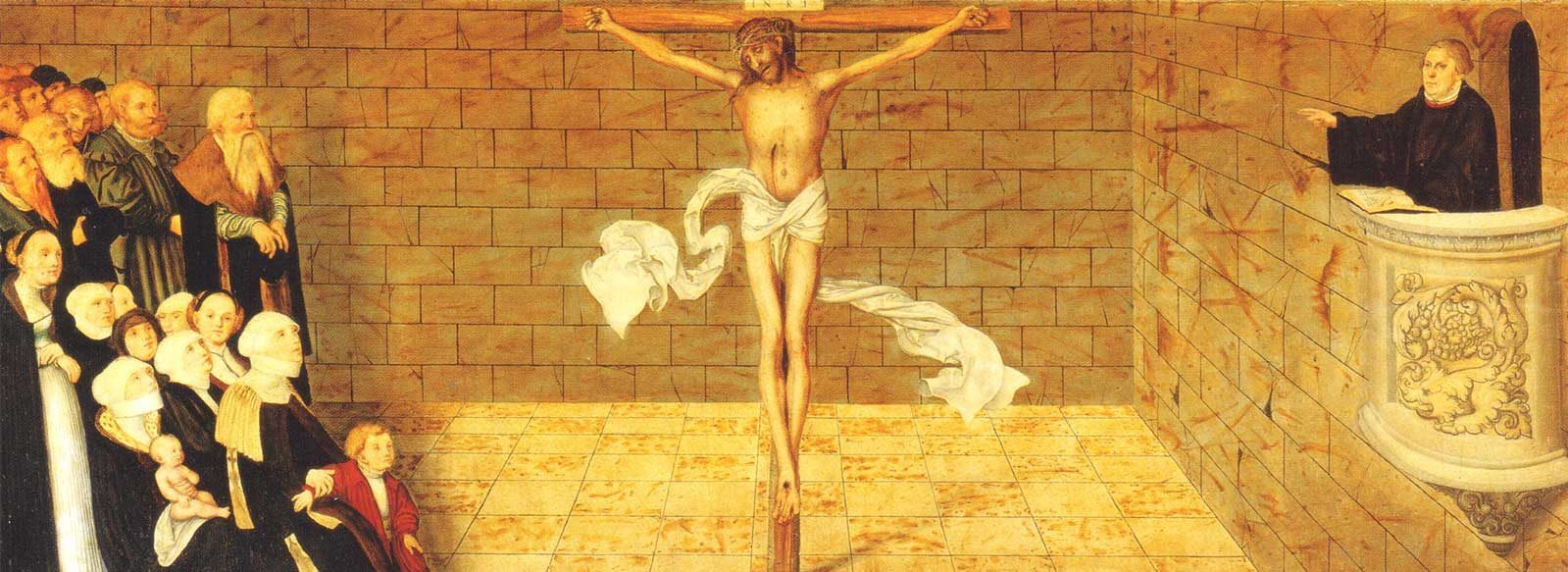
Jesus is the Word of God
Here's my Acts 6:1-7 sermon audio.
But this two and a half minute video from Walter Brueggemann says what my sermon says far better and more concisely.
My sermon text is below...
...continue reading "Acts 6:1-7 sermon (and Walter Brueggemann video)"
To be preached in the open air on Saturday (hopefully there'll be thousands coming past). I'll have a board with the visuals to be velcroed up as we go...
.
"Not just broken but sick."
That's what David Cameron said. And he meant those dreadful rioters

Maybe he's right, do you think? Though perhaps he should have looked behind him when he was making the statement:
 And so the politicians point the finger at "parts of our society" that are sick.
He said:
“It is a complete lack of responsibility in parts of our society, people allowed to think that the world owes them something, that their rights outweigh their responsibilities, and that their actions do not have consequences.”
Of course 18 months ago MPs were ordered to repay over a million pounds in falsely claimed expenses. Between just 650 MPs that’s quite a lot, isn't it?
As just one example, this man Gerald Kaufman broke parliamentary rules to get £8000 worth of flat screen TV and home entertainment system.

He didn’t wear a hoodie, break a window and carry it out under his arm though. He just fiddled his expenses is all. But, like hundreds of other MPs , he thought the world owed him something and that there'd be no consequences and so he did a smash and grab with his expenses form.
Who can we trust then? Perhaps we trust our police to catch the bad guys?
I'm sure the vast majority do a good job but in the last 6 weeks, 2 of the senior Met Police have had to resign in disgrace amidst allegations of widespread corruption in the force.

And how do we know all this? The media. Well at least we can trust the media, right?

Ok so those are the bad people right? There's sick Britain: Rioters, Politicians, Police and Media. But do you notice something about them all? They're all blaming each other [draw arrows between them all].
Everyone's blaming everyone else.
And we're blaming them.
Are we the only ones who are healthy?
Maybe we are the one section of society that's not sick. Maybe we're alright. Do you think?

Maybe we're part of the solution. Maybe we've even picked up a broom and joined the clean up!
Sure, good idea. Clean up the streets, but I tell you, you’re not cleaning up your heart.
I can sweep the streets, but even as I do it I have the same sickness inside me. And it’ll take more than a broom to sweep me clean.
Friends, the bible says you're the same. We're all the same. The problem is not with them over there. It's not those people who are sick. We're all sick.

You and I are well capable of the same violence and greed and corruption as all these people - even as we denounce them! That is the nature of the human heart.
Let me ask you:
WHAT WOULD YOU DO IF YOU THOUGHT THERE WOULD BE NO CONSEQUENCES?
The rioters don't feel like they'll be brought to justice. Neither did the corrupt media, police or politicians. They have strength in numbers and feel anonymous, but what about you? What would you do under the cover of anonymity? What would you do if all around you thought it was ok and there’d be no punishment?
Maybe you wouldn’t steal a TV or set a shop on fire, maybe you’d cheat on your partner or cheat on your tax return. If you thought there’d be no consequences, what would you do?
Maybe you wouldn’t run down the streets with weapons, maybe you’d just run from your responsibilities, from your family and friends who need you. Maybe you’d just run into drugs and alcohol cos it’s safe there. Maybe you wouldn’t loot, you’d only rob someone of their reputation. You wouldn’t start a fire, you’d only set a blaze of gossip going. Maybe you’d only do violence to your enemies in your heart. Maybe you'd be consumed with anger and bitterness on the inside. Maybe you’d just content yourself with feeling superior to the nasty people over there – all the while your heart is just as sick.
Not just broken, sick.
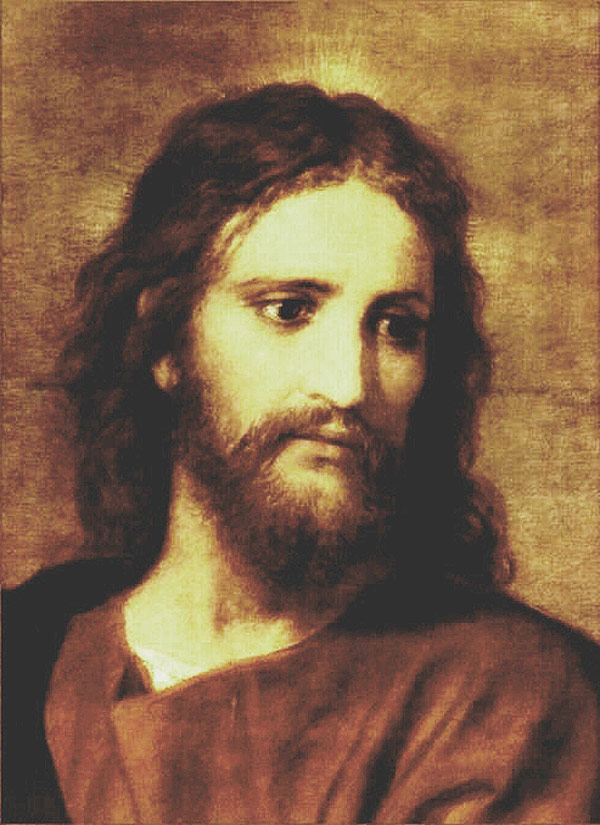
Let me tell you a shocking truth: It's good to admit that you're sick. It's good, because Jesus did not come for the righteous, He came for the riotous!
Jesus once walked up to a man who did more than fiddle his expenses, more than take bribes, he was a nasty white collar criminal called Matthew and he was a traitor to his people the Jews. He was hated. He was scum. And Jesus walked up to him and said “Follow me.” Instantly Jesus took him on and Matthew became one of the 12 disciples, he even wrote a book of the bible – The Gospel of Matthew.
What is Jesus like? How does he respond to a sick society?
Well that night Matthew threw a party so that all his mates could meet Jesus. And what kind of mates do you think Matthew had? Criminals, scumbags, sinners. The lowest of the low came. Some were rich, others were poor, but all of them were considered “Not just broken, but sick.”
I wonder what you think about Jesus, the Son of God, hanging out with such low-lives.
Let me tell you something shocking, if Jesus came today He wouldn't spend His time with the righteous but with the riotous. How do you feel about that?
Well in Jesus' day some people got very angry. They gate-crashed the party and told Jesus He really mustn't associate with sick sinners like these. Do you know what Jesus said?
“It’s not the healthy who need a doctor but the sick. I have not come to call the righteous but sinners.”
Jesus is like a doctor.
 Who here goes to their doctor and says “I’m a picture of perfect health, I thought you’d be impressed”? Doctors are not impressed by that, doctors are for sick people and Jesus is for sinners. Only sinners.
Are you a sinner? Are you sick? Spiritually sick? Sick at heart? I am. I’m not just broken, I’m sick. I have violence in my heart, I have greed in my heart, I have lust and anger and hypocrisy and jealousy and selfishness deep in my heart. And those rioters with alcohol and peer-pressure and a lack of consequences – you know what they are? They’re me with the hand-brake off.
I’m sick. Are you? I’m a sinner. Are you?
Maybe you were offended when I said that Jesus did not come for the righteous but for the riotous. If you were offended it's because you don't think of yourself as riotous. But the Bible says our hearts are full of anger, rage and malice. Can you admit that, deep down, you're not righteous, you're riotous?
Jesus is the Doctor for the sick. Only for the sick. Don’t spend your time pointing the finger at others. Don’t spend your time thinking, thank goodness I’m not like those bad people. Don’t pick up a broom if you think that by it you can clean yourself up. Confess your sickness: “Jesus I am sick, heal me.”
Jesus is a Doctor for sick sinners. He did not come into this world to congratulate the healthy, He did not come to condemn the sick. He came to heal the sick - that's what a Doctor does.
He did it by taking our spiritual sickness into Himself. He deliberately contracted our terminal illness. On the cross he died the death of sick looters, sick politicians, sick policemen, sick journalists, sick hypocrites, sick me and sick you. That's how much He is for the sick. Then He rose up again and offers to meet you in your sickness – not with condemnation but with healing.
And that’s the only power to change rioters, and politicians and police and the media and you and me.
I’m not just broken, I'm sick. Thank God there’s a Doctor! Call out to Him now to receive His care. And take this Gospel from me to read about Jesus who came for the sick.
Here are all 12 of Mike Reeves' "Great Theologians" - from the 2nd century to the 19th.
Lots of great sermons from Mockingbird - Anglican-y, Lutheran-y, pastorally sensitive, engaging with culture, what's not to like.
Stunning sermon (text) by Jason Goroncy on Matthew 15.
Jeremiah 39 and Jude 1 (now updated) by Rich Owen.
2 Corinthians 4 by Dev Menon.
And don't forget Paul Blackham's Jesus talks here.

Sermon Audio on Matthew 3:1-17
There are many frustrations involved in being an Australian cricket fan in this country. Many more in recent years! But one of the biggest frustrations is the fact that in the middle of an international test series to decide the number one team in the world, the sports news in this country seems more concerned about the off-season exploits of club football. Why? Transfer deals. Every club wants to find a man who will turn their fortunes around. They scour the world trying to find the man who will bring them glory, who will lift the trophies, who will win them the silverware. And they pay millions of pounds to secure this man.
But of course it’s a myth. There isn’t one footballer who can really do all that. But football fans pretend and hope against hope and spend ludicrous amounts of money, and take up all the column inches in the newspapers.
It’s a myth that one man can turn it all around, but imagine it works. Imagine they discover the man who will raise the club to fresh heights. He scores in every game, he takes them to the FA Cup final, he scores the winning goal in the dying seconds of the match. And you’re there in the crowd. And all season – even pre-season – he’s been your man, you’ve always trusted in him, you’ve always believed that he would be the one. And you’re there in the crowd and everyone is going crazy, and he runs to the sideline, right where you are, and lifts his arms and makes a gesture like “This is for you.” And you’re bellowing you celebrations to him, and you’re hugging total strangers, but you’re all on the same team, you’re all united IN the one man. You are united TO your champion. His victory is your victory, and you celebrate as though you had scored the winning goal. You haven’t scored the winning goal. You haven’t expended a calorie of effort in the victory, but your man has done it and you share in his glory.
That’s how Christians feel about Jesus. He is the one man, the one man who comes to reverse our fortunes, the one man who steps forward to defeat all the powers we could never defeat. The one man who wins victory and then shares His victory with we who believe in Him. He is our Champion, and we need to understand that about Jesus.
...continue reading "Christ our Champion – Sermon on Matthew 3"
Christ Alone: Luke 10 by Rich Owen
Trinity and Polyphony by Doug Jones
Psalm 22 by Steve Levy
Revelation 2 by Paul Mallard
Psalm 66 by Paul Mallard
.
Rich and Steve's sermons are some of my very favourites of this year.
When I lived in London, one of the things I loved to do on a Sunday was visit Speaker’s Corner. Every Sunday at Speaker’s Corner you have the right to go and proclaim whatever you want to proclaim about – could be true, could be a pack of lies, doesn’t matter – as long as you are 6 inches off the ground you have total freedom of speech and you can just let fly. So naturally enough this attracts any number of religious nutters – like me – and you can wander the length of Speakers Corner and listen to pretty much every religion under the sun.
On a sunny day the speakers will get up on their soapbox and point to the wonder of creation and say – “Look what the God Ram has done.” A few metres down – “Look what Allah has created.” A few metres down – “look what I have made.” Everyone’s looking at the same sun shining on the same blades of grass, listening to the same birds. And yet it seems there are as many gods and spiritualities and philosophies as there are people.
Why don’t we all have a clear picture of God? And why isn’t everyone’s the same? What do we make of all these religions in the world? And where does Christianity fit in?
Well I wonder how you answered our first question: “What do you picture when you think of God?”
I imagine we have as many answers to that question as we have people here this morning. That’s a very question. And if you look at verse 15 of our passage you’ll see why it’s difficult to picture God. Do you see v15. Why’s it difficult to picture God? He’s invisible.
And that’s not just a conceptual difficulty. It’s not just that He’d be a difficult Pictionary clue. In the Bible – seeing God is caught up with the idea of knowing Him. To see Him is to know Him and to be known by Him.
And the bible says we don’t know God. We just don’t. Everyone talks about God. Most people believe in God. Billions pray to God. The trouble is we don’t know God. ...continue reading "Why Bother With Christianity? Sermon on Colossians 1:15-23"
I'd downloaded Dev's sermon on addiction last week, but I finally listened to it last night. Wonderful!
The church of God is not a gathering of the self-righteous, but the gathering of the broken well diggers around the Fountain of Life-Giving Waters. We are a community of grace, where mistakes are understood for what they are, because we are addicts too, addicts in rehabilitation. Together we fight the battle to stand firm in the grace of Jesus Christ, in the love of God, in the fellowship of the Holy Spirit – together we fight the battle against unbelief. We use every resource God has given us to proclaim the desirability, the beauty of Jesus to one another – that we may see Him, believe in Him and remain in the Light.
Read (or listen to) the whole thing.
Sermon Audio
Powerpoint Slides
Recently the Guardian ran a feature on three great fairytales. Cinderella, the Tinderbox and Mossycoat. Let me read you the endings of each of them:
CINDERELLA
Then her sisters knew she had been the beautiful lady they had seen at the ball. They threw themselves at her feet to beg her to forgive them for all the bad treatment she had received from them. Cinderella raised them up and kissed them and said she forgave them with all her heart and wanted them only always to love her. Then, dressed in splendour, she was taken to the prince. He thought she was more beautiful than ever and married her a few days later. Cinderella, who was as good as she was beautiful, took her sisters to live in the palace and arranged for both of them to be married, on the same day, to great lords.
TINDERBOX
They all cried out: “Good soldier, you shall be our king, and you shall marry the beautiful princess.”
So they placed the soldier in the king’s carriage, and the three dogs ran on in front and cried “Hurrah!” and the little boys whistled through their fingers, and the soldiers presented arms. The princess came out of the copper castle, and became queen. The wedding festivities lasted a whole week, and the wide-eyed dogs sat at the table.
MOSSYCOAT
And so they were married. There were celebrations and feasting and fireworks and fancy dress and they had a basket of children, and they're living there now in the house on the hill, as far as I know.
What’s the link between all three? The happy ending is a wedding day and the wedding day is a day of restoration, where wrongs are righted, where justice is dispensed. There is healing, forgiveness, joy and feasting. And of course on that wedding day the very heart of what happens is a girl in rags becomes the princess in riches. All because of the wedding. That’s a happy ending.
But it’s not just fairytales. Virtually every film, every TV show, every novel, every pop song is obsessed with the guy and the girl getting together. This kind of committed, loving relationship consumes our culture and consumes our hearts.
Two BILLION people watched William and Kate get married. Two BILLION. Our household was very unlikely to celebrate the royal wedding – I’m Australian, my wife is Irish, and we’re at least united in rejoicing over English sporting defeats. There’s nothing very royalist at all about Emma and I, but we were glued.
A wedding. A ROYAL wedding – the world was captivated.
WHY?
Because the world is made for marriage. This universe, human history and each one of us are made for marriage.
I’m not talking about our relationship status. I don’t mean that we’ll all have our own little wedding day. But the world is heading towards THE wedding day. I don’t mean that each of us will or should get married in this life. I do mean that marriage – in its true sense – is the reason for our existence, it’s woven into the fabric of reality and it’s our future destiny.
You see the bible is a love story. ...continue reading "Sermon: Genesis 2:18-25"
A Sermon by Gerhard Forde
from the blog "Cross Alone"
(ht OldAdam)
On Death to Self
Matt. 17=22-27 and 26:47-56
We speak a good deal during Lent about that supreme mystery of our faith, the death to self. For, as we have heard, he who would save his life shall lose it, and he who loses his life for Jesus' sake shall find it. But what does that really mean -to die to self? Does it mean, perhaps. selling my car and going on foot or by bus? It might. We can't rule out the possibility. Does it mean, perhaps, selling my good clothes and furniture so that my wife and I should sit around in rags on orange crates? It might. Certainly we can't dismiss that possibility either. For the problem is that t!nless words like "dying to self" are translated into some kind of action, or something that actually happens -that is, some real change -they don't have any real meaning. So we certainly must try, eventually, to translate them into the language of action.
But before we get too hasty and impatient there are some things at which we should take a hard look. The first is that we have a rather incurable tendency always to refuse to really listen to the words of God and instead to translate them immediately into something we are going to do, indeed, can do. This is what we always do with the law. We take it and translate it into a do-it-yourself kit for salvation. It is as though we think we are going to do God a big favor by living up to what is demanded of us and even, possibly, put him out of the salvation business byaccomplishing all or at least some ofitourselves-evenifthatturns out to be just a teeny-weeny little bit. But when we do that we really come a-cropper when we come to this word about dying to self. For what can that possibly mean in a do-it-yourself religion? Here God has set a snare for us in our easy confidence that we are big enough to handle the job. For this is a word that we find difficult to handle. We find ourselves forced either to ignore it -which we mostly do -or to try to cut it down to size so we can handle it -maybe by selling our car or our furniture or our clothes. But even then we can't rest too easily with it, for we are never quite sure that that is enough. For however much discomfort such actions may cause us, is that really dying to self? They may be just another means of keeping myself in the business of doing God big -or little -favors, and thus ofprotecting myself from really hearing the words. The trouble is that the self keeps getting in the way.
But what then does it really mean? When considering this question, I was struck by some of the incidents recorded in our texts for today. For here we have the picture of Jesus on the way to his death. His disciples are with him, and are apparently figuring that they are going to have a hand in what is about to happen. They want to go along. They want to help out, to do their bit in the business of bringing in God's kingdom, even, as Peter says in Mark's account, if that means sacrificing their lives. But the really difficult thing for them to take, as I suspect it also is for us as "religious" people, is that in the final analysis there is absolutely and utterly nothing they can do. When Jesus sets his face to go to Jerusalem, Peter wants to do something about it. He sets himself in the way and says, "God forbid, Lord! Don't do it! Don't go!" Peter wants to do God a favor - to protect and preserve the Messiah and his kingdom. But Jesus looks at him and says, "Get thee behind me Satan! For you are hindrance to me, you are not on the side of God, but of men" (Mark 8:33)' This, Jesus says, is something that must happen; it is going to happen because God wants it, and there is absolutely nothing you can do about it.
And at the betrayal in the Garden of Gethsemane when the crowd comes out against Jesus with swords and clubs, they still want to do something. They still want to do their bit for God. They want to take up the sword and risk their lives, perhaps, and fight. One of them grasps a sword and cuts off the ear of one of the assailants. But Jesus will have none ofit: "Put up your sword," he says, "for there is absolutely nothing you can do!" In Luke's account, Jesus even stretches out his hand to undo what the disciples had tried to do -he heals the wounded man. At that point, no doubt, everything within us cries out in protest along with the disciples. Is there nothing we can do? Could we not at least perhaps stage a protest march on God's behalf? Could we not seek, perhaps, an interview with Pilate? Could we not try to influence the "power structures"? Something -however small? But the unrelenting answer comes back, "No, there is nothing you can do, absolutely nothing. If there were something to be done, my Father would send legions of angels to fight!" But there is nothing to be done. "For how then should the Scriptures be fulfilled, that it must be so?" And when it finally came to that last and bitter moment, when these good religious men finally realized that there was nothing they could do, they forsook him and fled.
Can you see it? Can you see that hidden in these very words, these very events, is that death itself which you fear so much coming to meet you? For there is nothing that the old man -the self which must die fears so much as having everythinB taken out ofhis hands. When they finally saw there was nothing they could do they forsook him and fled before the awesome truth. You, who presume to do business with God, canyou see it? Canyou see that this death of self is not, in the final analysis, something you can do? For the point is that God has once and for all reserved for himself the business ofyour salvation. There is nothing you can do now but, as the words of the old hymn have it, "climb Calvary's mournful mountain" and stand with your helpless arms at your side and tremble before "that miracle oftime, God's own sacrifice complete! It is finished; hear him cry; learn ofJesus Christ to die!"
Can you see it? Can you see that really the last, bitter death is there? That in that cross God has stormed the last bastion of the self, the last presumption that you really were going to do something for him? Can you see that the death of Jesus Christ is your death? He has died inyour place! He has done it. He made it. He created a salvation in the midst of time and his enemies. He is God happening to you. It is all over, finished, between you and God! He died in your place that death which you must die; he has done it insuchaway as to save you. He has borne the whole thing! The fact that there is nothing left for you to do is the death of self and new birth of the new creature. He died to make a new creature of you, and as he arose, to raise you up to trust God alone.
If you can see it, perhaps then you can see, or perhaps at least begin to see, what is the power of God's grace and rejoice. For that is the other side of the coin once you have gotten out of your self-enclosed system. Then perhaps you can turn away from yourself, maybe really for the first time, and look upon your neighbors. Maybe for the first time you can begin to receive creation as a gift, a sheer gift from God's hands. And who knows what might happen in the power ofthis grace? All possibilities are open. You might sell your car, or even give it away -for someone else. You might find even that you could swallow your pride and stage a protest march -for your neighbor -or begin to seek to influence the power structures! For in the power of his cross the way is open! The way is open to begin, at least, perhaps in faltering ways, in ~ountless little ways, to realize what it means to die to self. For that, in the final analysis, is his gift to you, the free gift ofthe new man, the new woman, the one who can live in faith and hope, for whom all possibilities are open!
Today is Ascension Sunday. It’s the Sunday after Ascension Day which is always a Thursday.
It’s the day Jesus made the ultimate journey – He journeyed from earth to heaven in order to sit down on the throne of the universe and rule the world as our Brother, our Priest, our King. On Ascension Day Christians remember we have a Friend in very high places.
On Good Friday we remember His death on the cross. On Easter Sunday we remember His rising from the dead. For 40 days afterwards He appeared to His followers, He gave “convincing proofs” of His resurrection (as we learnt this morning). He ate and drank and walked and talked with His friends and He gave us a little snapshot of what resurrection life looks like. It’s country walks, fishing with friends, barbecues on the beach, it’s feasting and friendship and glorious joy. But then after 40 days, Jesus ascended to heaven. And so there’s a sense of Christ’s absence in the world now. Jesus is not here, He is not among us, and we miss Him. But He also promised to send us His Spirit, which is the day we celebrate next Sunday.
Because 10 days after Jesus ascended is the day of Pentecost. On that day He sent the gift of His Spirit in a special way upon the church so that the church can be Christ’s witnesses to the ends of the earth. That’s what we learnt this morning.
So let me tell you that story again and let me use some language that might be familiar to you from our reading.
Today we celebrate ASCENSION – the ASCENT of Jesus. On Good Friday, He had gone down into death and curse and hell. On that cross He was EXILED from God’s presence – He was shut out, EXILED, from the presence and blessings of His Father and He endured the curses that we deserve for our disobedience.
In other words you might say He was like the temple torn down on the cross. He is GOD’S HOUSE – the meeting place of God and man, and as He said in John chapter 2, He would be torn down on the cross only to be raised again in three days. So He’s like God’s house torn down and raised up.
Or you could say He’s like a Seed that goes down into the ground. That’s what He said in John 12. He’s the Seed who gets planted into the ground. But on Easter Sunday He sprang up from the ground into resurrection life. He came through the exile and curses and was RESTORED. And there was an incredible joy at His restoration. It’s a joy that’s meant to be carried to the whole world. The nations are meant to look on at this restoration and praise God for it.
And then Jesus tells His disciples to stay IN Jerusalem . Another name for Jerusalem is ZION. But in Zion, Jesus is going to give a blessing – His Holy Spirit. And 10 days later the promised blessing from Jesus comes on His people: The Spirit is given to equip Christ’s disciples to witness to the nations. In ZION, the PEACE AND BLESSINGS of the LORD come upon His people.
So that’s the Gospel story. It’s a story of Ascension, a story of Exile, a story of about God’s House torn down and raised up, of the Seed planted and then blossoming, it’s about a joyful restoration and it’s about peace and blessings that fall down upon Zion. Are any of those words familiar?
Well our Psalms for this evening are called “Songs of Ascent.” That’s interesting. On Ascension Sunday. There are 15 “songs of ascent” in the book of Psalms and we’re covering them at Souls at Seven, three at a time.
The Psalms are SINGING ABOUT GOING UP.
People has speculated that these Psalms were sung by Old Testament believers on their way up to Jerusalem for the festivals. They went up to Zion and they sang about GOING UP on their way.
But we too are on our way up. We’re on our way up to the Heavenly Jerusalem, the true Zion. As we make our journey through life, these songs will help us too.
But ultimately Jesus is the One who made the true Ascent from earth to heaven. He made the ultimate journey through the sins and sufferings of this world and into God’s presence. And the Jews of the Old Testament and we today look to Jesus to make sense of our experiences of going up.
So let’s dip into our three songs for tonight. We’ll give a very quick overview and we’ll try to unpack a couple of things.

