Skip to content

You may know that I (sporadically but vigourously!) bang the drum for Christ the eternal Mediator being the deliberately revealed, consciously known object of faith in the Old Testament.  Here are some posts on the issue.

Pete Myers read it and posted this.  And our further discussions are here and here.

By way of some kind of response, here are ten propositions that circle around some of the issues. (Fabricius eat your heart out). 

For those yawning right now, hold on for some grand hilarity next week - I'm on holidays and will post only frivolity.  For those fixing to flex their theological muscles, remember to play nice.

.

5. In its own context and on its own terms the OT must be understood as a dynamic multi-Personal revelation.  OT saints who failed to see this did not ‘partially understand' the revelation - they misunderstood it.

 See this post here, and my next two posts - 5 and 6.

.

You may know that I (sporadically but vigourously!) bang the drum for Christ the eternal Mediator being the deliberately revealed, consciously known object of faith in the Old Testament.  Here are some posts on the issue.

Pete Myers read it and posted this.  And our further discussions are here and here.

By way of some kind of response, here are ten propositions that circle around some of the issues. (Fabricius eat your heart out). 

For those yawning right now, hold on for some grand hilarity next week - I'm on holidays and will post only frivolity.  For those fixing to flex their theological muscles, remember to play nice.

.

6. The Angel of the LORD is the pre-incarnate Christ.  His identity as God from God is as clear in the OT as His incarnate identity is in the New.

.

.

...continue reading "Trinity, revelation and OT – 6"

You may know that I (sporadically but vigourously!) bang the drum for Christ the eternal Mediator being the deliberately revealed, consciously known object of faith in the Old Testament.  Here are some posts on the issue.

Pete Myers read it and posted this.  And our further discussions are here and here.

By way of some kind of response, here are ten propositions that circle around some of the issues. (Fabricius eat your heart out). 

For those yawning right now, hold on for some grand hilarity next week - I'm on holidays and will post only frivolity.  For those fixing to flex their theological muscles, remember to play nice.

.

7.  Psalm 45 is a good example of a Scripture that assumes a multi-Personal doctrine of God even in its own context.

.

.

...continue reading "Trinity, revelation and OT – 7"

You may know that I (sporadically but vigourously!) bang the drum for Christ the eternal Mediator being the deliberately revealed, consciously known object of faith in the Old Testament.  Here are some posts on the issue.

Pete Myers read it and posted this.  And our further discussions are here and here.

By way of some kind of response, here are ten propositions that circle around some of the issues. (Fabricius eat your heart out). 

For those yawning right now, hold on for some grand hilarity next week - I'm on holidays and will post only frivolity.  For those fixing to flex their theological muscles, remember to play nice.

.

8. The administration of Gentile inclusion is not a ‘model' of progressive revelation.  The administration of Gentile inclusion is the new thing.

.

.

...continue reading "Trinity, revelation and OT – 8"

You may know that I (sporadically but vigourously!) bang the drum for Christ the eternal Mediator being the deliberately revealed, consciously known object of faith in the Old Testament.  Here are some posts on the issue.

Pete Myers read it and posted this.  And our further discussions are here and here.

By way of some kind of response, here are ten propositions that circle around some of the issues. (Fabricius eat your heart out). 

For those yawning right now, hold on for some grand hilarity next week - I'm on holidays and will post only frivolity.  For those fixing to flex their theological muscles, remember to play nice.

.

9.  Calvin and Owen believed in divine simplicity.  (I have serious reservations about the doctrine - see here)  But they managed to avoid the more dangerous aspects of it because they insisted upon Christ-mediated revelation. 

Both of them refused to say ‘Because God is simple any revelation of any aspect of God's nature will reveal the Whole.'  The both were crystal clear that revelation must happen in Christ as eternal Mediator (and be appropriated knowingly in the Person of the Mediator).

See here for examples from them both.

.

You may know that I (sporadically but vigourously!) bang the drum for Christ the eternal Mediator being the deliberately revealed, consciously known object of faith in the Old Testament.  Here are some posts on the issue.

Pete Myers read it and posted this.  And our further discussions are here and here.

By way of some kind of response, here are ten propositions that circle around some of the issues. (Fabricius eat your heart out). 

For those yawning right now, hold on for some grand hilarity next week - I'm on holidays and will post only frivolity.  For those fixing to flex their theological muscles, remember to play nice.

.

10. The One is not more ultimate than the Three.  Neither is the immanent something different to what we see in the economic. 

.

.

...continue reading "Trinity, revelation and OT – 10"

Check out this Bonhoeffer quote.  H/T Ben Myers

“It is wrong to assume that on the one hand there is a word, or a truth, and on the other hand there is a community existing as two separate entities, and that it would then be the task of the preacher to take this word, to manipulate and enliven it, in order to bring it within and apply it to the community. Rather, the Word moves along this path of its own accord. The preacher should and can do nothing more than be a servant of this movement inherent in the Word itself, and refrain from placing obstacles in its path.”

—Dietrich Bonhoeffer, Discipleship (Bonhoeffer Works Vol. 4; Minneapolis: Fortress, 2001), pp. 227-28.

Or as Barth would say (speaking of the Spirit), the Lord who speaks is the Lord who hears. 

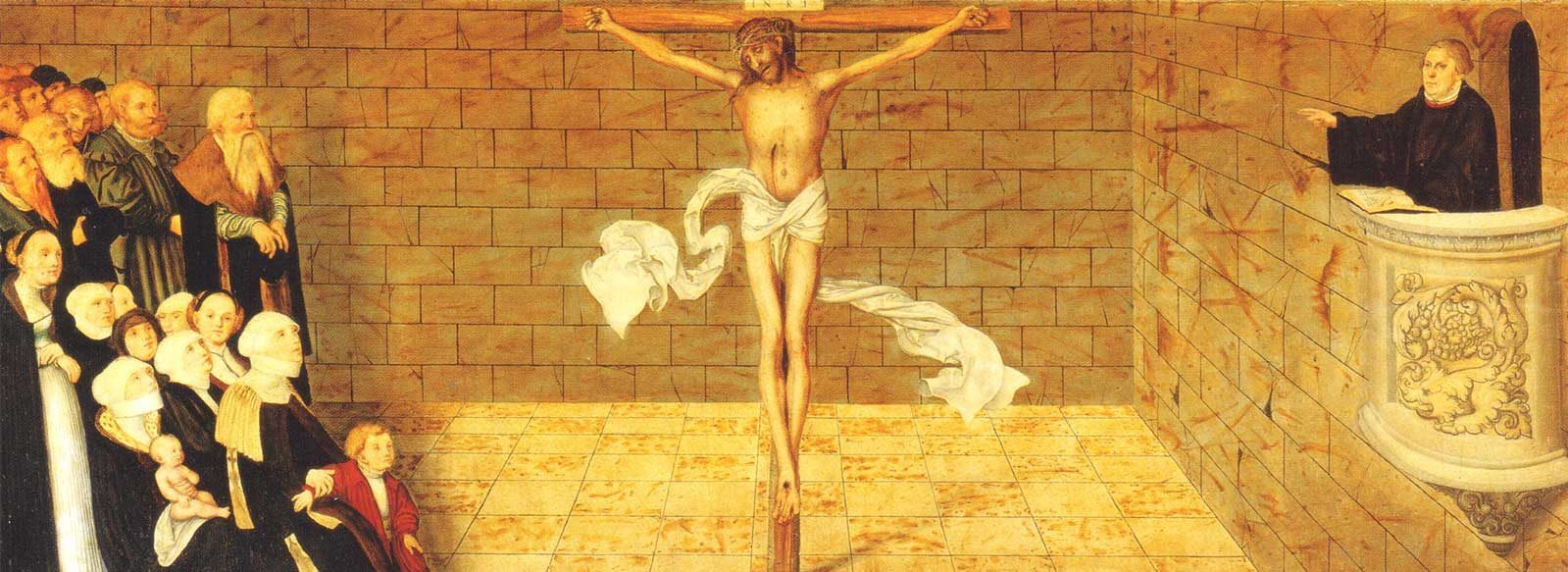
Preachers are not bridge-builders bravely standing in the hermeneutical gap between then and now. (How much homiletics depends on exactly this assumption??)  The living word is indeed alive (not just capable of liveliness!).  The Spirit is at work making His word lively, relevant, applied or whatever other actions the modern preacher is encouraged to take into their own hands!

.

7

If you ever say Amen it's usually a response to what someone else has said or prayed, right?

And it's usually after what they've said, right?

And only if it's really good do you repeat it: 'Amen, Amen!', right?

So it's an affirmation that someone else has just spoken truth (Amen is straight from the Hebrew for truth).

But when Jesus comes along, what does He do?  He gives Amens to His own sayings: 30 times in Matthew alone!  And in John's Gospel He gives a double-Amen to 25 of His own teachings!

e.g. Amen, Amen I say to you, whoever hears my word and believes Him who sent Me has eternal life (John 5:24)

What's Jesus doing by prefacing His teaching with 'Amen, Amen'?  Well let me put words to what this means.  Jesus is basically saying:

"You don't stand in judgement on my word.  I won't even wait for your Amen.  Your Amen could only ever be the faint echo of my own Amen!  You do not and cannot stand in judgement on my word.  Before you've even heard a syllable of it, I tell you on my own authority that this is truth.  This is the only authentication or approval these words ever could or should have - my own.  This is true because I say it, not because you have some vantage point from which to assess these words.  Let my Amen recalibrate everything you consider to be truth.  You must simply accept my words as the gold standard of truth because it is I who speak them.  In short: It doesn't matter what you think - this is the truth, deal with it!"

Who speaks like this?  Only God's Faithful and True Amen (Rev 3:14).

Imagine if our bible reading, our theology, our apologetics, our Christian obedience was shaped not by whether we thought, in all good conscience, we could give our Amen to Christ?  What if we stopped trying to assess Christ's word with our Amens and instead simply received His Amen in glad submission?

May we hear His word in the Spirit in which it was spoken - as truth itself. (John 17:17)

.
10

The End?

Ok time to bring these thoughts to a close (for now).

For links to the 14 posts in this series go here.

For the full text of the 14 posts go here.

Let me finish with a plea from the heart of true doctrine...  Jesus is the Word of God.  He is not the best Word.  He is not the ultimate Word.  He is not the seal of series of improving words.  He is the Word.  There is no knowledge of God that is not mediated through the Son.  Please consider these foundational verses.

In the beginning was the Word, and the Word was with God, and the Word was God. He was with God in the beginning. Through Him all things were made; without Him nothing was made that has been made.  (John 1:1-2)

No-one has ever seen God, but God the One and Only, who is at the Father's side, has made Him known. (John 1:18)

He is the Image of the invisible God, the Firstborn over all creation. For by Him all things were created  (Col 1:15-16)

The context for these verses is not incarnation.  The Word became flesh long after the Word was.  The Son has been the revelation of God from before the creation of the world.  Incarnation does not make Jesus the Word, rather the pre-existing Word became flesh.  At the risk of sledge-hammer repetition: Jesus is the Word and Image of God prior to incarnation.  He has always been the one Way, Truth and Life.  To be ignorant of the Son pre or post-incarnation is to be ignorant of God.

Consider additionally these crucial passages:

Jesus answered, "I am the way and the truth and the life. No-one comes to the Father except through me. (John 14:6)

 "All things have been committed to me by my Father. No-one knows the Son except the Father, and no-one knows the Father except the Son and those to whom the Son chooses to reveal him." (Matt 11:27)

Christ in the OT is not an irritating hobby horse that some people ride and we wish they didn't and would let us alone 'cos we all get to Jesus in the end'.  It's about the identity of Jesus.  Is He the revelation of God or is He something less? 

Is solus Christus true in revelation just as it is in salvation or is it a case of 'Jesus and...'?  Are there other ways? Other truths?  Or does Jesus retain for Himself all the glory?

Ok so what are your thoughts on this issue?  Boring?  Irrelevant? Untrue?  Are my arguments overstated? Unworkable? Old hat? Garbage?  What?

Over to you...

.

Here are some more Revelation sermons I've preached recently.  

Revelation 13-14 (recorded afterwards at home)

Revelation 15-16

Revelation 17-18 

I'm preaching the last four chapters in the next month (So all you pre and post millers have about a week to convince me before I preach chapter 20!)

Twitter widget by Rimon Habib - BuddyPress Expert Developer