Skip to content

6

Click for source

Have you ever heard this kind of claim from an atheist:

Unlike you theists, I am open to change.  All you need to do is show me the evidence and I'll confess on the spot that I was wrong.  If you can prove God I will switch sides.  You theists on the other hand obstinately cling on to the God hypothesis no matter what the evidence.  You call this irrationality "faith."

How to respond?

Do we say "No I'm very open to change, I just think the evidence is better on our side"?

That might sound tempting.  After all it has the air of intellectual credibility about it (if, ironically, you don't think about it too long).  And it's the least we could do seeing as the atheist has been so even-handed with "the evidence."  Besides, what hope is there for genuine dialogue if we're not open to change?

Well let's slow down a second.  What kind of openness is being claimed by the atheist?

Doesn't their claim amount to:

I, the neutral observer, will accept  the God hypothesis if and only if naturalistic evidence meets my criteria.  And of course such acceptance will be eternally tentative, since opposing evidence may arise to dis-prove the God hypothesis.

Let me ask some questions about those bolded phrases...

Are you really a neutral observer?  Is the scientific community, religious community or indeed the human race collectively a neutral observer?  How could you ever know?  What tests could you perform to figure out whether, when it comes to God, humanity suppresses the truth?

If you are assessing 'the God hypothesis', are your investigations being carried out in a way proper to the object of your study.  I.e. is God really a 'hypothesis' to be tested?  And if you think he is, the question must be asked, Which god are you talking about?  Because it doesn't sound like the God of the Bible.  If, on the other hand, God is a Self-Revealing Speaker, doesn't "scientific investigation" look very different?  i.e. Wouldn't a proper correspondence to this Object of enquiry entail listening to His Word?

Who gets to decide what is "evidence"?  Does the Bible count?  Does it count on its own terms, or only when filtered through other tests?  What about encountering Christ spiritually through Scripture or worship?  Wouldn't that be quite a  "knock-down" proof - for some even literally!  Is this evidence allowed at the bar?

Even if you are a neutral observer, even if God is a hypothesis that could be tested and even if the evidence you demand is the right kind of evidence - will you really 'become a believer' on the basis of this evidence?  Surely, to be consistent with your methods, you will merely line up with the God-hypothesis-camp until a better hypothesis comes along?  This is nothing like what Christians mean by "faith in God."

Therefore in what sense are you open to change?  Admittedly, you are open to reshaping certain of your views - and that is a very laudable thing. Few ever do it, so such openness is indeed commendable.  But the openness of which you speak is set within a tightly de-limited, pre-established epistemological system (i.e. system of gaining knowledge).

And if that's your definition of "open" then the Christian is at least as open.  If you show me convincing evidence about a pre-millennial return of Christ (to choose an intra-mural Christian dispute of secondary importance) then I hope I'm open enough to change.  I hope I am.  Obviously, people are biased, obstinate, self-justifying fools by nature (the Bible told us that long before science did), so it might be an uphill battle, but allow me to declare my willingness to change.

So there you are.  I'm open.

Of course, at this stage, the atheist says: "That's not openness to change!  That's just redecorating the exact same house."  To which I say, "Pretty much!  But then, a tentative assent to the God-hypothesis is also just re-decoration.  The foundations and structure of your beliefs would remain exactly the same."

You might rate yourself as a De-Facto Theist on Richard Dawkins' scale, but it's your commitments to a naturalistic method of knowledge that are really God for you.

To inflexibly hold pre-commitments about yourself, your object of enquiry, your method of enquiry and your criteria of judgement is to be "open" in only a very limited sense.   But here's the thing... pre-commitments about Me and God and the World and how I know things are absolutely inescapable!  I can't even begin to think without at least a shadow of an opinion on these things.

Which means none of us are very open.  There is no neutral space between the Christian position and the naturalistic position.  There is only conversion - i.e. a radical re-ordering of my view of self and God and the world.

Does this shut down all conversation?  Absolutely not!  This is the beginning of genuine conversation.  Now that we know where we all stand (and both Christians and atheists are regularly deluded about this), real interaction can happen.  How?  I say "Come on over to my house.  Let me show you around.  For a time, come in on my foundations, my vision of God and self and how to know things.  Experience the world from within these commitments.  See if life doesn't make more sense.  See if you don't confess that Jesus really is the deepest Truth"  And, by the same token, you can say to me "Come over to my house.  Allow me to show you the Magic of Reality as I see it.  Experience the world from within these commitments."

There's great hope for fruitful engagement (though this is a real statement of faith, I acknowledge!).  I believe that there is plenty to be said on the other side of an acknowledgement of our radical differences.  But let's be honest enough to state our differences.  It's not a case of simply assessing mutually agreed-upon evidence with the obvious tools for the job.  It's about show-casing different visions of reality.

This doesn't mean we cast stones at each other's "houses" or dig into our entrenched positions.  Instead it's a call to hospitality.  Let's love our neighbours.

1

A little while ago I lamented a certain kind of evangelism that is all too common.  It's basically the call to younger brother types to come to their senses, to wrench themselves away from the far country and to return to the father with a pre-prepared sorry speech.  The evangelist will even feed them a ready made, line-by-line repentance spiel - one with magic words guaranteed to effect a reconciliation.  The whole encounter goes something like this:

"We all know who God is don't we?  He's the Big Guy and you've been avoiding Him haven't you?  Allow me to latch onto some guilt feelings you've experienced.  Let me call that 'conviction of sin'.  And now let me promise relief from those feelings if you'll only return to the Big Guy and bring this speech with you.  I guarantee it'll work (becausetherewasthisthingcalledthecrosswhichyoudon'tneedtoknowaboutnow butIneedtocrowbaritinbecausethesewordsaremagic).  Anyway, the ball is now in your court.  It's all down to you.  If you're up to the challenge, carefully repeat this prayer after me..."

The whole paradigm is one in which "God" is taken for granted, Jesus is a helpful mechanism to fix the guilt problem but the real Name above all names is Decision before Whom all must bow in self-willed surrender.  Almighty Decision towers above you, are you equal to His call?

Let me suggest that the answer to all of this is (unsurprisingly) focussing on Christ.  Evangelism is speaking of Jesus.  It's lifting Him up by the Spirit (which means Scripturally) so as to present Him to the world as good news.  So we say 'Taste and see that the Lord is good.'  We basically hold out the Bread of life saying "Tasty isn't He??"

Now if we approach evangelism with Christ at the centre, there are many advantages:

1) Jesus simply is the most interesting and attractive Subject.  You might have some cracking gags, moving anecdotes, contemporary illustrations and memorable catch-phrases, but they've got nothing on the power and beauty of Christ.

2) Faith is immediately seen for what it is - receiving Christ as He's offered in the gospel.  Faith is not "banking the cheque" of forgiveness.  What does that even mean?  What do any of our illustrations of faith actually mean?   Far better simply to hold out Christ and say "Look and live!"

3) Decision is dethroned. We don't so much tell the world to believe in Jesus.  Far more than this, we tell the world about Jesus such that they do believe (Steve Holmes).   Because faith is a response to contemplating Christ.  The spotlight does not fall on the listener and their willingness to summon up the necessary response.  The spotlight falls on Christ Himself.

4) You don't have to worry about offering cheap grace.  You're not offering 'a blank cheque' for free, you're offering the Lord for free. To receive the it of grace/forgiveness/a ticket to heaven is entirely different from receiving Him - the LORD our Righteousness.  In this way conversion and discipleship are held together.  The one who simply receives Christ has unmistakably received a new Master.

5) You don't sell Christianity on the back of some abstract fringe benefits.  Instead the preacher says "The one thing you get for receiving Jesus, is Jesus.  But if you're seeing things clearly, the one thing you want is Jesus."

6) Because of this, you don't have to fence all your promises of forgiveness and freedom and new life with '...if you really, truly, ruly believe'.  Since faith is receiving the Christ who is offered there's no chance of the listener trusting an abstract promise in vain.  Those who receive Jesus receive Jesus.

7) The decision time at the end of the talk is de-emphasized.  It is not the business end of proceedings.  The real business is holding out Christ by the Spirit (and therefore in the word).  The listener receives Christ as they are won by the gospel preaching.  They can trust and receive Christ in their seats during the preaching.  It's not about a form of words that they must parrot at the end.  If you want to pray at the end that's fine.  But it's only confirming a receiving of Christ that's occurred during the preaching.  Faith comes by hearing.

7

“Who here has never heard teaching on the Trinity before?”

My translator asked the question of our audience after my first session.  In a room of 60 Malawian overseers, about 50 hands went up.  Each of them had responsibility for between 6 and 30 churches but very few had learned even a basic doctrine of God.

In May I travelled with Ian Milmine, my boss, to Malawi and Kenya, preaching the gospel and training pastors.  It was a tremendous opportunity and I’d be keen to go back, especially for the chance to support African ministers.  As one professor of theology in Kenya told me, few of his students – most of which are ordained ministers – could actually articulate the gospel.  In a country where 80% claim to go to church, the preaching they hear is a steady diet of ‘holiness teaching’ with a heck of a lot of altar calls thrown in.

As an evangelist I must have prayed with hundreds of people to become Christians on our trip.  But at times it felt like Luther’s experience of climbing the “Scala Sancta” steps in Rome.  It was years before Luther’s conversion and as he said the Lord’s Prayer on each step, he thought he was earning time off purgatory for his relatives.  But when he got to the top he proclaimed “who knows whether it is so.”  I have to admit the same statement crossed my mind when scores of folk indicated “decisions for Christ” – Who knows whether it is so?

It worked like this: whenever I finished a talk, the host of the meeting would either invite a response himself or ask me to do so.  Hands were raised, people stood up or came forwards, dozens would repeat a ‘prayer of commitment’.  Yet it seemed obvious to me that they’d ‘given their lives to Jesus’ many times before.

One evening at a university I decided to preach very strongly that “the gospel is not our life given to Jesus but His life given to us.”  After hammering that point for 45 minutes the host of the meeting got up and – I kid you not – asked “If you want to give your life to Jesus now, please raise your hand.”  I found myself in the strange position of praying that no-one would.  And no-one did!  Never have I been so sure that the word was received as when no-one “made a response”!

While I was dubious about the constant push for “mass conversions”, seed was sown and people rejoiced to hear the good news.  There was often a response to the word of liberation and joy, very different from the forced response of ‘the altar call’.  Anyway... rant over.

In addition to our preaching, Ian and I had separate opportunities to lead hotel staff to Christ in the course of our trip.  These one-on-one opportunities were wonderful gifts from God.  There is undeniably a spiritual openness in Africa that reveals the darkness of the West all the more!

.

This is an extract from my most recent prayer letter.  If you'd like to receive my prayer letter, please email me: glenscrivener at gmail dot com.

12

Evangelicals Now have run a negative review of Lee McMunn's Identity Course which I recommended here.

In a piece that reveals far more about the reviewer than it does about the resource, Simon Ward concludes that the course "cannot be recommended."

He bemoans the teaching in which - horror of horrors! - "enquirers are encouraged to ‘Come to Jesus as you are… put your trust in him... put him in charge!'"  He then complains that the actual terms "sin" and "repentance" aren't used, failing to appreciate, a) that both concepts are thoroughly explored using appropriate synonyms, and b) John's Gospel (on which the course is based) never uses the word "repentance" once.  In the same breath he criticizes the use of a "sinners prayer" at the end of the course and makes an unsubstantiated broadside, claiming that "there is an absence of the free and sovereign grace of God in salvation."

From these criticisms you'd think that Lee was Charles Finney himself rather than (I hope Lee won't mind me saying) a conservative evangelical and thoroughly reformed thinker.  He's Scottish for goodness sakes - how much more sound does he need to be!

Given that the reviewer gives virtually no biographical information, I did a Google search and found only one relevant lead about his identity - a speaking engagement at a Strict and Particular Baptist Chapel.  Those coming to hear Mr (Reverend?) Ward were encouraged to "Please bring AV Bibles and Gadsbys Hymns if possible."

Culturally it seems that Mr Ward is coming from a very different place to a young evangelist reaching a new generation with a DVD resource.  It would have been helpful if Mr Ward had declared his hand from the outset and revealed that he comes from a theology and practice of evangelism that is quite a bit different from both Lee McMunn and the majority of EN's readership.

I for one would be fascinated to read Mr Ward's approach to evangelism and might well find myself in agreement on certain issues.  But those discussions should be kept away from the reviews so that Christians can get a clearer sight of the actual resources.

Do check out the course here.  And, if the review irks you (as it's irked a few of us!) perhaps you could drop EN a line.

14

A Jubilee Sermon (on Trinity Sunday)
An alternative Trinity Sermon here 

“I declare before you all that my whole life whether it be long or short shall be devoted to your service.”

So said Princess Elizabeth to the whole British Empire on her 21st birthday.  The year was 1947.  And as we look back on her 60 years as Queen, who can deny that her long reign has been devoted to “service.”

What an incredible marker for a monarch!  Not power, or wealth, or prestige, but “service.”

The Queen is not simply Head of State, Head of the Commonwealth, the Fount of Justice, Head of the Armed Forces, the Defender of the Faith and Supreme Governor of the Church of England.  She is also patron of over 600 organisations and charities.

And, routinely, Queen Elizabeth II is referred to as this country’s greatest public servant.  A sovereign who serves.  What’s her motivation?

She has told us.  In her Christmas message of 2000 she said this:

For me the teachings of Christ and my own personal accountability before God provide a framework in which I try to lead my life. I, like so many of you, have drawn great comfort in difficult times from Christ’s words and example.

The Queen is following the example of Christ: the ultimate Sovereign who serves.  And this evening I just want to think about that remarkable combination of sovereignty and service.  Because there’s a reason we respond so positively to Sovereign Service.  When our Rulers are servants they show us something very profound.

Today is not only the Queen’s Jubilee celebrations.  In the Church Calendar it’s also Trinity Sunday.  Today, ministers all over the world attempt to put words to the truth that our one God is Three Persons: Father, Son and Holy Spirit.  Trinity is the truth that God is a unity of three – a tri-unity – a Trinity.

But perhaps you’re thinking, what on earth does the doctrine of the Trinity have to do with our Jubilee Celebrations?  Actually Trinity Sunday and the Queen’s Jubilee truly belong together.  Because with both we are dealing with that wonderful combination of sovereignty and service.  Let me explain...

John’s Gospel begins with these famous words:

In the beginning was the Word, and the Word was with God, and the Word was God. He was with God in the beginning.

If we were in any doubt about who the “Word” is, our song has just told us.  Jesus is the Word of God the Father from before the world began.

So John introduces his biography of Jesus by affirming that Jesus did not merely found a religion, He founded the universe.  Jesus, “the Word”, existed before the world began, with God His Father and with the Holy Spirit.  So John gives us a picture of “the beginning” that is unlike any the world has imagined.

The world’s creation myths are full of conflict, killing and chaos.  They speak of wars in heaven, or cosmic storms.  Powers collide and the universe is the debris.  But John casts a very different vision.  In the beginning, there was love.

That’s the doctrine of the Trinity in a nutshell: “In the beginning there was love.”  Because in the beginning there was the loving relationship of Father, Son and Holy Spirit.  Before there were people or planets or protons, there was love.  Love is the one thing God didn’t need to create because God is love.  The Father has always loved His eternal Son in the joy of the Holy Spirit.

And so at this Jubilee Celebration we remember that the Sovereign of Sovereigns is not a heavenly Tyrant – a distant individual, ruling in splendid isolation.  Before there was anything to rule, the Father, Son and Spirit related.  Their life is a life of caring, sharing, give and take, back and forth.  Before God's life was a life of sovereignty over the creation, God’s life was a life of service among the Persons.  The Father pours His love and life into the Son in the power of the Spirit.  The Son offers up His love and life in the power of the Spirit.  The very essence of our Sovereign IS service.  God’s life is a life of mutual self-giving.

We have a saying don’t we: Power corrupts and absolute power corrupts absolutely.  Well apparently not.  Apparently the absolute power in this world is not a corrupt Dictator, but a loving Family in which service is supreme.  Do you start to see why Trinity Sunday and the Jubilee belong together?

Because of Trinity, no wonder we’re so attracted to the Queen’s humble example.  The servant-heart of the sovereign is a glimpse of something holy.  Because of Trinity: sovereignty and service belong together.

Now imagine if this were not the case.  Imagine if God were just a solitary individual. Think of him there “in the beginning”, with no-one and nothing besides him, just his own thoughts for company.  Such a god could not be a god of service.  There’s no-one and nothing for this god to serve.  There’s no caring or sharing.  This god would be defined by supremacy, not by love.

But not with Trinity.  With Trinity: service IS supreme.  With Trinity: self-giving is ultimate reality.  With Trinity: God is love.

And this love was too good to keep to themselves.  In John 1 verse 3, we see that the God of love wanted to share.  John writes:

Through the Word all things were made.

This is where we've come from.  From the overflowing life of the Father, through the Word – the Lord Jesus – in the power of the Spirit, the world was born.  It was as if the Father, Son and Spirit had said “This thing is too good to keep to ourselves.”  And so a world is made, that we might share in their love.

What’s the meaning of life?  It seems like such a bold question, but Trinity Sunday has the answer.  Trinity Sunday tells you: “God is love and you’re invited.”  The meaning of our lives is to be drawn into the love which both predated and produced the universe.  The meaning of life is to come home to the ultimate Royal Family.

Some of you, I’m sure have met the Queen.  Some of you have been honoured by the Queen.  One of her titles is “The Fount of Honours”.   For one thing, she writes to those who make it to 100 and to 105.  She also congratulates subjects on their diamond wedding anniversaries, as well as 65th and 70th anniversaries.  I won’t ask any of you if you’ve been so honoured.  But I can only imagine how proud a person must feel to appear on the New Years Honours List or the Queen’s Birthday Honours List.

Yet however wonderful that is, there’s something much greater.  The Queen can bestow honours on you, she can even make you a Lord or a Baron or a Knight.  But she can’t make you her child.  She can’t give you her inheritance.  She won’t adopt you into her family and take you home to the Palace.  That’s not how it works.

But with Jesus, there’s an honour that is out of this world.  He can and He does invite us home.  This is the meaning of our lives – not simply to be honoured by Jesus but to be adopted by Him INTO His loving Family life.

John chapter 1 verse 10 says this:

10 Christ was in the world, and though the world was made through him, the world did not recognise him. 11 He came to that which was his own, but his own did not receive him. 12 Yet to all who received him, to those who believed in his name, he gave the right to become children of God-

The Son of God offers Himself to us.  All who receive Him are invited into His life.  We receive His Father as our Father and His Spirit as our Spirit.  God is love and Jesus invites us INTO the God of love.

Did you think Trinity was a dry, academic doctrine?  Did you think it was a tortuous logical problem? Did you think it was something impossible to understand?  No.  Trinity is the good news that God is love; that the ultimate sovereignty is self-giving service; and that we exist to find our place in their love.

Do you know how it happens?  It happens through the meekness of the Monarch.

Famously, John chapter 1 verse 14 says:

The Word became flesh and made His dwelling among us, we have seen His glory, the glory of the only begotten Son who came from the Father full of grace and truth.

How do we enter into Christ’s life?  He entered into ours.  The Word became flesh.  Our Maker became a man.  A member of the Trinity became a member of the human race.

It’s the ultimate riches to rags story.  We all know the fairytales of Princes becoming paupers.  Well the myth is a reality.  The true Monarch did empty Himself.  As Philippians chapter 2 says “Christ Jesus made Himself nothing, taking the very nature of a servant, being made in human likeness. 8 And being found in appearance as a man, he humbled himself and became obedient to death--even death on a cross!”

We love to hear stories of Royals who climb down off their thrones.  Apparently on V-E Day, Elizabeth and Margaret escaped out into the celebrations in London.  They wandered around anonymously, enjoying the moment along with the rest of the people.  The Queen still likes to get out anonymously – sometimes visiting a West End show with Prince Philip.  Only rarely are they spotted.

We like to hear about our Royals moving among us as commoners.  But what about the ultimate Royal becoming the ultimate commoner.  Incredible!

From heaven to earth, and not just to earth, He became a single cell in Mary’s womb.  And then a wriggling baby on the straw.  And then a defenceless refugee, on the run from Herod.  And then a builder’s labourer.  And then a penniless preacher.  A homeless dissident.  A stooping servant.  Yet He descends even further to be a victim of cruelty and injustice.  And finally a human sacrifice – dying a godforsaken death on the cross.  Never has anyone so Mighty become so meek.  Here is our Ultimate Sovereign – the ultimate Servant.

And because this is Trinity Sunday we see the true nature of Christ’s sacrifice.  Trinity Sunday tells us: Jesus is not just an example of human service.  He is God the Son.  He is our Maker.  His arms outstretched to the world are God’s arms – and they are opened for you.

What does Majesty look like?  When we think Majesty, we think Palaces and Crowns and Thrones.  Christ traded His palace for a manger.  His crown was made of thorns.  His throne was His cross.  The Great Prince became a Pauper.  More than a Pauper – a Bleeding Sacrifice.  And He did it for you.

For almost 2000 years the church has used a simple phrase to describe the Christian message.  It just says this: He became what we are, so that we might become what He is.

He – the Son of God – became flesh.  He entered into our predicament with all our sufferings and sins.  But He didn’t flinch.  He entered in and became what we are.  Why did He do it?  So that we might become what He is – a child of God.  The Son of God became human so that we humans can become children of God.

These are the Royal Honours that Jesus wants to bestow.  He is the true 'Fount of Honours' and He can bring you in to the ultimate Royal Family.

But His invitation requires a response.  It means a reality check for each of us.  We must realize that we live in a broken world with broken hearts and broken lives.  We need to acknowledge that our lives, naturally, are estranged from God’s Family.  That we need the forgiveness which Christ offers through His death.  We need Jesus in order to be reconnected to the love of God.  Do you recognize that need?

It’s something the Queen articulated so beautifully last Christmas.  Her televised message was, surely, the greatest Christmas sermon preached that day.  Perhaps you heard it.  She spoke of our need for Jesus - our need for forgiveness.  She said this:

Although we are capable of great acts of kindness, history teaches us that we sometimes need saving from ourselves - from our recklessness or our greed.

God sent into the world a unique person - neither a philosopher nor a general, important though they are, but a Saviour, with the power to forgive.

Forgiveness lies at the heart of the Christian faith. It can heal broken families, it can restore friendships and it can reconcile divided communities. It is in forgiveness that we feel the power of God's love.

In the last verse of this beautiful carol, O Little Town Of Bethlehem, there's a prayer:

O Holy Child of Bethlehem,
Descend to us we pray.
Cast out our sin
And enter in.
Be born in us today.

It is my prayer that on this [Christmas] day we might all find room in our lives for the message of the angels and for the love of God through Christ our Lord.

What a preacher our Queen is!  Do you have room in your life for the love of God through Christ our Lord?  He is offered to you, to forgive all your sins, to reconnect you to the Father, to give you His Spirit, to adopt you into the life and love of God.

The Ultimate Sovereign became the Ultimate Servant for you.  Our Queen trusts Him as her Saviour.  Do you?

John writes:

To all who receive Jesus, to those who believe in his name, he gives the right to become children of God.  (John 1:12)
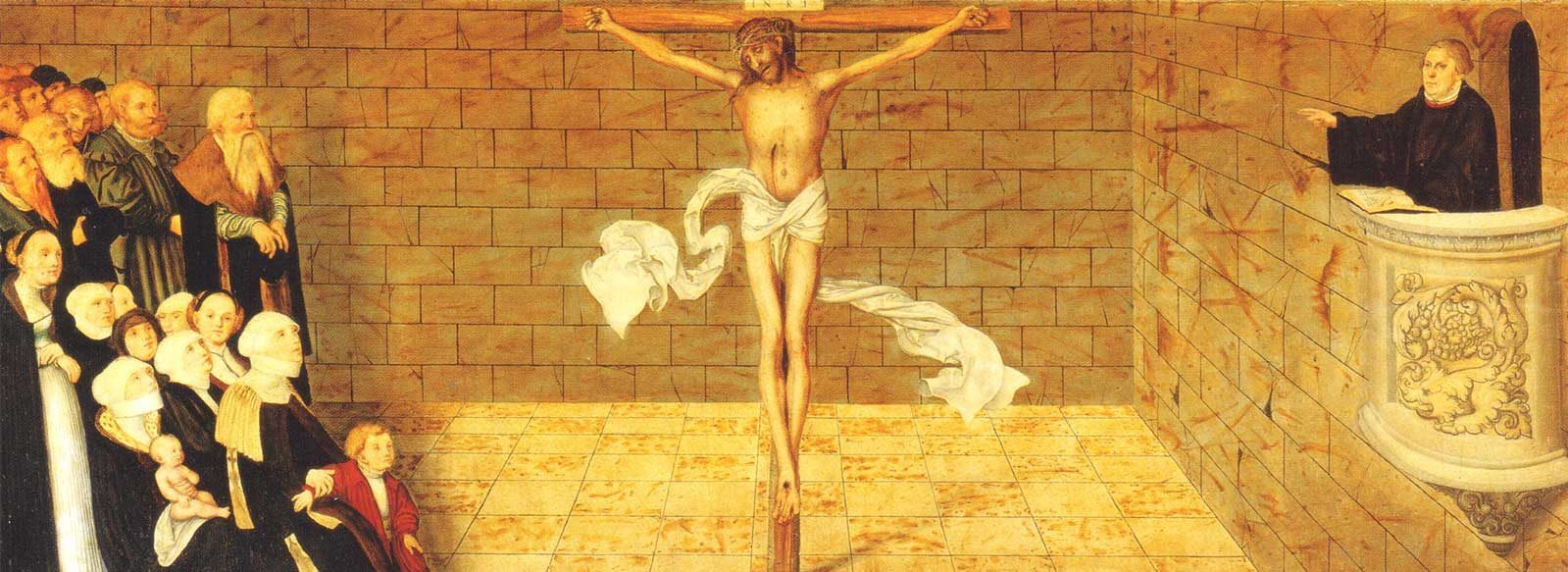
8

Still in Africa, back in a couple of days.  Here's one I first posted two years ago...

.

I lost some of the best years of my life last month to an atheist blog.

With that in mind, I was amused at the recent furore over comment moderation at richarddawkins.net.  People are surprised at the vitriol spewed forth under pseudonymous cover in the under-belly of RichardDawkins.net?  A forum devoted to one of the most vituperative fundamentalisms going?  Does this shock anyone?

A couple of weeks ago I commented on a well respected and well-read atheist blog and was sworn at and wished dead in the most imaginatively vicious ways.  Compared to the abuses I and other Christians suffered there, the "rat's rectum" comparisons that flew between fellow-atheists at Dawkins' site sound like Pollyanna.

Anyway, I thought I'd try to redeem my experience by reflecting on some things I learnt, and some things I should have:

One reflection on my experience was written during the interchanges: Evangelists and Apologists Note: The six things that have already happened.

Here are some other reflections:

  1. Reason flows from the heart.  These guys raised a banner loud and proud for reason, logic, the scientific method, etc.   But there was nothing particularly reasoned or scientific about their manner of argument.  They were well read intelligent people (PhD students etc) but much of their commenting consisted in caps locked swear words.  "Logic" was their slogan not their method.
  2. They constantly appealed to a logical high-ground without any thought as to whether they were allowed one - being materialists and all!
  3. Pointing out this inconsistency didn't seem to get me anywhere (though you never know how non-commenting readers are responding).
  4. Everyone deals in circularities:
    1. I believe the bible is the word of God because in it God speaks
    2. You believe the scientific method is the arbiter of what's true because it's proved itself effective when judged by science.
  5. Everyone has ultimate authorities which, by the nature of the case, cannot be authenticated by outside sources - ie the scientific method cannot be tested by the scientific method.  One guy admitted that this self-validation hasn't happened yet but that one day science would definitely be able to prove the scientific method by the scientific method.  There's faith for you.  Which leads to...
  6. Everyone is faith based.  We all proceed from assumptions which we take to be true and then move forwards on the basis of them.
  7. I kept getting asked for 'evidence'.  My responses were in three broad categories, first I'd point to Christ risen from the dead, second I'd simply quote Scriptures.  But probably the most effective thing was to say "everything!  Everything reveals the LORD Jesus to you."
  8. Therefore evangelism is the invitation to the unbeliever to step inside the world in which Jesus is LORD and look again.  Basically it's saying: "Let me tell you a story about a triune God, the world He made and the Son who redeems it.  Now look again at the world through the Lens of Jesus.  Now do you see why self-giving love is the greatest thing?  Now do you see why trust and beauty, evil and forgiveness, truth and goodness are real beyond any scientific analysis?  In other words, now you can take seriously the most basic aspects of your human existence and not run against the grain of reality all the time."
  9. In this sense theology is a science.  It begins with self-authenticating premises and moves out in faith to investigate .  This investigation is shaped by the Object of knowedge.  Since the Object of knowledge is the Speaking God, the method is to hear His Word.  The premises of our enquiry after knowledge (e.g. Jesus is LORD, the bible is true etc) are not falsifiable in the way the materialists demand they be.  But then the scientific premises (e.g. that true knowledge is verified by the scientific method etc) aren't falsifiable either.  Premises are the light by which we see.  It's their success in seeing that recommends them.
  10. The failure of "science alone" to see the world was very evident to me.  It didn't seem particularly evident to them.  That Beethoven's 9th was a series of compression waves was certain for them.  That it was "beautiful" was a verdict they couldn't make with anything like the same certainty.
  11. The atheists who commented were very clearly captured by the vision of "the onward march of science", demolishing ignorance and dispelling superstition.  There was clearly a love for scientific progress that had won their hearts.  Nothing less than a greater love could ever displace this.  All their calls for "evidence, evidence" were simply calls for reality to fit into their paradigm - to serve their greatest love.  They need a new paradigm, or better - a new love.
  12. The call for "evidence, evidence" in the sense that they mean is a desire to be confirmed in their self-imposed naturalistic prison.  What counts as 'evidence' for them is only that which can be assessed according to their naturalistic paradigm.  This is simply a refusal from the outset to hear a Voice from above.  Again it is a matter of hard-heartedness, however seriously they wish to be taken intellectually.
  13. My lowest point came in the heat of battle when I fired off a comment justifying my intellectual credibility.  I'm ashamed of what I took pride in at that moment.  I should have borne shame and taken pride in the foolishness of the gospel, allowing Christ to vindicate me.  The cause of the gospel was hindered rather than helped by the assertion of my academic credentials (which weren't that great anyway!).  This is especially so given what I've been arguing above.
  14. Having said all this, I think it was a worth-while exercise.  Many of the commenters were American 'de-converted' evangelicals and knew a lot of bible.  The hurt from previous scars was palpable and I hope that a charitable Christian voice might at least temper some of the "all Christians are bigots" tirades that otherwise spiral on in these forums.
  15. On the other hand, some of the commenters were angry Brits and others who seemed to know very little of Christian things.  All they've heard has been from other atheists.
  16. And of course there were many more who I'm sure just 'listened'.  My time at Speaker's Corner taught me that even as you engage the Muslim apologist in front of you, you're aiming at the wide-eyed apprentices hanging off his coat-tails.  Who knows how the Lord will use these words?
  17. Turning the other cheek hurts but it's powerful.  I trust that (#13 and other lapses notwithstanding) perhaps the most useful aspect of the interchange was the attempt to model Christ in the way I commented.
  18. The absolute hatred for Christians is frighteningly palpable.  The hatred that's there in the comments sections will rise more and more into the public realm, that seems pretty certain to me.  But if we're surprised and outraged let's get a grip - no soldier should act all offended and hurt when the enemy actually shoots bullets at them!
  19. Just as Stephen Fry speaks of descending into the "stinking, sliding, scuttling" floor of the internet, engaging in this kind of way can be the faintest taste of what the LORD Jesus did in descending to a world that hates Him.  (It can be a total waste of time too, but I think there is a time and a place for it).  I spent a few hours in an internet forum.  His whole life He lived and loved and spoke and served among a hatred that literally tore Him apart.  He's the One we proclaim.  His attitude is the attitude we take.  And as we join Him (in big ways and small) in cross-bearing love, we get to know His enduring grace that much more.
  20. There is a time for shaking dust off your feet.  Some need to spend a little longer in the battle.  But probably people like me (who have to be right!) should quit sooner.  :)

.

.

3

  1. Through Christ, the Triune God has already revealed Himself unmistakably in every aspect of creation so that humanity is without excuse.
  2. Against Christ, humanity has taken knowledge into its own hands and so barred the door against all claims from above.
  3. In view of Christ, God has handed humanity over to its chosen futility, locking the door from His side too.
  4. In Christ, God has entered this prison and manifested His eternal glory in time and space, even in human flesh.
  5. As Christ, humanity now has a perfect mind with which to comprehend God (and everything else) - one that is not only human but also in God.
  6. Out of Christ, His Spirit has been poured to incorporate us into the Man who knows.

This is what has already happened.

Here's what happens when we forget 1:

We think:

  • That the universe is basically mute (when actually it's preaching day and night)
  • That humanity is not really deaf - they're listening hard but the sermon's too quiet
  • That we, therefore, have to piece together proofs to amplify the sermon
  • That 'evidence' for God exists only in some limited aspects of the creation (e.g. fine-tuning)
  • That there are certain obvious pointers to "God" but 'Jesus' and 'Trinity' are actually pretty obscure
  • Therefore, that evangelism is a three-part process from creation to God to Jesus. (It's the very opposite!)

Here's what happens when we forget 2:

We think:

  • That humanity (or at least some humans) are actually truth seekers
  • That the mind is somehow less fallen than the rest of the person (rather than the centre of our enmity)
  • That fallen humanity is genuinely questing after the capital-T Truth when it makes its enquiries
  • That the way forward is to agree to their own systems of truth verification
  • Therefore that we need to find 'evidence' to submit to their systems

Here's what happens when we forget 3:

We think:

  • Perhaps if our faulty grasping after knowledge was the problem, our true grasping after knowledge will be the solution. (Instead we should realize that the grasping was the problem!)
  • If we now reason properly we can reverse the fall. (But no, God has confirmed our decision and locked the door from His side).
  • Maybe God is pleased by our efforts to ascend to knowledge (rather than thwarting them - catching the 'wise' in their craftiness)
  • Maybe God will aid our efforts to shepherd an unbeliever up the mountain. (In His grace, He might aid the unbeliever but not our efforts)

Here's what happens when we forget 4:

We think:

  • Christ is the cherry on the epistemological cake.
  • We can (or even should) reason from creation to Christ (rather than Christ to creation).
  • Christ is one relevation among many (rather than the one Lens through which all must be seen)

Here's what happens when we forget 5:

We think:

  • There remains within Adamic humanity a capacity for knowing God (rather than realizing that this capacity lies in Christ alone).
  • That the quality of our conversion, or ongoing knowledge of God, finally depends on our own reasoned response to God.  (At base it relies on Christ's reasoned response to God).
  • Christians are rational individuals raised to a higher intellectual plain (rather than fools united to a Person who is Wisdom).
  • Once we have come to Christ we can know God autonomously.  (No, only in Him by the Spirit can we go on knowing God)

Here's what happens when we forget 6:

We think:

  • Maybe we need Jesus to bring us to God, but it's up to us to get to Jesus.  (No, it's the sovereign work of the Spirit through the gospel word).
  • Maybe there are ways and means to get to Jesus apart from the Spirit-empowered word.  (No.  While the whole universe screams 'Jesus is Lord', the Spirit unblinds our eyes to these things only as He shows us Christ in the word).

.........................................

So then, these six events have already happened.  Acting like they haven't happened or they need bolstering by our own efforts betrays the gospel that we proclaim.

The only thing that needs to happen now and the only thing that can happen now to remedy our situation is for the Spirit to sweep the unbeliever up into the Son's knowledge of the Father.

And, lest we divorce the Spirit from the word, the only means by which the Spirit does that is the gospel word.

So get proclaiming.

.

2

From an Evangelism Training Day at City Evangelical Church, Leeds.

.

The Gospel That Saved You - Glen Scrivener

audio (sorry, part two of audio is coming soon, hopefully)

text

powerpoint

.

Small Talk To Big Talk - Roger Carswell

audio

.

You Have All You Need - Glen Scrivener

audio

text

powerpoint

.

The Place of Evangelists In The Life of the Church - Roger Carswell

audio

.

2

I'm leading a seminar track at Bible by the Beach called "Just Looking."  It's a very basic introduction to Jesus over three hour-long sessions.

Here's what I've come up with:

In John’s Gospel we’ll look at three prominent sceptics who become believers.  Each of them have an encounter with Christ that changes them.

In Chapter 3 there’s a very religious man called Nicodemus.

In Chapter 4 there’s a very immoral woman from Samaria.

In Chapter 20 there’s a doubter on the fringes of the disciples called Thomas.

None of them ‘get it’ to begin with.  And in meeting Jesus all of them are confronted in a way that shocks and destabilises them. Each of them are first offended by Jesus and then comforted by Him. But they’re all offended at different points because they’re all very different people. Nicodemus is very good. The woman of Samaria is very bad. Thomas is meant to be a Christ-follower, but he’s full of doubts.

We’re going to start with Doubting Thomas whose starring role is actually at the end of the Gospel.  Then we’ll do Nicodemus and finally the woman.  So essentially we’ll see...

Jesus Meets a Doubter on the Fringes

Jesus Meets a Good Person

Jesus Meets a Bad Person

Download a Word Document of the the three studies here.

1

When Jesus came, stooped, served, suffered, was shamed, bled and died - that was not a departure from His divine glory.  He wasn’t taking a holiday from being God.  That was the expression of His glory. The cross is the most God-life thing imaginable.  Because God’s life is a life of outgoing, outpouring, sacrificial, life-giving love.

Think of the cross.  Bring to mind that bloodied corpse with His arms outstretched to the world:  This is what is looks like to be God.  What is the highest heights of Godness, the deepest depths of deity?  Look to the Cross.  Look to the God who pours Himself out. His own life-blood is flowing from His veins.  And He does it for you.

The real God bleeds for His enemies.  The real God gives His life even to death.  The real God loves us more than His own life.  And when Jesus dies on the cross THEREFORE, God the Father exalts Him and says “THAT!!!  Look at the crucified One.  That's what it means to be God."

.

Sermon audio

Sermon text

Twitter widget by Rimon Habib - BuddyPress Expert Developer