 If we get God wrong, then we'll get our mission and our motivation wrong too.
If God is a needy Individual, mission will look a certain way.
But what if God is Father, eternally and outgoingly loving His Son by the Spirit...?
Jesus is the Word of God
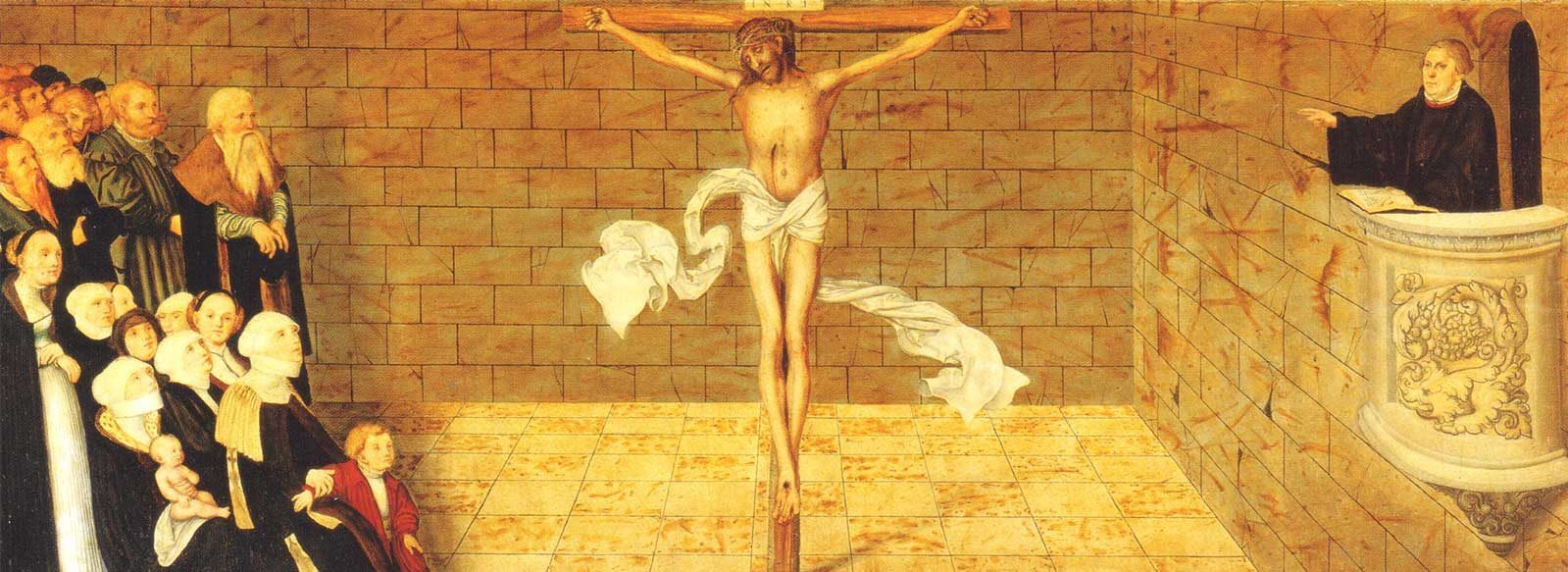
If we get God wrong, then we'll get our mission and our motivation wrong too.
If God is a needy Individual, mission will look a certain way.
But what if God is Father, eternally and outgoingly loving His Son by the Spirit...?

Thanks so much Dave Bish for putting on Tranformission on Saturday. We had a blast.
There is no other message that liberates - only the gospel of the Beloved Son. May this gospel speed forth and bring life throughout the land...
Main Session 1 - Mike Reeves
Main Session 2 - Mike Reeves
Peter Mead workshop: Adoption and the Bible
Dan Hames workshop: Adoption and church history
Glen Scrivener workshop: Adoption and Evangelism (slides and notes here)
Mike's main sessions were powerful, pastoral, mind-expanding and heart-warming as ever.
I'm very much looking forward to listening to the other workshops. Apparently I get a Gold Star for the audio quality of my sessions. Success! No doubt in other departments I have only a frowny face and a Must Try Harder.
Enjoy!
My final entry for Radio 2's Pause for Thought competition:
 Three Australians in a pub compare their scar stories. One points to purple flesh on his calf: “Box jellyfish” he complains. The second says “You big girl’s blouse” – shows his left hand missing: “Shark Attack!” he says. The third simply takes off his shirt revealing a massive scar from his throat straight down to his belly button. The other two say “Jeepers, what happened?” He replies “Post-mortem.”
We love a scar story. Do you have one? It’s a tale of triumph through adversity.
Think of the Paralympian on the podium winning gold. And you know that this gold has come through a furnace: a life-time of struggle, a car accident, a war wound, but through the furnace: Gold. We love triumph through adversity.
Recently Derren Brown was asked why his magic shows are so different. He said “Magic tends to be about people clicking their fingers... and it happens. Which is a God-like whim... What’s more interesting dramatically – he says – is a Hero-story... somebody who’s struggling with something and then goes through a journey but at some cost to himself.”
Derren Brown’s absolutely right. We’re just not interested in the God-like figure – all triumph and no adversity. We all respond to the Hero’s journey – struggle through adversity.
But what if the God story IS the Hero story?
At the end of John’s Gospel, Doubting Thomas is confronted by the Hero of the Bible. The Risen Jesus shows him His scars – proof of a love that took Him to hell and back. And Thomas blurts out “My Lord and My God!” Thomas has seen God, because He has seen His scars.
We’ve all got scar stories. The Bible says even God’s got a scar story. If that’s true then, in all our struggles, there really IS Triumph through adversity.
Here's my second round entry for Radio 2's Pause for Thought competition
 This week, universities up and down the country are holding Freshers’ Weeks. I’ve been at a couple this week and I’ve discovered two realities that are powerfully at play in Freshers’ Week. The first is that EVERYONE is utterly LOST. Folks are far from home, with a new environment, new people, new rules, new routines, and everyone’s LOST.
That’s one reality. The other is that everyone’s trying to FIND themselves. I still remember my mother’s parting words to me on the first day of uni. I think she’s now embarrassed by them, I’m certainly embarassed by them, she said with tears (and I quote) “Glen, I want you to FLY... Just... fly.” It’s the Bette Middler school of parenting I believe. But we know what she meant! In new environments we want to FIND the person that we want to be. We want to flourish and thrive and maybe even fly, I dunno. We certainly want to stop feeling lost.
That’s Freshers’ Week – but it’s also life. So often we feel lost and we want to find ourselves. But let me tell you – If you are LOST, the last thing you need to FIND is YOURSELF. Because you’re lost. And finding a lost person is NOT that much help. Lost people who find themSELVES find that they are Lost. Which is no great find. When you’re lost, you need to find HOME. And when you’re HOME then you can just BE yourself.
Jesus was always telling stories about how HE had come to find the lost. He’s like a searching shepherd finding lost sheep. He’s like a searching woman, finding a lost heirloom. He’s like a searching father, finding a lost son. Read more in Luke’s Gospel, chapter 15. Jesus comes from HOME – that ultimate Family Home of Father, Son and Holy Spirit – and He’s come to FIND the lost.
If you’re lost, you don’t need to find yourSELF. You need to find home. The good news Christians proclaim is that someone from Home has come to find you.
I've begun to explore how the three truths of 321 interact with the four planks of other gospel presentations (creation, fall, cross, repentance). Those gospel events are vital. But the three truths of Trinity, Adam and Christ and union with Christ are essential if we're to understand the four events rightly.
Today we'll think about 321 and creation....

"God made you, therefore..."
How do you want to finish that sentence?
There are many implications of God's creative work. But so quickly we want to speak about what it means for us. And even when we consider what it means for God we cite implications like: God owns everything, He has certain rights, He's the legitimate ruler of the universe and of you. Essentially we think Creator means Creditor or Creator means King - in fact it can be hard for us to think in any terms beyond this. "God made you, therefore you owe him" is a pretty common way of unpacking the implications of creation. And when it comes as the first point in an evangelistic presentation, it introduces God to us in profoundly unhelpful terms.
When Athanasius was battling Arius, he identified a grievous error in the heretic's method: Arius named God from his works and called him "Uncreated". He should have begun by naming God from his Son and calling him "Father." (Contra Arianos 1.34) If the first thing we know about God is that he is Maker, we'll start our gospel on the wrong foot.
For one thing, God defined as Creator becomes quite a needy deity. He's like the workaholic who doesn't know who he is unless he's at the office. God defined as Creator needs to work. He requires a world in order to fulfil himself. And then creation is not so much a gift of his love as a project for his own self-interested purposes. Instantly the God-world dynamic revolves around God's needs and we are the ones to fulfil him.
Nicene faith, on the other hand, begins "We believe in one God, the Father Almighty, Creator of heaven and earth." Father comes first. Which means, before anything else, God is a Life-giver. Because of the truth of 3, He has lived in love long before He has lived in labours. He does not achieve His divine identity by creating, instead creation expresses His eternal fruitfulness. He has no need of galaxies, mountain ranges, rainforests and us. We do not fulfil Him, He fulfils us. We do not give to Him, He gives to us.
Therefore when the Christian says "God made you, therefore..." - how should we finish that sentence? There are a hundred things we could say, but perhaps one of the first is, "God is Giver." "God is generous." "God is immeasurably expansive in His love." Whatever we say we need to avoid simply equating Creator with Creditor. The whole direction of the gospel presentation will depend on this set-up. Are we introducing God primarily as one who takes (because He's earned the right by making us) or as one who gives (because He's shown His life-giving character through creation)?
I hope you'll see that 3 is a vital truth to surround the teaching of creation.
But 2 and 1 are important too. Because what connection is there between God, the world and you? Why does creation matter if, essentially, the gospel is God's plan to save souls? What relationship is there between the fall of humanity and the physical world? What's the link between Christ's resurrection and the regeneration of all things? And what does God actually want with the world?
If the gospel's not about creation giving to God, then how does God's giving nature express itself in creation. Well He gives us our lives so He can give us His life. He gives in order to give. He creates a world through His Son and by His Spirit, so that He can enter that world through His Son and by His Spirit. Again the direction of travel is vital. God doesn't create a world below so that we can learn to make our way back up. He pours out His love in creation so He can pour out Himself in incarnation. Creation is intended to receive its Lord so that He commits His future to us as a Bridegroom commits himself to a bride.
Creation is not simply a truth to be affirmed and then forgotten while we deal with the spiritual problems of sin and redemption. Instead creation is the first stage in a unified movement of God, the goal of which is the summing up of all things under the feet of the incarnate Son (Ephesians 1:10)
Therefore the truths of 2 (Adam and Christ) and 1 (union with Christ) are vital - not just for the understanding of redemption. They earth redemption's story in creation. The world, summed up by our Representative Man, is the place where salvation happens. In this Man, on that cross, in our humanity God has worked. And in this flesh, on this earth, with these eyes I will see my Redeemer (Job 19:25-27).
...More to follow...
 Recently I entered a Radio 2 competition to present Pause for Thought. Unfortunately I didn't win, but what a consolation prize: meeting Vanessa Feltz at the final!
Here's my round one entry: We Are The Champions...
We Are The Champions
It’s official, the Olympomania Geiger counter has gone nuclear. As an Australian who’s lived half his life in the UK I’ve undergone a bit of a conversion experience, I’ve been caught up in Team GB hysteria. For the last fortnight I’ve been, in the words of Dylan Moran, ‘roaring advice at the best athletes in the world.’ And when you catch yourself screaming at the planet’s greatest sportsmen: “NOT LIKE THAT!” you realize you’ve been gripped by something bigger than yourself. There is a deep connection between us and the athletes – they are our champions.
Just this Friday, the Poet Laureate, Carol Ann Duffy, published a poem about the Olympics with the line: “We are Mo Farah lifting the 10 000m gold”. And on one level that’s just ridiculous. I’m not Mo Farah, I’m part-man, part-sofa. Brushing my teeth is about as aerobic as I like to get. But there’s something deeper going on. Our champions belong to us and their victory is our victory though we haven’t expended a calorie of effort.
And here is the very heart of Christian faith. You see I’m probably like you – I’m an arm-chair critic when it comes to life. I talk a good game, but my own performance is laughable by comparison. Step forward our Champion, Jesus. He comes at Christmas as our representative, wearing the colours of Team Earth. He lives our life for us, He dies our death for us, faces off against our biggest enemy – the grave – and beats it hands down. Now His victory is our victory – though we have not expended a calorie of effort.
Put it like this: If Usain Bolt is my competitor, I have no chance. If he’s my Champion, I can’t lose.
If you think God just sets you standards, then of course you’re going to fall short. But Christianity says there’s a Champion. And if He’s your Champion, you can rejoice like an Olympomanic long after the Games have gone. Because His victory is your victory.
321 is a gospel outline which I hope can teach the church and reach unbelievers with a richer, more Christ-centred account of the good news. It's the story of God, the World and You.
3 God is three Persons united in love
2 The story of the world is the story of two men
1 You are one with Adam. Be one with Jesus.
Here's the website which we're building and here's the animated outline in 5 minutes...
[vimeo http://vimeo.com/48734715]
Now let me acknowledge something up front: The three points of the mnemonic are not the central events of the gospel. Those events have to be narrated in among the three points. The central events of the gospel are the coming, dying and rising of Christ. But the three truths of 321 are the essential presuppositions without which the events of the gospel will be misunderstood.
I fully acknowledge that the gospel events, as narrated in places like 1 Corinthians 15:1-11, are concerned with the doing and dying of Jesus. But that doing and dying will not make gospel sense without a true doctrine of God, of Christology, of humanity and their proper interaction. Therefore my contention is that Trinity, Adam and Christ and union with Christ are essential doctrines which surround and interpret the gospel events.
In the next four posts, I'm just going to examine the four truths highlighted in other presentations (like the Four Spiritual Laws, or Knowing God Personally, or The 4 Points) - they are Creation, Fall, Cross and Repentance. I hope to show that these are vital elements of a gospel presentation and that they should be interpreted according to Trinity, Adam and Christ and union with Christ. Failure to appreciate these four events in the categories of Trinity etc, will skew the story in unbiblical and unevangelical ways.
More to follow...
 On Saturday a friend told me he could never be much of a witness in the workplace because... (notice where his thinking begins)... if he entered into debate, he'd only end up losing the arguments. I, on the other hand, would (he imagined) wipe the floor with their non-Christian reasoning and establish the unassailable right-ness of Christian truth. And... (at this point the details became hazy)... somehow his work colleagues would then bow to the superior intellectual credibility of the gospel, and... I dunno... become Christians?
Yeah, at that point the fantasy goes completely bonkers. But the opening assumptions are powerful. And they shape the way we think about evangelism. Essentially "being a witness" at work means - in the popular Christian imagination - being able to "hold your own" in discussions of stem-cell research and providing a Christian response to Euro-zone debt. Or at least it means being able to bridge seamlessly from discussions of popular culture to gospel truths. And, frankly, few people are up to that. I'm not really up to that and I'm paid to be.
But here are some things I told my friend...
What if the goal is not to win the arguments in the workplace? What if the goal is to be the kind of work colleague who others would open up to in a crisis? Because, let's face it, the person who's good at winning arguments aint always the person you'd confide in when your life's falling apart. In fact, scratch that. They almost never are!
I think that's a vital and fundamental change that needs to happen in our thinking. The key characteristic of "a good witness" needs to be someone who hurting people can confide in. Once we're thinking in those categories, evangelism in the workplace becomes a different beast.
Now the aim is to be a person who's known as a Christian, who seems to have something different about them, who loves people, who has an integrity, an openness, a pastoral heart and who has something different to say. Note - it's not that they have to be contrary, nor that they have to be "right", nor that they have to be heard, just that when they do speak, they seem to come from a different angle than the 'wisdom of the world.' In other words - our aim in being a witness in the workplace is... wait for it... to be a Christian.
This is not to make being a witness easy. It's not (because being a Christian isn't easy). But hopefully it simplifies our aims. And now, if you want some strategies for offering distinctive speech as a Christian, how about sitting down and thinking about how you'd finish these introductory sentences...
"Yeah, that's what I love about Jesus. He's constantly..."
"To be honest, that's why I'm a Christian. What really appealed was..."
"We thought about that at my church last Sunday. There's this story in the bible where..."
"Actually my church is really different like that. When such and such happened, they responded..."
"When I suffered X, the one thing that got me through was..."
If you can't finish off those sentences, the issue is not that you're a bad evangelist. If you can't finish those sentences it's because you've forgotten what you have in Jesus. And together with a Christian friend or two, perhaps you need to remind one another. Being able to finish those sentences will do your Christian life the world of good. And, by the by, it will also help your witness.
The mouth speaks what the heart is full of. (Matthew 12:34)

The Ninevites hear this prophet back from the dead.
They acknowledge that God is right to judge.
They bury themselves in the dust.
And they trust Jonah's God to bring them through to resurrection.
We too hear a word of judgement from God's Resurrected Prophet (Acts 17:30).
We too are buried in Him (Romans 6:3-5).
And we are brought out beyond condemnation (Romans 8:1).
Christians note: God does many miraculous things in the book of Jonah. At just the right time he appoints storms and fish and plants. It's almost magical. But there's one thing he refuses to do: He refuses to save Nineveh without a messenger. Faith comes by hearing (Romans 10:17).
It doesn't matter if you're a bad messenger (Jonah's sermon left much to be desired). It doesn't matter if you struggle with motivation (Jonah struggled with motivation). As those brought through judgement, we have a message that can save - no matter how rubbish we messengers are!