Skip to content

I've been chatting to three different mates about their sermons this week.  In each case the commentaries they have read and the sermons they have listened to have, in the end, put us in the driver's seat.  Ironically, those commentators and preachers who make the most noise about being "God-centred" have seemed to be the most keen to put us at the centre.

And it doesn't seem to matter which testament they're preaching from.  Two friends are preaching from Psalms.  And even though the Psalmist is described in impossibly lofty terms - an Ideal King and Sufferer and Worshipper - yet the applications from the great and good leave us aspiring to approximate the Psalmist's experience.  (And Jesus is brought in at the end as someone who really approximated the Psalmist's experience rather well!).

My other friend is preaching on the parable of the man who finds the treasure and buys the field.  He is surrounded by evangelical interpretations which make us the protagonists in the whole kingdom drama.  (Suffice to say, that is not the way I take it!)

It's reminded me yet again that "Christ in the Old Testament" is just the tip of the iceberg.  We need to fight a much more basic battle - Christ in all Scripture.  Is it really all about Him?

It's also reminded me: You gotta watch those "God-centred" preachers!

...unfortunately, that’s how some people view and use the Old Testament. They see Christ emerge from the picture at the end of Old Testament history (and that’s good), but they do not see him in all the little pictures. ...For example, some see all the Old Testament priests as pointing forwards to Christ’s priestly work; and they do that. Some see all the Old Testament kings as pointing forwards to Christ as King of all kings; and He is that. But is Christ only seen at the end of these long lines of priests and kings? Does He only emerge from the picture when we look back with New Testament eyes? Sometimes that’s the impression that’s given. But where does that leave Old Testament believers? Did they simply put their trust in Moses' sacrifices, Aaron’s priesthood, and David’s monarchy? No! By faith they saw the coming Messiah pictured in the Mosaic sacrifices, Aaron’s priesthood, and David’s kingdom. They saw Christ in the small pictures. True, they only saw Him in shadow form; but shadow implies at least some light, doesn’t it!

From David Murray

Many preachers on OT passages seem to have an arbitrary ranking system when it comes to theophanies (appearances of God).  Sometimes they are clear that the appearing LORD is Christ, sometimes they tentatively suggest it, sometimes they claim that all is shrouded in darkness and who can know and sometimes they ignore the issue altogether.

I'm never sure what might be the rationale behind such decisions.  But there seems to be a ranking at play.  So I've decided to reconstruct what I think the ranking might be.  Here is just  a top ten (with the number one being the most likely to be desginated a Christophany).  There are, obviously, many more appearances than these.  But I'm not sure you'll find many today who will acknowledge more than these ten.

10.  The LORD who eats with Abraham  (Genesis 18)

9.  The Glorious Apparition of Daniel 10

8.  The Voice of the LORD walking in the garden  (Genesis 3)

7.  The God who eats with the 70 elders of Israel  (Exodus 24)

6.  The fourth figure in the fiery furnace  (Daniel 3)

5.  The I AM of the burning bush (Exodus 3)

4.  The Man who wrestled Jacob  (Genesis 32)

3.  The LORD who rebukes Satan (Zechariah 3)

2.  Isaiah's Temple vision  (Isaiah 6)

1.  Commander of the LORD's host  (Joshua 5)

Have I got the ranking about right?  Are there other more worthy candidates for the top ten?

Against this arbitrary system, Jonathan Edwards' advice will be a much safer and saner approach:

When we read in sacred history what God did, from time to time, towards His Church and people, and how He revealed Himself to them, we are to understand it especially of the Second Person of the Trinity. When we read of God appearing after the fall, in some visible form, we are ordinarily, if not universally, to understand it of the Second Person of the Trinity.  (A History of the Work of Redemption)

See more from Owen and Edwards here.

1

I just finished a preaching group where a fine preacher gave a fine talk on Judges 14.  At the end he included a sentence about 'another Saviour who came to deliver His people eternally'.  That sort of thing.   He didn't make anything of the point and he didn't mention the name 'Jesus', but he included the sentence.

During the feedback session I asked him in as non-leading a way as possible, "Why did you include that sentence about Jesus?"

Quick as a flash another student answered "Because we're supposed to."

Let me ask:

Do we preach Christ from the OT "because we're supposed to" or because the Hebrew Scriptures are already and inherently a witness to Christ?

Is the 'Jesus bit' a token effort to fulfil some preaching requirement?  Or is Jesus actually witnessed in and through the passage?

Is Jesus as incidental to the proclamation of this passage as those terrible jokes that are also tacked on?

Is it the preacher's job to 'bridge to Christ'?  Or has God's word already done a good job of that?

Is Jesus forced into our sermons?  Or is He present as the Ground, Grammar and Goal of the whole Scripture?

Congregations can really tell the difference between the former and the latter.

Churches where the former is the common practice often produce Christians who know that Jesus is very important.  But they're not so sure why.

Preachers that follow this model can start to think that Jesus is a homiletical necessity, but not so much a spiritual one.  So when they speak of God's sovereignty, the importance of holiness, the necessity of prayer, they give powerful illustrations and pointed applications.  For these 'main points' of their sermon it's aged wine and the best of meats.  But then at the end they give their people Jesus as though He's cod liver oil.  Out of the blue, unappetising, supposedly good for you but we're not quite sure why.

Know what I mean?

I just finished a preaching group where a fine preacher gave a fine talk on Judges 14.  At the end he included a sentence about 'another Saviour who came to deliver His people eternally'.  That sort of thing.   He didn't make anything of the point and he didn't mention the name 'Jesus', but he included the sentence.

During the feedback session I asked him in as non-leading a way as possible, "Why did you include that sentence about Jesus?"

Quick as a flash another student answered "Because we're supposed to."

Let me ask:

Do we preach Christ from the OT "because we're supposed to" or because the Hebrew Scriptures are already and inherently a witness to Christ?

Is the 'Jesus bit' a token effort to fulfil some preaching requirement?  Or is Jesus actually witnessed in and through the passage?

Is Jesus as incidental to the proclamation of this passage as those terrible jokes that are also tacked on?

Is it the preacher's job to 'bridge to Christ'?  Or has God's word already done a good job of that?

Is Jesus forced into our sermons?  Or is He present as the Ground, Grammar and Goal of the whole Scripture?

Congregations can really tell the difference between the former and the latter.

Churches where the former is the common practice often produce Christians who know that Jesus is very important.  But they're not so sure why.

Preachers that follow this model can start to think that Jesus is a homiletical necessity, but not so much a spiritual one.  So when they speak of God's sovereignty, the importance of holiness, the necessity of prayer, they give powerful illustrations and pointed applications.  For these 'main points' of their sermon it's aged wine and the best of meats.  But then at the end they give their people Jesus as though He's cod liver oil.  Out of the blue, unappetising, supposedly good for you but we're not quite sure why.

Know what I mean?

David Murray is professor of Old Testament at Puritan Reformed Theological Seminary in the States.  And he proclaims Christ from the Hebrew Scriptures the way the Puritans did.  Which is the way Calvin did.  And Luther.  And the early church.  That is, he makes the bold assumption that Christ is the one true object of saving faith.  Insane I know.  Who believes that today?  Well he does.  And I do.  And many of you do too.  But it can often seem like modern evangelicals have lost a great deal of clarity on the issue.

Well David writes and speaks with the kind of plain speaking insightfulness we expect from Reformed Scots.

Check out his blog here.  He has much on preaching Christ from the OT here.  And he has produced a series of 10 videos on appearances of the Son of God in the OT.  The first two will be up indefinitely.  Later ones will be up only for one week at a time.  You can order all of them on DVD here.  Enjoy!

7

By promise

By prototype

By presence

Genesis 22 is a good example of Christ being there in all three senses.

By promise, He is there in the Seed, first promised in 3:15, threatened through sacrificial death but renewed so that in Abraham's Seed all nations will be blessed (22:18).

He is also promised very strikingly in v14.  Abraham said the LORD would provide a lamb (v7-8).  On this occasion a ram is provided (v13).  And "So Abraham caled the name of that place "The LORD will provide."  As it is said to this day, "On the mount of the LORD it shall be provided."   The Lamb of God who takes away the sin of the world will be provided on that mountain in the region of Moriah (Jerusalem - cf 2 Chron 3:1).  And everybody knew about it.  They kept saying 'On that mountain the LORD shall provide Himself the lamb.'  (It's a reflexive verb, tricky to translate but fascinating all the same!)

By prototype, there is Isaac the very first promised offspring of Abraham.  The beloved son.  The heir of the promises.  He carries the wood on his back up the hill while his father holds the tools of judgement (v6).  He is laid on the wood for sacrifice, but through divine intervention Abraham receives him back from death (cf Heb 11:19).  And all of this on the third day (v4)

By presence, the Angel of the LORD intervenes.  In v12 He sees that Abraham fears God because he didn't withhold his son from Himself (that is, from the Angel).  In verses 15-18 the Angel speaks as the LORD, swears by Himself and promises to bless Abraham as above.   He both is the LORD but He is also clearly distinct from another Person called LORD.    Interesting isn't it - this is the only time the Angel is said to speak from heaven.  Christ chose not to come down to this pre-enactment of the cross.

So Christ is present in a mixture of these three ways throughout the OT.

And it's important to highlight all three and to relate them to one another.  The Angel is present not as a freaky apparition but as a portent of the gospel work He would do as the promised Seed, the promised Isaac etc.  Check out these quotes by John Owen that interweave Christ as actually present and Christ as promised:

"After the promise [of Gen 3:15] was given, he appeared ‘in human form’ to instruct the Church in the mystery of his future incarnation, and under the name of Angel, to shadow out his office as sent unto it and employed in it by the Father; so here, before the promise, he discovered his distinct glorious person, as the eternal Voice of the Father. (John Owen's Works, Volume 18, p220)

[On the LORD's appearance in Genesis 18]  Neither is there any ground for the late exposition of this and the like places, namely, that a created angel representing the person of God doth speak and act in his name, and is called Jehovah; an invention to evade the appearances of the Son of God under the old testament, contrary to the sense of all antiquity, nor is any reason or instance produced to make it good. (ibid, p221)

[On Genesis 32:24-30]  From what hath been spoken, it is evident that he who appeared unto Jacob, with whom he earnestly wrestled, by tears and supplications was God; and because he was sent as the angel of God, it must be some distinct person in the Deity condescending unto that office; and appearing in the form of a man, he represented his future assumption of our human nature.  And by all this did God instruct the church in the mystery of the person of the Messiah, and who it was that they were to look for in the blessing of the promised Seed. (ibid, p225)

[On Exodus 3:1-6] He is expressly called an “Angel” Exod. 3:2 – namely, the Angel of the covenant, the great Angel of the presence of God, in whom was the name and nature of God.  And he thus appeared that the Church might know and consider who it was that was to work out their spiritual and eternal salvation, whereof that deliverance which then he would effect was a type and pledge. (ibid, p225)

When we highlight the presence of Christ with the people it is not to minimize the importance of the promise nor the proto-types.  Christ is present among them that He Himself might prefigure His promised work.  So the OT is not various promises and types moving towards Christ but is Christ Himself striding towards His own incarnation.  (Blackham's phrase).

But then why specifically highlight the presence verses?

Well often when I speak about Christ in the OT I mention the promises and people say "Ah yes, but they spoke better than they knew."  Sometimes they'll bring up 2 Cor 1:20 and say 'There were lots of promises about all kinds of stuff but, unbeknown  to the OT saints, these promises ended up being about Christ.'  Of course they never quote v19 which says 'These promises have always been 'Yes' in Christ.'  But still the 'promises' route seems to slide off people's backs.

The proto-types route very readily slides off backs too.  'David was David' they say, 'No-one had to know he prefigured the divine Messiah.'  Now of course you can quote Gen 49:10, you can point to the immensely exalted ways David is spoken of in the OT, you can do what Jesus did and quote Ps 110 or what Peter did and quote Psalm 16, but still people don't want to admit that the OT saints consciously knew about the typology in which they participated.

And so we turn to the presence verses.  And here there is still resistance - "Ok so Jacob knew that the name of the God of Abraham was the Angel (the Sent One) and He was the Source of blessing (Gen 48:15-16).  So what?"

But my hope is that banging on this particular point may just soften up an assumption that resists this teaching very strongly.  The assumption is that OT saints could not have understood that the divine Visitor who encountered them was Himself LORD and also sent from the LORD.  It is assumed that OT saints are effectively unitarian in their understanding.  It is assumed that the OT saints had no ability to conceive of 'God from God' the way we do and therefore no conceptual framework for knowing and trusting the distinct Person of the divine Mediator.

My hope is that banging on these verses may just loosen up such a tight set of assumptions, because those assumptions really do straight-jacket these discussions.

It's not by any means the only way by which we should speak of Christ in the OT but it's a significant plank in the argument.

.
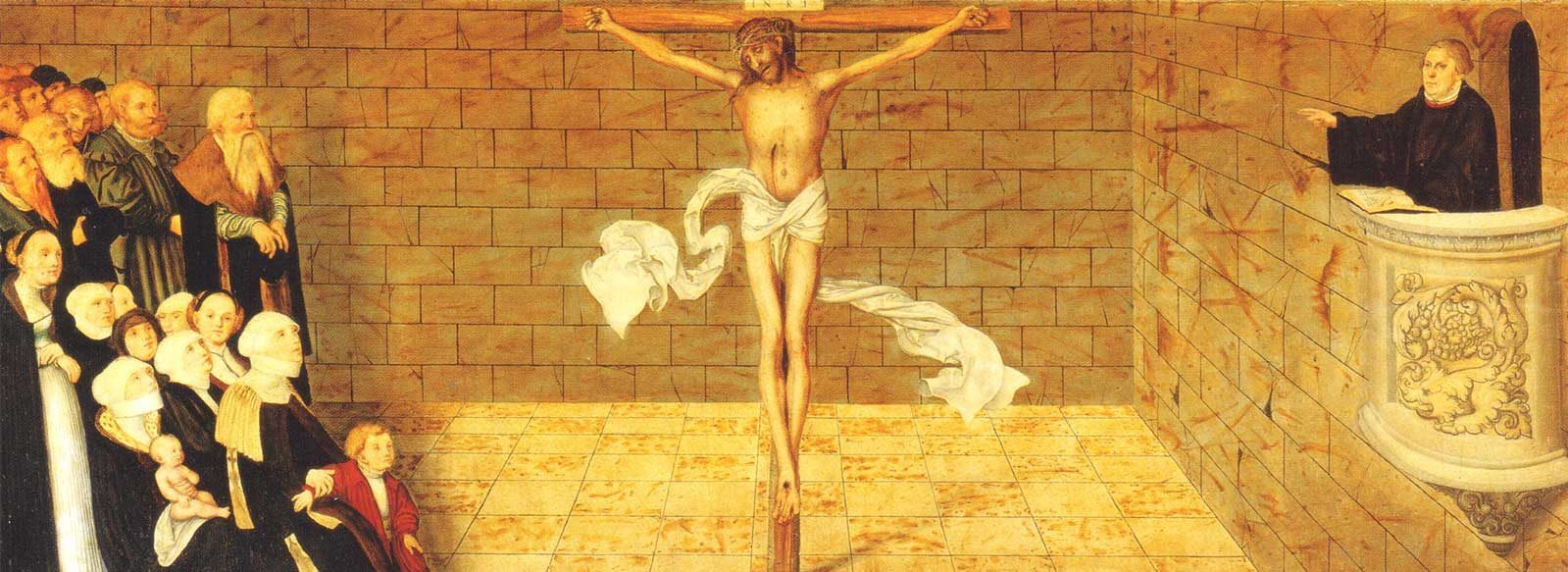
I fear that the King's English won't be half as Christ-focused when I hit the New Testament.

I'm not very good at all that Jesus in the New Testament stuff.  I'll have to learn!

Anyway - David and Goliath is up at the moment.  If you haven't heard me bang on about that before, go and read...

Twitter widget by Rimon Habib - BuddyPress Expert Developer