Skip to content

imageA friend on Facebook is studying Biology and just posted the question: "Any ideas for or against intelligent design" she has a classroom discussion on the issue coming up.

The first bit of advice was this:

I'd just take a copy of 'On the origin of the species' ( hardback) and smack any proponent of ID over the head with it :)

Another commenter said:

Cordyceps fungi and various parasitic insects (i.e. wasps). No way they could have been 'designed'.

I weighed in, as is my wont, with these two comments. (I've altered a word here and there for clarity). Perhaps it might be useful in your context...

I'm a Christian who believes the universe was designed (in one sense every Christian believes in intelligent design - since God's quite smart) but I don't like ID as a movement, cos the Christian story is actually that A) Creation is *fallen* and B) God is known, not by studying irreducible complexity but by seeing Him in the face of Christ.

That said, ID proponents are not dummies (some are, many aren't). And when they raise tough questions about thorough-going naturalism, they should be heard. How do systems increase in informational content without an intelligent input? That is a good and vital question? How can natural selection account for irreducible complexity (systems where incremental developments could never add up to the system as a whole because the individual stages don't add survival value)? That is a good question and needs more than a dismissive answer. Like I say, I'm not any kind of proponent for the ID movement, but they do raise vital scientific questions that shouldn't simply be dubbed stupid.

On another note, for the Christian, parasites are a brilliant testimony to the Bible's story. Parasites are secondary things that come along and spoil an original and ultimate good. That is precisely the Bible's picture of good and evil. There is an original and ultimate good (God) spoiled by something secondary and derivative (evil).

Then...

Like I say I'm not a fan of the ID project - but... Remember where the whole discussion begins. It begins with the undoubted and gob-smacking *appearance* of intelligent design. Everyone agrees that the world looks designed. A biologist might come along and say "I've found a mechanism that accounts for that appearance." But even if the mechanism has tremendous explanatory power (and natural selection does), remember:

A) Good science involves questioning paradigms, and IDers should be allowed to question "Does this mechanism really explain this and that?" Irreducible complexity and the information problem are some *excellent* questions to ask of the materialistic paradigm. It's not good science to ridicule that questioning. It actually starts to sound like a power play.

B) Even if we grant that Darwin has sewn up 'the origin of the *species*', there are still three other origins questions that are at least as pressing: origin of the cosmos, origin of life itself, origin of consciousness. You might want to argue that natural selection explains all of these, but at that point I recall the old saying: If all you've got is a hammer, everything starts to look like a nail. Natural selection is an excellent hammer to be applied to certain features of the natural world, but I'd seriously question its ability to explain everything. Darwin's finches are fascinating and tell us much about evolution - it's quite a stretch to make them explain the cosmos!

C) Remember that discovering a mechanism says precisely Nothing about the existence of a Maker. It's useful to know the workings of an internal combustion engine, but no matter how comprehensive the knowledge, the existence of Henry Ford is an explanation beyond the wit of reverse-engineering. Mechanism and Maker are two different questions.

D) Remember where the conversation begins. It begins with everyone agreeing that the world looks eerily like it's designed. Even if you come up with an elaborate mechanism and provide convincing answers to all objections, the simplest explanation (i.e. that it *is* designed - and natural selection is one mechanism among many) is a perfectly reasonable position to take! Those who ridicule it are betraying the rational, scientific ideals they claim to be upholding.

Like I say, I'm not an IDer, I'm just a Christian, but I look on the debate with interest.

TEP-PodcastCover-1024x1024321 isn't the simplest gospel presentation in the world.

And it doesn't seek to meet unbelievers where they're at.

Nor does it try to reason from common ground and bring people in stages to the gospel.

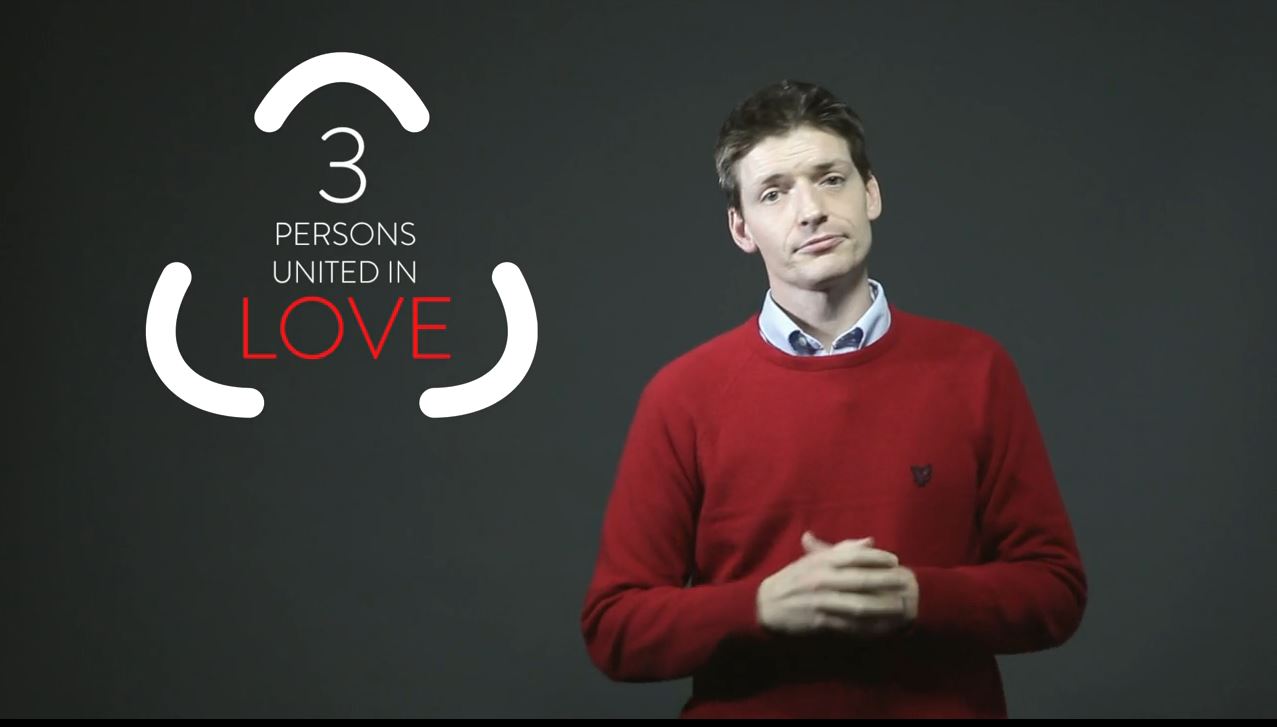
It also majors on such 'advanced truths' as Trinity and union with Christ.

So why do evangelism this way?

DOWNLOAD

SUBSCRIBE

If you want to run 321 the evangelistic course, go here.


3

Feel free to play our Halloween video in church and/or to share on social media.

For the thinking behind this presentation read this or listen here.

For an all-age song to teach about light triumphing over darkness, here's Jesus Our Risen Sun.

And for the trick or treaters knocking on your door, why not hand out these cards with the video details on them:

Halloween Video Card

Here's the PDF - Print off (in colour is best) - each A4 sheet makes 8 calling cards.


TEP-PodcastCover-1024x1024

On The Evangelists' Podcast we're in a series looking at 321

INTRODUCTION

THREE

TWO

ONE...


Here we ask...

Why speak of union with Christ in evangelism? Isn't that a truth for discipleship?

What happens when we don't have a category for 'oneness with Jesus'?

How does union with Christ help the evangelist?

How should we go about explaining it in evangelism?


SUBSCRIBE

DOWNLOAD

3

AdamChristIn our latest podcast we talk about Adam. Doesn't he complicate evangelism? Why discuss him?

The first thing to say is that 321 is not meant to be an inductive argument. It's not about getting agreement from people about the basics and working towards Jesus. It's simply about inviting the non-Christian into the Christian story and asking them to look around it from the inside.

I certainly do not expect agreement at the outset (otherwise I wouldn't begin with THREE!) What I want to do is paint a picture and ask the non-Christian to suspend disbelief for a few minutes while I explain the gospel.

Once I've explained the logic of Adam and Christ (perhaps from 1 Corinthians 15:21-22), then I can say something along the lines of...

"Do you understand the logic of the story - i.e. that Adam fell but Christ rose? If you get the logic then, sure, I completely understand your problem with Adam. But let's talk about Christ because, as you can see, the two are linked. I know you don't believe it, but the central Christian claim is that Christ rose. Let's examine whether Christ rose or not (from 1 Corinthians 15). If He rose, then Adam fell."

I am well aware that Adam is not a great stepping stone to Christ :)  But then, nothing is a good stepping stone to Christ. Christ makes the bridge Himself.

Once again... we begin with THREE (and with creation and Adam) not because we're seeking to get agreement from the outset. We begin here because that's where the Christian story begins. And we beg the non-Christian's indulgence to let us finish the story.

If the non-Christian wants verification of the story's truth - we point to Christ and His resurrection from the dead. If Christ rose, the story is true (and Adam fell). If He didn't rise then the story is just a fairytale and we can forget it all.

In all this I'm saying "Don't get too hung up on the Adam question. Adam does not vindicate the story, the story vindicates Adam". But as we discuss these things, I find that non-Christians really get the emotional impact of Adam. Seeing humanity as a family, seeing how the whole family tree has been corrupted from the outset, seeing the disconnected state we're all naturally in, this all makes a heck of a lot of emotional sense. The wonder of Christ entering in to this mess to address our problems from the inside. That's a wonderfully attractive proposition. Play on that. And then let Jesus vindicate Adam (not the other way around.)

I speak more extensively about Adam and evangelism here and here.

1

TEP-PodcastCover-1024x1024

In the previous episode  we discussed THREE (Trinity). That's the first truth of 321. In this podcast we talk about TWO (Adam and Christ).

Here we'll discuss whether Adam complicates or clarifies our evangelism.

Surely - you might think - Adam introduces more problems than he solves. Well, down through the centuries, the church has stood solidly on the ground of Adam's historical existence. And we have stood on the doctrine of original sin. Why? Because the gospel falls apart without these truths.

So how do we speak of them without being led down a thousand conversational cul-de-sacs?

DOWNLOAD

SUBSCRIBE


2

JesusLast week Emma and I spoke at a mission weekend for Christ Church, Fetcham. Emma's talk on the Saturday night was wonderful, then on Sunday I preached on Who is Jesus (Matthew 3) and How to get free without getting lost (Luke 15). In the morning sermon I asked people to receive Jesus and, if they did, to grab me afterwards so I could give them a book and a word of encouragement.

At the end of the service everyone moved out to coffee and I stayed behind, follow-up books in hand. I guess I looked a bit exposed, just waiting. I certainly felt exposed.

After not too long the pastor of the church came over and stood with me saying "You look a bit lonely there, let me keep you company for a bit." A perfectly natural response. We don't like to see vulnerability and we certainly don't like feeling vulnerability. But actually, there's something inherent in evangelism that means exposure and weakness. When we avoid it we can find ourselves avoiding the very essence of evangelism: offering Christ.

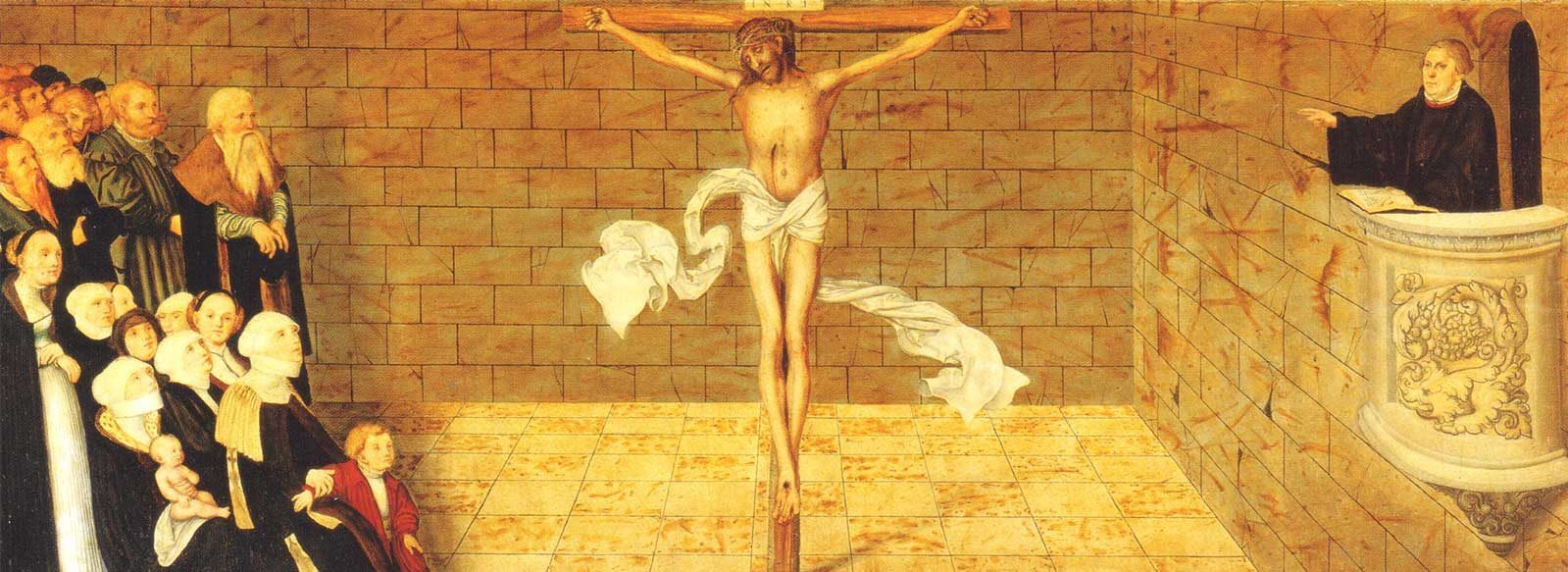
Like seeds - tiny, pathetic looking, seemingly ineffectual - the word goes out and it appears like an exercise in futility. What good could be done by foolish words about a foolish-looking Lord? An arms-wide Saviour is, by definition, vulnerable - and the word of the cross shares in that vulnerability. No wonder Paul was fearful and trembling as he went about his preaching (1 Corinthians 2:1-5). Actually evangelism should be a vulnerable activity.

But it occurs to me that much of evangelism can be an attempt to cover over that exposure. We try to cover it with intellectual credibility (Clever people are Christians, it's the clever option). We try to cover it with cool (Cool people are Christians, it's the cool option). We try to cover it with processes (I won't ask you simply to receive Jesus, I'll ask you into a programme where conversion can be broken down step-by-step).

And I wonder how much of what we do is A) a refusal to share the vulnerability of our arms-wide Saviour and B) unbelief in the power of this weak-looking gospel to save people. Perhaps that's why we hope that The Next Evangelistic Resource will be the break-through the church needs. Or why we mistakenly believe that 'the evangelist' - with all their fool-proof methods and giftings - will solve all our missionary ills. Or why we can preach without invitation or offer. Or why, in everyday life we fail to speak up for Jesus when the opportunities arise. We don't want to appear as foolish as our crucified Lord. And we don't actually believe in the power of this foolish-sounding message.

Or at least I don't. And I need to repent of such thinking constantly.

By the way, after the service I stuck around much longer than I was comfortable with. But someone did come up to say he had trusted Christ. God had been speaking to him powerfully through the weekend. Please pray for him as he takes his first steps.


Twitter widget by Rimon Habib - BuddyPress Expert Developer