Skip to content

TEP-PodcastCover-1024x1024Problems of the Head

We have discussed many intellectual objections to Christianity, but what is the place of reason in evangelism? Can we think our way to God? And if not, how should we go about telling the good news when people "demand wisdom"?

Among other things we discuss 2 Corinthians 4 and 5; Romans 1; Acts 17 and 1 Corinthians 1.

DOWNLOAD

SUBSCRIBE


13

god-scienceI've been asked to write brief answers to six thorny questions:

Hasn't science disproved God?

Is God homophobic?

Why does God appear so violent in the Old Testament?

Are the gospel accounts trustworthy?

Why isn't God more obvious?

Why has the Church caused so much pain?

I've got to keep it under 600 words. I'd love if you could help. What have I missed? What have I got wrong?

...........................

Hasn't science disproved God?

Thinking God’s Thoughts

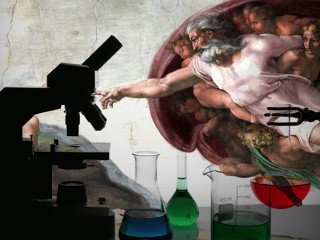
When Johannes Kepler discovered the laws of planetary motion in the early 17th century he did not lose his strong Christian faith. Instead he spoke of the wonderful privilege of "thinking God's thoughts after Him." That's been the mind-set of so many giants in the history of science: Copernicus, Galileo, Newton, Faraday and, in our own day, Christians like Francis Collins, leader of the Human Genome Project. They have not imagined “a God of the gaps” who was ever shrinking as their science progressed. They have believed in “the God of the whole” whose thoughts they were thinking after Him!

Faith and Foundations

Einstein said, "The fact that the universe is comprehensible is the greatest miracle." Science depends entirely upon this “miracle”. We need our minds ‘in here’ to correspond to the world ‘out there’ and for both of those to correspond to dependable laws of nature ‘up above.’ The fact that this triangle lines up so perfectly is astonishing. But Christians should not be surprised. Jesus, our Maker, sustains the universe (Hebrews 1:3) and at the same time has entered our world and assumed our humanity (John 1:14). He is the One who unites the laws ‘up above’, the world ‘out there’ and our minds ‘in here’. Faith, therefore, does not undermine science. Faith in Christ is the strongest possible foundation for scientific enquiry.

Mechanism and Maker

Science is wonderful at discovering mechanisms in nature. But understanding a mechanism does not rule out a Maker! If you explain the inner workings of a new contraption, I don’t say “Wonderful, now we can do without the inventor.” Instead I say “So that’s how they did it. Ingenius!” Same with science and God. We love to find out more of the mechanisms, but this should make us exalt our Maker, not exclude Him!

Pragmatics and Purpose

Professor of Mathematics, John Lennox often asks people to imagine a cake baked by Aunt Mildred. The cake is passed around various scientific departments. They discover 1001 facts about the cake’s nutritional content, it’s chemical and physical properties, they reverse engineer the recipe and replicate its tasty goodness. Wonderful! But can any of the scientists tell you why the cake was baked? No. For that you’d have to ask Aunt Mildred. Science is wonderful at answering the pragmatic questions: what? and how? It is simply not in a position to answer questions of purpose: why?

Evolution and Creation

Christians take different views on the question of evolution but some things we all agree on. Every creationist believes that natural selection happens – after all, from a single pair of cats on the ark we now have tabbies and tigers. At the same time no Christian evolutionist thinks natural selection explains everything about life. So we can all agree that natural selection happens while questioning its ability to explain the whole show.

For the sake of argument though, let’s imagine that random mutations and natural selection account for all the varieties of life on planet earth. This only explains the origin of the species. That’s as far as Darwin can take you. He cannot explain the origin of life itself (he must assume the origin of life). He cannot tell you the origin of the cosmos. And he cannot tell you the origin of consciousness. Those three origins questions are far more pressing, yet natural selection is no help for any of them. Science simply does not have a credible mechanism for explaining these deep issues. And even if it did, the mechanism would not disprove the Maker.

5

TEP-PodcastCover-1024x1024In previous episodes we have thought about:

1. Introduction. Six kinds of atheism

2. Six things that atheists get right

3. Six things that atheists miss

In this final episode on atheism we tie up some loose ends. In particular we address six hot topics in engaging with atheism:

  • Don't believers just believe in 'fairies at the bottom of the garden'?
  • Who made God?
  • Don't miracles break the laws of nature?
  • Doesn’t science rule out God?
  • What about Evolution?
  • Surely Christians reason in a circle?

SUBSCRIBE

DOWNLOAD

13

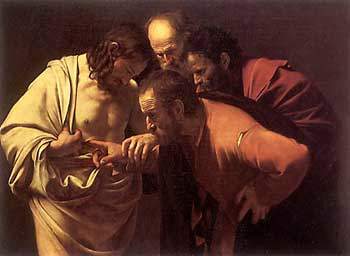
Caravaggio-ThomasWhen evangelists and apologists want to make their case for the resurrection, I've noticed one piece of "evidence" keeps getting used: No Jew expected a bodily resurrection in the middle of history. I'm not sure of the origin of this argument. Tom Wright certainly makes a big deal of it, maybe everyone else has just jumped on board?

The point seems to be that the resurrection was not wish fulfilment or a conspiracy to make the prophecies tally - it took everyone by surprise. Greeks certainly didn't believe in resurrection and Jews, it's claimed, exclusively thought of resurrection as an end-of-time phenomenon... Ergo, the resurrection wasn't a fantasy dreamt up by gullible Jews but a stubborn fact that foisted itself upon them. It's basically saying "you couldn't make this stuff up! Not if you were Kosher!"

What do we think?

Well I'm not going to go down the road you think I am... If you don't know my views on the expectant faith of believing Israel then perhaps have a look at this post where I challenge the myth that 'no-one expected the kind of Messiah Jesus turned out to be'. We won't discuss that here. In this post I want to ask a different question and it's this:

If we want to make the 'nobody saw it coming' argument, what are we assuming about the resurrection? More specifically, What story is the resurrection being fitted into? And why?

It seems to me telling people "No-one saw it coming" undermines the actual story which resurrection fulfils - the story of the Scriptures.

"Christ died for our sins according to the Scriptures... he was buried... he was raised on the third day according to the Scriptures." (1 Corinthians 15:3-4)

Resurrection makes sense in terms of a prior story - and it doesn't really make sense without it. When Paul summarises the gospel again in Romans 1 and 2 Timothy 2 he insists that Christ's descent from David is the proper precursor to His resurrection. Unless we know He is the Davidic King (and all which that implies) we lose the gospel sense of the event.

My fear is that 'nobody saw it coming' tries to fit the resurrection into a different story. In this story, resurrection is a freak occurrence in the midst of history (in general) in order to prove to thorough-going sceptics (with a presumption of unbelief) that there is an abstract realm called 'the supernatural.'

Yet Jesus did not rise 'according to general history' but according to a very specific history - Israel's'. He did not appear to His enemies but to His friends. And His rising did not vindicate 'the supernatural' but His own unique identity as LORD and Messiah (Acts 2:36). When Jesus and the Apostles sought to explain the resurrection they didn't close off the alternative explanations (stolen body, mistaken tomb, group hallucination), they opened their Bibles.

Last month Stephen Law, an atheist philosopher, responded to William Lane Craig, a Christian philosopher, over Christ's resurrection. The heart of Law's argument is this:

Extraordinary claims require extraordinary evidence. In the absence of extraordinary evidence there's excellent reason to be skeptical about the claims.

I might, for instance, have every reason to believe Jack whenever he reports to me his movements from the night before. But if, one day, Jack claims that he hosted the Queen for tea and was crowned King in a secret ceremony, the extraordinary claim bumps up the requirement for further proofs. Given the new claim, it's just not enough to say "Jack has always told the truth in the past" or "Jack has no motive to lie". We need extraordinary evidence to support the extraordinary claim.

Law says that extraordinary evidence for Christ's resurrection is lacking and therefore we have every right to disbelieve it (just as we would disbelieve the normally truth-telling Jack).

It seems to me a poor response to Law to say: 'No, the evidence is actually very plausible, let me list it again.'  What we need to do is shift the paradigm into which resurrection is being placed. Resurrection is according to the Scriptures, not according to Supernaturalism. It's part of the story of God remaking the world from the inside through His Davidic King. Easter Sunday vindicates the God who fulfils His purposes for Israel and - through them - for the world. It doesn't vindicate some double-decker universe in which, occasionally, freaky stuff from upstairs intrudes. But so often the atheist and the Christian can end up arguing the resurrection on that footing.

Against this I think it's important to emphasize the non-surprising nature of the resurrection. What if the Queen was inclined to have tea with her subjects? What if ancient prophecies foretold the time she would visit her people? What if, Jack turned out to have a claim to the throne himself? What if, the more you thought about it, the more you realised how regal Jack had always been? (The illustration is stretching to breaking point I know, but stick with me for one more paragraph...)

Maybe you saw the coronation coming from a mile off or maybe you weren't brilliant at piecing together the evidence at the time - let's leave that to one side. But once Jack's claim is made, it now makes more sense of the story not less. Suddenly believing in the Queen's visit doesn't only 'explain' the raw data of the event - it vindicates a whole vision of reality. And that vision casts light on the event.

In this way the Old Testament and the resurrection are mutually reinforcing. The one gives us the vision, the other the event.  So let's preach the resurrection "according to the Scriptures."  As Abraham said to the Rich Man:

“If they do not listen to Moses and the Prophets, they will not be convinced even if someone rises from the dead.”’ (Luke 16:31)
 

2

Comedy and Christianity

Dante said, "A tragedy is a story that begins in joy and ends in pain. A comedy is a story that begins in pain but ends in joy." In that sense, Christianity is an Almighty comedy.

In this 20 Minute Talk I make two basic points:

1) Comedy is serious.

2) Christianity is comedic.

4

Last year I was in a kind of debate with Andrew Copson - Chief Executive of the British Humanist Association (BHA). His final line of the evening was a plea for us all to "be good for goodness sakes."

The line sounds twee but there's a genuine point that deserves our attention: Goodness for the sake of 'spiritual reward' is neither necessary, nor desirable. In fact it's pretty ugly. If a religious person is motivated towards goodness simply by celestial carrots and sticks (which some are) then you can understand a humanist's protest. I hear the criticism loud and clear, and I wrote these four posts called "Why be good?" as a response.  Only the gospel saves us from immorality and moralism.

But if you're unaware of the gospel, then your view of religion will probably sound that of like BHA President Jim Al-Khalili:

I have often felt offended by the misguided notion that people require a religious faith to provide their moral compass in order to lead a good life. Reason, decency, tolerance, empathy and hope are human traits that we should aspire to, not because we seek reward of eternal life or because we fear the punishment of a supernatural being, but because they define our humanity.

We might want to be curious about why such traits define our humanity, and who gets to say, and why the ones mentioned by Al-Khalili are so darned anaemic, and why he didn't also identify deep-seated characteristics like greed, hypocrisy and violence. We might want to point out that Christian faith brings far more to the table than 'a moral compass'. Actually it's a vision for the whole terrain and an accounting for why and where we fit into a moral order that is very old and runs very deep.

But we're not going to mention those things. We're just going to point out the terrible danger of moralism here.

Suppose that I'm a humanist who has unplugged the celestial CCTV and now I'm free to be good for goodness sakes. What will that look like? Well I'm still going to get outraged by 'inhuman' behaviour - good. But now God isn't the ultimate court of appeal and dispenser of perfect justice. No, the 'moral-outrage buck' stops with me. Since God has been deposed, I'm going to have to mount the highest horse.

And, as far as godless high-horseing goes, get a load of this: [Read from the bottom upwards. RD was responding to this]

DawkinsOutraged

Dawkins has never let ignorance of a topic prevent him from weighing in with the full weight of his moral indignation. But feel the indignation.

When one tweeter asked him whence his moral compass (given Darwinism and all), he responded:

Idiot that I am, I'm mining the quote - but I think it unearths a deep problem for those who let go of "God" but want to be "Good." The problem is not in acting morally- of course not. The problem comes in adjudicating the morals and in acting The Moral One.  Wonderfully for the Christian, the Father adjudicates and the Son is the Moral One, but what's the situation for the humanist?

They are above the non-existent 'God', they are above the religious who (they claim) are only good for dubious reasons, and they are above nature ('red in tooth and claw') and their own selfish genes. They have risen above everything else in all reality... in order to be good.

How does a humanist not avoid hubris at this point? How do they not avoid moralism?

Dostoyevsky famously said "If there is no God, everything is permissible."  But nihilism isn't the only danger. Dawkoyevsky's dilemma is this: "If there is no God, everything is puritanical."

1

TEP-PodcastCover-1024x1024Brian Cox wants the Large Hadron Collider to show him 'the face of the cosmos'. But if that's what you want, there's a much better scientific method...

Episode 9 of The Evangelist's Podcast: Science

DOWNLOAD

SUBSCRIBE

A VIDEO of a science talk from last year:

[youtube=http://www.youtube.com/watch?v=V68x4Z3VknM]

TEP-PodcastCover-1024x1024

On the Evangelist's Podcast we're talking about some of the big questions people ask about Christian faith.

Here are the last 3 episodes:

What about other religions?  DOWNLOAD
[audio http://revivalmedia.org/medias/audios/TEP006.mp3]

.

Isn't it narrow to say only Jesus saves?  DOWNLOAD
[audio http://revivalmedia.org/medias/audios/TEP007.mp3]

.

What about suffering?  DOWNLOAD
[audio http://revivalmedia.org/medias/audios/TEP008.mp3]

2

Test patternOk boys and girls, today we’re going to do science. I know, I’m very excited too. If you want to join in at home here’s what you will need:

  • One rationally comprehensible universe.

Not just any universe. You’ll need to be particular here. It must be a rationally comprehensible, rationally ordered cosmos.  Not a chaos, a cosmos, I must insist on this point.

Next, you’ll need

  • One consistent set of discoverable laws.

Some of the boys and girls will claim that you don’t need the laws yet – science will produce them for you later. But that’s just silly, isn’t it children? You might not know the laws yet but you need there to be laws. And you need to trust that they’re out there and that you have ways of approaching them.

Thirdly, you'll need

  • At least one rational scientist.

This one ought to go without saying, but you’d be surprised how often it gets left out of the ingredients list!

And finally – this is the one you were all waiting for...

  • A scientific method by which to proceed.

Now if you’ve been following us for a while, the good news is you’ll have a scientific method left over from yesterday’s activities. If you haven’t already got a scientific method, please don’t just “borrow” one from the other children. That really isn't fair.  You should go back to the original episodes and build it up from first principles. A scientific method is made from very expensive ingredients, and if you haven’t bought them yourself, then using someone else’s method is stealing.

.

So there you have it – the four ingredients you need to do science. Now before you all complain... before you all complain – yes I know... I know that none of you can afford the ingredients.  I’m sorry about that, but that’s the way it is.  When we’re dealing with such valuable things, there’s no way around it.

All I can say to you is this: If you want to do science – and I sincerely hope that you do – you can’t take shortcuts, you must have these ingredients. If you don’t have them – and you don’t – then you’ll have to ask Mum or Dad.

5

unapologetic_cover_2372637a

This might only make sense for those who have read or are reading the book... but I don't have much time so I'm not going to spell things out too much.

Read this extract from chapter one to get an idea of the book.

The whole 'emotional sense' thing is a brilliant idea. And it's wonderfully written.  Here are 6 thoughts:

1) The book connects every time it's about sin and Jesus. It floats away on Spufford's soaring prose the rest of the time.

2) Spufford continually speaks of sin as the "human potential to f*#k things up". That's very well put. If I was Spufford, I'd object to any priggishness about the term. 'Transgression' and 'iniquity' don't describe transgressions and iniquities the way we  experience them today. "F#@k ups" do.  Jesus meets us here or not at all.

3) "Yeshua" - his Jesus chapter - is the stand-out. (Surprise, surprise).

4) Jesus shines. Spufford's "God", on the other hand seems simply to be a "Shining" and so, ironically, he doesn't.

5) Spufford is strong on the uncontainable, unreachable, beautiful-yet-bonkers teaching of Jesus. On the issues of forgiveness, generosity, worry and non-violence, Spufford captures the irrepressible overflow of the kingdom.  These sections are very refreshing to read, but...

6) ...Spufford doesn't follow this same trajectory when he treats Jesus' teaching on sexuality and hell. He hides it away saying, on the one hand, that Jesus speaks very little about sex and, on the other, that the church doesn't really believe in hell anymore, so...  Well, so Spufford should have treated Christ's teaching here, the way he treats it on every other subject: bonkers-but-beautiful,  demanding more from us than could possibly lie within us - and, at the same time, speaking of a Kingdom and King in which these things are and can be.

Spufford points attractively towards a fruitful line of gospel engagement. Let's pray others follow.

Twitter widget by Rimon Habib - BuddyPress Expert Developer