Skip to content

imageA friend on Facebook is studying Biology and just posted the question: "Any ideas for or against intelligent design" she has a classroom discussion on the issue coming up.

The first bit of advice was this:

I'd just take a copy of 'On the origin of the species' ( hardback) and smack any proponent of ID over the head with it :)

Another commenter said:

Cordyceps fungi and various parasitic insects (i.e. wasps). No way they could have been 'designed'.

I weighed in, as is my wont, with these two comments. (I've altered a word here and there for clarity). Perhaps it might be useful in your context...

I'm a Christian who believes the universe was designed (in one sense every Christian believes in intelligent design - since God's quite smart) but I don't like ID as a movement, cos the Christian story is actually that A) Creation is *fallen* and B) God is known, not by studying irreducible complexity but by seeing Him in the face of Christ.

That said, ID proponents are not dummies (some are, many aren't). And when they raise tough questions about thorough-going naturalism, they should be heard. How do systems increase in informational content without an intelligent input? That is a good and vital question? How can natural selection account for irreducible complexity (systems where incremental developments could never add up to the system as a whole because the individual stages don't add survival value)? That is a good question and needs more than a dismissive answer. Like I say, I'm not any kind of proponent for the ID movement, but they do raise vital scientific questions that shouldn't simply be dubbed stupid.

On another note, for the Christian, parasites are a brilliant testimony to the Bible's story. Parasites are secondary things that come along and spoil an original and ultimate good. That is precisely the Bible's picture of good and evil. There is an original and ultimate good (God) spoiled by something secondary and derivative (evil).

Then...

Like I say I'm not a fan of the ID project - but... Remember where the whole discussion begins. It begins with the undoubted and gob-smacking *appearance* of intelligent design. Everyone agrees that the world looks designed. A biologist might come along and say "I've found a mechanism that accounts for that appearance." But even if the mechanism has tremendous explanatory power (and natural selection does), remember:

A) Good science involves questioning paradigms, and IDers should be allowed to question "Does this mechanism really explain this and that?" Irreducible complexity and the information problem are some *excellent* questions to ask of the materialistic paradigm. It's not good science to ridicule that questioning. It actually starts to sound like a power play.

B) Even if we grant that Darwin has sewn up 'the origin of the *species*', there are still three other origins questions that are at least as pressing: origin of the cosmos, origin of life itself, origin of consciousness. You might want to argue that natural selection explains all of these, but at that point I recall the old saying: If all you've got is a hammer, everything starts to look like a nail. Natural selection is an excellent hammer to be applied to certain features of the natural world, but I'd seriously question its ability to explain everything. Darwin's finches are fascinating and tell us much about evolution - it's quite a stretch to make them explain the cosmos!

C) Remember that discovering a mechanism says precisely Nothing about the existence of a Maker. It's useful to know the workings of an internal combustion engine, but no matter how comprehensive the knowledge, the existence of Henry Ford is an explanation beyond the wit of reverse-engineering. Mechanism and Maker are two different questions.

D) Remember where the conversation begins. It begins with everyone agreeing that the world looks eerily like it's designed. Even if you come up with an elaborate mechanism and provide convincing answers to all objections, the simplest explanation (i.e. that it *is* designed - and natural selection is one mechanism among many) is a perfectly reasonable position to take! Those who ridicule it are betraying the rational, scientific ideals they claim to be upholding.

Like I say, I'm not an IDer, I'm just a Christian, but I look on the debate with interest.

5

Two weeks ago I watched this outstanding talk by Nate Wilson called Myth Wars:

 Download Audio

The central point is that, today, our grand myth speaks of man as "an ascendant ape" who has emerged by a process of "climb and scratch and grab." It's an ugly story but it has the great attraction of putting us top of the heap (even if the heap is the smoldering ruin of countless losers in the struggle for survival).

Against this, the true myth is the gospel in which man is not an ascendant ape but a fallen son. There is climbing, scratching and grabbing but that's not progress! Such beastliness is precisely the problem. Instead Christ comes down from a place above us to "serve and give and love." That's the very different story we have to tell.

With Wilson's thoughts still buzzing in my head, I went to the cinema today to see Gravity, Alfonso Cuarón's spectacular thriller set in space.

It is visually spell-binding and brutally tense. It opens you up to wonder then puts a knot in your stomach that only tightens over the course of an hour and a half. Go and see it in 3D but be prepared to be disoriented in more ways than one. You see there's something even more disturbing than the sense of threat sustained over 90 minutes. There's the myth into which the storyline fits.

We begin in the heavens which are glorious, spectacular, overwhelming in their glory. But also aimless, uncaring and deadly in every sense. Very soon shrapnel - what could be more random? - smashes through people and spaceships and such debris only produces more debris. This is the environment for Sandra Bullock and George Clooney - cut adrift from their space station, with minimal oxygen and a vanishing probability of survival.

The film has undoubted "spiritual" overtones - references to prayer, Christian icons, a statue of the Buddha - and one review in the Washington Post has seen the whole thing as pointing us to Christian truth. After all, says Paul Asay, it's a "hell-and-back" kind of story. There's re-birth and home-coming even after the death and darkness. But the trouble is, lots of stories have a kind of rebirth. Story-tellers have to use the same raw-materials that went into the ultimate story, the gospel. But the way they arrange those raw materials is vital.

Think about it, the modern myth also has birth coming out of death. Through the struggle for survival emerges a winner. But that path-way is through "climb and scratch and grab" and a heck of a lot of dumb luck. So which story is Gravity?

Well there is life through death - rebirth through darkness. And, it has to be said, there is self-giving sacrifice in the story - death so that others may live. At that point you might conclude that Gravity's on the side of the angels. But I'm not so sure. All stories will echo the gospel in some way (like I say, every cook's got the same ingredients), but when we see the overall direction of the film I think it's telling the modern myth.

This is a survival story against the odds. Yes there is sacrifice which helps along the way. But the sacrifice is from below - the heavens themselves are the problem and we must outwit them. In the end, survival is just one of those very improbable things. Many others perish, but the lucky few make it, and they make it standing on the shoulders of the dead.

[Warning: this paragraph will give you a sense of the ending but only vaguely] By the final scene, the story is put in context. The Darwinian motifs are very striking. This is a survival tale. And what emerges from the striving is a brave new... well, pretty much a new species, erect and bettered by the struggle.

The lesson is, let go of the past, let go of losses, stand on the shoulders of those who have gone before, embrace the struggle and if you're lucky you'll live to fight another day.

A spiritual story? Yes, absolutely. But, if you ask me, it points to a markedly different spirituality. Maybe Wilson's lenses have skewed my viewing of the film, but I came away feeling mightily disturbed. Yet even in that disturbance, we are sent back to the gospel. I say, see the film and be wowed. But let it drive you to a true answer to the death and darkness. The true myth says: the heavens are not malign, the Lamb is at the centre of the throne.


3

OscarHow does porn impact a young girl who discovers her father's stash?  Michelle VanLoon writes about it in My Father The Porn Addict.  This sentence struck me more than any other:

Porn taught me that the single most important thing to grown-ups was this mysterious world of fantasy, pain, and animalistic impulses too powerful to ignore.

Porn peddles a lie that becomes "the single most important thing" for those who buy into it.  Actually it peddles many lies, but here's a prominent one: Porn tells us that love, respect and mutual honour are window dressing.  Behind closed doors it's "fantasy, pain and animalistic impulses."

Loving commitment and kindness are like mating calls.  The real business is mating.  People might talk about relationships and fidelity, actually it's about glands and groans.  On the surface it's love and trust, underneath it's power and gratification.  And that's what's basic, primal, bubbling away.

To believe the lie is to feed it, to participate in it, to grow connected to it and then to see the world through its lens.  Porn sacramentally reinforces the worshipper in that creed and the cycle spirals down.

When a Christian is embroiled in this other religion, what happens when they are told to 'clean up their private world'?  It will likely be heard as the demand to 'put a lid on what's real.'  Renouncing porn will be like agreeing to deny the truth, simply because the truth is too dangerous or shameful or powerful to acknowledge or indulge.  And so the determined porn-denier will commit to living in the unreality of kindness, mutual service and self-control.  All the while power and gratification throb away in heart and mind.

Combatting the lie will take more than a resolve to label pornography as 'harmful' or 'bad.'  We need to know that it's also 'untrue.'  And why is it untrue?  Let's cut to the chase:  God is as He is towards us.  God is not different 'behind closed doors.'  He does not display sacrificial love as window dressing.  The Lamb is at the centre of the throne (Revelation 7:17).    Push through to the deepest depths of God and you will find a faithful marital love that gives itself for the other.  His gracious gospel offers are not mating calls to woo us while back at home He's all about power and gratification.  No!  He is love 'all the way down.'

Not every god will help you to conquer porn.  There are many gods who are power and gratification pure and simple.  And there are many Christian doctrines of God that offer a split-personality God - sacrificial in public, selfish in private.

But just imagine... what if, actually, the primeval passions that determine us are intimate, committed, self-denying deferrals to the other?  What if it's respect and mutual love that are really bubbling away underneath?  What if it's serving the other that drives this world, not using.  What if giving and not getting is ultimate?

And I don't just mean, Let's escape mystically into some godly sphere where that love stuff is true.  I don't mean, Let's affirm these religious truths (all the while knowing that 'the real world aint like that.')  No, let's fling wide those doors that we're always closing because we imagine that darkness rules the roost.  Let's declare that Jesus really is Lord.  This really is Christ's universe.  Light really is this world's driving force, not darkness.   And all that other stuff is parasitic, corrupted, ugly, unnatural, ephemeral and passing away.

The lie of pornography will be unmasked and the bedrooms of Christians, both single and married, will be revolutionized when we see God aright.  Behind closed doors there's not a throbbing, coercive power too dangerous to name.  The primal urge is not grunting but grace.

6

H4When 10 of those asked me to do an evangelistic video for Halloween, I knew the dangers. Immediately I predicted a range of reactions reflecting the range of views on the subject.

When John Piper was asked about Halloween he summarized these varying approaches...

How to write something that satisfied all such groups?

Well, you can't. So I decided to write something for the friends of Christians - friends who would have little understanding of Halloween's origins or the gospel. That's the target audience. Therefore I'm not trying to convert Christians to 'trick or treating'. I am trying to engage trick-or-treaters (and their Facebooking parents) with the gospel.

Originally the video was going to be an animation with silhouetted figures playing the part of trick-or-treaters. We ran out of time for that and so decided to film it. On the day, I told the parents to bring children in whatever costumes they were comfortable with - a pirate or a spiderman would be perfect. I also brought some spare pumpkin costumes just in case. As it happened, the parents did a wonderful job on wardrobe and make-up as you can see.  And my videographer and soundtrack artist were incredibly good at evoking the mock-horror.

What we ended up with was a really quite scary first minute of film that went beyond what I'd imagined with words and a basic animation. But I'm glad for how the film has turned out. I think that initial impact grabs folks and hopefully pulls them into the gospel material. Remember - this is for non-Christians. Non-Christians.

So I want to make clear, my intention is not to open the doors for Christians to go trick-or-treating. I want to open the doors for trick-or-treaters to come to Christ!

Interestingly I've had complaints in the other direction too. One person so far has thought I'm too hard on paganism. I think they made some good points. They asked Why do we "mock" these spiritual beliefs (witches, paganism, etc)? Is it really Christian to mock? Would we similarly 'mock' Muslims or Hindus?  That complaint led to a really fruitful conversation. But I mention it just to say that the video is not at all trying to compromise with spiritual darkness but to unmask it.

Here's the bottom line for me: if you're not sold on the whole "mocking the darkness" angle (which I think is the true meaning of Halloween... see links below) then please don't get involved in Halloween just because we made a pretty video. I'm persuaded that Halloween can be engaged with positively, but if you're not persuaded then don't practice.

Romans 14:14 is the verse here:

I am convinced, being fully persuaded in the Lord Jesus, that nothing is unclean in itself. But if anyone regards something as unclean, then for that person it is unclean.

Just cos I made it rhyme, doesn't mean I'm right. If you're a Christian wondering what your approach to Halloween will be this year, our video hasn't solved anything for you. You can't short-cut the reading, thinking and praying part.

If you want some pointers in the direction of Christian engagement with Halloween, James Jordan is my top tip on a starting place. Peter Dray has also written a great paper (delivered first as an evangelistic talk). The Oxford Concise Dictionary of the Christian Church has good entries on "All Saints Eve" and "All Saints Day" (which deny that ancient Christians simply adopted pagan practices). CS Lewis's introduction to the Screwtape Letters gives sound advice on neither thinking too highly nor too little of evil powers and gives a great defence of holy mockery. He quotes Luther:

“The best way to drive out the devil, if he will not yield to texts of Scripture, is to jeer and flout him, for he cannot bear scorn.” (Martin Luther)

Alan Rudnick writes from an American perspective and Steve Utley from a British one. Michael Spencer and Anderson Rearick might be a step too far for some, but they're fascinating for showing how attitudes have changed on this issue.

If you're after a video for how Christians should engage Halloween, then check out Ed Drew's video. Our video is designed to reach non-Christians. And to that end I ask that you get busy sharing it towards the end of October. If we really want to oppose Satan then, as Luther says "Christians should face the devil with the Word of God."


TEP-PodcastCover-1024x1024

We're in a series talking about what stops us from evangelizing.

Last time we thought about false views of God. We fear getting our hands dirty because we mistakenly think holiness means keeping out of the world.

This time we're thinking about a false view of the world. We fear having red faces because we mistakenly think it's the world that determines our true identity.

SUBSCRIBE

DOWNLOAD

TEP-PodcastCover-1024x1024In our last episode we began looking at Problems of the Head. We tried to establish the proper place of reason in evangelism. Reason is not the ladder reaching up to heaven, revelation is the rescue that comes down.

In this episode we work through some of the implications for reason. We think about how we should address enquirer's intellectual objections. In particular we try to:

  • Reframe the question
  • Reflect to the questioner, and
  • Reveal Christ

The true nature of evangelism is not offering Cool, Credibility, Creeds or Courses. It's offering Christ.

SUBSCRIBE

DOWNLOAD


2

all-souls-sign-3I've been asked to write brief answers to six thorny questions:

Hasn't science disproved God?

Is God homophobic?

Why does God appear so violent in the Old Testament?

Are the gospel accounts trustworthy?

Why isn't God more obvious?

Why has the Church caused so much pain?

I've got to keep these under 600 words. I'd love if you could help. What have I missed? What have I got wrong?

...........................

Why has the Church caused so much pain?

Not a Liability!

The church is not a liability in mission. The church is God’s mission strategy for the world (Psalm 14:5; Matthew 28:16-20; Acts 2:41-47; Ephesians 3:10-11; 1 Timothy 3:15). Certainly, we can denounce many of the church’s actions, but only because they betray her true nature as Jesus’ bride.

In evangelism training I encourage Christians to consider the statement “That’s what I love about my church...” We need to be able to finish that sentence with genuine enthusiasm and drop it into conversation. We need to invite people into communities that don’t just have the answer to this complaint but who are the answer.

Macro or Micro?

People ask this question in two ways. On the macro level, it’s about crusades, inquisitions and conquistadors. On the micro level, it’s personal: “those people hurt me and they call themselves Christians.” We must figure out which version of the question is being asked.

Macro

David Bentley-Hart’s book “Atheist Delusions” does a wonderful job of outlining the Christian revolution from the first century onwards. Church, the world’s largest sociological phenomenon, has also been the champion of the greatest social improvements (e.g. equality, human rights, philanthropy, hospitals, hospices, schools, science, etc). Its failures (e.g. the crusades) occurred precisely when it forsook the teaching of its Lord (Matthew 5:38-48; 26:52-54; John 18:36).

Against this, atheist claims – like Christopher Hitchens’ – that “religion poisons everything” are lazy caricatures. For Hitchens to make his case he had to place Stalin into the religious (and therefore evil) category and Martin Luther King into the non-religious (and therefore benevolent) category. Such intellectual dishonesty is rife in these debates. It surfaces often as the charge that “religion is the cause of all wars”. The briefest glance at 20th century history tells you that God is not the common denominator in war – man is.

Micro

When the complaint is closer to home, we, and our local church, should be an exception that disproves their rule. Alongside that, we must point them to the true nature of church...

The Father and His adopted children

Evangelist, Michael Ots tells the story of meeting a family with a very unruly child. Michael was tempted to think poorly of the parents until he learnt the boy was adopted from a difficult background. That one fact transformed his outlook. When you realise God the Father is adopting children out of the most difficult environments you expect different things from the children and you infer different things about the Father.

The Doctor and His Hospital

Many think of Jesus as the Rewarder of the moral, therefore they expect His church to be a society of the superior. Actually Jesus is the Doctor for the spiritually sick (Mark 2:13-17) and His church is a hospital for sinners. No-one criticizes a hospital for attracting the sick!

The Spirit and His ‘works in progress’

Of course the faults of Christians are more evident, the Spirit leads us into a unity and transparency where sins are exposed. Of course our hopes for Christians are dashed more frequently, we expect more from them. But Christians do not claim moral superiority, which is why Christians are not “hypocrites” when we fail. Admission of failure is the very atmosphere of Christianity.

On the other hand, Jesus tells his most famous story about an elder brother who was too good to sit next to his younger brother at the family feast (Luke 15). If we find ourselves unable to join a church with those kinds of people in it – it’s not the church that’s being judgemental.

1

christ-the-redeemerI've been asked to write brief answers to six thorny questions:

Hasn't science disproved God?

Is God homophobic?

Why does God appear so violent in the Old Testament?

Are the gospel accounts trustworthy?

Why isn't God more obvious?

Why has the Church caused so much pain?

I've got to keep these under 600 words. I'd love if you could help. What have I missed? What have I got wrong?

...........................

Why isn't God more obvious?

The Obvious and the oblivious

"The one thing you know about God is that you don't know Him!" That's essentially how Paul opens his famous sermon in Acts 17. The Athenians were incredibly "religious" yet Paul did not think this was an advantage. Their many idols incensed him and he found a particularly tragic idol labelled "the unknown God" – a kind of catch-all deity to cover all their religious bases (v23). Thus Paul begins by pointing to the only spiritual truth they know: they are completely oblivious to God.

That's not to say that God isn't obvious. Paul rams home the manifest presence of God in every detail of the world: He gives us life (v24-25), He directs each moment (v26), He’s near to us all (v27), "in Him we live and move and have our being" (v28). There is no excuse for our ignorance. We will be judged for it (v29-31).

Romans 1:16-23 also insists that the reality of God presses in on every creature at every moment. He is totally obvious and we are totally oblivious. The reason? We "suppress the truth in unrighteousness."

Ever since the fall we have been like a maths student listening to our iPod all year instead of the teacher. When the exam comes we are both ignorant and "without excuse".

Ignorance is not bliss

It is a tragedy that the human race does not know its Maker. This ignorance is a sign of our fatal estrangement from Him (Romans 8:7; 2 Corinthians 4:4; Ephesians 2:12; 4:17-19; Colossians 2:21). But, ironically, it's something that can really connect with the unbeliever. Most unbelievers know they are not ‘one with the Almighty’. Anyone who claims to ‘commune intimately with God’ sounds mentally unbalanced. We all know that we don't know God.

I often say to non-Christians: "I bet you've prayed, and I bet you've felt like it just bounced off the ceiling." That estrangement from God is universally felt. Like Paul in Athens we can tap into that feeling of alienation. When we do so, the non-obviousness of God is not a disadvantage, it’s a vital part of our message.

Getting to know you

The solution to our culpable ignorance is not from our side. God will have to graciously reveal Himself to us who are lost in truth-suppression. 1 Corinthians 1 tells how it happens. Not through other-worldly power, not through sophisticated wisdom but through Christ and Him crucified. In particular, weak and foolish preaching (v17-23) of a weak and foolish Saviour (v24-25) by a weak and foolish community (v26-30) reveals the true God. That might sound crazy, but it’s a wonderful truth. Here's why...

I once asked an atheist what it would take to convince him of God. He said, “If God spelt out the 10 commandments with stars in the night sky, I’d believe.” “What a horrible God!” I responded. Such a God wants to stay at a distance, demand your obedience and expect you to piece it together from below. The living God does the reverse. He descends from the heavens, gives Himself to us and dies with arms outstretched to the world. That’s what true divinity looks like.

We must point people to Jesus, especially Jesus on the cross. He is the Image, the Word, the Exact Representation of God (Colossians 1:15; John 1:1; Hebrews 1:3). In a world of deep spiritual confusion we look to the cross and see One who has loved us to hell and back. At the cross a miracle happens. People see Jesus and say: "There is God – it's obvious!"

bibleI've been asked to write brief answers to six thorny questions:

Hasn't science disproved God?

Is God homophobic?

Why does God appear so violent in the Old Testament?

Are the gospel accounts trustworthy?

Why isn't God more obvious?

Why has the Church caused so much pain?

I've got to keep these under 600 words. I'd love if you could help. What have I missed? What have I got wrong?

...........................

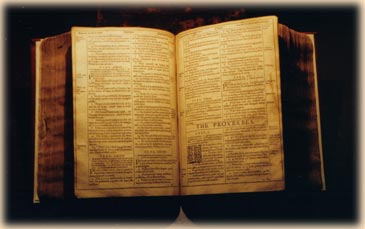
Can we trust the Gospels?

The Bible Proves the Bible

The Gospels are not free-floating. They fit into the symphonic story of Scripture. Therefore the way they fit is a wonderful testimony to the truth of the whole Bible. A book like Walter Kaiser’s Messiah in the Old Testament highlights over 60 detailed Old Testament predictions which Jesus concretely fulfils in the Gospels – these just scratch the surface. Josh McDowell cites 29 Old Testament prophecies that are fulfilled on Good Friday alone. Perhaps take your friend to Genesis 22, Psalm 22 or Isaiah 53 then read Matthew 27 for the fulfilment.

The Gospels Present Themselves as History

Show the enquirer Luke 1:1-4 and see that the authors of the Gospels are not attempting to write fables but history. Look through the early chapters (e.g. 2:1-4; 3:1-2, 23-38) and see how Luke mentions scores of historical figures and places. This is not “once upon a time in a land far away.” Luke is doing everything in his power to convey to us that these events happened in real world history. At that point he’s either telling the truth or concocting an elaborate and wicked hoax. What do we think?

Lost in Transmission?

Bart Ehrman wrote a best-seller called “Misquoting Jesus”, alleging that today’s copies of the Gospels aren’t necessarily what the authors first wrote. We have nearly 25 000 ancient manuscript copies of the New Testament – a number that dwarfs anything else in ancient literature. Unsurprisingly, given they were all hand copied, there are discrepancies. Yet if we were worried that these differences were of any great importance, Ehrman’s attempt to make a sensational case should reassure us. The best he can do is point to Mark 16:9-20; John 8:1-11 and 1 John 5:8 which any decent Bible translation will itself highlight without any embarrassment. Then he points out that we have alternative readings for verses like Mark 1:41 and Hebrews 2:9. Your Bible’s footnotes will probably tell you the options and you can see for yourself how little hangs on the difference. This is the best case offered by biblical studies’ most prominent sceptic. Therefore any fears that Jesus' real message is lost in transmission are unfounded.

Lost Gospels?

But aren’t there many lost gospels that were suppressed by the church? No, and you should really stop reading Dan Brown! Gospels like The Gospel of Thomas were written at least a century after the original four, in a language Jesus didn’t speak, in a completely different style (collections of sayings, not narrative) and proposing concepts of God, salvation, the body and women that are utterly alien to the Bible (and to sanity). If you want to see why the church always rejected them, just read them.

Defend the Bible?

Charles Spurgeon’s famous line is still the best on this subject: “Defend the Bible? I would as soon defend a lion! Unchain it and it will defend itself.” Our first priority is to get Scripture into people’s hands. I always challenge enquirers to pick up a Gospel (perhaps John) and shoot up a prayer: “Dear God, if you’re there, show me the real Jesus.” I tell them “You’ve got nothing to lose. If He’s not there, He won’t answer. But if He is, then you need to meet His Son. This book is the way to do it.”

Of course we can assure enquirers that the Bible is internally consistent, historically accurate, well attested, faithfully passed down, etc. But none of that makes it the word of God. God’s word vindicates itself when God Himself speaks through it.

6

bibleI've been asked to write brief answers to six thorny questions:

Hasn't science disproved God?

Is God homophobic?

Why does God appear so violent in the Old Testament?

Are the gospel accounts trustworthy?

Why isn't God more obvious?

Why has the Church caused so much pain?

I've got to keep these under 600 words. I'd love if you could help. What have I missed? What have I got wrong?

...........................

Why does God appear so violent in the Old Testament?

Confronting the Caricatures

According to the Apostles, the Old Testament is all about “the good news of peace through Jesus Christ” while the New Testament concerns Christ, “the Judge of the living and the dead” (Acts 10:36-43). Grace in the Old, Judgement in the New! What unites the Scriptures is Christ Himself.

John tells us Christ was there “in the beginning” (1:1-18). Therefore Christ was the One Moses, Abraham and Isaiah saw and wrote about (5:37-47; 8:56-58; 12:37-41). The problems we might have with “the God of the Old Testament” we have with Jesus.

Having said this...

The Times Have Changed

When Jesus came in the flesh He fulfilled and ended the temporary structures of the Old Testament, in particular the Temple with its priests and sacrifices and the theocratic nation with its kings and armies. Instead Jesus relentlessly urges forgiveness and non-violence (see Matthew 5:38-48; 26:52-54; Luke 6:27-36; John 18:36).

So here’s our challenge: Jesus tells us to put down our swords and to pick up His book. Yet in His book (the Old Testament) we read of several holy wars. What to  think?

Let’s examine the central act of violence brought up in these discussions – the conquest of the promised land, commanded in Deuteronomy, fulfilled in Joshua. (For further reading see Paul Copan’s Is God a Moral Monster?)

The Conquest of Canaan

For 400 years Canaanite cultures were involved in child-burning and other grotesque evils (Genesis 15:13-16; cf “Molech”, Lev 18:21). The Lord gave them centuries to repent of it – considerably longer than any other “just war” ever launched. He then, through His people, visited them with a one off, unrepeatable judgement. It had nothing to do with race – this was not genocide. Later on, when the Israelites were also guilty of such sins, they too were judged.

Every Canaanite who ever sought mercy from the Israelites was spared (see Joshua 2&9). Certainly, prior to the conquest, God speaks the language of total destruction (Deut 20:16-18). Yet Copan argues that this was well understood in the day as militaristic hyperbole. The language of “driving out” precedes and predominates over language of “wiping out” (Deut 7:17-24; 9:1-6). And when Joshua sums up his achievements, he considers that he’s done what Moses had commanded – this, in spite of the fact the Canaanites were not fully driven out, let alone wiped out. (see Joshua 23-24; Judges 1)

Judgement and Grace

Having said this, these stories still shock. God is not a Rotarian. There is blood and fire to this Righteous Judge – in both Testaments. But remember three things:

First, we often complain that God should do more about evil in this world. When He gives us this one-off, unrepeatable pre-figurement of His righteous judgement, we cannot then complain at His intervention!

Second, the Bible makes it clear we are all moral and spiritual Canaanites. We all need the mercy shown to Rahab in Joshua 2. This is what Jesus provides, absorbing the fire and justice on the cross and providing us with refuge.

Third, in Jesus we are brought into a realm beyond judgement – a realm of cheek-turning, enemy-forgiving love (Colossians 1:13-14). Thus the New Testament views these ancient wars as types of our own campaign of peace (2 Corinthians 10:1-5; Ephesians 6:10-20). ‘Christian violence’ is a contradiction in terms.

In the end, the problem of violence does not lie in millennia old Hebrew wars but in our hearts. The solution is not to reject Jesus or His book. The only answer is Jesus Himself – the Judge who became our Refuge.

Twitter widget by Rimon Habib - BuddyPress Expert Developer