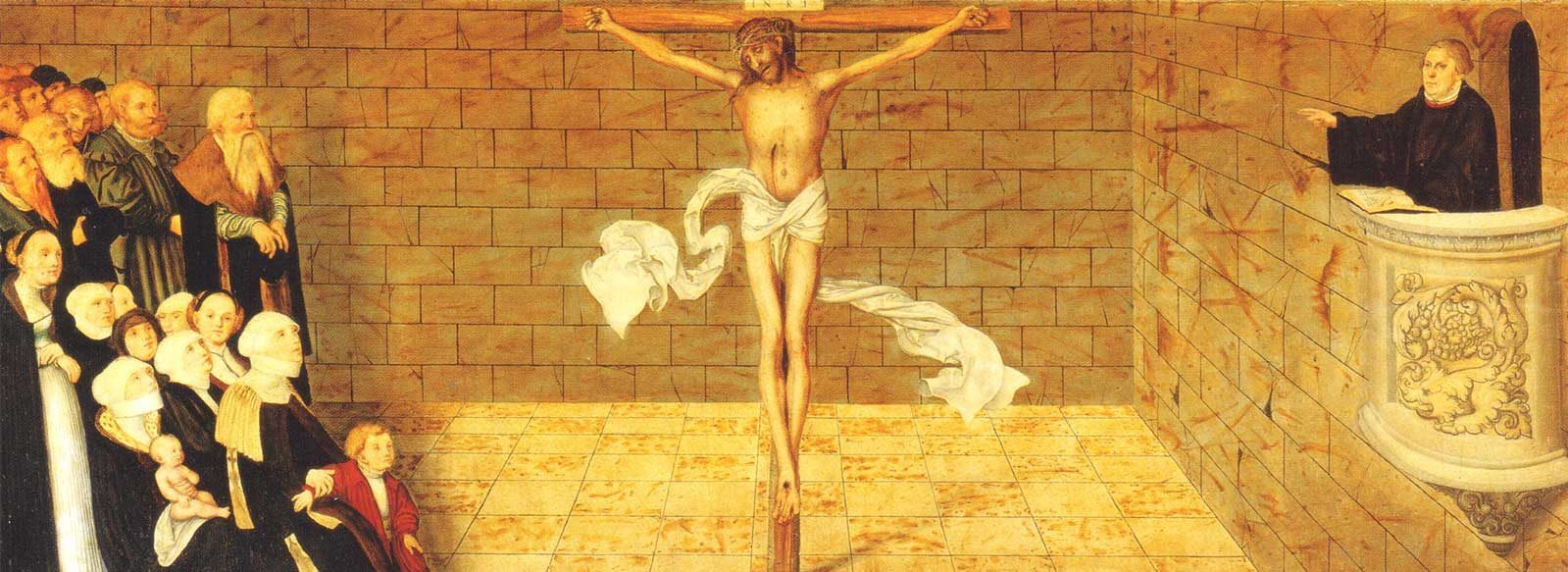
Priest and People Hebrews 4:14-16; 6:19-20; 7:23-28; 9:23-28; 10:11-14
Champion and Army 1 Samuel 17
Seed of Abraham Galatians 3:16,29
Son and sons Galatians 3:26
Anointed one(s) 1 John 2:20
.
The Privileges of Oneness with Jesus
His Status
His Inheritance
His Family
.
Discuss
If you asked the non-Christians you know ‘What is the Christian life all about?’, how would they respond?
How does Oneness with Jesus shape our understanding of the Christian life?
.
Becoming One with the Son of God John 1:12-14:
How does someone become a Christian?
.
Discuss:
People often say “I wish I had your faith!” What’s their understanding of “faith”?
How can people “have faith”?
.
A Sentence Up Your Sleeve...
“That’s what I love about being a Christian...”
.
QUESTIONS
Sometimes people worry that offering Jesus “for free” will lead Christians to be careless about “doing good”. Given what we’ve been discussing, what would you say to that?
Often we worry that we’re not clever or knowledgeable enough to share our faith. How does this teaching give us hope in our evangelism?
What do you love about being a Christian? How could you drop this naturally into conversation?
DISCUSS: “You and I do bad things and fail to do good things. If we don’t sort out this sin problem now we’ll be in trouble when we die.”
What’s good and bad about this statement?
How would you improve it?
.
1 Corinthians 15:20-23
In Adam we – and the whole world – are taken down to death and curse
In Christ we – and the whole world – are raised to life and blessings
.
Shaped by our families
In Adam we share:
family history – disconnection from God.
family traits – defects: suspicion, slavery, selfishness, stuff-ups
family inheritance – death.
. Our problem is not so much our behaviour, it’s our being. How will this affect our evangelism?
.
O loving wisdom of our God!
When all was sin and shame,
A second Adam to the fight
And to the rescue came. Praise to the Holiest in the Height, J.H. Newman
.
How does Jesus solve our disconnection, defects and death?
John 3:1-18
.
A Sentence Up Your Sleeve...
“That problem is beyond me. I don’t think I/we can ever solve it, do you?”
.
QUESTIONS
How are Adam and Jesus similar? How are they different?
Someone asks, “Why is there so much suffering and evil in the world?” Using the teaching of this session, how would you answer?
If you were asked “Why did Jesus come?” how would you answer?
What is the “problem” you’d drop into conversation above? How do you think you could naturally speak about our great need for a Saviour?
TWO The story of the world is the story of two representatives
ONE You are one with Adam. Will you be one with Jesus?
.
GOD’S THREE-NESS
What was there “in the beginning?” John 1:1-18
Nothing
Chaos
Power
Love
.
From His Family to Our Failures Matthew 3:13-17
He joins us in our filth to invite us to His Family.
.
It All Begins With Jesus John 1:14; John 14:5-10; Colossians 1:15
Which God do you believe in?
Which God don't you believe in?
.
A Sentence Up Your Sleeve...
“That’s what I love about Jesus...”
QUESTIONS
“What’s all this trinity nonsense?” asks a friend. What do you say?
What are the dangers of speaking about an unChristlike God? Have you fallen into that danger?
How would you complete that sentence in conversation: “That’s what I love about Jesus...”? What would you say about what first attracted you to Christ? What would you say about what currently attracts you to Him?
I had a great time this weekend with Emmanuel Church, Plymouth. It was a time of refocussing our vision through the lens of Jesus. In Him we see God, the world and ourselves rightly.
If you've heard me before on any of these passages, move along, nothing new here. But if not, here are the mp3s and Powerpoint ...
321 begins by associating God with three-ness."God is three Persons united in love" says the presentation. And occasionally people have asked, "What about God's one-ness?"
Well the short answer is - it's right there in the explanation: "three Persons unitedin love." That phrase is just trying to unpack the word Trinity which is itself only the squashing together of "tri" and "unity". Just from the word 'Trinity' it should be clear how the church has considered God's one-ness historically. God's one-ness is a unity of the Three. It's not a unity apart from the Three or underneath the Three. But often we think like that.
It's always revealing when people say things like: "Trinity is great but we also need to focus on God's unity." This is literally the same as saying "The unity of the Three is great, but we also need to talk about the unity of God." At that point we really need to ask, "What is this second kind of unity you want to talk about? And what is this God you want to talk about apart from discussion of the Three?" Those are worrying questions to raise!
To answer them, people sometimes try to wheel in Gregory of Nazianzen for support. In doing so they make him say the precise opposite of what he meant. Here's his famous quote:
No sooner do I conceive of the one than I am illumined by the splendour of the three; no sooner do I distinguish them than I am carried back to the one.
Wonderful theology. Yet in a heartbeat the thought can get turned into...
Once I've spent a decent amount of time thinking about the one God of monotheism, I then force myself to spend the same amount of time considering Father, Son and Spirit. And once I've given equal airtime to the Three, I return to my philosophically defined monad.
But that couldn't be further from Gregory's meaning. The One simply is the profound interpenetration of the Three and the Three just are 'in'each other in unloseable, mutually-constituting, ontological oneness. Gregory is not saying that we ought not to think of one-ness and three-ness separately. He's saying we cannot do it. The one and the three are strictly mutually-defining concepts.
Yet every time someone says "Let's not prioritise trinity, let's give equal time to the unity" they attempt this feat. Whatever three-ness they're considering apart from the one-ness - it's not the true three-ness of God. Whatever one-ness they're considering apart from the three-ness - it's not the true one-ness of God.
So here's my offer. I will happily major on the one-ness of God for the rest of my life. I will rename the website one-two-one.org - cool, still has a nice ring to it. But I'll do it on one condition: can we please all agree that this oneness is the one-ness of Jesus with His Father?
You see, if we're talking about Christ, if we're talking about the gospel, if we're talking about salvation, then whatever one-ness we uphold must not destroy the concrete Person of Jesus. It must not mess with the gospel economy in which the Son lives and dies before the Father, is exalted and ministers before Him. It must not dissolve our salvation in which the Son bears us before the Father. If Jesus, if the gospel, if salvation determines our God-talk then the one-ness we maintain must be a one-ness of distinct Persons mustn't it? It mustbe a one-ness that includes difference and interplay and relationship mustn't it?
So if the one-ness we're talking about is the "one-ness" of Jesus with His Father then sign me up. I couldn't be more for "one-ness". I'll talk about this one-ness until Jesus returns. But some want to talk about another one-ness - a one-ness that would dissolve the Person of Jesus, His gospel, His salvation. A one-ness that would involve not merely looking away from 'the Three' in some abstract sense, but looking away from Jesus and His gospel in order to know God. To look to this other one-ness is to look away from the God of Jesus and we must never do that.
There can be only one kind of one-ness. And it's the one-ness of the Three.
Forever together Three tethered as one,
The Father and Spirit embracing the Son.
Before and beyond and beneath and above,
Our God is a Family united in love.
Praise the Lord, Praise the Lord,
Let the earth hear His voice!
Praise the Lord, Praise the Lord,
Let the peoples rejoice!
O come to the Father, through Jesus the Son,
Be filled by the Spirit with all Christ has done.
The world has a history written by two:
King Adam fell faithless, King Jesus renewed.
First Adam brought darkness and death and a curse,
But Jesus came second -- the fall to reverse.
Praise the Lord, Praise the Lord,
Let the earth hear His voice!
Praise the Lord, Praise the Lord,
Let the peoples rejoice!
O come to the Father, through Jesus the Son,
Be filled by the Spirit with all Christ has done.
Once born into Adam but now we can be
United to Jesus, adopted, set free.
As one with the Son we are given new birth,
His Father, His Spirit and heaven on earth!
Praise the Lord, Praise the Lord,
Let the earth hear His voice!
Praise the Lord, Praise the Lord,
Let the peoples rejoice!
O Come to the Father, through Jesus the Son,
Be filled by the Spirit with all Christ has done.
Three tethered togather forever as one,
The Father and Spirit embracing the Son,
Before and beyond and beneath and above,
Our God is a Family united in love.
Praise the Lord, Praise the Lord,
Let the earth hear His voice!
Praise the Lord, Praise the Lord,
Let the peoples rejoice!
O come to the Father, through Jesus the Son,
Be filled by the Spirit with all Christ has done.
The world is a story that’s written by two:
King Adam fell badly, King Jesus renewed.
First Adam brought darkness and death and a curse,
But Jesus came second – the fall to reverse.
Praise the Lord, Praise the Lord,
Let the earth hear His voice!
Praise the Lord, Praise the Lord,
Let the peoples rejoice!
O come to the Father, through Jesus the Son,
Be filled by the Spirit with all Christ has done.
First born into Adam but now we can be
United to Jesus, adopted, set free.
As one with the Son we are given new birth,
His Father, His Spirit and heaven on earth!
Praise the Lord, Praise the Lord,
Let the earth hear His voice!
Praise the Lord, Praise the Lord,
Let the peoples rejoice!
O Come to the Father, through Jesus the Son,
Be filled by the Spirit with all Christ has done.
I've been pleased that, in the last month, the 321 video has been shared so widely. It's meant that I've been able to interact online with a handful of people who have raised questions about the presentation. I'd say the reservation people have had is this: "Where's repentance?" In fact it's pretty much the only objection I've heard so far.
I was bracing myself for Trinitarian discussions. I was gearing up to present robust defences of Adam's historicity. None of that has come up. Yet.
But a good 8 or 10 times someone has said "This is a deficient gospel because there's no summons to repent."
There are a number of ways to respond to this. One is simply to say "This is only a 5 minute summary. You can't say everything."
Another is to say "the word 'repent' is not magic. John's Gospel, for one, gets along fine without it."
Another is to say: "Repentance is not, properly speaking, a part of the good news. The good news is the announcement of Jesus - His dying, rising, enthronement and return. The gospel is not about us, it's about Him. Repentance is the response to the good news."
Those things are true and they need saying at some point. But in most cases I've responded with a question of my own. Roughly speaking I've asked "Since 321 presents humanity as lost in Adam with no spiritual life in ourselves and no ability to produce life... and since the new life is presented as coming entirely from beyond us in Jesus... and since the new life of Jesus is presented as an all-embracing, marriage-like oneness with Jesus... what does the command to "be one with Jesus" lack which using the word "repent" would add?"
I've asked that kind of question many times but I've not yet received an answer. So let me ask it more generally...
If we proclaim the renunciation of self in Adam and the receiving of new life in Christ, what more do we want in our definition of repentance?
I know that no-one in these discussions wants to question salvation by "faith alone." But I do fear that - in wanting something more - 'faith alone' is exactly what's in jeopardy.
In some evangelistic presentations I see a desire to present salvation as a discrete series of steps. There tend to be a sling of synonyms made into stages. The unbeliever is told to confess and profess and turn and surrender and trust and repent and submit and admit and believe and commit and do. It's not the seven sacraments of the Catholic Church. It's more stream-lined than that. And it's about internal, mental hoops to jump through. But still, so often it's a system we offer to people rather than the simplicity of offering the Son.
Have you ever heard a "close the deal" evangelistic talk in which Jesus Himself is not presented or offered? Perhaps the preacher has simply piled up illustration upon illustration - "There's a line... cross the line. Jesus has given you a cheque... bank the cheque. In the Matrix there's a red pill and a blue pill... which pill will you take?" What might begin as a call to "simply trust Jesus" becomes an exhortation to adopt this attitude or that, this resolution or that, and then... Well the thing is, when repentance is this discrete thing then the sinner who repents is only really left with their discrete repentance. They've "made the step", or whatever, but they're in great danger of leaving the meeting with a resolution not a redeemer.
All of which is to say - Offer Christ. The new life is in Him. And if a non-Christian hears this offer and says "I'm not sure I have it in me to repent", tell them:
"You definitely don’t have it in you. But God has given it to you in Jesus. Have Him!"
You'll notice that I'm not considering Creation, Fall, Redemption and Consummation. More properly those are the four gospel events - all four resting in God's hands. I'm considering "repentance" rather than "consummation" simply because the evangelistic presentations with which we're familiar tend to finish with our work not God's. And perhaps that's significant! We'll see.
Today we'll examine repentance according to 3, 2 and 1. Tomorrow we'll draw out some implications...
How does 3 shape our understanding of repentance?
Trinity means that God is Giver (see here). Therefore the Fall is a failure to receive from the giving God (see here). What then will repentance involve? Well it can't involve a summoning up of religious resolve! It can't be the determination of the sinner to "get serious" and start making up the missed payments. That kind of self-will is virtually the essence of sin!
No, repentance with the triune God means receiving the gift of the Son. The Father has given Christ to the world (John 3:16). The new life is not in us - it's in Jesus (1 John 5:11). Repentance - the new life we must have - is a gift of the Father, present in the Son, offered by the Spirit (Acts 5:31; Acts 11:18; 2 Timothy 2:25).
How does 2 shape our understanding of repentance?
Adam cannot repent. Adam can only perish. This is a vital point to grasp and Edward Fisher in The Marrow of Modern Divinity expressed it well in dialogue form:
-- I conceive that repentance consists in a man's humbling himself before God, and sorrowing and grieving for offending him by his sins, and in turning from them all to the Lord.
-- And would you have a man to do all this truly before he come to Christ by believing?
-- Yea, indeed, I think it is very meet he should.
-- Why, then, I tell you truly, you would have him to do that which is impossible.
According to Paul, the unbeliever is dead in transgressions and sins and bound to Satan (Eph 2:1-3). No exercise of moral or religious effort can deliver such a person (Phil 3:1-9). The law, even the law of God, is powerless to save (Rom 3:20; 8:3). And so the unbeliever is sunk in sin and flesh, bound to Satan, under the law’s condemnation, without hope and without God in the world (Eph 2:12). There is nothing within the unbeliever that will help them. Asking Adam to repent is like asking a corpse to 'get fit'. There needs to be a new life. But the unbeliever is in no position to summon it.
How does 1 shape our understanding of repentance?
When I married my wife, "single Glen" died. That old existence was put to death in our covenant union. In this sense "old Glen" did not contribute to the marriage, "old Glen" was killed by the marriage. I became new in one-ness with my wife. And this newness was a radical, all-of-life revolution. Nothing remained the same. Every aspect of my life had to be rethought according to my married identity. But I didn't earn any of this. It was all a gift that came part-and-parcel with the marriage.
In the same way, sinners are offered covenant union with Christ. In this oneness they are killed and given a new existence. Everything is different. Nothing remains untouched by this unbreakable oneness. The sinner does not (and cannot) earn it. But in Jesus there is, suddenly, a new creation, the old has gone, the new has come (2 Corinthians 5:17).
So then, what kind of "repentance" does 321 preach?
Let me break it down into some propositions that I tweeted earlier in the year:
Adam cannot repent. Adam can only perish.
True repentance must be done to us (as faith is done to us) since the greatest sin is to imagine that we can ‘do penance.’
There cannot be impenitent faith (if it’s true faith) or unbelieving repentance (if it’s true repentance).
Repentance and faith are not two separate stages of salvation. They are two sides of the same coin. But note – this is a coin God gives to us!
Repentance is given to us because Christ is given to us - and that's the direction of travel, from Him to us.
We do not offer repentance to God as our part of the bargain. We’re summoned to repentance in the gospel because this is the life of faith.
And as we offer Christ, we tell the unbeliever exactly what a life of one-ness will look like with Jesus. Just as 'marriage prep' unveils the good and the bad of the union on offer, so we prepare people for the radical, total-life-change which Jesus brings. But at the end of the day we offer Christ. And we say as Spurgeon did:
Do not attempt to touch yourself up and make yourself something other than you really are, but come as you are to Him who justifies the ungodly. …The Gospel will receive you into its halls if you come as a sinner, not otherwise. Wait not for reformation, but come at once for salvation. God justifieth the ungodly, and that takes you up where you now are; it meets you in your worst estate. Come in your disorder. I mean, come to your heavenly Father in all your sin and sinfulness. Come to Jesus just as you are: filthy, naked, neither fit to live nor fit to die. Come, you that are the very sweepings of creation; come, though you hardly dare to hope for anything but death. Come, though despair is brooding over you, pressing upon your bosom like a horrible nightmare. Come and ask the Lord to justify another ungodly one. (From “Justification of the Ungodly” by C.H. Spurgeon. A sermon on Romans 4:5 – found in “All of Grace“)
For more on preaching repentance in evangelism, see this paper I wrote a few years ago.
And stay tuned for part two where we'll tease out some more implications...
I've been thinking about the three doctrines of 321 and how they interact with the four events of more traditional gospel outlines. Previously I've discussed Creation and Fall. Now we'll look at Christ's work of redemption.
How does 3 shape our understanding of Christ's redemption
I don't think I know any gospel outlines that begin with the Trinity. (If you know of any, please tell me). But if a presentation does not have the Son of God "in the beginning" it's going to be awkward to crow-bar him in later.
How will Jesus be introduced as anything greater than a Prophet in a scheme that does not begin with His divine glory. Instead, the introduction of Jesus into gospel explanations can only befuddle the non-Christian who is prone to ask "Who is this guy? What's he got to do with this creation and fall business you've been speaking of?"
In so many schemes Jesus comes late to fix a problem he's not been involved with. This has massive implications for the presentation of his Person - does he really come across as fully God? And it hugely affects the presentation of his work - he looks for all the world like an innocent third party interposed into the God - man dilemma.
John Stott saw the desperate need for a trinitarian framing of the cross when he wrote:
At the root of every caricature of the cross there lies a distorted Christology… In particular, it is essential to affirm that the love, the holiness and the will of the Father are identical to the love, the holiness and the will of the Son. God was in Christ reconciling the world to himself. (The Cross of Christ)
The doctrine of penal substitution - which I both affirm and love - has been attacked in recent years. But the version of it that has aroused such scorn has often been the non-trinitarian caricature which Stott wrote against. If we're going to uphold the glory of the cross we must put it in its proper trinitarian context.
How does 2 shape our understanding of Christ's work of redemption?
Why did Christ have to become a man? Why couldn't the Son have incarnated as a literal Lamb? Or why couldn't God have "zapped" the wooden cross, rather than his Son? If redemption is simply about the just justification of sinners in the punishment of the Son - why does Jesus become our Brother? Couldn't God's wrath have been poured out on a non-incarnate Son?
No, no, no! The Son takes our flesh because he's entering into our plight and transforming it from the inside. As many church fathers have put it: He became what we are, so that we might become what he is. Redemption is not simply the balancing of the punishment books. It's about our Maker summing up his creation in himself - taking responsibility for it. His penal substitutionary death is absolutely vital. On the cross he is "carrying the can" for his handiwork. But that act is comprehended within a vast work of creation and redemption - moving humanity (and in humanity, the cosmos) through death and curse to life and glory.
Of course the Son had to become Man. Man rules the world. Adam - the pattern of the Coming One (Rom 5:14) - stood over creation, ruling and blessing it. Through the fall, he failed and cursed it. Christ comes to wrest humanity (and in humanity, the world) back to God. In his resurrection, he takes us through death and into an immortal physical glory. This is the cosmic dimension to salvation which will always be missed when we construe the gospel as, simply, the answer to 'my sin'. 'Adam and Christ' vitally connects Jesus' work to this flesh and this world. Without it, as Paul argues in 1 Corinthians 15, we have no gospel.
How does 1 shape our understanding of Christ's work of redemption?
So 3 assures me that Jesus is God. 2 assures me that Jesus is Man. But you might well think - so what? I'm still left on the outside of all this. And at this point two questions become vital to ask and answer:
1) How do Ibenefit from the Person and work of Jesus?
2) What do I do once I have appropriated Christ's salvation?
In answer to the first question, many gospel presentations put the task firmly into the sinner's hands. Jesus has "cleared the path" through his death and resurrection, now the sinner must "take the step of faith" and come to God. The appropriation of Christ's benefits happens through "the sinner's prayer" in which we ask for - and God zaps into our account - forgiveness, righteousness, the Spirit and eternal life. Jesus does not really mediate these benefits, he only pays for them. And this leads to a problem in answering that second question: What now?
Now that I've stepped across Jesus - "the bridge" - what is the Christian life? I've got forgiveness and eternal life, so how will the evangelist tell me to continue? Probably they'll tell me to go to church, read my bible, pray, try hard not to sin and hold on tight till heaven. To which I'm liable to say "Why??! What connection does any of that have to what you've described in your sales pitch?!"
But no. We benefit from the Person and work of Christ because he is given to us in marriage union. All that is mine is his - he takes my sin and shame and covers over it. All that is his is mine - he gives me his status, his inheritance, his family connections. Best of all he gives me himself. And this is the Christian life: belonging to Jesus and he to me.
So of course the Christian now belongs to his body, of course they listen to him (in the bible) and speak to him (in prayer). It's all organically related to Jesus himself. That's a salvation - and a salvation message - that makes sense.
But without Trinity, Adam and Christ and union with Christ, the very heart of the gospel - Christ and his work - will be radically misunderstood.