Ok so you've probably all seen this a million times but I've only just stumbled across it. And oh how I did laugh...
[youtube=http://www.youtube.com/watch?v=cQ9sJVJMiYM]
.
Jesus is the Word of God
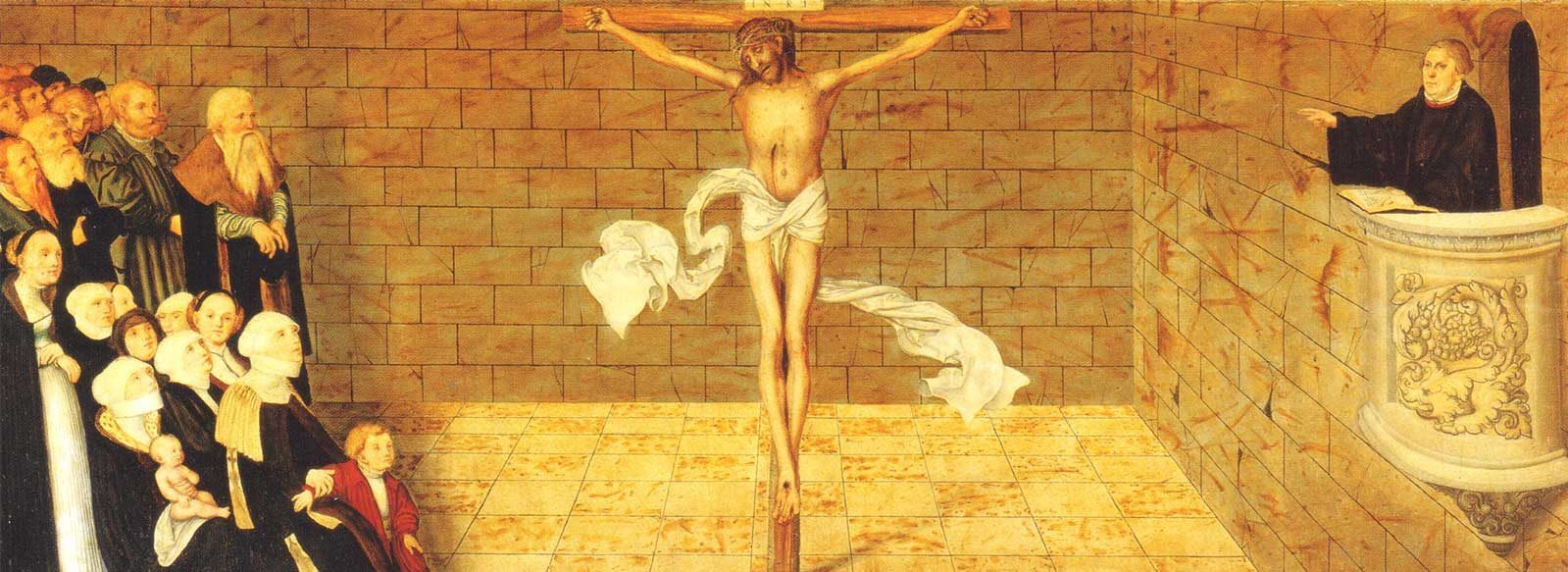
Ok so you've probably all seen this a million times but I've only just stumbled across it. And oh how I did laugh...
[youtube=http://www.youtube.com/watch?v=cQ9sJVJMiYM]
.
I was reflecting today that in the last fortnight I've received four pearls of wisdom from four Anglican bishops. That's right, I said Anglican bishops.
The first pearl came from retired Bishop John Taylor who spoke at our ordination retreat. He told the story of a pastoral visit to a very ill woman in hospital. It represents brilliantly what I think pastoral practice (and good evangelism) boils down to. Here's how I remember his re-telling:
I told her God's grace was for her - even for her.
She said "No, it couldn't be, you don't know what I've done."
I told her "Christ said 'The healthy don't need a doctor, the sick do. I've not come to call the righteous but sinner.' It really is for you."
She said "No."
I said "Yes!"...
...Eventually she received Christ.
Brilliant! The word from beyond comes, contradicts and finally comforts. It perfectly encapsulates my understanding of ministry.
.
The next pearl comes from my Bishop of Chichester in his charge to us priests prior to ordination. He spoke about public worship:
It is fundamental for biblical faith that God is the subject and not the object of the liturgy. In [OT] Temple worship, it is God who reveals himself, his presence, his name, his will. The cultus was not a kind of magical conjuring up of a compliant deity but the place at which by thankful remembrance of what God has done in the past God himself has the opening to disclose himself again, here and now, to renew faith and secure its transmission to the next generation... it is something which lies in God's own hands...
...Let me finish by trying to draw together a few scattered strands of this charge. First, I would like you to remember always that true worship is not something we do, but a moment in which God discloses himself to us. Second, I would like you to remember that both praise of God and thanksgiving for his actual gifts are central to authentic worship and third, I would like you to remember that worship has an important role in reconvincing people of his concrete, actual, historical acts of mercy so that they can become effective witnesses to those who do not believe. And finally, I would like you to remember that if our worship is genuine, it can be a powerful witness to both those who believe and those who do not yet believe, that God is real and has been among his people.
We do not pull God down (through our faithful preaching, our good music or our sacramental practice). These things, in God's good pleasure, are a means of His grace. The direction of the arrow is DOWN.
.
Next pearl was from my area Bishop, Wallace Benn who preached at my ordination. His passage was John 21:1-19. He spoke of the importance of feeding the sheep (v15-17) and of the sure expectation of suffering in ministry (v18-19). But first and foremost he drummed into us the vital importance of 'maintaining your love relationship with the Lord' (v15-17).
.
Finally, Douglas Milmine - former Bishop of Paraguay - was at my ordination. He's been ordained since 1947, been a bishop for 35 years and absolutely brim full of the joy of the Lord. Just minutes before the ordination service he said to us in the vestry:
I've only one regret in my ministry - that I didn't save more souls. That's the only reason we're here - saving souls.
Go bishops!
.
Israel did not elect David. Not even his nearest and dearest wanted David as king.
In 1 Samuel 16 we see the choosing of this king. Yet it is not man's choice but God's.
The LORD said... "I have chosen one of [Jesse's] sons to be king..."
Samuel saw Eliab and thought, "Surely the LORD's anointed stands here before the LORD." But the LORD said to Samuel, "Do not consider his appearance or his height, for I have rejected him. The LORD does not look at the things man looks at. Man looks at the outward appearance, but the LORD looks at the heart."...
Jesse made seven of his sons pass before Samuel, but Samuel said to him, "The LORD has not chosen these."...
Then the LORD said, "Rise and anoint [David]; he is the one." So Samuel took the horn of oil and anointed him in the presence of his brothers, and from that day on the Spirit of the LORD came upon David in power.
Here is the LORD's election. Not the firstborn Eliab, whose name (My God is Father) was clearly very well suited to the post of Christ! The LORD rejects what man chooses.
His choice always confounds human wisdom. We choose the rich and powerful. He chooses the lowly and lifts them up. This is just what we have been taught by Hannah's prayer at the beginning of the book:
e.g. He raises the poor from the dust and lifts the needy from the ash heap; He seats them with princes and has them inherit a throne of honour. (1 Sam 2:8)
How does this work out? Hannah goes on...
"It is not by strength that one prevails; those who oppose the LORD will be shattered. He will thunder against them from heaven; the LORD will judge the ends of the earth. "He will give strength to His King and exalt the horn of His Anointed." (1 Sam 2:10)
The LORD chooses His Anointed - His Messiah or Christ - and strengthens Him in order to shatter the proud and powerful. And Chapter 16 has shown us that even this choice has been counter to human intuitions. The Israelite electorate did not choose David, the greatest Israelite kingmaker, Samuel, did not choose David, his brothers did not choose David. The LORD chose David. And He anointed him "in the presence of his brothers."
This is both a judgement and a comfort for David's brothers. It is a judgement - they are not the chosen ones. They have been passed over by the LORD. He has searched their hearts and found them wanting. This must have been a bitter disappointment to them. But, at the same time, there is great comfort. Immediately these brothers have been made royalty! Though in themselves they are not chosen, in their brother they belong to the royal household. This election has thrust them down and brought them back up.
Now if chapter 16 was the LORD's choice of David, chapter 17 shows David choosing himself for his people. In chapter 17 David comes to the front lines but already his brothers have forgotten or dismissed his identity. They were there when he was anointed and they must have known Hannah's song - the anointed one would shatter the enemy (1 Sam 2:10). But again, David is not man's choice. He is not even the choice of his own brothers. (1 Sam 17:28)
In the end David takes matters into his own hands. On the basis of the LORD's election, David basically chooses himself for Israel. He convinces Saul to let him fight (v33ff) and effectively goes in Saul's place (Saul being the Israelite's giant (1 Sam 9:10) and the natural human choice for Champion).
The chosen king chooses himself to the post of Champion, no thanks to any human support. He even rejects the armour of Saul and single handedly defeats the enemy. No Israelite could say on that day 'I knew David could do it!' Not even his own brothers could say 'I cheered him on.' His own arm worked salvation for him. And it was not even for a willing people. He went into battle for those who had rejected him.
The victors on that day in the valley of Elah were not those who had previously backed the right champion. They couldn't even claim to have voted for David. They were simply those who found themselves, contrary to all their previous doubts and denunciations, caught up in the victory of another. Dismay had turned to praise as they saw the LORD's chosen king who had chosen himself for them. The stone the builders had rejected had become the capstone and - suddenly, unexpectedly - it was marvellous in their eyes (Ps 118:22).
.
Previous posts in this series have looked through the lens of David & Goliath to consider preaching, grace and faith. In each case we have seen the temptation to approach these subjects without the Anointed King at the centre. In such a vision, the battle scene simply boils down to an anaemic vision of the sovereignty of God and the eventual victory of His people. But without an explicit Christ-centred-ness, what are we left with?
Well, preaching becomes simply the rallying cry to soldier on. Grace becomes simply God's sovereign empowerment for battle. Faith becomes our work in trusting this sovereign God against all odds. But all of this (ironically since this vision usually seeks to be ""God-centred"") focuses on ourselves. For where do we look in this version of preaching? To ourselves and our soldiering abilities - Are we faithful to His military briefings? Where do we look in this version of grace? To the (sovereignly empowered) works that God has wrought through us. And so evidences of grace are found where? In us. And where do we look in this version of faith? We test our own believing state, looking for this internal mental act within. Without Christ-centred-ness at the heart of it, even ""God-centred-ness"" will turn us in on ourselves.
And this is also true in the realm of election. Just as preaching, grace and faith should be turning us away from ourselves and explicitly to Christ, so election must be focused on Him. I do not find grace or faith in me - I find it in Christ. Similarly I do not find election in myself, I find it in Christ.
Election is God's choice of Christ (and His choice to fight for us) in spite of our doubts and denunciations. Election is the gospel for Christ is the Elect One.
Election is the Father's choosing of Christ contra to all our rejection of Him (Is 28:16; 42:1; 1 Pet 1:20). If I ask myself whether I am choice in God's eyes the answer can only be a resounding No. In myself I am repugnant, reprehensible, reprobate. But in Christ I share His chosen status - I share His royal name, I share His family relations, I share His victory. Election focuses us on Christ and only on ourselves when considered in Him.
Election (like grace or faith) becomes a dark truth whenever we turn our eyes to ourselves. How quickly faith evaporates when we examine it - for faith is essentially looking away to Christ. Election is the same. Election is neither hidden in myself, nor is it merely hidden in an inscrutible divine will - election is hidden (and therefore revealed) in Jesus. Notice that phrase from 1 Samuel 16:13 - 'Samuel anointed David in the presence of his brothers.' Election does not simply occur in the divine counsels of eternity. Election is disclosed as it really is in Jesus Christ. The electing Father declares His eternal choice to all as He points us to the One who tabernacled among us:
"Here is My Servant, Whom I uphold, My Chosen One in Whom I delight; I will put My Spirit on Him and He will bring justice to the nations." (Is 42:1)
Election is laid bare whenever we look to Jesus. The eternal choice of God is on view in Christ. To lay hold of this Elect One is to lay hold infallibly and eternally upon the election of God. It lies outside ourselves, but precisely because of this it lies in the safest place for us.
So where do we fit in all this? Well where did we fit in with 'grace' or 'faith'? Simply put, we found ourselves the happy recipients of them. We found ourselves rejoicing in the victory of Christ when we saw Him. It's no different with election. At one time we doubted and denounced Him, now we trust and exalt Him and find ourselves (like David's brothers) benefiting from His chosen status. And so all those who look away from self, who look to Jesus and say a belated but grateful 'yes' to God's choice of king, they find themselves participating in the chosenness of their Champion. Their choice has done nothing. His choice has done everything. They do not look to themselves to understand their election since it really doesn't reside there. It resides in Christ - the Elect One of God.
It's been a lengthy post already but I don't think I can do better than to quote Spurgeon once again. This is perhaps my favourite quotation on the whole topic:
“Many persons want to know their election before they look to Christ, but they cannot learn it thus, it is only to be discovered by ‘looking unto Jesus.’ If you desire to ascertain your own election; after the following manner shall you assure your heart before God. Do you feel yourself to be a lost, guilty sinner? Go straightway to the cross of Christ and tell Jesus so, and tell Him that you have read in the Bible, ‘Him that cometh unto me, I will in no wise cast out.’ Tell Him that He has said, ‘This is a faithful saying, and worthy of all acceptation, that Christ Jesus came into the world to save sinners.’ Look to Jesus and believe on Him, and you shall make proof of your election directly, for so surely as thou believest, thou art elect. If you will give yourself wholly up to Christ and trust Him, then you are one of God’s chosen ones; but if you stop and say, ‘I want to know first whether I am elect’, you ask what you do not know. Go to Jesus, be you never so guilty, just as you are. Leave all curious inquiry about election alone. Go straight to Christ and hide in His wounds, and you shall know your election. The assurance of the Holy Spirit shall be given to you, so that you shall be able to say, ‘I know whom I have believed, and I am persuaded that He is able to keep that which I have committed to Him.’ Christ was at the everlasting council: He can tell you whether you were chosen or not; but you cannot find it out any other way. Go and put your trust in Him and His answer will be - ‘I have loved thee with an everlasting love, therefore with loving-kindness have I drawn thee.’ There will be no doubt about His having chosen you, when you have chosen Him.” (‘Knowing, brethren beloved, your election of God.’ Morning and Evening, July 17. 1 Thess 1:4.)
.
I'm about to be ordained presbyter in the Anglican Church (in about 90 minutes!) It's heartening to know I'm joining guys like these!
Here's the final statement of the GAFCON conference.
Some extracts:
We, the participants in the Global Anglican Future Conference, are a fellowship of confessing Anglicans for the benefit of the Church and the furtherance of its mission. We are a fellowship of people united in the communion (koinonia) of the one Spirit and committed to work and pray together in the common mission of Christ. It is a confessing fellowship in that its members confess the faith of Christ crucified, stand firm for the gospel in the global and Anglican context, and affirm a contemporary rule, the Jerusalem Declaration, to guide the movement for the future. We are a fellowship of Anglicans, including provinces, dioceses, churches, missionary jurisdictions, para-church organisations and individual Anglican Christians whose goal is to reform, heal and revitalise the Anglican Communion and expand its mission to the world.
Our fellowship is not breaking away from the Anglican Communion. We, together with many other faithful Anglicans throughout the world, believe the doctrinal foundation of Anglicanism, which defines our core identity as Anglicans, is expressed in these words: The doctrine of the Church is grounded in the Holy Scriptures and in such teachings of the ancient Fathers and Councils of the Church as are agreeable to the said Scriptures. In particular, such doctrine is to be found in the Thirty-nine Articles of Religion, the Book of Common Prayer and the Ordinal. We intend to remain faithful to this standard, and we call on others in the Communion to reaffirm and return to it. While acknowledging the nature of Canterbury as an historic see, we do not accept that Anglican identity is determined necessarily through recognition by the Archbishop of Canterbury. Building on the above doctrinal foundation of Anglican identity, we hereby publish the Jerusalem Declaration as the basis of our fellowship.
I like this conclusion too:
The meeting in Jerusalem this week was called in a sense of urgency that a false gospel has so paralysed the Anglican Communion that this crisis must be addressed. The chief threat of this dispute involves the compromising of the integrity of the church’s worldwide mission. The primary reason we have come to Jerusalem and issued this declaration is to free our churches to give clear and certain witness to Jesus Christ.
If there's a bee in our bonnet - it's that Christ is not being proclaimed clearly and distinctly enough. Everything else that's objectionable in these controversies flows from this crucial point.
.
I'm about to be ordained presbyter in the Anglican Church (in about 90 minutes!) It's heartening to know I'm joining guys like these!
Here's the final statement of the GAFCON conference.
Some extracts:
We, the participants in the Global Anglican Future Conference, are a fellowship of confessing Anglicans for the benefit of the Church and the furtherance of its mission. We are a fellowship of people united in the communion (koinonia) of the one Spirit and committed to work and pray together in the common mission of Christ. It is a confessing fellowship in that its members confess the faith of Christ crucified, stand firm for the gospel in the global and Anglican context, and affirm a contemporary rule, the Jerusalem Declaration, to guide the movement for the future. We are a fellowship of Anglicans, including provinces, dioceses, churches, missionary jurisdictions, para-church organisations and individual Anglican Christians whose goal is to reform, heal and revitalise the Anglican Communion and expand its mission to the world.
Our fellowship is not breaking away from the Anglican Communion. We, together with many other faithful Anglicans throughout the world, believe the doctrinal foundation of Anglicanism, which defines our core identity as Anglicans, is expressed in these words: The doctrine of the Church is grounded in the Holy Scriptures and in such teachings of the ancient Fathers and Councils of the Church as are agreeable to the said Scriptures. In particular, such doctrine is to be found in the Thirty-nine Articles of Religion, the Book of Common Prayer and the Ordinal. We intend to remain faithful to this standard, and we call on others in the Communion to reaffirm and return to it. While acknowledging the nature of Canterbury as an historic see, we do not accept that Anglican identity is determined necessarily through recognition by the Archbishop of Canterbury. Building on the above doctrinal foundation of Anglican identity, we hereby publish the Jerusalem Declaration as the basis of our fellowship.
I like this conclusion too:
The meeting in Jerusalem this week was called in a sense of urgency that a false gospel has so paralysed the Anglican Communion that this crisis must be addressed. The chief threat of this dispute involves the compromising of the integrity of the church’s worldwide mission. The primary reason we have come to Jerusalem and issued this declaration is to free our churches to give clear and certain witness to Jesus Christ.
If there's a bee in our bonnet - it's that Christ is not being proclaimed clearly and distinctly enough. Everything else that's objectionable in these controversies flows from this crucial point.
.
Continuing on the Spurgeon quotes... Here is today's devotional from morning and evening and it's a doozy! It's very reminiscent of a recent post on faith as looking outside ourselves to Christ. But, as ever, Spurgeon says it best. Drink it in!
"Looking unto Jesus." --Hebrews 12:2
It is ever the Holy Spirit's work to turn our eyes away from self to Jesus; but Satan's work is just the opposite of this, for he is constantly trying to make us regard ourselves instead of Christ. He insinuates, "Your sins are too great for pardon; you have no faith; you do not repent enough; you will never be able to continue to the end; you have not the joy of His children; you have such a wavering hold of Jesus." All these are thoughts about self, and we shall never find comfort or assurance by looking within. But the Holy Spirit turns our eyes entirely away from self: He tells us that we are nothing, but that "Christ is all in all." Remember, therefore, it is not thy hold of Christ that saves thee--it is Christ; it is not thy joy in Christ that saves thee--it is Christ; it is not even faith in Christ, though that be the instrument--it is Christ's blood and merits; therefore, look not so much to thy hand with which thou art grasping Christ, as to Christ; look not to thy hope, but to Jesus, the source of thy hope; look not to thy faith, but to Jesus, the author and finisher of thy faith. We shall never find happiness by looking at our prayers, our doings, or our feelings; it is what Jesus is, not what we are, that gives rest to the soul. If we would at once overcome Satan and have peace with God, it must be by "looking unto Jesus." Keep thine eye simply on Him; let His death, His sufferings, His merits, His glories, His intercession, be fresh upon thy mind; when thou wakest in the morning look to Him; when thou liest down at night look to Him. Oh! let not thy hopes or fears come between thee and Jesus; follow hard after Him, and He will never fail thee.
"My hope is built on nothing less
Than Jesu's blood and righteousness:
I dare not trust the sweetest frame,
But wholly lean on Jesu's name."
Lest anyone feel left out by my last post on ordination vows, this was today's reading from Spurgeon's Evening and Morning - we all have a holy calling!
"Let every man abide in the same calling wherein he was called."—1 Corinthians 7:20.
Some persons have the foolish notion that the only way in which they can live for God is by becoming ministers, missionaries, or Bible women. Alas! how many would be shut out from any opportunity of magnifying the Most High if this were the case. Beloved, it is not office, it is earnestness; it is not position, it is grace which will enable us to glorify God. God is most surely glorified in that cobbler's stall, where the godly worker, as he plies the awl, sings of the Saviour's love, ay, glorified far more than in many a prebendal stall where official religiousness performs its scanty duties. The name of Jesus is glorified by the poor unlearned carter as he drives his horse, and blesses his God, or speaks to his fellow labourer by the roadside, as much as by the popular divine who, throughout the country, like Boanerges, is thundering out the gospel. God is glorified by our serving Him in our proper vocations. Take care, dear reader, that you do not forsake the path of duty by leaving your occupation, and take care you do not dishonour your profession while in it. Think little of yourselves, but do not think too little of your callings. Every lawful trade may be sanctified by the gospel to noblest ends. Turn to the Bible, and you will find the most menial forms of labour connected either with most daring deeds of faith, or with persons whose lives have been illustrious for holiness. Therefore be not discontented with your calling. Whatever God has made your position, or your work, abide in that, unless you are quite sure that he calls you to something else. Let your first care be to glorify God to the utmost of your power where you are. Fill your present sphere to His praise, and if He needs you in another He will show it you. This evening lay aside vexatious ambition, and embrace peaceful content.
Many, unhelpfully, reserve the word 'calling' for a particular burden felt for ordained ministry. This is not the sense of the word in the bible. 1 Corinthians begins with the one calling which embraces us all:
God... has called you into fellowship with His Son Jesus Christ our Lord (1 Cor 1:9)
Chapter 7 embellishes upon this - some were called when single, some when married, some when slaves, some when free, some when circumcised, some when uncircumcised. Our call was not to these positions. Rather, in these positions we are called to Christ. And Paul is keen that we live out our calling in the position we find ourselves.
So remember - whether paid by the church or by your firm, whether working in the home or at school, you are called. Called to fellowship with Christ. Called to live out this fellowship in the place where you are. The church pastor could prove a total failure in living out this calling. The Christian dentist could witness to hundreds in their "secular" job. There's one calling - a call to fellowship with Jesus. So "Let your first care be to glorify God to the utmost of your power where you are. Fill your present sphere to His praise."
.
