Skip to content

3

Mike ReevesDavid Meredith The Trinity Applauded

Mike Reeves How the Trinity Shapes the Gospel

Mike Reeves How the Trinity Shapes Evangelism

Discussion: Mike Reeves, David Meredith with Melvin Tinker

David Meredith The Trinity Applied: Church life

The discussion time is particularly worth hearing.

1

HT Sparticus

[youtube=http://www.youtube.com/watch?v=zB7MichlL1k]

[youtube=http://www.youtube.com/watch?v=3zDHSLDY0Q8]

[youtube=http://www.youtube.com/watch?v=vvdMLE6Tmvc]

[youtube=http://www.youtube.com/watch?v=Dd7FixvoKBw]

[youtube=http://www.youtube.com/watch?v=1t24XAntNCY]

[youtube=http://www.youtube.com/watch?v=Ezg4sr67OGA]

[youtube=http://www.youtube.com/watch?v=iGAMbNKcN1U]


23

Isaiah Future- William_Strutt_Peace_1896Isaiah is the tale of two cities. Both of them are Jerusalem.

There is the old Jerusalem with its temple - the House of God. It represents the pinnacle of human and religious strength. If anywhere could be safe from the coming judgement, it would be Jerusalem. Yet the LORD repeatedly asserts that Jerusalem is first in line for divine judgement.

A few examples:

In Isaiah 5 there might be a 6-fold "woe" pronounced on the people in general, but it culminates in the temple with the LORD's own prophet (Isaiah 6:5).

When the LORD commissions Isaiah to preach to Jerusalem, his preaching will completely cut down the tree until only the Holy Seed is left. (Isaiah 6:13)

When Isaiah pronounces oracles against the nations (Isaiah 13-21) they culminate with Jerusalem (Isaiah 22; 29-31).

In Isaiah 51, it is Jerusalem that will drink the cup of the LORD's wrath first (cf Jeremiah 25).

Yet on the other side of this judgement comes a salvation that is also "to the Jew first."

Isaiah is cleansed by fire from the altar (Isaiah 6:7)

The holy Seed will come as a shoot from the stump of Jesse to be universal Ruler (Isaiah 11).

After cosmic judgement, our hope will be manifest "On this mountain" (Isaiah 25:6) but "On that day" (Isaiah 25:9).

After drinking the cup, the LORD takes it out of Zion's hand and comforts them (Isaiah 40:1ff; 51:22)

So we see that judgement and salvation as preached by Isaiah is not like this:

Judgement&Salvation1

It's not that good behaviour could ever avert the judgement of God that rests on Jerusalem. Instead it's like this:

Judgement&Salvation2

Or, to be more precise, it's like this:

salvation-judgement2

Judgement begins with the house of God (1 Peter 4:17). Israel is the house(hold) of God. The temple is the house of God. And, in fact, the world is the house of God. But it's all scheduled for demolition - from the top down.

Yet what about this holy Seed? What about this Offspring of Jesse? Surely He will sum up Israel - isn't that what a King does? Represent people?

What about this Servant King who is the covenant (Isaiah 42:1-6)? What about this Anointed One who takes up the lost cause of His people? (Isaiah 61).  He will bring salvation to Zion, light to the nations, peace to the ends of the earth (Isaiah 11). First He must suffer in a very temple-kind-of-way (Isaiah 53:1-10) and then be glorified (Isaiah 53:11-12). In this way He will sprinkle clean many nations (Isaiah 52:15). They will stream to the true House of God (Isaiah 2:1-4) and so salvation can reach the ends of the earth (Isaiah 65-66).

salvation-judgement31In this way the preaching of Isaiah is classically law-gospel. There is the righteous judgement of God which cannot be evaded by any of our own righteousness (Isaiah 64:6). And there is one hope for us - the Divine, Davidic Christ of God. He alone bears our punishment and rises to give life. We who receive His word are brought into His eternal covenant and blessed with all His divine blessings (Isaiah 55:3).

Luther did not invent such a paradigm. It pulses through the Scriptures. Because all the bible preaches salvation by grace alone, through faith alone, in Christ alone.

28

Luther BibleAs early as 1520, Luther identified a proper distinction of law and gospel as central to his evangelical understanding of the Scriptures:

“the entire Scripture of God is divided into two parts: commandments and promises.”

The commandments are law and to be obeyed. The promises are gospel and to be trusted. Confusing these categories is the fast-track towards losing the gospel.

For Luther and the reformers, the theological use of the law is to convict us of sin and guilt and to drive us to Christ. His blood alone can answer the demands and damnation of the law.

And so, for Luther (and for many even in the reformed tradition), evangelical preaching involves this journey of law and then gospel - the demands that kill and the promise of Christ that brings life.

At which point, non-Lutherans are liable to say, "That's sweet. And artificial. Are we really meant to force Scripture into this mould?" It can seem a little alien.

Now I'm not a Lutheran, certainly not in the denominational sense. But let me suggest that something like "law-gospel" is not a Procrustean bed for the Scriptures, but the natural contour God's Word.

As I argue here - it's not just Genesis 1 that can be divided into forming and then filling. The whole of the bible runs from form to its filled-full reality. The law is a key example of this. The Good Life outlined by Moses is filled full by Jesus (Matthew 5:17).

And the journey from form to filled-full reality is a journey from death to life. First comes darkness, then light. First the seed, then the plant. First the curses of exile, then the blessings of restoration. First Adam, then Christ. First the cross, then the resurrection. First the old covenant, then the new covenant. First the old earth, then the earth renewed.

In all this, the ultimate reality is known and intended in advance, but there is a journey to undergo. And law-gospel is but one expression of that journey - through death to life. Luther was by no means the first to spot this pattern. I want to argue that this is the basic preaching of the prophets. Today we'll think about Jeremiah. Tomorrow, Isaiah.

In Jeremiah 1, the prophet is called by the Appearing Word of the LORD who puts His words in Jeremiah's mouth. At this point in history, the Word of the LORD will not appear to Israel en masse (Hebrews 1:1). Christ speaks through His prophets to the people. Only in the last days does the Word of the LORD come in the flesh as His own prophet (Hebrews 1:2).

But here in Jeremiah 1, what is the shape of the proclamation which Christ commissions Jeremiah to fulfil?

Then the Lord reached out his hand and touched my mouth and said to me, “I have put my words in your mouth. 10 See, today I appoint you over nations and kingdoms to uproot and tear down, to destroy and overthrow, to build and to plant.”  (Jeremiah 1:9-10)

Notice the pattern? Uprooting, tearing down, destroying, overthrowing. But then: building and planting.

As Jeremiah speaks to his own people he will proclaim total destruction. Exile will come.  Inescapably.

Essentially, those in Jerusalem respond: "Yeah, sure. We're with you on the total destruction thing. Total destruction for the nations. But we have the temple of the LORD, the temple of the LORD, the temple of the LORD!" (Jeremiah 7:4)

But no, says Jeremiah. The temple is the first place to feel the flames. Judgement begins with the house of God (cf 1 Peter 4:17). God's people are not exempted from judgement. In fact they are judged more harshly. Doom is coming. And it is unavoidable. Your special status, special places, special rituals, special behaviours, special leaders are all worthless. The end is nigh. Your only hope  is God's Leader, His Shepherd:

“The days are coming,” declares the Lord,
“when I will raise up for David a righteous Branch,
a King who will reign wisely
and do what is just and right in the land.
In his days Judah will be saved
and Israel will live in safety.
This is the name by which he will be called:
The Lord Our Righteousness.  (Jeremiah 23:5-6)

It's law then gospel. It's Israel and all its worthless efforts then Christ and all His mighty salvation.

The whole pattern of prophetic preaching is like this. The prophets preach righteousness to the people. But they also make it clear that the people's righteousness cannot save. Exile is coming and the only hope is God's Messiah on the other side of judgement.

Law-gospel isn't a 16th century invention. It's at least 2000 years older than that.

2

Genesis 12Audio    Text    Powerpoint

Here's a point I didn't have time for in the sermon...

In Egypt, Abram is far from the altar of the LORD and so he's far from calling on the Name of the LORD.  It's the altar of the LORD that makes sense of the Name of the LORD.

Think of where Abram's altar is.  It's on a mountain ridge between Bethel and Ai. "Bethel" means “house of God” and "Ai"  means “ruin”. To the west lies the presence of the Lord. To the east lies a ruin.  And this hilltop place of sacrifice stands between them. Where God’s house meets our ruin – there is bloody sacrifice.

At the altar God meets our ruin and provides the blood that saves.  Here sinners can call on the true Name of God.  Through the blood of the sacrifice we find that the LORD truly is "the compassionate and gracious God..." (Exodus 34:6ff). But who can call on the gospel character of Christ when they are far from His altar??

Abram shows what happens when we stray from the cross.  Having sinned, he gives us a picture of a spiritual sulk. In Genesis 13:3, he moves through the “Negev” - the "wilderness" - going from place to place. Moping in the dryness, moping around the fringes of the promised land.

Isn't this what we all do when we fail?  I do.  I put myself in a self-imposed “time-out” with God.  I try not to bother Him for a while and hope He forgets what I’ve done. But no, time doesn’t atone for our sins. Tears don’t atone for our sins.  The LORD Himself provides our atonement.

So then, let's flee to the cross, let's know the blood of the LORD Jesus. Let's not mope around on the fringes of His promise, let's not try to clean ourselves up. Let's come to Christ for the bath. Then we will call on His gospel character - the Name that makes sense at the altar.

4

Jonathan Sekhar recommends...

[youtube=http://www.youtube.com/watch?v=E8WvPHSMJ6c&feature=youtu.be]

And on the theme of Late Night Talk Shows...

[youtube=http://www.youtube.com/watch?v=WOlpdd7y8MI]

[youtube=http://www.youtube.com/watch?v=vAFQIciWsF4]

Do you have some chat show favourites?


4

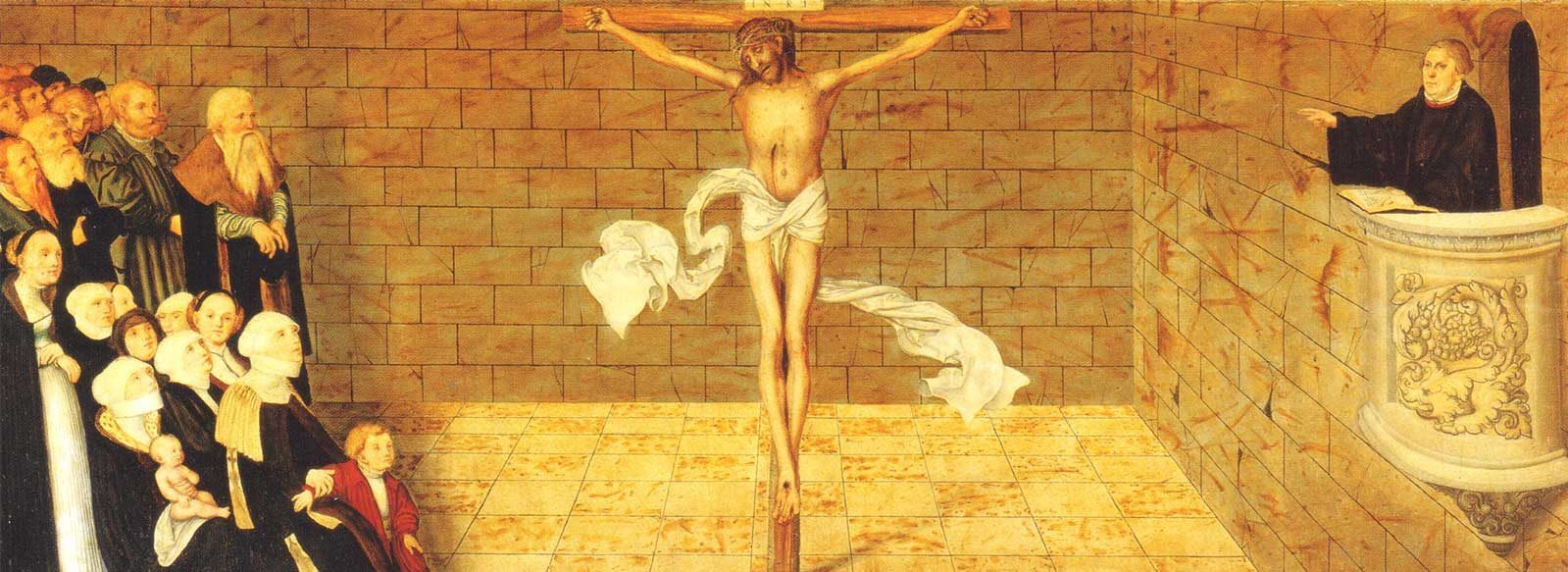
preacherFor more vitrio-verse on "preaching" check out this hymn.

And here is a poem to encapsulate all that's worst about show-pulpitry...

.

“Tis Scripture, Tis Scripture,” he loudly proclaims
“Our rule and our guide, Our fount and our frame.
We stand on the bible, for better, for worse
But let me give vent to my own bluster first.”

“Tis Scripture, Tis Scripture, so let me digress –
To warn you of others who do not confess
Our creed guaranteed to produce a revival:
We are the ones who honour the bible.

“Tis Scripture, Tis Scripture, though some shun our scheme
Daring to preach on one verse, or a theme!
I really must warn you about all our rivals,
And then I will ask you to take up your bibles.

“Tis Scripture, Tis Scripture, and so I rehearse
Our constant insistence on verse by verse.
Methodical, logical, slowly proceeding,
This is our system, now, what was our reading?

“Tis Scripture, Tis Scripture, but don’t be naive,
The troubles with preaching you would not believe.
We must invest time in Corinthian Gnostics,
The value of genre and Hebrew acrostics.

“Tis Scripture, Tis Scripture, a difficult book,
But do not despair for to me you can look.
The dirty great chasm between then and now
Is bridg’d by my painstaking, expert know-how.

“Tis Scripture, Tis Scripture, The clock is against us!
I fear that I shan’t do this passage its justice.
We’ve only got time for a mere  bible dip,
Yet before we explore – a joke and a quip.

“Tis Scripture, Tis Scripture, but first let me quote
From Shakespeare and Churchill, a drole anecdote,
My children’s exploits and the signs of the times,
The state of the church, and, my, how time flies!

“Tis Scripture, Tis Scripture, just time for essentials,
But, wait, have I listed my many credentials?
My friends in high places, the people I meet,
The man I converted in the aeroplane seat?

“Tis Scripture, Tis Scripture, although it’s a drag
I’ll lighten the tone with a mother-in-law gag.
And stories I’ve stolen from preachers at will.
Consider it sugar to sweeten the pill.

“Tis Scripture, Tis Scripture, though sixty six books –
This story of glory’s more plain than it looks.
Distilling its filling through splendid oration,
You’ll see it boils down to this fine illustration.

“Tis Scripture, Tis Scripture, the detail’s not vital,
I’ve spent all my time on a memorable title
And quaint turns of phrase that will please only me,
And predictable points, beginning with ‘P’.

“Tis Scripture, Tis Scripture, my time is now through,
My pithy summation will just have to do.
You guessed it the moment my sermon began:
God is the Boss. Submit to His plan.

“Tis Scripture, Tis Scripture, And now let us pray,
‘I thank You my Father You made me this way,
Not like all those others about whom we’ve heard
For I am the preacher who honours Your word.’”

.
6

EvangelismI know how conversational evangelism is meant to go... They're meant to ask "Have you got a match?" and you reply "Yeah, Jesus for the devil any day!"  And then... prepare the font because new birth is gonna break out!  Or something.

But really, is there a place for conversational evangelism? Well, in spite of its bad press, yes. Of course there's a place for conversational evangelism. The gospel is for everything - especially for our speech. "I believe, therefore I spoke" said Paul (2 Corinthians 4:13).

Yet I wonder if our struggle in "conversational evangelism" isn't the evangelism bit.  I wonder whether our real struggle is actually having conversations.  And maybe it's our faulty notions of "evangelism" that scupper us.

I mean, if you're going to have a gospel conversation, a pre-requisite is probably having a normal conversation.  It's pretty important to be in a conversation because you want to be in a conversation. People can tell if you don't!

A 'gospel conversation' is not an occasion for you to 'do your thing' to an unsuspecting victim. The triune God moves out from a fullness and a desire to bless. That's our motivation.

So listen. Explore their pet topics. Don't try to be interesting. Be interested.

In this way, be curious about people's deepest fears and greatest hopes. (And still, this isn't really evangelistic advice is it? This is true for your conversations after church too.)

Maybe as the conversation develops, genuinely ask if they think such fears/hopes can be answered. How? See where that leads.

And before and beyond any conversational tactics, know for yourself the answers to these questions:

 - What do you love about Jesus? Specifically. What struck you about Him as you were getting to know Him? What is striking you as you're learning more.

 - What do you love about life? I mean love. What thrills you and engages your heart? And think about how that reflects the Life-Giver and His love for life.

 - What do you hate about life? Not grumbles, genuine despairs because you and/or the world are not what they should be. Where do you lose hope for yourself and the world and think "I/we just can't do it!"? Here you're thinking about our fallen condition, from which only Jesus can save us.

 - What do you love about your church? Specifically. How have they blessed you, in the past, more recently?

And if you're talking about anything that remotely matters, and if you're engaged in the other person for their sake, then there's a fair chance you might be able to say something like "Yeah, that's what I love about Jesus/church..."  And presto... you're speaking gospel truth. In a conversation no less!

But of course, if you can't finish the sentence "That's what I love about Jesus/church, etc...." then your real problem is not evangelism.  Your problems run deeper.

Which is why this advice about "conversational evangelism" isn't really about evangelism at all. It's just about conversation. The reason we don't talk to non-Christians about the stuff that matters is because we rarely talk to other Christians about the stuff that matters.

We'll find, though, that if we do put words to our love for Jesus with Christians then, A) that love will be kindled all the more and B) the words are more likely to flow with non-Christians.

What would you say on the topic of conversational evangelism?

15

christ-and-mosesJustin Taylor recently linked to Calvin's New Testament preface. It contains a heart-warming account of OT typology. Let me quote a few lines...

[Christ] is the victorious and noble king David, bringing by his hand all rebellious power to subjection.

He is the magnificent and triumphant king Solomon, governing his kingdom in peace and prosperity.

He is the strong and powerful Samson, who by his death has overwhelmed all his enemies.

It's a Keller-style "Jesus is the true and better..." long before Keller. Well of course, it's a thoroughly biblical - a thoroughly Christian - way of reading the bible.

But let's not forget that Christ is also David's Lord (Psalm 110:1); Solomon's Fount of Wisdom (1 Kings 3:5); and the Angel of the LORD foretelling Samson's birth (Judges 13).

In other words, Christ is not merely patterned in the OT (through the types). He is not merely promised. He is present. He is there as the consciously-known object of saving faith in all ages. David Murray gets at why this is so important here.

I'm massively encouraged by the church’s renewed interest in preaching Christ from the Old Testament, and especially by the increased willingness to see how Old Testament people, places, events, etc., point forward to Christ. This “types and trajectories” (or redemptive-historical) hermeneutic has many strengths.

However, I’m a bit concerned that an overuse of this tool can give the impression that Christ is merely the end of redemptive history rather than an active participant throughout.

Puritans such as Jonathan Edwards were masters of balance here. In his History of the Work of Redemption, Edwards shows Christ as not only the end of redemptive history, but actively and savingly involved from the first chapter to the last. He did not view Old Testament people, events, etc., as only stepping-stones to Christ; he saw Christ in the stepping-stones themselves. He did not see the need to relate everything to “the big picture”; he found the “big picture” even in the “small pictures.”

I’d also like to encourage preachers and teachers to be clear and consistent on the question: “How were Old Testament believers saved?” The most common options seem to be:

1. They were saved by obeying the law.

2. They were saved by offering sacrifices.

3. They were saved by a general faith in God.

4. They were saved by faith in the Messiah.

Unless we consistently answer #4, we end up portraying heaven as not only populated by lovers of Christ, but also by legalists, ritualists, and mere theists who never knew Christ until they got there. Turning back again in order to go forwards, may I recommend Calvin's Institutes Book 2 (chapters 9-11) to help remove some of the blur that often surrounds this question.

I agree wholeheartedly with that recommendation. It gives the other side to Calvin's teaching on the matter. Christ is not simply the true and better Adam, He is Adam's true and only hope! Jesus is not simply better than Noah. Faith in Him is not simply better than faith in a sub-Christian God. It's Christ alone or not at all. This is why we can never be content with merely preaching Jesus through OT types. Let's hear Calvin some more...

[The OT saints] had and knew Christ as Mediator, through whom they were joined to God and were to share in His promises.” (II.10.2).

“Holy men of old knew God only by beholding Him in His Son as in a mirror.  When I say this, I mean that God has never manifested Himself to men in any other way than through the Son, that is, His sole wisdom, light and truth.  From this fountain Adam, Noah, Abraham, Isaac, Jacob, and others drank all that they had of heavenly teaching.  From the same fountain, all the prophets have also drawn every heavenly oracle that they have given forth. (IV.8.5)

Christ is the fountain, not simply the finale!  Therefore it's vital to maintain both the christological promises and patterns of the OT and the presence of Christ.

But let me conclude with a word to those who bang the "presence" drum (people like me).  We mustn't forget the patterns and promises. The OT saints did not merely rest in a correct doctrine of God. The fact that they grasped the Divine Sent One as 'God from God' did not save them! The fact they knew Christ as a distinct Member of the Godhead is not, in itself, salvific. They trusted in the Christ they knew there and then but also in what He would do when He came to save them. Their faith was not merely in the Person but also the work of Christ.  The object of their hope was not merely the Word of the LORD but His redeeming work as the Seed of the woman.

To use Calvin's phrase, Christ always comes clothed in His promises. No-one can behold a naked Christ and we mustn't preach a naked Christ in the OT. Christ is the root and offspring of David (Rev 22:16). If we only preach Christ as the root then we miss His incarnate - i.e. His saving - work.  And no-one can rest their faith on a non-incarnate - i.e. non-saving - Christ!

Let's hear one last time from Calvin who helpfully upholds both sides for us: the presence and the promises/patterns:

The fathers, when they wished to behold God, always turned their eyes to Christ.  I mean not only that they beheld God in his eternal Word, but also they attended with their whole mind and the whole affection of their heart to the promised manifestation of Christ. (Commentary, John 1:18)

3

Priesthood of Christ

I had a great time this weekend with Emmanuel Church, Plymouth. It was a time of refocussing our vision through the lens of Jesus. In Him we see God, the world and ourselves rightly.

If you've heard me before on any of these passages, move along, nothing new here. But if not, here are the mp3s and Powerpoint ...

Beginning with Jesus - Colossians 1:15-23

God's Threeness - Galatians 3:26-4:7

The World's Twoness - Romans 5:12-21

Our Oneness - John 15; Ephesians 5; Hebrews 4

Communion - 1 Corinthians 10:14-17; 11:23-26

Powerpoint Slides

.

Twitter widget by Rimon Habib - BuddyPress Expert Developer