Skip to content

3

Sermon Audio

Powerpoint Slides

“You can tell a man by the company he keeps” – so the saying goes.  Well then, what do we make of Jesus?

Because in the early chapters of Luke, Jesus starts recruiting people for His kingdom.  And they are not the recruits you would expect.

It all began back in chapter 4 verses 18-19 where He unveils His recruitment policy.

"The Spirit of the Lord is on me, because he has anointed me to preach good news to the poor. He has sent me to proclaim freedom for the prisoners and recovery of sight for the blind, to release the oppressed, 19 to proclaim the year of the Lord's favour."

You can tell a man by the company he keeps.  What company does Jesus keep?

...continue reading "The Calling of Levi – a sermon on Luke 5:27-32"

9

In Proverbs you've got four main players: The King, His Son, and the alternative choices for bride: Wisdom and Folly. (See this sermon for instance).

In Psalms you've also got four players and they're introduced in Psalms 1 and 2.  (I discuss this more in a sermon on Psalms 1 and 2).

(1)   the LORD;

(2)   the Christ, the Blessed Man;

(3)   The Righteous who take refuge in Him; and

(4)   The Wicked who oppose Him.

The subsequent Psalms reveal the interaction of these four groups.

In some, like Psalm 1, the Blessed Man is shown before the LORD and then the righteous and the wicked are contrasted.

In some, like Psalm 2, the righteous complain to the LORD about the wicked and then He reminds them about the Blessed Man, Christ.

In some we have simply the words of Christ.

In others we have the words of the LORD to Christ.

In some we simply have the words of sinners like us taking refuge in Him.

But all of the Psalms are about the inter-relation of these four groups.  And they all work together to speak to us of Christ.

.

3

Sermon on 1 John 4:7-21.
Audio
Powerpoint

Let me give you a thought experiment.  Here are two scenarios.

Scenario 1: Imagine we’re on a ship.  But it springs a leak and starts sinking.  While we’re fleeing to the life-rafts, you manage to grab a bag before it all goes down.  Unbeknownst to the rest of us your bag contains a bottle of water and some canned meat – tuna and spam and things like that.  So there we are huddled together in the life-raft bobbing along the open sea.  Eventually spot an island in the distance.  We start paddling towards it and as we get closer we see that the island is incredibly bare. There doesn’t appear to be a stick of shrubbery, no sign of fresh water, it’s basically a big rock in the middle of the ocean.  But it’s our only hope.  So we row towards the island and as we get closer your brother turns to you and says “Boy I’m thirsty.”  What do you do?

Scenario 2: Same deal.  Our ship sinks.  We flee to the life-rafts.  Unbeknownst to everyone you have a bag containing water and canned meat.  As we bob along in the open sea we spot an island in the distance.  As we paddle towards it, we see that it’s lushous, luxurious, full of life.  You can see the trees heavy with choice fruits.  There’s a gushing waterfall in the distance.  It’s a tropical paradise.  As we row towards shore your brother turns to you and says “Boy I’m thirsty.”

What do you do?  Do you give your brother a drink of water?

Well in scenario 2 you’d be much more likely to give him your water wouldn’t you?  In fact in scenario 2 you might even throw the whole bag open and say, water and spam for everyone, let’s celebrate, wouldn’t you?  In scenario 2 you would treat your little bag of goods a lot differently wouldn’t you?

Why?  Are you a much nicer person in scenario 2?  Are you suddenly more moral?  Have you suddenly got a heightened sense of ethical duty?  Is your conscience stronger now?  What’s changed between scenario 1 and scenario 2?

Here’s what’s changed – your vision has changed.  You have seen an abundance of life and it’s liberated you to be generous.  That’s the only difference between these scenarios.  You’re still the same bundle of sins and selfishness you always were, but now you’ve seen, now you’re celebrating, now you’re assured that things are going to be ok.

You could take anyone in the whole human race and put them into those two scenarios and present them with exactly the same temptations.  And in scenario 1 we’d all be much more tempted to be grasping and greedy.  And in scenario 2 we’d all be much more likely to be selfless and generous.

And that’s got nothing to do with the quality of your moral fibre.  It’s got everything to do with what’s out there.  If your vision is captured by a new reality out there – then you’re freed to be generous.  Sinful, selfish, sulking little ball of contradictions that you are – you see, you celebrate, you’re assured that things are going to be ok, and suddenly you find yourself loving.

And the argument of 1 John, especially in chapters 3 and 4, is this:  Look!  Look!  There is an abundance of life, it’s going to be ok.  We are in tropical paradise territory people.  So bust open your little bag and share out the spam.  That’s the argument. ...continue reading "Beloved, let us love – Sermon on 1 John 4:7-21"

…So the handsome prince married his beloved bride and they all lived happily ever after.  Do you believe in fairytales?  I say “fairytales” – it’s a bit deeper than that isn’t it?  It runs in our cultural bloodstream, it courses through our literature, our music, our films, our deepest values in life.  We have this belief that when the guy and the girl get together – that is it.  That’s the ultimate.  That’s our happily ever after.  Do you believe in fairytales?

Graham and Elizabeth don’t believe in fairytales.  They believe in something better.  They believe in a true story that is sweeter, richer and happier than any fairytale ever told.

They do believe in a happily ever after.  They do believe that, in the end, the handsome Prince does get His beloved bride and all things will be well.  But that happy ending is not today.  Today is a beginning.  And today is a foretaste.  Today we get a glimpse of what the kingdom of heaven is like.

Our reading, which Graham and Elizabeth chose, is from a parable that Jesus told.  Jesus says (and He ought to know), “The Kingdom of Heaven is like a king who prepared a wedding banquet for his son.”  God is the King, Jesus is His Son.  And heaven is a wedding feast.  It is a joyful celebration thrown by the Father for His Son.  Here is the meaning of life according to the bible:  The Father loves His Son Jesus and invites the world in to enjoy Jesus Christ with Him.

This is the life of heaven and we’re all invited.

There’s another much lesser wedding this year, I don’t know if you’ve got your invitation yet?  William and Kate have invited 40 kings and queens, 50 members of the royal family (Not Fergie), 60 governors general and Commonwealth prime-ministers, 200 members of the government, Parliament and diplomatic corps.  But also Kate Middleton’s grocer, butcher and postman.  Her pub landlord and 300 other friends of the couple.

My invitation’s obviously lost in the mail.  But everyone who has been invited says how thrilled they are to be invited to the royal wedding and how they’ve been madly hunting down the right clothes for the occasion.

Apparently gentlemen are required to wear uniform, morning coat or lounge suit.  Ladies are required to wear a hat for the wedding service.

Now I dare say if you received a gilded, royal invitation with the Queen’s own stamp you’d RSVP quick smart and you’d go and get the right clothes.

Well it was even simpler at royal weddings in the bible.  In bible times, servants would come and take your RSVP personally.  And if you wanted to go, the right clothes were provided on the day by the host.  And so there really was no excuse for not showing up and not being dressed for the occasion.

But the shock of our story is how people respond to the King’s invitation.

The first round of invitations meets with complete indifference.  The royal servants are shocked, they go again – “The feast has been prepared, the King and His Prince are personally inviting you, it’s the event of the millennium, the finest of foods, the best of wines, incredible company, joy and feasting, won’t you come?”  No they won’t come.  And they are so angry about it, they wound and kill the servants.

You have to be a pretty staunch anti-royalist to ignore an invitation like this.  You have to hate the King and His Son very much to kill the inviters don’t you?  It’s high treason.

But that is Jesus’ retelling of the Old Testament story.  Prophet after prophet invite the people: “Come into the Kingdom, it’s the ultimate royal wedding.”  But the invitation is torn up and those who invite are beaten up or killed.

And eventually the people are given over to what they want.  If they don’t want the King and His Son, that’s their decision.  If they don’t want the feast, they don’t get the feast, and judgement falls.

But that’s not going to spoil the wedding.  There is an irrepressible joy of this Father and this Son.  And so the story goes on to describe another round of invitations.

The Father says:

`The wedding banquet is ready, but those I invited did not deserve to come. 9 Go to the street corners and invite to the banquet anyone you find.' 10 So the servants went out into the streets and gathered all the people they could find, both good and bad, and the wedding hall was filled with guests.

Heaven is for everyone.  Absolutely everyone.  Good and bad.  Diplomats and Butchers, Princes and prostitutes, Celebrities and criminals.  The Father will celebrate His Son and will celebrate with everyone who wants to join in.  It will be an eternity of feasting and joy.  It will be the happily ever after we all long for.  It’s what Graham and Elizabeth’s wedding is pointing to.

But the story ends with one guest, not wearing the appropriate clothes.  He’s refused to put on what’s been provided.  He’s refused to acknowledge the occasion.  It is a snub to the Father and the Son and he is cast out of the feast.

Heaven is a party.  But it’s not any old party.  It’s God the Father’s celebration of His Son.  If we don’t want to acknowledge Jesus, then what place do we have at the party?

But then why wouldn’t we acknowledge Jesus?  Because here are the lengths He’s gone to, to invite us.  In the story he sends servants.  In reality, He came in Person – you can read about it in the bible.  He is God’s personal invitation to heaven.  And everything He does is beckoning us in.  He has come down into our situation and has stretched out His arms to every human being.  And here’s how much He wants us at the feast: on that cross Jesus voluntarily took our judgement for heavenly high treason.  The Heavenly Bridegroom got bound hand and foot and dragged outside the city.  The Royal Son of the Father was cast into outer darkness with weeping and wailing and gnashing of teeth.  Jesus suffered hell to bring us heaven.  He was cast out so that we could be brought in.  He really wants you at the feast.  He wants everyone there, good and bad, just come.

Don’t you want to celebrate this Son… who would do this, for you??

It’s Graham and Elizabeth’s prayer that everyone at this wedding would celebrate with them.  Not just today. But to celebrate the ultimate Bridegroom, the ultimate happily ever after.

What's life all about?

You know life does not fizzle out after a couple of good parties and then we rot.  There is a happy ending and you’re invited.  Look at Christ.  He is the Invite and He’s beckoning you in.

Graham and Elizabeth, Mr and Mrs Harter, you know what marriage is all about.  As our reading says “The kingdom of heaven is LIKE marriage.”  You know that marriage points to the ultimate union between Jesus and His people.

Heaven is LIKE marriage.  Marriage isn’t our heaven.  It’s a pointer to heaven.

Which means today is very very happy.  But it isn’t the happily ever after.  Today is the beginning of an adventure with many highs and many lows.  But thankfully you are saved from putting the expectations of heaven onto your marriage.

A man I know has counseled hundreds of couples going through difficult times.  Sometimes he’d describe the couple as a “tick on a dog” relationship.  One partner is sucking the life out of the other.  But mostly, he says, there’s two ticks and no dog.  When two people make their marriage their heaven they are heading for disaster.

Graham, Elizabeth will make a wonderful wife, but a terrible god.  Elizabeth, Graham will make a wonderful husband, but he’s a lousy god.  Seek your fullness and spiritual buoyancy from Jesus.  He is worth celebrating, He is the centre of heavenly celebrations, He is the ultimate Spouse.  Seek Him and you’ll have all the resources you need to love and serve the other.  Then your marriage will really sing, and the world will be pointed to Christ.

So enjoy today everyone.  And allow today to direct us to a deeper, even happier truth.
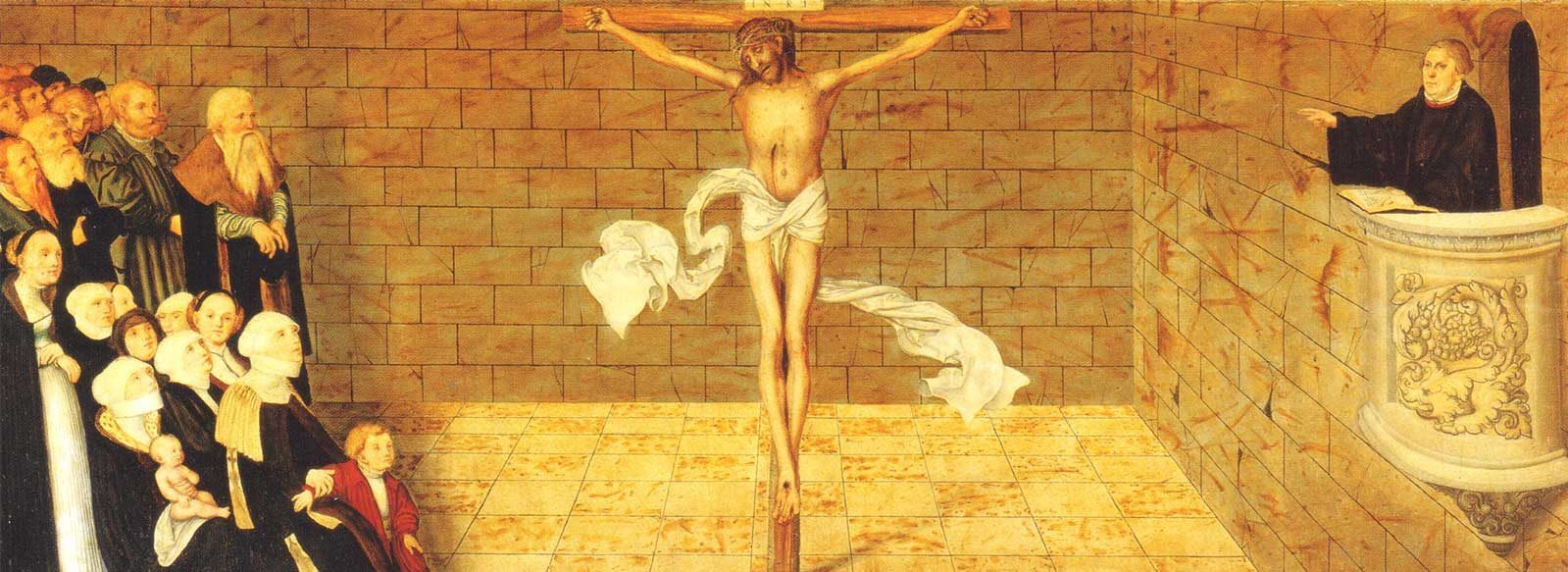
The Old Adam has often linked to his pastor in the past and the sermons have been well worth a listen.  But now he has the mp3s for download so you can stick em on your phone etc.

They are wonderful.  Just listened to"Two Christian paradigms" on John 3 and it gladdened my heart no end.  Go and listen.

And here are more resources by Pastor Mark Anderson.


Audio Powerpoint

A few days ago I was strolling along the beach with my wife.  We bought some amazing tropical fruit from a roadside vendor, I went for a swim and then lay down on a deckchair sipping a cold beer.  I said to Emma “This is the life.”

When have you said that phrase?  “This is the life”?  You might not like hot holidays. Maybe you’d rather go skiing with friends and then sit down by a roaring fire with a big hot chocolate, extra cream.  “This is the life.”

Or you go out and celebrate some success at your favourite restaurant with your favourite people. “This is the life” we say.

It’s funny how rarely we use that saying isn’t it?  We live for awfully long stretches of time without saying “this is the life”.  Apparently most of life isn’t “the life”.  Evidently only very rarely is life THE LIFE.  We have to stop doing everything we have been doing and fly halfway around the world before our life starts to be THE LIFE.  Is that right?  Is it the case that most of our lives aren’t really “the life”?  That would be a real shame wouldn’t it?

Because 36 hours after I said: “this is the life”, we were locked outside our house in the freezing rain, rummaging through our suitcases before concluding our house-keys were somewhere on the continent of Australia. Was this “the life”?  “The life” seemed far away at that point.

But I wonder whether for most of us “the life” seems out of reach.

But John, the author of this letter, thinks very differently about “the life.”  For John “the life” is not a time or a place.  “The life” is a person – a person who was there in the beginning.  A person with whom we now have fellowship.  Look at the first few verses of the letter:

That which was from the beginning, which we have heard, which we have seen with our eyes, which we have looked at and our hands have touched--this we proclaim concerning the Word of life. 2 The life appeared; we have seen it and testify to it, and we proclaim to you the eternal life, which was with the Father and has appeared to us.

This is the life.  Not a time or a place.  A person.  This is the life: Jesus.  He was there in the beginning.  There with the Father.  He came in the middle to live out “THE LIFE” on full display to the world.  John had seen THE LIFE.  He’d walked the dusty roads of Israel with THE LIFE.  When he saw Jesus saying and doing His thing, John said to Himself “THIS is the life.”  Jesus is the life.  And so John wants to tell the whole world about THE LIFE.  Verse 3:

3 We proclaim to you what we have seen and heard, so that you also may have fellowship with us. And our fellowship is with the Father and with his Son, Jesus Christ.

It’s John’s greatest joy to pass on THE LIFE to us.  So that you and I can enjoy THE LIFE, not just when we’re sunbathing by the pool or having drinks with friends, but when we’re locked out of the house in the freezing rain, when we lose our jobs and our health and our friends, our family, even our own lives.  We can lose everything in life and still have THE LIFE.  Because we have Jesus: the Author of Life, the Word of Life, the Meaning of Life.

In all of life we can have THE LIFE.

But it’s a different kind of life to “THE LIFE” we enjoy sitting by the pool.  THE LIFE we seek is usually pretty self-indulgent.  THE LIFE that Jesus gives is self-giving.  THE LIFE we pursue is about sitting back and relaxing.  THE LIFE of Jesus is an outgoing life.

Did you notice in these opening verses: Jesus goes out from the Father into the world.  He “appears” to the disciples who receive THE LIFE and then they go out and tell others.

THE LIFE is Jesus and it’s not a self-indulgent, sitting-back kind of life.  It’s a self-giving, out-going kind of life.

And with that as background, come now to a crucial verse in our passage – chapter 3, verse 16:

...continue reading "This is the life – 1 John 3:11-24 sermon"

10

A sermon on 1 John 1:1-4

Audio here

That which was from the beginning, which we have heard, which we have seen with our eyes, which we have looked at and our hands have touched--this we proclaim concerning the Word of life. 2 The life appeared; we have seen it and testify to it, and we proclaim to you the eternal life, which was with the Father and has appeared to us. 3 We proclaim to you what we have seen and heard, so that you also may have fellowship with us. And our fellowship is with the Father and with his Son, Jesus Christ. 4 We write this to make our joy complete.

It was a good meal, good friends, good wine.  People were relaxing around the table. One man seemed even more relaxed than the rest.  We’re told that

23 the disciple whom Jesus loved, was reclining next to Jesus… Leaning back against Jesus, he asked Him a question… (John 13:23,25, NIV)

This is the Apostle John – the author of this letter.  And the author of John’s Gospel as well.  John remembers this night very well.  He remembers leaning back against Jesus.  And the Old King James version is a lot more literal about the closeness here, even if it uses old fashioned language.  It says:

23 [John was] leaning on Jesus' bosom …

and in the next verse it describes him

lying on Jesus' breast (John 13:23, KJV)

He’s laying his head on the chest of Jesus.

John was one of the younger if not the youngest disciple.  And he calls himself “the disciple Jesus loved.”  Clearly he felt completely at ease with Jesus – leaning back on his chest.  Jesus had just washed their feet, He was teaching them about His Father and because it was Passover they would have been singing hymns around the dinner table.  We can imagine throughout Jesus’ arm around His young friend as John leant back on Jesus.

John knew he could find rest and peace and welcome in the arms of Jesus.  But he also knew just who Jesus is.  You see John begins his gospel reminding us that this Jesus is God’s Eternal Word, the Creator of Heaven and Earth. The opening line to his gospel says, “In the beginning was the Word.”  In the beginning was Jesus. Before the universe – Jesus was there.  In fact He wasn’t just there, John chapter 1, verse 18 says Jesus was “in the bosom of the Father.”  To use the old King James translation.  In the beginning Jesus was in the bosom of the Father.

Jesus had enjoyed for eternity what John enjoyed for those few minutes.  Companionable, contented, joy and love.  That has always been Christ’s experience “in the arms of the Father” if you like.

And then, without breaking fellowship in any way with the Father, Jesus came down into our world as flesh.  As one of us.  Fully God and Fully Man.  So that we might rest in His arms.

...continue reading "In the bosom of Jesus in the bosom of the Father – A Sermon on 1 John 1:1-4"

In this 8 part series we look at our experience through the lens of the children of Israel in the wilderness.

Wilderness Church 1  Introduction  (Deuteronomy 8)

Wilderness Church 2  Saved by the blood  (Exodus 12-13)

Wilderness Church 3  Brought out  (Exodus 14-15)

Wilderness Church 4  Sustained  (Exodus 16-17)

Wilderness Church 5  Guided  (Numbers 9)

Wilderness Church 6  Lead  (Numbers 27)

Wilderness Church 7   Promised  (Numbers 13-14)

Wilderness Church 8  Fulfilled in Jesus (Matthew 3-4)

Twitter widget by Rimon Habib - BuddyPress Expert Developer