Skip to content

13

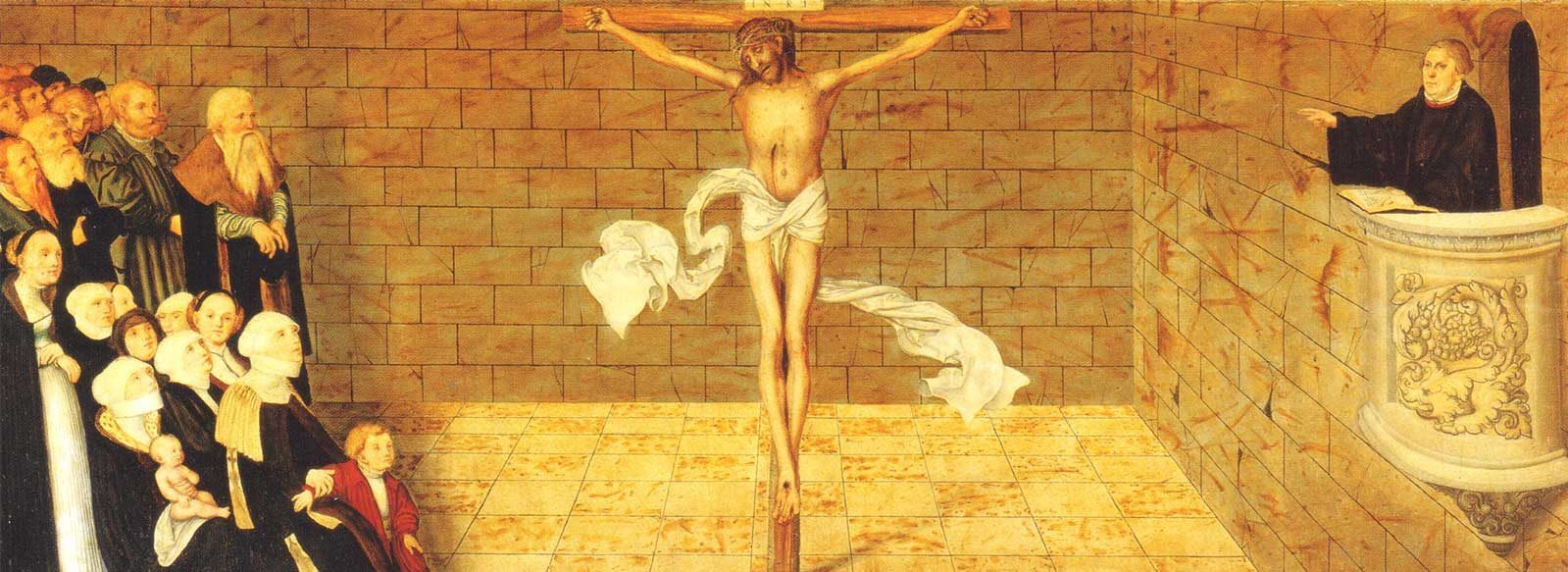
Ok, so Christians and evangelism.  Is everyone supposed to look like this guy?

Or do we send those few nut-jobs out on the street so that we can get on with the the kumbaya's, the marshmallows, oh and "building the kingdom" (insert meaning here).

Well blog du jour seems to be modelling community on the trinity.  So here goes.

The Ultimate community-on-mission is God who is a multi-Personal union moving outwards.  Two things are important here.  First, mission is not just one of the things God does.  His ek-centric life is His very way of being.  Second, the Three do not take on identical roles but Each depends on the Others in order to corporately perform the work.

So now, we are swept up into mission as the Spirit unites us to the One Sent from the Father.  "As the Father has sent me, even so I am sending you." (John 20:21)  We will also share these two characteristics.

First, mission is not just one of the things the church does.  We are sent ones commissioned by the Sent One.  We are created by mission and for mission.

But you are a chosen people, a royal priesthood, a holy nation, a people belonging to God, that you may declare the praises of Him who called you out of darkness into His wonderful light.  (1 Pet 2:9)

It's not that church, from time to time, decides to act in a missionary way.  It is missionary, that is its nature.  So when we became Christians we joined an evangelistic organisation.  If we're in the body we need to know that the body is heading somewhere.  It's always going to the nations to disciple them.  You cannot 'buy into' Christ without 'buying into' evangelism.  The Christian's life and being is now oriented towards this mission.  There is not 'love' or 'unity' as well as 'mission.'  But rather there is love and unity in mission.

But second, as with the Trinity, we don't all do the same stuff.  Same mission, different roles.

Later in Peter's letter he speaks about two broad categories of gifting - speakers and servers (1 Pet 4:10ff).  And he implores them to get on with their particular giftings.

And that's great.  It's so unfortunate when people think of 'evangelism' simply in terms of the guy in the picture!  And it's tragic when  giftings aren't recognized and encouraged.  We want diversity and we certainly don't want to cram people into the same moulds.  So Peter speaks of different giftings - 'speakers' and 'servers'.  But let's not imagine that he has thereby set forth completely different spheres of operation!  That wouldn't be a very good model of the Trinity.

No, think of the diakonos kind of serving spoken of here (which most basically means table-serving, ie hospitality gifts).  And think of combining this with the speaking gifts?  What if the differently gifted church members collaborated in the missionary task - good food and hospitality and those good with words are liberally sprinkled around the place - what a powerful gospel work!

At such evangelistic dinner parties it is very true that some are performing quite different functions to others.  But they are all being thoroughly missionary.  It's a unified diversity and it's going somewhere - to the nations!

If we get our trinitarian styled mission communities wrong...

The Arian church will laud the noble few who do the real missionary work  (i.e. street preaching etc...)

The Tritheist church will have the speakers heading off by themselves and the servers serving a quite different agenda.

The Modalist church will forget giftings altogether and fit everyone into the same mould.

But the truly trinitarian church will allow the particular giftings to flourish in the service of the one missionary aim.

This post was prompted by this and this.  And I wrote some more about this back here.

.

13

Ok, so Christians and evangelism.  Is everyone supposed to look like this guy?

Or do we send those few nut-jobs out on the street so that we can get on with the the kumbaya's, the marshmallows, oh and "building the kingdom" (insert meaning here).

Well blog du jour seems to be modelling community on the trinity.  So here goes.

The Ultimate community-on-mission is God who is a multi-Personal union moving outwards.  Two things are important here.  First, mission is not just one of the things God does.  His ek-centric (outgoing) life is His very way of being.  Second, the Three do not take on identical roles but Each depends on the Others in order to corporately perform the work.

So now, we are swept up into mission as the Spirit unites us to the One Sent from the Father.  "As the Father has sent me, even so I am sending you." (John 20:21)  We will also share these two characteristics.

First, mission is not just one of the things the church does.  We are sent ones commissioned by the Sent One.  We are created by mission and for mission.

But you are a chosen people, a royal priesthood, a holy nation, a people belonging to God, that you may declare the praises of Him who called you out of darkness into His wonderful light.  (1 Pet 2:9)

It's not that church, from time to time, decides to act in a missionary way.  It is missionary, that is its nature.  So when we became Christians we joined an evangelistic organisation.  If we're in the body we need to know that the body is heading somewhere.  It's always going to the nations to disciple them.  You cannot 'buy into' Christ without 'buying into' evangelism.  The Christian's life and being is now oriented towards this mission.  There is not 'love' or 'unity' as well as 'mission.'  But rather there is love and unity in mission.

But second, as with the Trinity, we don't all do the same stuff.  Same mission, different roles.

Later in Peter's letter he speaks about two broad categories of gifting - speakers and servers (1 Pet 4:10ff).  And he implores them to get on with their particular giftings.

And that's great.  It's so unfortunate when people think of 'evangelism' simply in terms of the guy in the picture!  And it's tragic when  giftings aren't recognized and encouraged.  We want diversity and we certainly don't want to cram people into the same moulds.  So Peter speaks of different giftings - 'speakers' and 'servers'.  But let's not imagine that he has thereby set forth completely different spheres of operation!  That wouldn't be a very good model of the Trinity.

No, think of the diakonos kind of serving spoken of here (which most basically means table-serving, ie hospitality gifts).  And think of combining this with the speaking gifts?  What if the differently gifted church members collaborated in the missionary task - good food and hospitality and those good with words are liberally sprinkled around the place - what a powerful gospel work!

At such evangelistic dinner parties it is very true that some are performing quite different functions to others.  But they are all being thoroughly missionary.  It's a unified diversity and it's going somewhere - to the nations!

If we get our trinitarian styled mission communities wrong...

The Arian church will laud the noble few who do the real missionary work  (i.e. street preaching etc...)

The Tritheist church will have the speakers heading off by themselves and the servers serving a quite different agenda.

The Modalist church will forget giftings altogether and fit everyone into the same mould.

But the truly trinitarian church will allow the particular giftings to flourish in the service of the one missionary aim.

This post was prompted by this and this.  And I wrote some more about this back here.

.

6

PLEASE NOTE:  John Frame is not 'a baddie'.  It would be hard to find a contemporary systematic theologian as engaging, clear and humble-hearted as Frame.  He is very easy to like.  And my beef here is down to a certain way of doing trinitarian theology and a certain dislike of scholastic theology and of the doctrine of simplicity in particular.  Those views of mine probably make me the baddie in many minds.  But hopefully we can get beyond caricatures and affirm what is good, be challenged where we need challenging and keep sharpening our intellects and softening our hearts.

What started me thinking about Frame was a great post Pete's written against the idea of "balance": Balance is tritheistic.  We do not seek to walk a tightrope between divine sovereignty and human responsibility or between transcendence and immanence or between unitarianism and polytheism or between faith and works or between evangelism and social action or between any other supposed polarities. As Pete says, such thinking assumes that the 'many' are over against the 'one' - it's tritheistic.

To view this as a trinitarian question is exactly right.  But at one point Pete speaks of 'perspectivalism' as though it was doing the same job as trinitarian thinking.  I don't think it does.  From my reading of Frame, perspectivalism  stems from a consideration of the three Lordship attributes (authority, control, presence) and how they are ultimately identical in the simple divine essence.  What's more when this kind of triadic thinking is applied to the actual Trinity you get modalism (as Frame admits).  Perspectivalism is triadic.  But then Plato's god is triadic.  Allah has an eternal word and a spirit.  Triadic doesn't mean trinitarian.  And I think we're missing a major trick if we think we're being trinitarian every time we co-ordinate a group of three.  There are right and wrong ways to do it.

My fear is that if 'perpectivalism' is seen as the answer to 'balance', then tritheistic balance will just be replaced by modalistic balance.   Both modalism and tritheism share a concern to uphold the equal deity of the Three.  The tritheist does it by cutting them loose from one another while the modalist does it by equally smushing them into the same divine stuff.  Balance for the former means equal air time for the three separate entities.  Balance for the latter means blurring the distinctions and saying they're all deep down the same.

And both are as bad as each other.

Perichoresis on the other hand is the way the ultimate Triad relates.  And I believe this provides a far more helpful way to co-ordinate other relations.  Not least because perichoresis upholds the need for a starting point and a structure.  With perichoresis there is a Beginning and a Way.  And you have to get the Beginning right (you can't start just anywhere).  And you have to continue according to the Way (you can't proceed any old how).

To know God you must begin with Jesus illuminated by the Spirit as He reveals the Father.  That is the only beginning you can make.  Because there is an inherent and non-reversible structure to the relation.  And as you proceed in your knowledge of God your method will be determined by the concrete and asymmetrical (functional) hierarchy of Father, Son and Spirit.

Perspectivalism won't give you this.  If perspectivalism pure and simple is your guide then you are meant to look deep enough into God's 'presence' and you'll get his 'control' and 'authority' thrown in.  Or you'll look deep enough into his 'authority' and you'll see the other two.  Perspectivalism won't give you a starting point or a method.  Not in any hard and fast sense.

But that's a problem.  Because in so many of those polarities mentioned above there are right and wrong ways to relate them.

Take for instance the way Keller uses perspectivalism in preaching.  We need preaching that is doctrinal (normative), personal (existential) and culturally transformative (situational).  Now perspectivalism might be able to tell you to hit all three bases but, by itself, it won't allow you to have a priority nor give you a right method for how to co-ordinate them.  But, in my opinion, you can't just preach cultural transformation trusting that, in the end, this perspective will naturally include the other two.  Rather I'd want to make a strong case for proclaiming Christ's finished work extra nos and only then, on that basis, making personal and cultural applications.  There is a Beginning and a Way inherent to those relations. 

Pete also mentions the relation between evangelism and social action.  I have some very particular views on this relationship.  We must not simply balance up the two "like two wings of a bird" as some would have it.  There is a Beginning and a Way.  The Beginning is gospel proclamation.  And the Way to continue in that relation is under the banner of explicit gospelling. 

Perhaps my biggest beef is in the realm of theological method.  Frame assiduously avoids talk of 'starting points' in theology.  (I'm sure it sounds all too Barthian!)  The centre of theology is, for him, every word that proceeds from God's mouth.  Yet Scripture speaks of matters "of first importance" (1 Cor 15:1ff) and in particular Christ is set forward as the Way, the Truth, the Word, the Image, the Revealer, the Mystery, the Hiding Place of God's revelation (John 14:6; John 1:1-3; Col 1:15f; John 1:18; Col 2:8f; Matt 11:25-27).  There is a perichoretic structuring of revelation that cannot be ironed out.  In theology the Beginning and the Way is Christ or else you have nothing of God. 

I commonly hear people reacting against 'starting points' and 'christocentric methodology' and often this objection is registered with Frame's name somewhere on the horizon.  "Because of perspectivalism we shouldn't get too hung up on certain ways of approaching X, Y and Z."

That's a major, major pity.  And it's absolutely wrong.  The ultimate relational principle is not perspectivalism.  It's perichoresis.  And this gives us every reason to approach theology (and everything else!) expecting structure and hierarchy, beginnings and ways.  Our starting points and methodology are absolutely crucial - the trinitarian nature of reality guarantees it.

A fuller essay on Frame is here

.

What is church like?

Is it a jacuzzi?

Cosy? Relaxing?  A chance for you and your nearest and dearest to recharge the batteries?

Or is it...

A waterfall?

Scary?  Exciting?  Expansive?  Never safe?

Or is it... and here's my new word for the week...

A jacuzzerfall

Here we see the blessings of our close fellowship in Christ flowing out and blessing the whole world.

9But you are a chosen people, a royal priesthood, a holy nation, a people belonging to God, that you may declare the praises of him who called you out of darkness into his wonderful light. 10 Once you were not a people, but now you are the people of God; once you had not received mercy, but now you have received mercy. 11 Dear friends, I urge you, as aliens and strangers in the world, to abstain from sinful desires, which war against your soul. 12 Live such good lives among the pagans that, though they accuse you of doing wrong, they may see your good deeds and glorify God on the day he visits us.  (1 Peter 2:9-12)

This is what church is like - a jacuzzerfall.  (Now go and use the word this week)

And here's my little sermon on the subjectText here.

Afterthought:  Of course God also is a jacuzzerfall, but that's a whole other post...

.

We often think of evangelism and pastoral care as very different practices pulling in very different directions.  "She's a born evangelist but he's pastorally sensitive" we say.  And the thought of a "pastorally sensitive evangelist" sounds as likely as a "compassionate traffic warden."

But speaking as someone with a heart for both let me outline four ways I think these giftings belong together and help each other:

1) Evangelism must be an overflow of the heart or else it's a dead work.  The evangelist should at least be able to pastor his or her own heart.  And as they equip the saints for their evangelistic works (Ephesians 4:11-12) it mustn't be an appeal to simply redouble outreach efforts.  It needs to be the stoking of gospel fires.  If an evangelist doesn't know how to stir hearts for these works of service they can't be an evangelist.

2) Pastoral care must aim for an outwardly focussed definition of spiritual health.  Comfort in affliction is for the sake of passing on that comfort (2 Cor 1).  The goal of pastoral care cannot be individual happiness or a smoother functioning lifestyle.  The goal is to declare the praises of Him who called us out of darkness (1 Pet 2:9) such that we say along with the man of John 9, "I once was blind but now I see."  Pastoral care that stops short of evangelism fails to be true pastoral care because true flourishing as a disciple involves disciple-making.

3)  There's nothing like evangelism for experiencing the wonders of the gospel in your own soul.  Many's the time I've spoken gospel truth to an unbeliever and been struck forcibly by the beauty of the gospel.  Paul wrote to Philemon: "Be active in sharing your faith so that you will have a full understanding of every good thing we have in Christ." (v6)  The nature of the gospel - as the overflow of the triune God's abundant life - means that this gospel will not have its full effect in our hearts until we find it spilling over to others.

4) When the church is nurturing thousands upon thousands who find freedom from depression, self-harm, eating disorders, addictions, etc, etc, it demonstrates the power of the gospel to a broken world.  If we proclaim and live out gospel solutions to the pressing problems of the day the world will see the grace  of Jesus in action.  I believe that pursuing gospel care in these areas will have profound evangelistic impact.

Can you think of other areas where evangelism and pastoral care can help each other?

.

I've had the most incredible couple of weeks in the run-up to our special week of evangelism.  Amazing gospel opportunities along with massive, sometimes bizarre, mostly very tragic disruptions.

In it all I've been reminded that Satan flocks to gospel proclamation like birds to seed.

But take heart - the seed wins in the end.

.

Read Exodus 19

"Watch out for the LORD on the mountain!" said the LORD on the mountain. "When the LORD comes to this mountain," continued the LORD on the mountain, "you won't even be able to touch the mountain."  (v10ff)

Of course these kinds of statements would be absurd if we assumed a uni-personal God in the OT.  But they make perfect sense when we take seriously our theme verse from Exodus 3:12.  It is the Divine Angel - the great I AM - who brings His people to the mountain to meet with God (Ex 3:12).  The LORD Jesus saves a people to serve the Father.

Verses4-5:  He has now brought them on eagles wings (cf Deut 32:11; 2 Sam 1:23; Ps 103:5; Is 40:31) as His treasured possession (Deut 7:6; 14:2; 26:18; Ps 135:4; Mal 3:17).  Their election is for the sake of the world.  They are the treasure in the field (cf Matt 13:44).  The whole field is purchased by the LORD that He might set His special affection on the treasure.  But that special-ness is a priestly special-ness.  The world is purchased for the treasure and the treasure exists for the world.

The whole earth is the LORD's and Israel is His priest to the nations.  The whole purpose for their existence is to bring the nations to God and God to the nations.

In the rest of chapter 19 we get a little picture of priestliness.

The whole nation is commanded to go up the mountain in v13.  Yet when the trumpet blasts and then gets louder and louder (v19), the Israelites remain at the foot of the mountain.  It seems to me that what the LORD (Jesus) says about the LORD (the Father) in v21 is a response to their reticence:

The LORD said to him, "Go down and warn the people so they do not force their way through to see the LORD and many of them perish. 22 Even the priests, who approach the LORD, must consecrate themselves, or the LORD will break out against them."

They were too scared to come up and then the LORD confirms their decision (that's how it seems to me).  And so the nation remains at the foot of the mountain.  The priests come a certain way up.  And (v24) Moses and Aaron (and later Joshua) can come all the way up.  Here is a kind of tabernacle division before the tabernacle.

The nations are right outside the camp.  The Israelites can come a certain distance.  The priests can come up further (with consecration).  But the High Priest / Head / Joshua(Jesus) will go into the heart of the firey/cloudy Presence on behalf of the people.

From now on this kind of priestly access to God will be enshrined in the tabernacle and Levitical laws.  This is what priesthood looks like.  One body acting on behalf of the greater mass. And one man in particular summing up that priestly body.

In Deuteronomy 18 we see what the Israelites were to learn about this:

15 The LORD your God will raise up for you a prophet like me from among your own brothers. You must listen to him. 16 For this is what you asked of the LORD your God at Horeb on the day of the assembly when you said, "Let us not hear the voice of the LORD our God nor see this great fire any more, or we will die." 17 The LORD said to me: "What they say is good. 18 I will raise up for them a prophet like you from among their brothers; I will put my words in his mouth, and he will tell them everything I command him. 19 If anyone does not listen to my words that the prophet speaks in my name, I myself will call him to account.

The Mediating LORD who brought them to the mountain would one day be the Priestly LORD-Man.  No more divisions within Israel between the Son, the High Priests, the priests and the people.  He will be the people, the priest, the high priest, Moses, the temple, the sacrifice all rolled up in one!  And we still remain the treasured priestly people (1 Peter 2:4-6).  We have been brought all the way up the mountain by our ascended Priest.  And now we exist as the priestly nation bringing the world to the unseen LORD through the Saving God-Man.

Sorry this was late.  And rushed...

.

18

I long for church communities that are Christ-centred, grace-filled, all-of-life and intentionally missional.  I love the vision that Tim Chester casts for this and have benefited massively from the resources he's offered the wider church in this direction (see these superb talks for instance).

Let me raise one issue though - it's an issue that generated some good discussion on Tim's blog and I hope it will generate some more here - perhaps from Tim but from any others too.

Tim was writing about the imbalance of resources that many churches pour into "the Sunday morning event".   Very true.  I've heard people speak in hushed tones about some gold standard of sermon preparation - an hour in the study for every minute in the pulpit.  Yowsers!  If that's the cost of gathering around word and sacrament then I can well understand the desire to re-balance the expenditure of resources.

But there's something deeper to discuss than the re-allocation of resources or the degree of formality to our meetings.  What I want to establish is the absolute necessity of the event for the life of church.  Church is not just family, it is also an event and irreducibly so.  I'll say it that starkly because I know how popular it is to speak of church as ongoing-missional-community in opposition to chuch as event.

In our discussions, Tim said this:

Church is not an event, but a Christ-centred community of people with a shared life.

I disagree.  I’d say say church is also an event and irreducibly so.

Church has its being in becoming.  It ever becomes what it is as it hears God's word.  In this way church is the community called out (ekklesia) to listen to its risen Lord in the proclamation of word and sacrament.  This is the centre of the life of the community.

Let me just take one Scriptural example from Paul.  We are one body because we all share in the one bread (1 Cor 10:17). That is pretty stunning language – and it’s very ‘eventist’.  Here is a consummation of one-body-ness in which we become what we are. The event and the on-going life of the body are inter-dependent.

Think of marriage.  The covenant reality is that husband and wife are one flesh.  But there is an event in which they become one flesh (if you were Presbyterian you might even call it covenant renewal!).

It’s commanded in Scripture (cf 1 Cor 7) and it takes time and effort and a measure of ritual and it’s irreducibly an event.  Of course the degree of ritual and cost and time-expenditure will vary according to many factors.  But to imagine I can think of an ongoing covenant life without also thinking about the one-flesh event is a big danger in marriage.

And, by parallel, church life needs to be maintained by consciously enjoyed and anticipated and ritualised “events” in our church life together.  We can't do without them.  And however much it's necessary to speak of day-in, day-out community life we dare not lose language of event either.  The old reformed ecclesiologies speak of gathering around word and sacrament.  They didn't forget that we were family, but they did highlight that there were foundational "events" at the centre of church life.

So we say Yes to shared life, Yes to Christ-centred community.  But the way in which our community is “centred” around Christ takes a certain form.  The centre is an actual, concrete centre around which we orient ourselves.  As Christ's community therefore we order ourselves around the place where Christ is given to us. And He is given to us supremely in word and sacrament.

Tim speaks of the community life of church in these terms:

There is nowhere else when grace is experienced. There is nowhere else where God is present by his Spirit.

I'd say that in word and sacrament there are certain promises attached of God’s special presence by His Spirit.  I think therefore the language of ‘event’ needs to be held onto.

And primarily I think it needs to be maintained for the sake of up-holding two other concerns:

1) We are communities of grace.  Tim is huge on this and I've been very blessed by his insights on this (e.g.).  But if we want to be communities of grace we need to orient ourselves around where Christ is given to us, not primarily around what Christ would have us do.

2) We are communities of proclamation.  Where we honour the “event” of Church, we honour “proclamation”.  While our community life preaches to the world (John 13:35; 17:21) I'd want to co-ordinate this to a centre of verbal proclamation that constitutes and re-constitutes the community.

I'm very well aware that Tim and his churches manage to preserve what I'm seeking to preserve a thousand times better than I ever will.  But I just wanted to raise a flag for the absolute importance of "event" in church life.  I hope you can see why.

.

Together with a couple of other churches, we're running a series of mission events in the week running up to Easter.  It's part of the nationwide Passion for Life initiative.

In writing a press release for the papers I sought the help of a local minister whose first career was journalism.  I told him the line-up of speakers: We have a former high-flying politician (Jonathan Aitken) who was brought down by perjury charges and found Christ in prison.  We have an international sportsman (Henry Olonga) exiled from his own country of Zimbabwe for standing up to Robert Mugabe.  We have a former police officer who forgave the criminal who shot him in the face.  And we have evenings on science and the new atheism.  (By the way, please pray for our events.  We want to see people trust Christ!)

After I ran through all our events he said to me, "Which night do you think people will talk about in the pub?"  That was his diagnostic for a good headline.  And as soon as he said that I knew the answer immediately: The policeman who forgave his almost-killer.  (Read the amazing story here).  He agreed.  That definitely has the biggest wow facter.  There is no power on earth to enable that kind of forgiveness - it is so out-of-this-world.

Just interesting isn't it?  The celebs, the powerful, the big names can't hold a candle to the testimony of an ordinary man who puts the gospel into practice.

For more on forgiveness:

The mad genius of turning the other cheek

Cheek turning 101

.

I've just posted a little advertisement for our Passion for Life mission events held later in the month.

If you scroll down and click the link within that post:  "What's On In Eastbourne" (as many times as you like!) I think it might help us ascend the search engine rankings.  Or something.  You'd think I'd be more web savvy wouldn't you...

.

Twitter widget by Rimon Habib - BuddyPress Expert Developer