Skip to content

From Halden:

“I do not seek my own glory” (John 8:5). With these words Jesus set a precedent for all those who claim to follow him. Fundamental to the call to discipleship is the renunciation of seeking to glorify, to magnify, to enhance and promote oneself.

It is often thought that this calling is based on the distinction between God and humanity. God should be glorified, not us. Therefore we refuse to glorify ourselves and instead glorify God. Indeed, aspects of the Reformed tradition insist that God’s whole aim in being involved with the world is to glorify God’s own self. Thus, we glorify God rather than ourselves because God wants to glorify God’s self rather than humanity.

However, this is all entirely wrong. Jesus, according to the Christian confession is God’s very self come among us. Thus, when Jesus reveals that he does not seek his own glory, he is stating something that is not only to be true about us, but preeminently about God’s own life. God’s life consists in the refusal to seek self-glorification. Rather, the life of the Godhead itself consists in the loving mutuality of the trinitarian persons who only seek the glory of one another. Thus, Jesus seeks the glory of the Father rather than his own, and so also the Father seeks to glorify Jesus (John 7:18). Finally, God also fundamentally desires to glorify humanity: “those he justified he also glorified” (Rom 8:30).

So, we do not reject the quest of self-glorfication to somehow “make room” for God’s desire to self-glorify. Rather we reject self-glorification because that’s precisely what God is like. To reject the quest for self-exaltation is, counterintuitively, the very epitome of what it means to be God-like. We don’t reject self-glorification because self-glorification is reserved for God alone. We reject it because self-glorification in any form is demonic.

From Halden:

“I do not seek my own glory” (John 8:5). With these words Jesus set a precedent for all those who claim to follow him. Fundamental to the call to discipleship is the renunciation of seeking to glorify, to magnify, to enhance and promote oneself.

It is often thought that this calling is based on the distinction between God and humanity. God should be glorified, not us. Therefore we refuse to glorify ourselves and instead glorify God. Indeed, aspects of the Reformed tradition insist that God’s whole aim in being involved with the world is to glorify God’s own self. Thus, we glorify God rather than ourselves because God wants to glorify God’s self rather than humanity.

However, this is all entirely wrong. Jesus, according to the Christian confession is God’s very self come among us. Thus, when Jesus reveals that he does not seek his own glory, he is stating something that is not only to be true about us, but preeminently about God’s own life. God’s life consists in the refusal to seek self-glorification. Rather, the life of the Godhead itself consists in the loving mutuality of the trinitarian persons who only seek the glory of one another. Thus, Jesus seeks the glory of the Father rather than his own, and so also the Father seeks to glorify Jesus (John 7:18). Finally, God also fundamentally desires to glorify humanity: “those he justified he also glorified” (Rom 8:30).

So, we do not reject the quest of self-glorfication to somehow “make room” for God’s desire to self-glorify. Rather we reject self-glorification because that’s precisely what God is like. To reject the quest for self-exaltation is, counterintuitively, the very epitome of what it means to be God-like. We don’t reject self-glorification because self-glorification is reserved for God alone. We reject it because self-glorification in any form is demonic.

Here's the first thing I ever published on the internet.  It's the heart of my website began about 5 years ago.  It's a decent summary of where I'm coming from theologically. This is the introduction to 5 Doctrine of God papers.


The God who is...

Revealed in Jesus

We meet the Living God only in Jesus. He is the sole point of contact between God and the creation. Theology cannot begin without Him nor continue outside of Him. We must be radically and self-consciously Christ-obsessed. This is the mark of Christian theology, distinguishing it from all human philosophy and theistic supposition. Taking every thought captive to Christ is the means by which we will defend true knowledge of God against the countless philosophical accretions which threaten the Church. click here for more


Three Persons United  

Our Christian life begins when we meet the Father in the Son and by the Spirit. The Christian life is, from first to last, a life lived in and by the Three. The Trinity is not special information for the advanced believer. The God we know is the Three Persons united in love. There is no 'more basic' truth to God than the Father, Son and Holy Spirit. There is no real God beneath or beyond the Persons. All talk of the Living God must therefore be about the Persons. Understanding them and deepening our fellowship with them in their relations and roles will be the very stuff of our Christian lives. click here for more


Bigger than you think 

Since God is the Three Persons united, we must not imagine some fourth 'substance' that is somehow more foundational than the Father, Son and Holy Spirit. We must not enquire into impersonal 'attributes' or 'essences' as though they are the bedrock realities upon which the Persons are founded. We understand God's attributes only when we understand His Triune ways and works as revealed in Jesus. We must not come to the Word of God with our philosophical notions of God's attributes and then fit the Persons into these idolatrous moulds. As the Father reveals His character in the Son and by the Spirit then we can see the power, love, wisdom etc of the Living God. Allowing our doctrine of God to be shaped in this way will open our eyes to a God who is bigger than we could ever conceive. click here for more


Love

The Living God is Persons in loving, committed relationship. His will for our life is to be swept up into this eternal love affair and to be agents of His love for the creation. If our doctrine of God is fundamentally impersonal, our Christian lives will consist of duty-bound Pharisaism. If we understand the Passionate God then our lives will begin to conform to the total love of heart, soul, mind and strength which Jesus models and commands. click here for more


Proclaimed by Moses

The Scriptures do not introduce us to God and then to the LORD and then to Christ and the Trinity. Revelation does not progress towards Christ - it begins with Him. Moses and the Prophets proclaim the same Triune God as Jesus and the Apostles. From Genesis 1, the Trinitarian Gospel of the LORD-Messiah is front-and-centre as the focus of all Biblical revelation. In this paper we will briefly run through Genesis and Exodus to see how Christ is proclaimed as the One and Only revelation of the Unseen LORD. click here for more

.


2

Here's a beef of mine - when people almost completely reverse Gregory of Nazianzus's famous trinity quote while expressing admiration for it.  You know the one...

"I cannot think on the one without quickly being encircled by the splendor of the three nor can I discern the three without being straightway carried back to the one.".

I too love the quote.  But many times this is what the quotation is wheeled out to mean:

When I spend 600 pages of my systematic theology expounding a simple divine essence I then force myself to examine the Persons and when I've had enough of discussing the Persons I gleefully return to the omnibeing.

or

After I've thought of the god of monotheism for a bit I make sure I spend at least as long thinking about the gospel.  And once I'm done thinking about the gospel, then I make sure I think about that other idea - you know, god's oneness.

Here's how I reckon the reversal happens.  First people take Gregory to be saying something very basic - i.e. the One and the Three are 'equally ultimate' (or, if you're really posh, equiprimordial!).  Then you run away with the 'equally ultimate' thought and think of it as some kind of 'equal air time' agreement between competing political parties. 

But first of all, Gregory is saying something much more than that basic thought.  Look again at the 'cannot', the 'being encircled' and the 'carried back.'  Gregory is not forcing himself to give equal air time to One and Three.  Gregory says that the Oneness of God actually gives him the Three.  And the Three give Him the Oneness.  It's not that he's ensuring equal treatment, he doesn't need to turn from a consideration of Oneness to a consideration of Threeness.  It's a right contemplation of the Oneness of God itself that presents him with the Three.  And the Three simply present to him as the One God.

This is how the One and the Three are related.  The One God simply is the loving unity of those Three Persons. And those Three Persons simply are without remainder who this One God is.

Trinity simply means 'unity of three'.  That's how the One and the Three are co-ordinated. They are not separate topics to be separately studied.  You cannot talk about the One God if you're not talking about the Three Persons who are the One God.  That's the radical importance of Gregory's insight.

Now go and re-write those 600 pages.

Rant over.

.

It's a law of human resources that the less experience a person has the more adjectives appear on their resume.  "Team-player.  High-achiever.  Fast learner.  Leadership qualities."  Wherever these descriptors are piled up it's designed to hide a worrying lack of achievement.

Dead idols have a rubbish resume.  No educational history.  No work experience.  No prior achievements.  So how are they described?  Adjectives, piled to the heavens.  99 names etc.  Put them in capitals, add the word 'Most', 'All' or  'Ever' and repeat them loudly in the vain hope they won't have to be substantiated. 

Does it ever strike you how few adjectives there are in our creeds.  Instead they are just chock full of verbs.

When we're asked about the Living God we answer with confidence, 'Let me tell you what the Father, Son and Spirit have done...'  Our God simply is the God of the Gospel - the One who has performed these marvellous deeds.

Some verbs I've really enjoyed recently:

24And God heard their groaning, and God remembered his covenant with Abraham, with Isaac, and with Jacob. 25God saw the people of Israel—and God knew. (Ex 2:24-25)

4 I... established my covenant with them to give them the land of Canaan, the land in which they lived as sojourners. 5Moreover, I have heard the groaning of the people of Israel whom the Egyptians hold as slaves, and I have remembered my covenant. 6Say therefore to the people of Israel, 'I am the LORD, and I will bring you out from under the burdens of the Egyptians, and I will deliver you from slavery to them, and I will redeem you with an outstretched arm and with great acts of judgment. 7I will take you to be my people, and I will be your God, and you shall know that I am the LORD your God, who has brought you out from under the burdens of the Egyptians. 8I will bring you into the land that I swore to give to Abraham, to Isaac, and to Jacob. I will give it to you for a possession. I am the LORD.'" (Ex 6:4-8)

2And you shall remember the whole way that the LORD your God has led you these forty years in the wilderness, that he might humble you, testing you to know what was in your heart, whether you would keep his commandments or not. 3And he humbled you and let you hunger and fed you with manna, which you did not know, nor did your fathers know, that he might make you know that man does not live by bread alone, but man lives by every word that comes from the mouth of the LORD.  (Deut 8:2-4)

Beware lists of adjectives in your theology.  It might be a sign you've stopped describing the Living God.  Beware getting embroiled in discussion of what God's like, more than what He's done.  Especially beware discussions of what He can do rather than a concentration on what He has done.

And as you consider how the Father, Son and Spirit are towards you right now, where does your mind go?  Abstract qualities?  No, don't let your mind run to adjectives.  Think of the verbs:

To Him Who loves us (present continuous) and has freed us (past tense) from our sins by His blood...  (Rev 1:5)

Think verbs.  That's what makes for gospel theology and gospel assurance.  It makes all the difference.

.


It's a law of human resources that the less experience a person has the more adjectives appear on their resume.  "Team-player.  High-achiever.  Fast learner.  Leadership qualities."  Wherever these descriptors are piled up it's designed to hide a worrying lack of achievement.

Dead idols have a rubbish resume.  No educational history.  No work experience.  No prior achievements.  So how are they described?  Adjectives, piled to the heavens.  99 names etc.  Put them in capitals, add the word 'Most', 'All' or  'Ever' and repeat them loudly in the vain hope they won't have to be substantiated. 

Does it ever strike you how few adjectives there are in our creeds.  Instead they are just chock full of verbs.

When we're asked about the Living God we answer with confidence, 'Let me tell you what the Father, Son and Spirit have done...'  Our God simply is the God of the Gospel - the One who has performed these marvellous deeds.

Some verbs I've really enjoyed recently:

24And God heard their groaning, and God remembered his covenant with Abraham, with Isaac, and with Jacob. 25God saw the people of Israel—and God knew. (Ex 2:24-25)

4 I... established my covenant with them to give them the land of Canaan, the land in which they lived as sojourners. 5Moreover, I have heard the groaning of the people of Israel whom the Egyptians hold as slaves, and I have remembered my covenant. 6Say therefore to the people of Israel, 'I am the LORD, and I will bring you out from under the burdens of the Egyptians, and I will deliver you from slavery to them, and I will redeem you with an outstretched arm and with great acts of judgment. 7I will take you to be my people, and I will be your God, and you shall know that I am the LORD your God, who has brought you out from under the burdens of the Egyptians. 8I will bring you into the land that I swore to give to Abraham, to Isaac, and to Jacob. I will give it to you for a possession. I am the LORD.'" (Ex 6:4-8)

2And you shall remember the whole way that the LORD your God has led you these forty years in the wilderness, that he might humble you, testing you to know what was in your heart, whether you would keep his commandments or not. 3And he humbled you and let you hunger and fed you with manna, which you did not know, nor did your fathers know, that he might make you know that man does not live by bread alone, but man lives by every word that comes from the mouth of the LORD.  (Deut 8:2-4)

Beware lists of adjectives in your theology.  It might be a sign you've stopped describing the Living God.  Beware getting embroiled in discussion of what God's like, more than what He's done.  Especially beware discussions of what He can do rather than a concentration on what He has done.

And as you consider how the Father, Son and Spirit are towards you right now, where does your mind go?  Abstract qualities?  No, don't let your mind run to adjectives.  Think of the verbs:

To Him Who loves us (present continuous) and has freed us (past tense) from our sins by His blood...  (Rev 1:5)

Think verbs.  That's what makes for gospel theology and gospel assurance.  It makes all the difference.

.


[youtube=http://www.youtube.com/watch?v=_IxG96wpx60&feature=player_embedded]

From Stand Firm in Faith

Any number of things madden me about this:

1. If Jesus is a 'mechanism' for Schori - she ain't a sister.  She's just not.  If Jesus is incidental to the identity of 'God' she's got the wrong god.

2. Apparently Schori looks to fruits of the Spirit in religious teachers to demonstrate their closeness to God.  But then for 'conservatives' to insist on the confession of Christ as Lord amounts to works.

3. Her arguments are about the Abrahamic faiths - but just how does the Dali Lama fit into this?  Is he an anonymous Abrahamite?  Just who is the 'God' who's in charge of this 'salvation'?  Apparently he's not even as specific as the God of Abraham.  Apparently His identity just isn't important.

But one other thought:

4.  I believe we Evangelicals are a bit hamstrung when it comes to answering Schori whileever we remain unclear that Jesus just is the God of Abraham.  When our own reasoning also runs along the lines of "Jesus is essential for us, but not for them" our opposition to this teaching will not be as strong as it should be.

Just a thought.

.

The dumb thing about blogging is that you're always burying your old stuff with whatever nonsense occured to you in the shower that morning.  Almost 500 posts on it occurs to me that newer is not necessarily better and, apart from Bobby, I'm not sure how many of you were following the blog from the beginning.  So because of that (and because I'm lazy!), I'll repost some older stuff.  Probably not every Thursday, but getting old stuff out of the freezer on Thawsdays appeals to me.  Anyway, here's my third ever post.  It's called:

God is not revealed in His Twin

This should be very obvious, but we easily forget it.  Even in the verses that most directly uphold the full and complete revelation of the Father in the Son, the differentiation of Father and Son are also prominently in view:

"Anyone who has seen me has seen the Father" (John 14:9)

"The Son is the radiance of God's glory and the exact representation of his being, sustaining all things by his powerful word. After he had provided purification for sins, he sat down at the right hand of the Majesty in heaven." (Heb 1:3)

"He is the image of the invisible God, the firstborn over all creation." (Col 1:15)

"...see the light of the gospel of the glory of Christ, who is the image of God... For God, who said, "Let light shine out of darkness," made his light shine in our hearts to give us the light of the knowledge of the glory of God in the face of Christ." (2 Cor 4:4-6)

The Father is perfectly revealed, not by His Twin, not by a Clone, but by Someone who is His Complement.  The Father is revealed in His Son, the Firstborn, His Image, His right-hand Man-Priest.  Self-differentiation is at the heart of God's revelation.  Jesus is not the same as His Father and yet fully reveals Him. More than this - this difference is of the essence of the divine self-disclosure.  Self-differentiation in communion is the being of God - all of this is perfectly revealed in, by and through Jesus of Nazareth.

Now to say that Jesus is other to His Father is not an Arian position.  On the contrary this is a determination to see Jesus' revelation as a full disclosure of the life of God.  It was Arius who would leave us short of full revelation in Jesus.  Here we are embracing the otherness of Father and Son as the very deepest revelation of the divine nature. It is because of His equality with the Father that Christ's otherness must be taken as part and parcel of the divine revelation. Because Jesus fully reveals the divine life by speaking of Another, thus He is not obstructing our view of this Other.   Rather the interplay of He and the Other are constitutive of the divine life which He reveals.  Arius is refuted at the deepest level, and all by heeding this simple truth: God is not revealed in His Twin but in His Son.

This should be so obvious and plain and yet so many take their opposition of Arius in precisely the opposite direction.  Their first and fatal move is to maintain that homo-ousios commits us to three-fold repetition.  They assume Father and Son are identical from the outset - all in the name of Nicene orthodoxy (of course ignoring 'God from God...').  Now when they approach the eating, sleeping, dying, rising Jesus they must account for these differences while upholding that the Father and Son possess identical CVs.  What to do with the discrepancies?  Simple.  Ignore the fact that Nicea pronounced the homo-ousios on Jesus of Nazareth and instead attribute all discrepancies to a human nature that is distanced from His divine nature. 

The cost of such a move?  Immediately, the otherness of Jesus is not revelatory of the divine nature, in fact it impedes our view of God. Now to see Jesus is not to see divine life, but merely human.  We have in fact lost the one Image, Word, Representative and Mediator of God.  Jesus of Nazareth has become, to all intents and purposes, homoi-ousios with the Father.  Question marks hover over everything we see in Jesus as to whether or not this reveals the divine life.  We have returned to Arius's problem via another route - we are left short of full revelation in Jesus.

Now if we took seriously the fact that God is not revealed in His Twin but in His Son we would be saved from all of this.  Christ's humanity neither commits us to an eating, sleeping, dying, rising Father, but nor does it distance us from a true revelation of God.  Instead Christ's eating reveals a Father who provides in our frailties, His sleeping reveals a Father who protects in our weakness, His death reveals a living, judging Father, His resurrection reveals a justifying, reconciling Father.  We see into the very heart-beat of the eternal trinity when we see Jesus of Nazareth in all His glorious humanity. 

And all because we have remembered the simple adage: God is not revealed in His Twin, but in His Son!

.
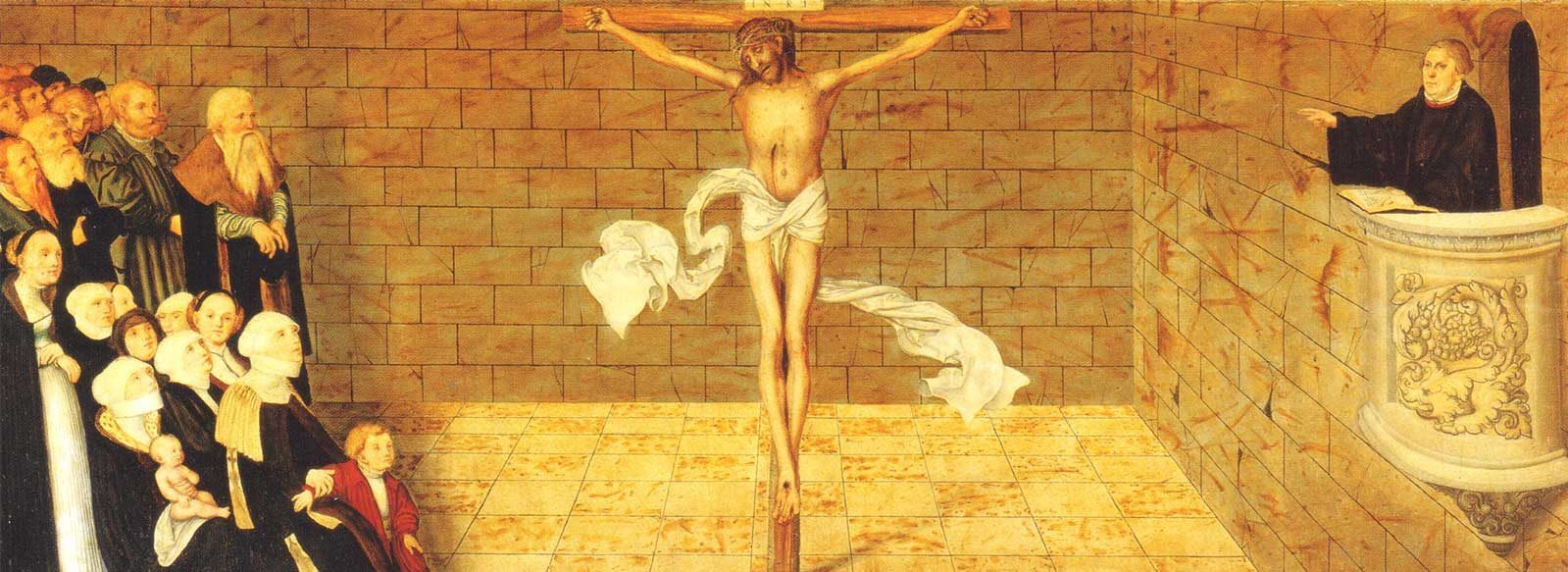
Go to theology network for the full paper on preaching.  I'll post it here in chunks.  Be great to talk about it if you want to comment.

The Speaking God

Let’s begin at the beginning.  Our God is the Speaking God.  The eternal life of Father, Son and Spirit has ever been an out-going, communicative life.  Because our God simply is Trinity there has never been such a thing as a God who then comes to speech.  Arius was wrong.  There is not a God who then has a Word.  God’s existence does not precede His expression.  Rather God’s expression, His Word, is eternally constitutive of His life.  God is always and eternally the Speaking God.  To encounter His Word is not to be obstructed or distanced from a divine reality behind His disclosure.  Rather to receive His Word is to be drawn into the depths of His eternal reality as the Speaking God.  Revelation, as the unfolding of God's own life in Word and Spirit, is not simply what He does.  It is who He is. 

From the overflow of this communicative life came creation.  Again, by His Word and through the Spirit, God brought all things into being (Genesis 1; Psalm 33:6; John 1:1-4).  The universe exists in correspondence to God's Word.  "God said... and it was."  This means that to be is to be an obedient hearer of the Word.  The universe is His congregation and, derivatively, His herald (Psalm 19:1-6). Humanity, as the pinnacle of creation, is supremely called to appropriate God’s revelation.  Our vocation, not simply as Christians but as creatures, is to receive the Word.  And in receiving the Word we participate in the life of the Speaking God. 

What is more, He comes to participate in our life.  In incarnation, the Word comes not simply to man or even just in man, but as man.  God’s revelation could not be louder or clearer.  The Word, Jesus Christ, reveals His Father through His words and actions (e.g. John 14:5-11).  Both these words and actions were committed to Him by the Father (e.g. John 5:19ff; 8:26,38; 10:37f; 15:15; 17:6,14).  These words were entrusted to the disciples and these actions were witnessed and remembered by them, all through the power of the Spirit (e.g John 16:12-15).  In the power of that same Spirit, these disciples proclaimed them to the world (e.g. John 20:21-23; Acts 1:8).  The world’s response to this witness is their response to Christ, and their response to Christ is their response to the Father (e.g. John 14:22-26). 

To put it another way, the Father Himself confronts us in the Person of His Son and the Son Himself confronts us in the Spirit-empowered words of His messengers (e.g. Matthew 10:40).  From Father to Son, from Son to His bride and so out into the world the Spirit carries divine revelation. 

Contemporary proclamation is not simply the remembrance of past events or the recitation of ancient words.  To proclaim this Word in the power of this Spirit is to stand in a stream of revelation which both preceded and produced the universe.  Our words witnessing the Word have their source and authority in the Speaking God who graciously includes us in His ongoing life of self-disclosure.

.

Twitter widget by Rimon Habib - BuddyPress Expert Developer