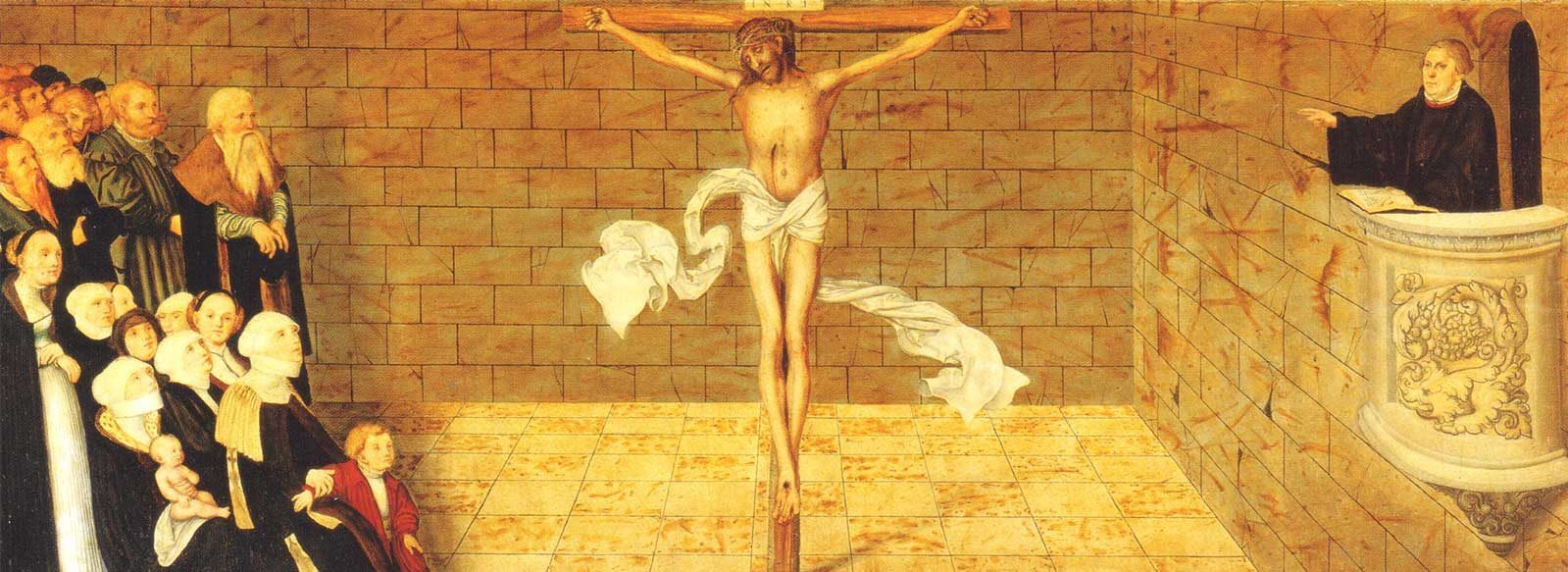
I believe the Bible is the word of God because in it God speaks. This is not an unfortunate circularity. At the end of the day nothing could convince me it's God's word except that God speaks. You could tell me it's great history, it's logically coherent and displays incredible internal consistency as a library of books over many centuries. Great, I believe all those things. But that doesn't make it God's word. The only thing that could authenticate the Bible as God's word is if God personally speaks through it. And at that stage I'm essentially saying that it's God's word because it's God's word.
Or to shift that argument to christology, I believe that Jesus is the Radiance of the Father's glory because in Him I've met the glorious Father. Yet this Father is met only in the face of the Son. In other words, I know that Jesus is Lord because I see in Him the kind of Lord that only Jesus reveals. There is a self-authenticating majesty to Jesus such that I say, along with Lord Byron, "If God's not like Jesus, He ought to be." Jesus is the kind of God that I believe in - the kind of God that Jesus uniquely reveals. He's IT. And I know He's IT because, well, look at Him! Jesus is Lord because Jesus is Lord.
At this point you'll note how inter-related these two circularities are. And also the integral role of the Spirit in both. He brings us God's written word with divine authority, illuminating Christ so that, in Him, we might see and know the Father.
Now "circular arguments" get a bad name. For one thing it sounds like buying into them will trap you. Actually, if you find yourself in the right Circle, you'll finally be free. The Circle of Father, Son and Spirit doesn't limit you. No these ultimate realities (because they really are ultimate) enable you to move out into the world all the wiser for knowing their Lordship. With the Spirit-breathed word, and the Lens of the Father's Son... then you can really get somewhere. From this knowledge you'll find all sorts of other things illuminated by God's Light.
But still, people will cry foul. "You can't reason in a circle" people will say. But hang on, we all employ circular reasoning whenever we make claims about ultimate reality. Didn't your mum ever justify her pronouncements with "Because I'm the mummy"?
It's inevitable that your ultimate ground of authentication must authenticate itself, or it isn't ultimate.
Now this plays out in all sorts of areas. But think, for instance, of the naturalist assumption that the "natural" realm is best placed to judge any hypothetical "further realm". If a "further realm" exists, they say, it must play by the rules of naturalism. This, of course, radically limits the kinds of realms the naturalist would be willing to admit and means that the gods they consider can only be superbeings within the world.
Now the naturalist cannot establish such a priority via naturalism. It is, by definition, beyond the ability of the natural sciences to pronounce on the existence of realms beyond their scope. Yet naturalists assume that the "natural" realm is all there is, was, or ever shall be.
Naturalism, they say, is the best explanation of ultimate reality because other explanations fail naturalistic tests. Or, to put it most simply, naturalism is true (or our best bet) because naturalism says so.
Now let's be clear - belief in naturalism is not a groundless leap of faith. It's a faith commitment that springs from compelling evidence (true faith always does). The evidence is this: trusting our own powers of perception and reasoning has produced great success in the natural sciences. I.e. it works, it explains things, when we move out into the world on its basis things make sense.
But,
1) The Christian does not deny the explanatory power of the naturalistic sciences. The Christian believes that such sciences have sprung from a broader Christian world-view and rejoice in the fruits of the gospel here. Christians simply deny that such knowledge is the only or surest knowledge.
In fact,
2) The Christian sees that naturalism is horrifically reductionistic and harmful when seeking to be applied beyond the natural sciences. As the old saying goes, If all you've got is a hammer, everything looks like a nail. To treat human personhood and relationships, ethics and aesthetics, to say nothing of a relationship with God, as a mere interplay of matter and energy is to misunderstand these things greatly. The explanatory power breaks down here in a catastrophic way. And yet, these things - love, forgiveness, beauty, goodness etc - are the most precious realities in human existence.
In the discussion between Richard Dawkins and Rowan Williams the other day, Dawkins said he "believed" we would find naturalistic explanations for consciousness - explanations which we do not now possess. That is a consistent faith position within his world-view. Naturalism has produced the goods in many spheres of enquiry - he trusts that consciousness will be one more success story for the natural sciences.
Yet all the while an explanation for personal reality presents itself to Dawkins. One which does not rule out science but underpins it. And one which accounts for the priority of the personal which is the most blindingly obvious reality which we encounter moment by moment. Nothing else accounts for it like this accounts for it...
In the beginning was the Word, and the Word was with God, and the Word was God. He was with God in the beginning. Through him all things were made; without him nothing was made that has been made. In him was life, and that life was the light of men. The light shines in the darkness, but the darkness has not understood it. (John 1:1-4)
I honestly don't know why Dawkins - or anyone - can't see it. How can there be darkness when the Light of Christ is so dazzlingly obvious? But then I would say that. I'm in the grip of the ultimate Circularity!

