Skip to content

Sometimes, when I'm sharing with Christians about tough times, I ask them: 'Why do you think God is breaking you down like this?'

Almost without fail they say something like, 'I know, I know, it's to make me stronger.'

No!  No, no, no, a thousand times no!

He's breaking you down to make you broken.  Don't, whatever you do, toughen up!

The sacrifices of God are a broken spirit; a broken and contrite heart, O God, you will not despise. (Ps 51:17)

The LORD is close to the broken-hearted and saves those who are crushed in spirit. (Ps 34:18)

Everyone who falls on that stone will be broken to pieces, but he on whom it falls will be crushed. (Luke 20:18)

.

There's often a point in the crime drama where the bad guy tells the cop 'You and me, we're not so different really.'  Well there are two baddies in the history of trinitarian theology who really aren't that different: Arius and Sabellius.  Arius was the sub-ordinationist.  He defined the One God such that Jesus could not fit in.  Instead Jesus had to take His place under the One God.  Sabellius was the modalist.  He defined the One God such that Jesus was absorbed in, losing everything that made Him distinctly Jesus.  Instead Jesus was just the mask that the One God wore occasionally.  But you know - Arius and Sabellius weren't so different.  They both had a doctrine of the One God that couldn't cope with Jesus.

It was Jurgen Moltmann who really nailed this in my thinking. Check out this quote from The Trinity and the Kingdom of God:

A pre-conceived doctrine of the One God means "Christ must either recede into the series of the prophets, giving way to the One God, or he must disappear into the One God as one of his manifestations." (p131)

Here are the errors of Arius and Sabellius - and Jesus gets either squashed down or squished in.  The distinct Person of Christ will always lose out when 'the One God' is defined without Him.  Arius will allow Him to be Jesus and not God, Sabellius will allow Him to be God and not Jesus.  But fundamentally these errors are not so different because both prefer a pre-conceived 'One God' to Jesus. 

This leaves us no option but to begin with a doctrine of God that expressly includes the mutual relations of Father and Son.  Nothing else will allow Jesus to be Jesus and God.  Moltmann helped me to see what was at stake in this.  To begin with a definition of God that doesn't already include the distinct Personhood of the Son means either Arius's or Sabellius's error.  And, at the end of the day, they're not so different.

This is why Moltmann says:

...the doctrine of the Trinity is not only the deification of Christ; it is even more the Christianization of the concept of God. God cannot be comprehended without Christ, and Christ cannot be understood without God. If we are to perceive this, we not only have to reject the Arian heresy; the Sabellian heresy must be dismissed with equal emphasis." (p131-132)

Christ will never fit into a 'God' defined without Him.  We must begin with Him or else we will never honour Him properly.  The errors of subordinationism and modalism are simply the result of falling off either side of the wrong horse.  We must begin with Christ.

.

There's often a point in the crime drama where the bad guy tells the cop 'You and me, we're not so different really.'  Well there are two baddies in the history of trinitarian theology who really aren't that different: Arius and Sabellius.  Arius was the sub-ordinationist.  He defined the One God such that Jesus could not fit in.  Instead Jesus had to take His place under the One God.  Sabellius was the modalist.  He defined the One God such that Jesus was absorbed in, losing everything that made Him distinctly Jesus.  Instead Jesus was just the mask that the One God wore occasionally.  But you know - Arius and Sabellius weren't so different.  They both had a doctrine of the One God that couldn't cope with Jesus.

It was Jurgen Moltmann who really nailed this in my thinking. Check out this quote from The Trinity and the Kingdom of God:

A pre-conceived doctrine of the One God means "Christ must either recede into the series of the prophets, giving way to the One God, or he must disappear into the One God as one of his manifestations." (p131)

Here are the errors of Arius and Sabellius - and Jesus gets either squashed down or squished in.  The distinct Person of Christ will always lose out when 'the One God' is defined without Him.  Arius will allow Him to be Jesus and not God, Sabellius will allow Him to be God and not Jesus.  But fundamentally these errors are not so different because both prefer a pre-conceived 'One God' to Jesus. 

This leaves us no option but to begin with a doctrine of God that expressly includes the mutual relations of Father and Son.  Nothing else will allow Jesus to be Jesus and God.  Moltmann helped me to see what was at stake in this.  To begin with a definition of God that doesn't already include the distinct Personhood of the Son means either Arius's or Sabellius's error.  And, at the end of the day, they're not so different.

This is why Moltmann says:

...the doctrine of the Trinity is not only the deification of Christ; it is even more the Christianization of the concept of God. God cannot be comprehended without Christ, and Christ cannot be understood without God. If we are to perceive this, we not only have to reject the Arian heresy; the Sabellian heresy must be dismissed with equal emphasis." (p131-132)

Christ will never fit into a 'God' defined without Him.  We must begin with Him or else we will never honour Him properly.  The errors of subordinationism and modalism are simply the result of falling off either side of the wrong horse.  We must begin with Christ.

.

Ok, so the last post put forward church life as an analogy of trinitarian life.  More specifically:

'Differently gifted members of one priesthood' is analagous to 'Differently gifted Persons in one Godhead.'

Once this is seen, then we can all breathe a sigh of relief and just let Jesus be Jesus. 

What do I mean by that?  Well let me ask a few questions.  When you read the Gospels, do you ever wonder:

  • Why doesn't Jesus just say 'I am God'?  Why all this 'I am sent...' stuff?
  • Why does Jesus keep saying things like: 'I can do nothing by myself'? (e.g John 5:19,30)
  • How come Jesus sleeps?
  • How come Jesus doesn't know when He's returning?

Do we get worried when we see that Jesus is 'differently gifted' to the One He calls Father??

Well we needn't be.  It is a revelation of His divine nature (and not a concealment) that we see in Jesus such dependence on the Father.  When He says 'I am sent' it reveals His divine nature as the eternal Son of the Father.  When He says 'I can do nothing' it reveals His divine nature as the eternal Servant of the LORD.  When He sleeps it reveals His divine nature as One dependent upon the ever-wakeful Father.  When He says He doesn't know when He's returning He reveals His divine nature as One sent from God.  He waits on the Father's command and does not initiate His first or second coming.

He really can't do anything by Himself.  He really does sleep (He really does die even!)  He really doesn't know when He's returning.  But for all that He is no less divine.   For He belongs to the other Members and in union with their 'giftings' He is a full participant in the communion that is God.

We don't need to assign these differences in Jesus to some 'human nature' locked off from a special sphere of uncorrupted deity.  Jesus' deity is not insulated from these differences, it includes them.  It is the human Jesus who says 'If you've seen me you've seen the Father.'  It is the human Jesus who says 'Son, your sins are forgiven.'  In His differences, even in His complete humanity, He is the living God.  So let's let Him be who He is in the Gospels.  Let's not fit Him into some pre-conceived notions of divinity.  Let's let Jesus be Jesus.

From Genesis 1, the way of the LORD has always been forming, then filling.

The filled-out reality is there by anticipation even in the forming. The intention for filling is included in the forming. But still the order is ‘form, then fill.':

  • In Gen 1:2 - a formless and empty creation is then formed (days 1-3) and filled (days 4-6) as the Word of God is revealed (Gen 1:3ff).
  • (This is similar to both the tabernacle and the temple where first it is formed, then filled by the Glory of the LORD).
  • Adam is formed (from dust) and then filled (by the breath of the LORD God).
  • Humanity as male and female is first formed in Adam and then filled out in Eve's creation and their consummation.
  • The first Adam is filled by the Last.
  • The people of Israel as the seed of Abraham are filled by Christ, the Seed of Abraham.
  • The law is the form of the covenant and is filled by the gospel events.

In all this we remember that the intention for filling is already anticipated in the forming. The very forming reveals a long-intended desire to fill. The forming sets everything on a trajectory towards something beyond itself.

Is it too much to suggest on this basis alone the supralapsarian tendencies of the Living God? I'll do it anyway!

Eden is not the point. Adam is not the point. Adamic humanity is not the point. Israel and its worship is not the point. All these things are forms, intended to be filled-out by realities to which the forms themselves point but which they do not themselves contain. The intention is always to move through Eden and beyond to the New Jerusalem; through Adam and beyond to the Heavenly Man; through Israel (and its worship) and beyond to the Church of Jesus Christ.

Tellingly, this movement goes through death and out the other side to resurrection.  Thus...

  • The day is not always bright (as it will be in the new creation). Instead it goes from darkness into light.
  • The tree is not first, first comes the seed (John 12:24; 1 Cor 15:37)
  • There are not blessings and curses for Israel as alternative present tense realities but rather the blessings come after the curse. (see Deut 4:23-31; Deut 28-29 culminating in 30:1ff).
  • The cross comes first and then resurrection.
  • The LORD makes the old covenant and then the covenant renewed. (though the new covenant reality is grasped by faith long before both old and new covenants purchased).
  • The LORD makes the old earth and then the earth renewed.
  • First comes my body of flesh and then my spiritual body. (1 Cor 15:44)

.

The Christian therefore knows two incontrovertible facts:

1. All things are forward-looking. The best is yet to come (let's never yearn for Adam, for Eden, for Israel, for old covenant).

2. The path to better things is through suffering: the road to resurrection blessing always goes through the cross.

Psalm 30:5 For his anger lasts only a moment, but his favour lasts a lifetime; weeping may remain for a night, but rejoicing comes in the morning.

Psalm 126:6 He who goes out weeping, carrying seed to sow, will return with songs of joy, carrying sheaves with him.

1 Peter 5:6 Humble yourselves, therefore, under God's mighty hand, that he may lift you up in due time.

.

11

When discussing the priesthood of all believers I tried to highlight the corporate nature of our priestliness.  I only find my priestliness in union with Christ and in union with others.  Both are essential.

The priesthood of all believers is not a priestliness that is the private possession of each believer.  If we argue like this then the very basis for the doctrine is undermined.  If I claim priestliness in myself then I can be priestly without you.  And if this is admitted then my different gifted-ness and the distinct exercise of my priestly gifts will easily appear as a different order of priestliness to yours.  And once we say that we're a hop, skip and a jump from a priesthood of the few.

No - the priesthood of all believers upholds that, while having different gifts to you and while exercising them in different ways, I cannot be priestly without you.  Yet with you I am both priestly and I have your gifts - for you in your giftedness belong to me, and I to you (Rom 12:5ff).

In thinking this through the connections with trinitarian theology suggest themselves pretty readily.  In John 17, Christ prays for a priestly church unity.  That is, He prays that the church be united as witness to the world. (see v18, 21, 23).  In v21 and 23, Christ makes clear the proto-type for such priestly unity: the Father-Son union.  So in thinking about Church and gifts, there seem to be some fruitful lines of enquiry into Trinity and attributes. 

In this post I'll consider things from Trinity => church.  In my next post I'll think of church =>Trinity.

As we consider things from Trinity => church. It seems like the major trinitarian heresies are easily seen in our understandings of church.

tritheism: a 'trinity' of separable Persons becomes, in church practice, separable priests - lone-ranger, hit and run  evangelists divorced from the corporate life of the church.

modalism: a one-ness in which the Persons lose their distinctiveness becomes, in church practice, a forcing of church members into the same mould.  Everyone must exercise every gift.  Training in mission = making everyone do street-evangelism.  That kind of thing.

subordinationism (Arianism): The ontological subordination of Son and Spirit becomes, in church practice, the suborination of the non-full-time Christian workers.  It's the old two-tier way of life first espoused by Eusebius but replicated today.  The 'perfect' are the priests (nowadays the 'full-time Christian workers'), the 'permitted' are the regular folk (nowadays those whose tithes support the 'full-time Christian workers'). 

The antidote must be to go back to the trinity and understand again how the many are one.  Not competitively, not identically, not merely apparently.  Rather the one-ness (of God and of church) is a unity of distinct Persons whose belongingness to one another makes them who they are.  

I am - in all my differentness to you, in all my distinct gifting and role - one with you in the mission that constitutes both me and the church.  Without you I have no mission, in fact I have no ecclesial being - that is, I am not a Christian.  I have my life and being and we have our mission to the world only because we belong together at the very deepest level.

20 "My prayer is not for them alone. I pray also for those who will believe in me through their message, 21 that all of them may be one, Father, just as you are in me and I am in you. May they also be in us so that the world may believe that you have sent me. 22 I have given them the glory that you gave me, that they may be one as we are one: 23 I in them and you in me. May they be brought to complete unity to let the world know that you sent me and have loved them even as you have loved me.  (John 17:20-23)

.

Rest of series:

Part two

Part three - Let Jesus be Jesus
I'm no expert on the historical use of this phrase but surely there are some unhelpful ways of spinning this evangelical touchstone.  Here's what I think the phrase must protect:

  • The church as a whole is the only earthly priesthood the NT recognizes.  (Ex 19:6; 1 Pet 2:9; Rev 5:10) 
  • Every Christian has equally entered this priesthood. 
  • None is more priestly than another. 

To this should be added the indispensibile prior truth: Christ is our one and only, all-sufficient Priest.  (How easy it is to trumpet the priesthood of us against catholic understandings.  How much better to lead with the priesthood of Christ.  But that's for another time!)

So this is what we are protecting by the phrase.  BUT surely what we can't mean is:  Every individual is equally a priest in themselves.  Here is the great danger of misunderstanding the phrase - I may start to look for my priestliness in myself.  That is, I may say 'the priesthood is all believers; I'm a believer; therefore I, on my own, am a priest.'  To think like this is to completely invert the intention of the doctrine.  My priestliness is found only in union with Christ and with the corporate priesthood that is His body.  And I must look for priesthood in both those places - first in Christ and second in His body.  But never in me!  I, on my lonesome, am not a priest. I, on my lonesome, cannot begin to bring God to world or world to God.

Why is this important?  Well, let's just think of the implications for evangelism:

1. Upon trusting Christ I have joined a priestly body and therefore my whole existence is now caught up in priestly work - i.e. mediating God to world and world to God.  But...

2. It is a priestly body and so I must never do this in isolation.  The self-funded, self-governed, one-man evangelist is not godly evangelism.

3. Because there are many parts but one body (1 Cor 12:20) we can honour the different parts without forcing 'hands' and 'feet' to be lips!   In other words we shouldn't force non-speaking-gifted Christians into speaking roles.  But...

4.  We do have to encourage speakers and servers (1 Pet 4:10f) together to utilise their complementary gifts in mission.

That seems fairly straightforward.  And yet. 

  • How much of a church's evangelistic strategy simply involves bringing the non-Christian to the pulpit?
  • How much of evangelism training simply equips individuals for solo-witness? 
  • How much of it simply equips individuals for their verbal 'answer'? 
  • What does the average church-goer think of when they think of evangelism - corporate or individual?  The 'answer' or more than that? 
  • How many of the church's exhortations to evangelism are straight-forward challenges for 'hands' and 'feet' to be 'lips'?
  • How little do we encourage members of the body to come together organically and complement one another in mission? 
  • How do Christians feel who aren't gifted speakers - do they feel that they are just as missionary, just as priestly?

I think much of these problems come from an individualizing of the 'the priesthood of all believers'?  We have turned something inherently corporate into a private possession of each member.  As soon as this happens then I can be an evangelist without you.  The 'lips' get on without the 'hands' and we quickly revert to a 'priesthood of the few' - just via another route. 

.

Anyway, these thoughts have come out of preparation for this sermon on 1 Peter.

.

I'm no expert on the historical use of this phrase but surely there are some unhelpful ways of spinning this evangelical touchstone.  Here's what I think the phrase must protect:

  • The church as a whole is the only earthly priesthood the NT recognizes.  (Ex 19:6; 1 Pet 2:9; Rev 5:10) 
  • Every Christian has equally entered this priesthood. 
  • None is more priestly than another. 

To this should be added the indispensibile prior truth: Christ is our one and only, all-sufficient Priest.  (How easy it is to trumpet the priesthood of us against catholic understandings.  How much better to lead with the priesthood of Christ.  But that's for another time!)

So this is what we are protecting by the phrase.  BUT surely what we can't mean is:  Every individual is equally a priest in themselves.  Here is the great danger of misunderstanding the phrase - I may start to look for my priestliness in myself.  That is, I may say 'the priesthood is all believers; I'm a believer; therefore I, on my own, am a priest.'  To think like this is to completely invert the intention of the doctrine.  My priestliness is found only in union with Christ and with the corporate priesthood that is His body.  And I must look for priesthood in both those places - first in Christ and second in His body.  But never in me!  I, on my lonesome, am not a priest. I, on my lonesome, cannot begin to bring God to world or world to God.

Why is this important?  Well, let's just think of the implications for evangelism:

1. Upon trusting Christ I have joined a priestly body and therefore my whole existence is now caught up in priestly work - i.e. mediating God to world and world to God.  But...

2. It is a priestly body and so I must never do this in isolation.  The self-funded, self-governed, one-man evangelist is not godly evangelism.

3. Because there are many parts but one body (1 Cor 12:20) we can honour the different parts without forcing 'hands' and 'feet' to be lips!   In other words we shouldn't force non-speaking-gifted Christians into speaking roles.  But...

4.  We do have to encourage speakers and servers (1 Pet 4:10f) together to utilise their complementary gifts in mission.

That seems fairly straightforward.  And yet. 

  • How much of a church's evangelistic strategy simply involves bringing the non-Christian to the pulpit?
  • How much of evangelism training simply equips individuals for solo-witness? 
  • How much of it simply equips individuals for their verbal 'answer'? 
  • What does the average church-goer think of when they think of evangelism - corporate or individual?  The 'answer' or more than that? 
  • How many of the church's exhortations to evangelism are straight-forward challenges for 'hands' and 'feet' to be 'lips'?
  • How little do we encourage members of the body to come together organically and complement one another in mission? 
  • How do Christians feel who aren't gifted speakers - do they feel that they are just as missionary, just as priestly?

I think much of these problems come from an individualizing of the 'the priesthood of all believers'?  We have turned something inherently corporate into a private possession of each member.  As soon as this happens then I can be an evangelist without you.  The 'lips' get on without the 'hands' and we quickly revert to a 'priesthood of the few' - just via another route. 

.

Anyway, these thoughts have come out of preparation for this sermon on 1 Peter.

.

"A new command I give you: Love one another. As I have loved you, so you must love one another. By this all men will know that you are my disciples, if you love one another." (John 13:34-35)

"May they be brought to complete unity to let the world know that you sent me and have loved them even as you have loved me." (John 17:23)

"You are the light of the world. A city on a hill cannot be hidden. Neither do people light a lamp and put it under a bowl. Instead they put it on its stand, and it gives light to everyone in the house.  In the same way, let your light shine before men, that they may see your good deeds and praise your Father in heaven." (Matt 5:14-16)

The congregational life of the church has breath-taking potential.  We are on show to the world - even beyond this world! (Eph 3:10).  Jesus wants the world to look on and to say "The love these people display reminds me of Christ.  This love is out of this world. Now I believe that Christ came from the Father.  Praise be to God!"

If we took this seriously we would see that there is not 'fellowship' on the one hand and 'mission' on the other.  But in the plan and purpose of Jesus our fellowship is missional.  Our life together is to the end that we witness to the world.  We are a missionary body - a kingdom of priests. (Ex 19:6; 1 Pet 2:9; Rev 5:10).  The community of the church is not a community for its own sake but for the sake of the world.  This outward focus is constitutive of our life together.  Thus we are neither a 'holy huddle' nor a loose association of evangelists. 

These are the two errors we could fall into.  On the 'holy huddle' side we may invest in community life for its own sake.  And yet Jesus expects that the world will be able to see our united love.  On the other side we may neglect our brothers and sisters for the sake of mission.  Yet this is impossible if we've understood Jesus' commands above.   Loving the 'brotherhood' is missional.  Thus when Paul says to do good "especially to those who belong to the household of faith" (Gal 6:10) it is not simply an inwardly-looking nepotism.  The love of the Christian family is the shop-window of the gospel and has unparalleled magnetic potential!

The question in practice is how do we make this gospel fellowship visible to the outside world?  I have three suggestions, I'd love to hear any that you have.

  1. Churches should keep 'church' commitments to a minimum so that Christians can actually engage in the world around us.
  2. Home groups should be places where non-Christian friends can come along and see fellowship (over meals preferably)
  3. Church members should be encouraged to collaborate in efforts to 'infiltrate' clubs, sports teams, bars etc.  This way Christians can 'love one another' before the watching world rather than having guerilla soldiers go on individual 'raids.'

Any other thoughts on the practicalities of this?

.

For a sermon I just preached on John 13 which prompted these thoughts go here.

.

9

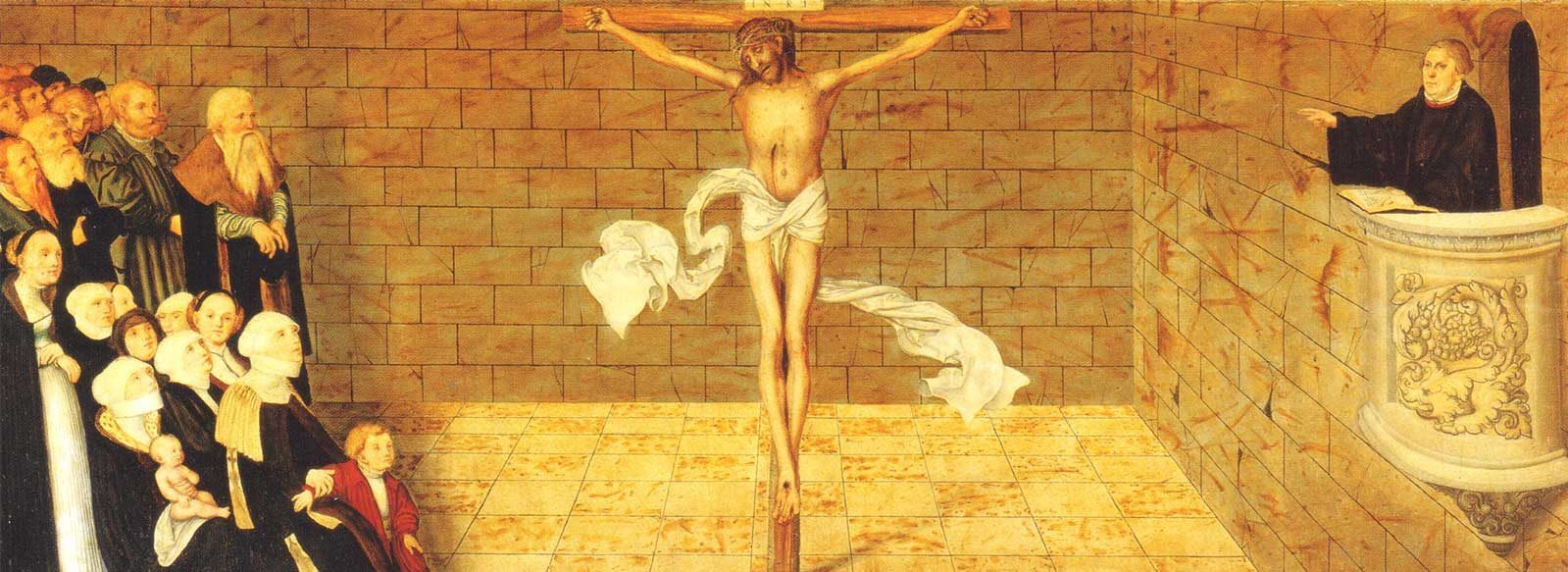
State, Explain, Illustrate, Apply.  That's apparently the blueprint for the young preacher.  Find three points in the text (regardless of the genre of the passage, regardless of how many 'points' the Scripture might be making).  For each of the points (it's best if they all begin with 'P'): state it, explain it, illustrate it and - in a discrete section of the sermon - apply it. 

This almost inevitably means turning each point into a law to be enjoined on the congregation.  Thus: point one - Jesus is faithful.  Application - how will you be faithful this week?  For the preacher who is very keen on 'application' they will offer all manner of suggestions as to how the congregation can be faithful in the minutiae of their lives.

All this begs the question: what is preaching for?  If it is faith that comes by hearing why do our sermons aim at awakening works?   Why do both preachers and congregations love to cut to the 'application.'  You know the phrases that get a whole church wide eyed, edging to the front of their pews, pliant in the preacher's hand: "Now where does the rubber hit the road?" "What about on a Monday morning?" "How does this play out in the nitty gritty of life?"  And of course the answer given by the preacher (the answer that all our flesh longs to hear) is "You've heard this abstract, 'unearthed' stuff about Christ's righteousness, now, go, establish your own righteousness in your home, school or office.  You've heard of Christ, now you go and be the Faithful One." 

On this understanding, application looks like this:

preaching 1 

In my experience the more 'concrete' and 'earthed' an application the better.  Specific moral instructions are thought to really liven up the sermon.  Now of course this puts a huge onus on the preacher to be able to discern the thoughts and attitudes of the heart - something which surely only the Spirit by His Word is competent to do.  And the more specific these applications become the more easily they slide off the backs of a congregation safe in the knowledge they didn't commit that sin this week. 

But that's not the real issue with such an understanding of 'application'.  The real issue is - what are we aiming at in preaching?  Here's my question: what if we took seriously the fact that the gospel is to be believed?  Christ is to be received.  The Word is to be heard.  What would application look like then?  I suggest it should look much more like this:

preaching 2

Application ought to be the pointed driving home of the gospel.  It is the lively and repeated application of the Word to the heart of the congregation to the end that it might be believed.  It is not the derivation of principles which can then be turned into moral instruction.  Application is the Spirit's work of awakening faith in the Christ who we proclaim.  It is a work which we cannot perform ourselves but to which we are called nonetheless.  In prayerful dependence we follow the way of witness in the Scriptures as they point to Christ.  And we point too.  With excitement, with passion, with entreaty.  And we say like Moses did regarding the bronze serpent: Look and live!

.

Twitter widget by Rimon Habib - BuddyPress Expert Developer