Skip to content

3

Here are handouts from a marriage course my wife and I ran recently:

Session 1

Session 2

Session 3

What kind of oneness - part 1

What kind of oneness - part 2

.

SERMON AUDIO HERE.

On Saturday our church witnessed a tremendous picture of the book of Proverbs.  The vicar married his son to a wise and beautiful woman.  It was a very joyous occasion.  And it perfectly pictures the book of Proverbs.

Because Proverbs is all about a father – King Solomon – addressing his son, the young prince.  And he keeps saying, over twenty times, “my son, my son, my son.”  It’s a case of saying, “Now boy, here’s what you need in life.” You can almost imagine it as the vicar and his son having a father-son chat.

And as you read through Proverbs essentially Solomon’s advice to his son is this:  Watch out for the ladies!

In fact there are two ladies you need to look out for.

There’s a lady called Wisdom – get her, embrace her, marry her.  There’s a lady called Folly – avoid her, don’t listen to her, don’t be ensnared by her.

And the King keeps saying to his son, the young prince – embrace wisdom, shun folly.  All of life essentially boils down to one of two paths.  Will you go wisdom’s way, or will you go folly’s way?  The way of wisdom is the way of life and success.  The way of folly is the way of death and disaster.  Everything depends on shunning folly and embracing wisdom.

But what’s fascinating is that King Solomon does not present this choice as a matter of the intellect.  It’s not just about applying ourselves to learning and head knowledge.  And neither is this choice a matter of the will – as though we just need to be determined and resolved and just do it!.  No, wisdom and folly are matters of the heart.

Our lives are ultimately a success or a failure depending on what we love.  Or rather on Who we love.

...continue reading "Marriage in Proverbs – a sermon"

3

Just playing around with some thoughts.  Comments welcomed...

Jesus Christ crushed the head of Satan (Gen 3:15); drove out the devil (John 12:31) and disarmed the rulers and authorities, putting them to open shame and triumphing over them (Col 2:15).

How?

Through dying on a cross.

He didn't come down from the cross to bust out some ultimate fighting moves on the devil.  It's not that, as He died, the Spirit went to work on Satan behind the scenes with baseball bats and chains.  The cross wasn't Christ's non-violent resistance stunt distracting us while the elect angels went ballistic on the forces of evil.

No, it's all there on Golgotha.  The all-time decisive cosmic face-off did not involve hordes of spiritual forces doing battle in the heavenlies.  It involved a lonely Man on a lonely hill.  The taunts of the devil rang out from the lips of His enemies: "If you are the Son of God, come down now from the cross."  The diabolical onslaught did not come through waves of black magic but through the simple appeal to use power and save self.

The greatest ever spiritual battle involved the simple choice of whether this Man would obey His Father or serve Himself.  The height and width and breadth of the battlefield was that single cross.  The one Victor was that Champion strung up on a tree.  Right there this defenceless Man was crushing, driving out, disarming and triumphing over evil once and for all.

What does that tell you about evil?

Well if it was something like an equal and opposite force, then you might expect a heavenly punch-up.  But it's not.  It's not a created thing but a perversion.  It's a parasite, distorting everything good and pulling it down into oblivion.  (See these recent Mike Reeves talks on evil for more).

And so the Author of Life enters into this matrix of death.  Christ absorbs this evil at its worst and transforms it.  He does this, not by taking it seriously as a legitimate opponent but by entering it in simple obedience to His Father's will.  As this Man trusts God - even in the jaws of death - He reverses the cycle of self-assertion and self-vindication.  This cycle is the very opposite of God's own life and therefore the quintessence of evil.  So the Source of good goes to the heart of evil and, by turning the other cheek, overturns the whole thing.

Therefore we get the ultimate Genesis 50:20 moment.  Even what Satan intends for evil, God intends for good.

So, again, evil is not granted an existence alongside God and His creation-redemption agenda.  It is a perversion which is then taken up into the purposes of God and made to serve Him.

Well then.  We stand, clothed in Christ and His victory.  And the evil one, thrashing around in his death-throes, fires some flaming arrows our way - some mixture of temptations and condemnations.  And both James and Peter tell us "resist the devil" (1 Pet 5:9; James 4:7) and James adds the promise "and he will flee from you."

That's always seemed to me an extraordinary promise.  Doesn't it sound a little far fetched to believe that I can send Satan scurrying into the night?  Yet that's exactly what "fleeing" means - running scared.  And how are we going to make Satan flee from us?  Simply by resisting him.  That just means 'standing against' him.  He wants you to indulge a craving, you simply stand against it.  Nothing more, nothing less, just resist.  He wants you to wallow in past sins, you simply stand against it.  And the devil runs for his life!  He has met a Christian - a little Christ - one clothed in the Champion and employing those same tactics.

If that sounds incredible to us, maybe we don't properly understand Satan or his defeat.  Recently the devil's been coming at me with some recurring thoughts about myself.  Ordinarily I'd get embroiled in an endless round of indulging the thoughts and then condemning myself for them.  Either way he wins.  I can't explain exactly why but of late I've just known a real freedom to laugh at the temptations - whether I've caught myself entertaining them or not.  Whatever.  I'm not called to engage Satan mano e mano.  That battle's been won.  And I don't get to nip his temptations in the bud - that's not an option.  My job's pretty simple.  Just stand in Christ and refuse to take his temptations seriously.

And maybe to fart at him.

.

My broadband's down for a while so I'm just emailing this in from my phone. I won't be able to write or respond for a bit but I will be getting your comments.

So why don't you help me out with something I'm thinking through: How should we go about enthusing Christians for evangelism?

Any thoughts?

How should we respond to sin in our lives?

One response is to think 'Come on Glen, I'm better than that.'

Another is to think 'Come on Glen, Christ is better than that.'

The first may produce a very moral life.  But the devil is more than happy to concede to you a Christ-less morality.  Self-righteousness is a far muddier swamp than unrighteous living.  I am not better than my sin.  I am not even better than the foulest evil I've imagined.

Instead, when I sin I am revealed as the person I've always been.  Psalm 51:5 has often struck me.  Here is David with blood on his hands.  Yet his confession is that the man who committed adultery and murder is the man he had always been.

We think when we've sinned that it was just a blot on our otherwise acceptable record.  The word of God says our sins simply express the person we have always been (Matt 7:17f). My gross sins are not 'out of character' - they are me with the hand-brake off.

No sin can shock me.  Not my own, nor the sins of my brothers and sisters who confess to me.  If the blood of God was shed for my sin (Acts 20:28) - then my sin is infinitely heinous.  No, I'm not better than sin.  But Christ is.

This is true in two senses.

First it's true in the sense that Christ is more desirable than sin.  In the wilderness of temptations, Satan can only offer me a bucket of salt.  Christ always stands before me with living waters (John 4:10; 7:38; Rev 7:17).  The father of lies tells me life is found in this sin.  Jesus tells me it's a broken cistern that can hold no water.  Only His waters are truly life-giving. (Jer 2:12-13)  I forsake even my precious sins because I have learnt that Jesus is more desirable.

But Christ is better than sin in another, much more important, sense. For He is the good person that I fail to be.  He is the reality that stands before the holy Father - not my sin.

My sin, though it clings to my bones and sinks to the depths of my heart, does not define me, Christ does.  When the Father looks to find me, He does not look in the record that stands against me (Ps 130:3; Col 2:14).  He looks to His Beloved Son and finds me hidden there.

Which means even as the diseased tree of my flesh produces in me the very worst fruit, Christ is my Plea, my Status, my Righteousness.  Even as the chief of sinners, even in the act of my worst rebellion, Christ - the One who is infinitely better - defines me and not my sin.

So Christ is better in both these senses.  But - and here's where this post has been heading - without being utterly convinced of this latter sense, the former sense could easily lead to a Pharasaism not unlike the 'I am better than sin' response.

How so?

Well if I respond to sin simply by saying 'Jesus is more desirable' it basically throws me back on myself.  I am left with my own heart and its ability to desire Jesus.  The work of annihilating sin becomes simply my work of destroying my heart idols.  The work of liberation is simply the work of my affections desiring Christ with sufficient ardour.  Where is the locus of this redemption?  Me.

Now do my heart-idols need crucifying?  Yes.  Do I need Christ uppermost in my affections?  Yes.  But by golly, if I found it hard to reform my outward behaviour - how hard is it going to be to reform my inner world??!  Impossible.

So, you say, that's why we need the gracious work of the Spirit and diligently to employ the means of grace, etc, etc.  Well... there's a time and a place for that.  But let's think.  If that's our bottom line, doesn't it sound exactly like the Catholic view of grace?  "It's all of grace" says the Catholic "... supernatural, infused grace worked in us, with which we cooperate, making us better and better over time."  Doesn't that sound very similar to "We fight sin by enflaming our affections for Christ - flames stoked by the Spirit via His means of grace"?

It's not that there's no place for the 'Christ is more desirable' approach.  It's that we must recognize it's true place - i.e. after we're assured of the extrinsic work of Christ.  "Grace" is not basically a supernatural empowerment to work at my salvation or to enflame my Christian affections.  "Grace" is the work of Christ alone on behalf of sinners who contribute nothing.  (This is similar to the points I made here - grace is not so much the bread David provides as the victory David wins).

Therefore my first reponse to sin is this - even in the very midst of sin, Jesus has been carrying me on His heart before the Father.  Even ensnared in the darkest selfishness, the Spirit has been calling 'Abba' from within me.  Even as my heart desired worthless idols, the Father loved me even as He loves Christ.

This is the truth that really changes us.  It reveals to us that not even our sin can separate us from the love of God in Christ.  We realize again that our darkness is not a locked basement to the Lord.  Even our self-willed rebellion cannot remove us from His embrace.  We sin in His face - this drives us down in contrition.  And at the same time He is lifting us up to the Father.

The truth that really changes us is that our lives are not our own.  Jesus has taken possession of us in spite of ourselves and wills to do us eternal good.  The Spirit of sonship is already praying 'Abba' in you.  The affections you are so keen to enflame are already ablaze - and that, even as you quench Him!

Now surrender. Now be conquered. Now receive what is entirely beyond you.  And see if you don't love Him with renewed and supernatural vigour!  But don't begin with your heart for Christ.  Begin with His heart for you.

We love because He first loved us. 1 John 4:19

.
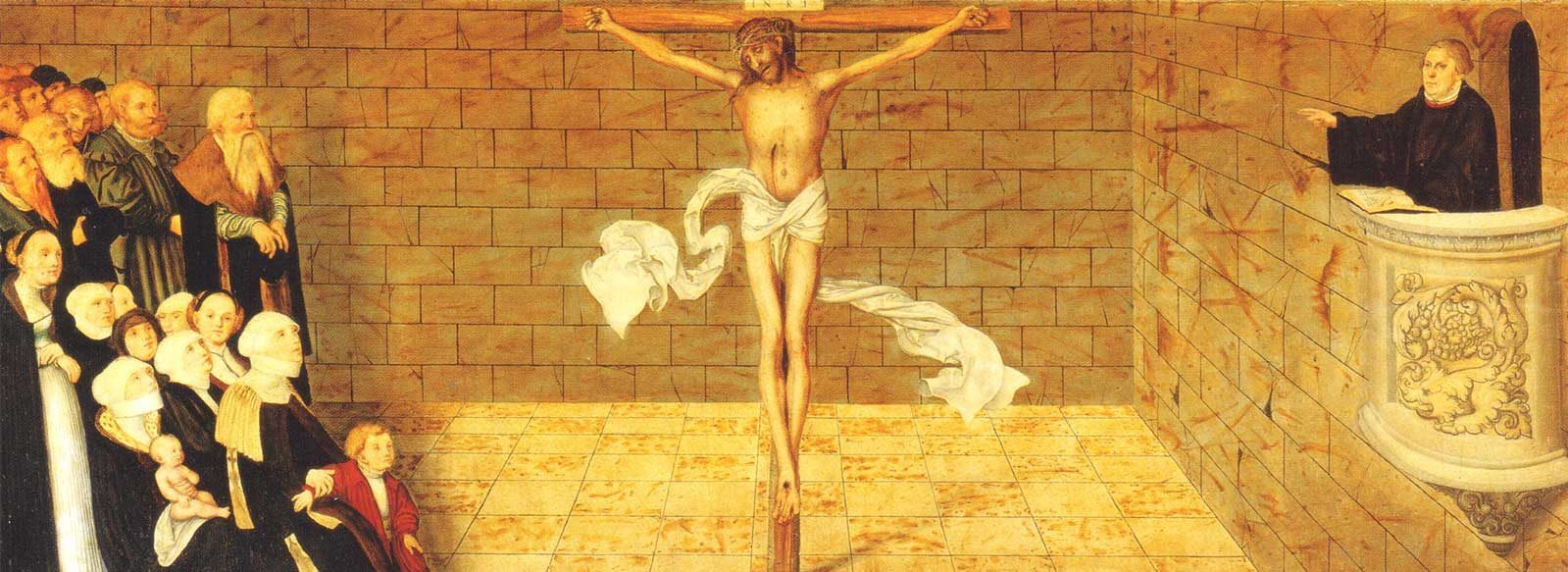
When I was at Oak Hill, John Frame's "Doctrine of the Knowledge of God" was referred to by students as 'The greatest book in the world ever'.  Oak Hill was that kind of place.  But more and more, through people like Tim Keller and Mark Driscoll, I'm hearing Frame's stuff - particularly his perspectivalism - cited in reformed circles.  If you've never heard of Frame or perspectivalism, skip this post.  I'll get to some implications in a follow up.  For those who are all too interested here's a longer essay I've written on his Doctrine of the Knowledge of God.

But for the low-down, his big idea goes something like this...

As finite creatures we don't see things from all the angles like God does.  But our perspectives are neither untrue, nor are they the whole truth.  They aren't competitive, they actually cohere.

So in Frame's doctrine of God, he talks about the triad of God's authority, control and presence. Though we might view these 'Lordship' attributes as different, Frame would say they are ultimately identical in the simple divine essence.  We have here a concept of the one and the three but it's not exactly the trinity.

When we view epistemology through this triadic lens we see that knowledge involves a knowing subject, the known object and the norms by which the object is known.  This generates the existential perspective, the situational perspective and the normative perspective.

Again the key to Frame's multi-perspectivalism is that these three perspectives are not competing realities as though any need to be given priority. They are complementary perspectives on the one unified reality.

And this can be helpful when, for instance in studies of ethics, you get turf wars over whether duty ethics (the deonologists) should rule the roost with their norms.  Or whether outcome-focussed ethics (the utilitarians) should claim victory for the situational perspective.  Or maybe the existential angle is best and the virtue ethicists should win.  But no, says Frame, they're not competing claims but integrated perspectives.

It's a neat concept and you can put it to a thousand uses.  So you might hear Driscoll speaking about leadership in terms of Prophets (normative), Priests (existential) and Kings (situational).  And we need all three to operate effectively.

Or you'll hear Keller talk about sermons needing to be doctrinally proclaiming Christ (normative), motivating personal growth in grace (existential) and aiming at cultural transformation (situational).

It's not the worst idea in the world.  But I think it's got real limitations.

It's one thing to see triads everywhere (they are - it is the Lord's world after all).  But it's not obvious that these 'threes' should be united the way Frame's Lordship attributes coinhere in the simple divine essence.  I won't get into divine simplicity here but for now let's just note that there's a more fundamental triad.  And the unity of these Three is emphatically not perspectival.

To see the Father, Son and Spirit as perspectives on the one God is modalism pure and simple.  Frame knows this and admits as much here.  But he argues that the Persons are not less than perspectives on the one God, but more.  I would say that they are something quite different and that it's too much of a flirtation with modalism to think perspectivally at all about the Persons.

No the ultimate Triad is united perichoretically not perspectivally. Perichoresis means the mutual indwelling of the Persons.  And the great difference with perichoresis is that the Three maintain their distinctions all the way down.  They don't become a singularity in some simple divine essence - rather the divine essence is eternally what it is as the mutual indwelling of these concretely particular Persons.  Most importantly, the Three co-exist in structured, (functionally) hierarchical, non-reversible relations.  This means that there is a particular Beginning that you have to make with the relations and a particular Way that they inter-relate.

It's not that you look to the Father who reveals the Spirit in the power of the Son.  No quite definitely you look to the Son in the power of the Spirit to reveal the Father.  There is a particular starting point and a particular way to proceed.  With perspectivalism you can start anywhere and proceed how you like as long as you cover all your bases.  Not so with perichoretic relations.  Starting points and methodologies become all important.  There is a Way in and a Way to proceed.

So what?  That's for next time...

.

We've been talking about forgiveness tonight in our bible study group.  Some wonderful honesty and mutual encouragement.  Wrestling with forgiveness is at the very heart of understanding and living out the gospel of Jesus.

We were studying Matthew 18:21-35.  I find it really helpful to put some modern-day figures on the money involved.  Ten thousand talents - let's call that a hundred billion pounds.  A hundred denarii?  Let's call that £5000.  Now five grand is not nothing.  If you cost me five grand I will be mighty peeved.  But only until I remember the hundred billion.  And that's how forgiveness works.  It's always costly.  A hundred denarii aint nothing.  But first appreciate the hundred billion.  Then cancel the five grand.

But as we spoke of how difficult forgiveness is, it struck me where a lot of our (ok, my!) problems come from.  So much stems from refusing to face the damage done to us.  We dare not stare it full in the face and say "You robbed me of five grand (or even five million!) and I'm never getting it back."  We don't feel we have the resources to take such a hit.  So instead of facing the loss head on and drawing on our resources in Christ we convince ourselves that the five grand is not gone for good.  It can't be gone, it's all we had.  So we consider it as an outstanding debt.  And we make them pay.  In tit-for-tat and slurs and cold shoulders and the mental equivalent of voodoo dolls.

And whilever they are a debtor making repayments forgiveness is just not an option.  We've bought into a repayment model and cancelling the debt is unthinkable.  But once we face the debt as a straight out loss we can say "Dang, it's cost me.  Now what?"  And that's really the position of us all when we are wronged.  The devil loves to tell us - "You haven't really lost out for good.  You can recoup your costs here, let me show you how."  But the devil is a liar.  You have lost.  It's gone and it's not coming back except by the redeeming hand of Christ.  But for now you need to appreciate the loss as a loss.  A dead loss.  Not bruised and battered.  Dead.  And it can only become gain in the hands of the Lord of Resurrection.

Because once you've faced the loss you then realise your options.  Bitterness/ hard-heartedness/ revenge is an option which involves its own costs.  On the other hand there's 'taking pity, cancelling the debt and letting them go' (Matt 18:27).

The one option you don't have (and never did have) was recouping the loss. But only once you've faced the loss are you able to make the decision that can free you (and them).  You've lost out and nothing will change that.  Now you've got to choose how to handle that loss.  The devil's way will cost you dearly.  But Jesus says "I know a way of handling this loss that will free you and free them and put you in touch with the power of my cosmic redemption."

It begins by acknowledging your own debt. Enjoying the hundred billion.  Facing the loss of the five thousand.  And then it continues in taking pity, cancelling the debt and letting go.  In the end that's the only way to handle the loss.

.

Recently I got a job as an evangelist working with Revival in Eastbourne and beyond.  I won't jump into the role with both feet until my curacy at All Souls, Eastbourne ends (Easter 2011).  But the idea is to stay a member at All Souls and work with churches in the town and further afield (invitations happily received!).

The organisation has a proud history with Eric Hutchings founding the work 60 years ago.  They haven't had a dedicated evangelist on board for some time so it will be an opportunity to develop a ministry with the backing of a staff team and many committed supporters.  The Lord is good.

Initially I will focus on working with interested Eastbourne churches, enthusing and equipping the leadership and laity.  I'd love to establish a little school of evangelism and start building a team.  There's a lot of scope for town centre open-air work and park-bench evangelism (Eastbourne is the retirement capital of the UK).  It'd be great to produce resources for the wider church through books and videos and other web avenues.  And I'd be pushing on doors to see whether larger-scale interdenominational evangelism might be possible here or abroad.

All good fun.  Praise Jesus!

.

4

Last time I finished on this thought:

It’s a wonderful thing to participate in the divine nature (2 Peter 1:4).  But the very essence of it is taking up your cross and following Christ (Mark 8:34)

It got me thinking about the three 'Abba, Father's of the New Testament.

In Galatians 4:6 we read about the Spirit of adoption praying the Son's prayer within us - 'Abba, Father.'  If anything is 'participating in the divine nature' it's this.  God adopts you into God's communion with God.  And He carries on His life of union and communion in us.  Deeper than your heartbeat is the Spirit's cry within you.  This is your true spiritual pulse.  Abba, Father.  Abba, Father. Abba, Father.

In Romans 8:15 we join in with the Spirit.  Adding our Amen, we make Christ's prayer our own and call out to the Father in that same childlike dependence. Again, this is wonderful participation in God.

But what about the original 'Abba, Father'?  Mark 14:36 - Christ is sweating blood at the prospect of drinking the cup.  With loud cries and tears He prays with reverent submission, "Your will be done." (cf Heb 5:7).  The original 'Abba, Father' is prayed in the midst of Christ's total self-offering.

It's this prayer that is placed within us.  Not just any intimacy with the Father but the intimacy of the obedient Son, obedient even to death on a cross.

Now our co-crucifixion with Christ is something that's graciously happened entirely outside ourselves.  It's first happened for us and then been applied to us.  But now that we've granted this we must confess it's something that happens in us too.  The gift of participating in God is the gift of participating in the obedient self-offering of the Son.  It's not a warm bath and a cup of herbal tea.  It's much more earthy and glorious than that.  In fact it's much more profoundly joyful than that.  We will experience fellowship in the communion of the trinity as we experience fellowship in Christ's sufferings.

10 I want to know Christ and the power of his resurrection and the fellowship of sharing in his sufferings, becoming like him in his death, 11 and so, somehow, to attain to the resurrection from the dead.  (Phil 3:10-11)

What is church like?

Is it a jacuzzi?

Cosy? Relaxing?  A chance for you and your nearest and dearest to recharge the batteries?

Or is it...

A waterfall?

Scary?  Exciting?  Expansive?  Never safe?

Or is it... and here's my new word for the week...

A jacuzzerfall

Here we see the blessings of our close fellowship in Christ flowing out and blessing the whole world.

9But you are a chosen people, a royal priesthood, a holy nation, a people belonging to God, that you may declare the praises of him who called you out of darkness into his wonderful light. 10 Once you were not a people, but now you are the people of God; once you had not received mercy, but now you have received mercy. 11 Dear friends, I urge you, as aliens and strangers in the world, to abstain from sinful desires, which war against your soul. 12 Live such good lives among the pagans that, though they accuse you of doing wrong, they may see your good deeds and glorify God on the day he visits us.  (1 Peter 2:9-12)

This is what church is like - a jacuzzerfall.  (Now go and use the word this week)

And here's my little sermon on the subjectText here.

Afterthought:  Of course God also is a jacuzzerfall, but that's a whole other post...

.

Twitter widget by Rimon Habib - BuddyPress Expert Developer