
I've finally got my act together.
Scriptural Devotions all indexed and referenced here.
Sermons and talks all indexed and referenced here.
Bit cross-eyed now...
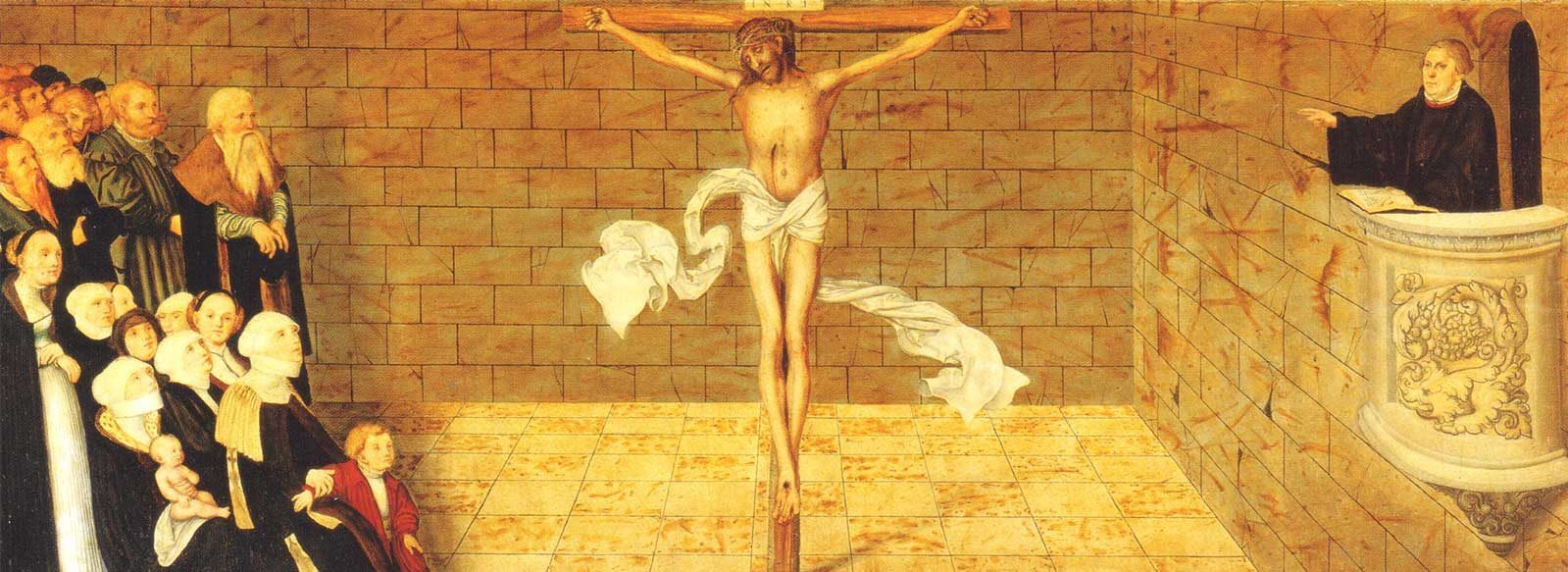
Jesus is the Word of God
 The one year edition of the King's English is out now. All 365 devotions in one volume, from "In the beginning" to "Alleluia".
Now available in three formats...

(Get 20% off your order if you quote the code "FELICITAS" before 14 December)
Also available as a Kindle...
.

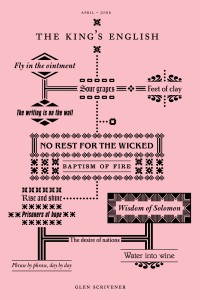


Purchase these quarterly devotionals in time for 2013.
And coming very soon - an all-year version. 365 readings in one volume - a great Christmas gift.
Stay tuned for more details.
When I began the King's English, I was looking forward to covering this phrase. I only realised today that I never did! Well here it is, finally.
On the surface it’s a quaint archaism. But it speaks of a deadly trap. “Filthy lucre” is used four times in the King James Bible and in each case it refers to a grave temptation for gospel ministers (1 Timothy 3:3,8; Titus 1:7; 1 Peter 5:2). Eg:
Feed the flock of God which is among you, taking the oversight thereof, not by constraint, but willingly; not for filthy lucre, but of a ready mind. (1 Peter 5:2)
The KJV follows Tyndale in leaving the Vulgate’s lucrum untranslated. Lucrum is the Latin word from which we get “lucrative”. It just means profit. The underlying Greek word is a compound word meaning “unclean gain”. So here’s what we’re being warned against: unclean gain, base profit, filthy lucre.
The repetition of this biblical warning should make us think. But it rarely does. Many times people have joked with me: “What attracted you to the ministry? It can’t have been the money!” Everyone has a good laugh. Everyone except the Apostles. They were worried about ministering for the money in the first century. What about in the twenty first century when Christianity is big business?
Listen to John Bunyan illustrate the dangers of lucre.
Then CHRISTIAN and HOPEFUL went till they came at a delicate plain, called Ease, where they went with much content; but that plain was but narrow, so they were quickly got over it. Now at the further side of that plain was a little hill called Lucre, and in that hill a silver mine, which some of them that had formerly gone that way, because of the rarity of it, had turned aside to see; but going too near the brink of the pit, the ground being deceitful under them, broke, and they were slain; some also had been maimed there, and could not to their dying day be their own men again.
Then I saw in my dream, that a little off the road, over against the silver mine, stood DEMAS (gentleman-like), to call to passengers to come and see; who said to CHRISTIAN and his fellow, "Ho, turn aside hither, and I will show you a thing."
CHRISTIAN. What thing is so deserving as to turn us out of the way to see it?
DEMAS. Here is a silver mine, and some digging in it for treasure; if you will come, with a little pain you may richly provide for yourselves.
HOPEFUL. Then said HOPEFUL, "Let us go and see."
CHRISTIAN. "Not I," said CHRISTIAN; "I have heard of this place before now and how many have there been slain; and besides, that treasure is a snare to those that seek it, for it hinders them in their pilgrimage." (Pilgrim’s Progress)
It is indeed a snare and a hindrance. So how can we avoid it?
At heart, we must recapture a vision of the Generous Father. Our God treats nothing as a means to some other end. It is His eternal nature to love the other. First His Son, and then, through His Son and by the Spirit, He loves the world. “God so loved the world He gave” (John 3:16). He is a Fountain of life and love whose glory is to pour Himself out. His activity is not mercenary. He’s not in the whole “creation-salvation game” for what He can get out of it. He commits Himself to us for the sake of committing Himself to us. Because this is the kind of God He is. He genuinely loves to give and He gives to love.
Once we’ve grasped this, we’ve learnt the secret of life and of ministry. Immanuel Kant wasn’t so far off really. Treating people as ends in themselves is absolutely right and good. If even God does it, then it must be the good life. But such living is the fruit of the gospel. It’s the good life that comes about with this good God.
So when I’m tempted to minister for “shameful gain” (NIV) or “filthy lucre” I should not be surprised. It’s actually a perennial temptation. But look first to the Father, poured out in Jesus. I have all I need in His generosity. And look, secondly, to “the flock of God which is among you.” They are not means towards further gain. They are my “crown” and “joy” (Philippians 4:1; 2 Thessalonians 2:19). They are my reward – a reward far greater than that snare and hindrance: “filthy lucre.”

Armageddon is well known in our culture as the "final battle" for the future of the planet. But the way people imagine this battle differs greatly from the biblical reality.
According to Hollywood, "Armageddon" is a special effects punch-up where the outcome is doubtful right up to the last minute. According to the Bible, "Armageddon" is all build-up and no follow-through. It's a case of "first round, first minute" for the good guys!
Before we consider it, we'll set the scene in the book of Revelation. If you like, you can skip the outline below, but it shows some of my "working" for why I consider "Armageddon" the way that I do...
Outline of Revelation
In Chapter 1 John sees a vision of the risen Christ.
In Chapters 2-3: Christ addresses seven churches.
In Chapters 4-5: As a slain Lamb, the Son approaches the enthroned Father and takes the scroll from His hand – here are the title deeds to creation.
Then we have the largest section of Revelation: from chapter 6 to chapter 20. This shows the unravelling of the scroll. Jesus, the Lamb, unfolds God’s history. These chapters show us the history of the world from Christ’s first coming until His second.
And so chapters 21-22 show us God’s new world – the new heavens and new earth. This is the ultimate "happily ever after".
Most people think of Revelation as a book about the future, yet the great majority of the book tells us about the present. What we see in chapters 6-20 are are 7 action replays of this history from different angles. So we see…
Chapter 6: The opening of the seven seals.
Chapter 8-11: The blowing of the seven trumpets.
Chapters 12-14: We meet the unholy trinity: the Dragon (Satan), the Beast and the False Prophet (his earthly intermediaries). We also meet the anti-church: Babylon.
Chapters 15-16: The pouring out of the seven bowls of judgement.
Then we see the defeat of the four evil forces...
Chapters 17-18: The destruction of Babylon (the false church)
Chapter 19: The destruction of the Beast and the False prophet.
Chapter 20: The destruction of Satan.
Armageddon
Some may not agree with my outline, but it seems clear to me that these are not seven consecutive scenes of judgement. Here are seven "action replays" of the same reality viewed from different angles.
One of the reasons I take this view is because of "Armageddon". There are three final "punch-ups" narrated in Revelation. They correspond to the defeat of Babylon, the defeat of the Beast and False Prophet and the defeat of Satan. Either God fails to eradicate evil twice but gets it right on the third attempt, or all three descriptions are true descriptions of "the end."
If that's right, then the "Armageddon" passage is one of three angles on the same last battle. See if you can spot the common theme in all three tellings:
[They were gathered] to the battle of that great day of God Almighty.... And he gathered them together into a place called in the Hebrew tongue Armageddon. And the seventh angel poured out his vial into the air; and there came a great voice out of the temple of heaven, from the throne, saying, It is done. (Revelation 16:14-17)
And I saw the beast, and the kings of the earth, and their armies, gathered together to make war against him that sat on the horse, and against his army. And the beast was taken, and with him the false prophet that wrought miracles before him. (Revelation 19:19-20)
Satan shall go out to deceive the nations which are in the four quarters of the earth, Gog and Magog, to gather them together to battle: the number of whom is as the sand of the sea. And they went up on the breadth of the earth, and compassed the camp of the saints about, and the beloved city: and fire came down from God out of heaven, and devoured them. And the devil that deceived them was cast into the lake of fire and brimstone, where the beast and the false prophet are, and shall be tormented day and night for ever and ever. (Revelation 20:7-10)
Did you notice the common theme? There is a menacing build up followed by a complete non-event of a conclusion. There’s stockpiling of weapons, there’s amassing of troops, there’s sabre-rattling. But the minute God’s had enough – it’s over. There’s a knockout punch before the bell has sounded.
Evil is not an equal and opposite force which gives God a run for His money. As we saw with "the bottomless pit" - darkness is no match for light. Emptiness is no match for fullness.
Do you worry about the future? Does it seem like the darkness will win?
Take heart, the Lamb wins. When push really does come to shove, Armageddon is no contest!
The word in Greek is "Abyss." Jerome's Vulgate left it untranslated. John Wycliffe rendered it "the pit of depnesse". But it's been William Tyndale's turn of phrase that has endured: "bottomless pit"! Rightly, the KJV decided it could not improve on Tyndale. The phrase occurs seven times, all in the book of Revelation (where sevens abound!). Take this representative example:
They had a king over them, which is the angel of the bottomless pit, whose name in the Hebrew tongue is Abaddon, but in the Greek tongue hath his name Apollyon. (Revelation 9:11)
The sense of the "bottomless pit" (or "abyss") is an unbounded chaos. Infinite emptiness. An immeasurable depth. Limitless nothingness. This place of destruction and corruption is highlighted at the beginning and end of the Bible.
In the opening verses of Scripture we read about a void opened up in the creation of heaven and earth:
In the beginning God created the heaven and the earth. And the earth was without form, and void; and darkness was upon the face of the deep. And the Spirit of God moved upon the face of the waters. (Genesis 1:1-2)
"The deep" is the Abyss. And its presence is felt in the second verse of the Bible!
God, having created a reality beyond Himself, is faced, not with a mere extension of His divine being, but with something very distinct from Himself. God is light but here is darkness. God is full but here is an emptiness. In creation there is something beyond God which needs enlightening and filling full. This is what the work of creation involves. Over the six days God forms and then fills the universe, acting redemptively upon what is, by nature, "without form and void".
God separates light from darkness and sea from dry land. He divides and adjudicates - "Hitherto shalt thou come, but no further" (Job 38:11). God's creative work is all about undoing the abyss. He brings light, fullness and form - bounding the boundless.
Yet somehow there is a sphere that stands against the spreading goodness of God. There is an abyss. And it does not stand on an alternative foundation. The only true foundation can be the living God. Whatever stands against God cannot stand on anything substantial. No, God's enemies have nothing to stand on. Their realm is groundless - a bottomless pit.
Think about this negative reality. The realm of evil is not an equal and opposite kingdom. It is darkness, somehow resisting God's radiant light. It is a boundless emptiness, somehow resisting God's glory filling the earth. It is rebellion without a cause.
Sin and evil have no ultimate foundation, no reasons, no footing. They are madness. Those swallowed by the bottomless pit can only keep falling. Think of the tragedy: it's one kind of death to fall far - it's another to fall forever.
What hope is there in the face of this abyss?
Paul writes to the Romans to tell them that we have no hope against the powers of darkness. None of us can ascend to heaven and none of us can plumb the bottomless pit. But Christ has come down from the heights. And He has risen from the abyss:
Say not in thine heart, Who shall ascend into heaven? (that is, to bring Christ down from above:) Or, Who shall descend into the deep [the abyss]? (that is, to bring up Christ again from the dead) (Romans 10:6-7)
We don't have to climb up to heaven and we don't have to climb out of the bottomless pit. Christ has done it all. He is the Radiant Light of the Father. He is the Spreading Goodness of God. And He has come to plunder Satan's house (Mark 3:27). He has entered into our darkness and risen to bring us home.
We cannot reason with evil - it's insanity. We cannot climb out of the bottomless pit - there is no footing. But Christ has done it all. We need only trust Him and He'll turn our pit to paradise:
If thou shalt confess with thy mouth the Lord Jesus, and shalt believe in thine heart that God hath raised him from the dead, thou shalt be saved. (Romans 10:9)
"Out, damned spot! out, I say!"
Lady Macbeth’s line is one of Shakespeare’s most famous. In the first act of Macbeth she helps her husband to murder the King. By the end of the play she is in mental torment and eventually takes her own life. In her final scene she is before a doctor and cannot cleanse her conscience.
Out, damned spot! out, I say!... who would have thought the old man to have had so much blood in him? ...What, will these hands ne’er be clean?...Here’s the smell of the blood still; all the perfumes of Arabia will not sweeten this little hand. Oh, oh, oh!
The Doctor says “What a sigh is there! The heart is sorely charg’d. ...This disease is beyond my practice.”
Shame and guilt is a disease. And it’s a disease beyond the practice of 17th century doctors. It’s beyond the practice of 21st century doctors. Taking away our guilt and shame is beyond every power on earth, even - and perhaps especially - religion. But in Hebrews 10 we learn about a "once for all" cleansing that contrasts starkly with the old religious ways.
In verses 1-4, we're told that even God’s own religion did not cleanse people from sin – it only reminded them of sin. Every day the blood of animals was shed, yet everyone knows that animals can’t pay for sin. Every year there was a grand theatrical performance called the Day of Atonement. The High Priest had a starring role and there was a scapegoat. You confessed your sins over the scapegoat and there were sacrifices and at the end it was pronounced that God was “at one” with Israel. But... the next year they did it all over again. They weren’t cleansed from their sins, they were only reminded of their sins.
This whole system was a shadow of the coming reality (v1). The real atonement was achieved when Christ came into the world (v5-10).
There is a true and willing Sacrifice who steps forward amidst the bloodshed of the temple and says “Enough! Here I am. I'm the Reality to which these shadows have pointed.”
Jesus, our Scapegoat, died the death of every slanderer, every pornographer, every bully, every murderer, swindler, adulterer, terrorist... every sinner. And now
we are sanctified through the offering of the body of Jesus Christ once for all. (Hebrews 10:10)
That phrase "once for all" is so precious. Understanding it will transport you from the shadow-lands of guilt and perpetual striving to the freedom of Christ's finished work. Therefore in the next paragraph, Hebrews lays out the stark difference between the reality of Christ’s sacrifice and the shadow of the old covenant (v11-14).
The old sacrifices were continual, Christ’s was once for all
The old sacrifices were powerless, Christ’s was completely effective.
The old priests stood for their constant work, Christ sits having finished the work.
Do you realise the wonder of Christ's finished work? Do you understand that, through Him, you are made holy "once for all"?
The final paragraph will help us (v15-18). Here the writer returns to his favourite passage - Jeremiah chapter 31. He proclaims the glorious truth that our "sins and iniquities God remembers no more."
Imagine debts piling up. You pay off one credit card with another. It snowballs and suddenly you’re £90 000 in the red. The debt collectors are after you. You don’t answer the phone, you pretend you’re not in.
Eventually you get some financial advice. They tell you to phone the credit card company and explain your situation. You pluck up courage and give your details over the phone. Then you begin to make excuses... “Now, about the £90 000, I’ll try to pay it back, I just need some time...” The woman on the other end of the phone says “We have no record of any debts in your name.” You ask her to double check. She double checks, “We have no record of any debts in your name.”
If you've trusted Jesus your Scapegoat, those are God's words to you today.
Their sins and iniquities will I remember no more. (Hebrews 10:17)
Don't live in the shadows. Don't try to clean yourself up. Remember you've been cleansed through the cross of Christ - once and for all.
Out of the depths have I cried unto thee, O LORD. 2 Lord, hear my voice: let thine ears be attentive to the voice of my supplications. 3 If thou, LORD, shouldest mark iniquities, O Lord, who shall stand? 4 But there is forgiveness with thee, that thou mayest be feared. 5 I wait for the LORD, my soul doth wait, and in his word do I hope. 6 My soul waiteth for the Lord more than they that watch for the morning: I say, more than they that watch for the morning. 7 Let Israel hope in the LORD: for with the LORD there is mercy, and with him is plenteous redemption. 8 And he shall redeem Israel from all his iniquities. (Psalm 130)
 In modern speech a "double-edged sword" is a powerful weapon that "cuts both ways". It's an argument or feature or technology that has a clear benefit and a clear liability. It's something that both advances your cause and the cause of your opponent.
But the bible's usage of the term is a little different. You see God's "two-edged sword" cuts only one way.
"The word of God is quick, and powerful, and sharper than any twoedged sword, piercing even to the dividing asunder of soul and spirit, and of the joints and marrow, and is a discerner of the thoughts and intents of the heart." (Hebrews 4:12)
Here's a radical thought: God's word is a two-edged sword. And when God wields it, it cuts in only one direction. God's word is not judged by us. God's word judges us. We do not assess it. It assesses us. We do not interpret it. It interprets us. We do not master it. It masters us.
Have you ever encountered the piercing quality of God's word?
Last year I was preparing to help a friend in a court-hearing. We were building our case, establishing our cause, marshalling evidence and feeling more and more justified. And then I read just six words from Proverbs:
Do not bring hastily to court. (Proverbs 25:8)
It cut to the heart. And it brought to mind other verses about the dangers of pursuing adversarial legal action (e.g. Matthew 5:25-26; 1 Corinthians 6:1-8). God's word came home. It discerned the thoughts and intents of the heart. I could tell you many other "piercing" moments and I'm sure you could too.
So often we come to God's word seeking "discernment" about our future, about our choices. We seek to "discern" correct theology, or just to "discern" a little dose of spiritual inspiration. But all of those motives are about us discerning the word. Or us discerning truths through the word. Do you see the problem?
God's word discerns us. We are in the firing line. We might consider the word to be our object of study. But no, we are the objects of the word's study. We are the ones to be scrutinized.
Is that your attitude as you approach the word?
If it's not, perhaps that's because you've forgotten that God's word is "quick" - in other words, it's "alive." When Hebrews speaks of the Word - it has in mind a personal Power working through the Scriptures. Just listen to how the verse continues:
Neither is there any creature that is not manifest in his sight: but all things are naked and opened unto the eyes of him with whom we have to do. (Hebrews 13:13)
The "Word of God" in view is the Judge of the World. Hebrews is speaking of the eternal Word, the Lord Jesus. This living Word encounters His people through the Scriptures as they're proclaimed today (Hebrews 13:7). But because the Word is a Him, Scripture reading can never be impersonal. To open up the Word is to be opened up by the Word, who is Judge of all.
In these verses we learn that it's not simply judgement day that uncovers. Whenever we encounter the Living Word of God we are judged.
"Brilliant" you respond, "Just what I need! More judgement in my life!"
Ah but, the judging word is not the final word. For those who belong to Jesus, judgement could never be the final word. Christ Himself has taken the judgement on the cross. And as our great High Priest, He has brought us sinners through the sword of judgement and into the presence of God our Father.
That's why the verse continues:
Seeing then that we have a great high priest, that is passed into the heavens, Jesus the Son of God, let us hold fast our profession. For we have not an high priest which cannot be touched with the feeling of our infirmities; but was in all points tempted like as we are, yet without sin. Let us therefore come boldly unto the throne of grace, that we may obtain mercy, and find grace to help in time of need. (Hebrews 4:14-16)
What a roller-coaster! Cut to the heart, then lifted to the throne. This is a true experience of the Word of God. First exposed, then covered by His blood. First pierced, then healed. First judged, then saved. First brought to our knees, then raised through the heavens.
Do we ever impersonalise the Word of God? Do we ever domesticate God's Word? Do we ever get stuck in the judgement and fail to appreciate the salvation?
Remember that God's Word Jesus only exposes so He can cover. He only cuts so He can cure. He only brings low, so He can raise up. Let us expose ourselves to His piercing. Then let us come boldly through His priesthood.

In the space of one verse Paul gives us two - if not three - phrases:
"I have fought a good fight, I have finished my course, I have kept the faith." (2 Timothy 4:7)
Both "fighting the good fight" and "keeping the faith" have become well-known. If we added "staying the course" then we'd have a trifecta of famous phrases. In a way, that's not surprising. Paul means to be memorable here.
This is the last chapter of the last letter he wrote. Tradition has it Paul was beheaded in Rome in AD67 and here is the epitaph he chooses for himself. He's a fighter, a runner, a perseverer. And as he comes to the end of his life he inspires us all towards the same.
Paul is writing to his spiritual son Timothy, passing on the baton of gospel work. Crucially, he was the last of a dying breed. He had met with the risen Christ and been an eye-witness of His glory. Soon there would be no-one left on earth who could say that.
So as the church's last foundational apostle, how does Paul encourage the next generation? Chapter 2 gives a sense of his burden.
Thou therefore, my son, be strong in the grace that is in Christ Jesus. And the things that thou hast heard of me among many witnesses, the same commit thou to faithful men, who shall be able to teach others also. Thou therefore endure hardness, as a good soldier of Jesus Christ. No man that warreth entangleth himself with the affairs of this life; that he may please him who hath chosen him to be a soldier. And if a man also strive for masteries, yet is he not crowned, except he strive lawfully. The husbandman that laboureth must be first partaker of the fruits. Consider what I say; and the Lord give thee understanding in all things. (2 Timothy 2:1-7)
Paul knows that his eye-witness testimony will not die out with him. In verse 2 he envisions four generations of gospel ministry. From Paul to Timothy to Timothy's trainees to their trainees. On and on it goes until it reaches you and me.
But, of course, it doesn't stop with us. We too will commit this gospel message to others. And they to others, and so on. The saying is true: "God's grace always runs downhill." It applies to proclamation too. In fact grace and proclamation are almost synonyms.
From Christ's exaltation and the Pentecostal outpouring, there has been a gospel flow which has reached even us. Now we are caught up in its movement.
As I say this, though, I might be conjuring up the wrong kind of imagery - fountains and babbling brooks and floating along. Paul's imagery is much more robust. How does it feel to be gripped by this gospel and pass it on? Like a soldier, like an athlete, like a farmer.
Like a soldier - enduring, obedient, single-minded.
Like an athlete - compelled by a vision of the crown, striving to play things as they're meant to be played.
Like a farmer - patient, hard-working, but enjoying the fruits of his labour.
All of these callings involve unglamorous service, sacrifice, hard-work and perseverance. But they also promise victory, crowns and harvests. This is the long-termism Paul seeks to instil in Timothy. After the exhaustion and self-sacrifice comes the prize. And the prize is worth it.
Paul asks us to meditate on these portraits. But only because he has been meditating on them so deeply. As he writes his epitaph he returns to these same three visions: "I have fought a good fight, I have finished my course, I have kept the faith."
He goes on...
Henceforth there is laid up for me a crown of righteousness, which the Lord, the righteous judge, shall give me at that day: and not to me only, but unto all them also that love his appearing. (2 Timothy 4:8)
Here is the prize. Just as Paul has participated in Christ's sufferings, so he will participate in His glory. Christ's life had a shape - cross and resurrection. The Christian life will have that same shape - suffering and glory. And Paul is now retiring from his hard-working soldiering, running and farming. Now he's entering into his victory, his crown, his harvest. Truly he's being "promoted to glory!"
And perhaps we think to ourselves - that's wonderful for Paul, what about for us?
Well he says that all of us can likewise share in this glory. And the way he phrases it is telling. He does not say "This crown is for all who have soldiered as hard as I have." He does not say "This victory is for all who have run as hard as I have." He does not say "This crown is for all who have persevered as valiantly as I have." No, the crown is for those who "love his appearing."
If we simply love Jesus. If we simply want Him - then we will share in His glory.
It's just that those who share in His glory, will also share in His suffering. That's not the price we pay - it's the privilege of living His life in this world. Paul on his death bed wouldn't have it any other way. And if we see things rightly, neither would we.
So then, as you long for Christ's appearing, as you pass on His gospel hope, meditate on your calling:
-- the soldier
-- the athlete
-- the farmer.
Anticipate the glory of Christ's return
-- the victory
-- the crown
-- the harvest.
And know that one day too, you will be able to say "I have fought a good fight, I have finished my course, I have kept the faith."

2 Timothy 3:14-4:5
One of the most pervasive myths of the modern world is this: We think we know what we want. We think we know what's best for us. And we think we ourselves are the best judges of these matters.
The truth could not be further from this common misconception.
In the book of Proverbs, Wisdom spoke a frightening truth:
"All they that hate me love death." (Proverbs 8:36)
The natural state of the human heart is to be estranged from Christ our Wisdom. And in that perverse condition our desires are completely twisted. We hate the Fountain of Living Waters and we love the pit of curses and death.
Therefore what do we look for in our moral and spiritual guides? The truth? Never. Not naturally. Instead we look for leaders who will tell us what we want to hear.
Notice how Jesus put it: "Because I tell you the truth, ye believe me not." (John 8:45)
Jesus doesn't say 'In spite of my truth telling you don't believe.' He says 'Because of my truth-telling you don't believe.' We are not naturally oriented to truth. We flee it when it's spoken. Instead we 'turn to fables' as the Apostle Paul put it so memorably:
For the time will come when they will not endure sound doctrine; but after their own lusts shall they heap to themselves teachers, having itching ears; And they shall turn away their ears from the truth, and shall be turned unto fables. (2 Timothy 4:3-4)
An "itching ear" is such an evocative phrase. Itches aren't just satisfied by scratching - they demand to be scratched. They only seem to increase if they go un-heeded. Paul says our ears are like this. We don't merely like to hear pleasant lies, we demand to hear them. And Paul says there's always a ready supply of phoney prophets who will scratch us where we itch. It's not just a problem for the last days. The prophet Isaiah spoke of the same reality 8 centuries earlier:
This is a rebellious people, lying children, children that will not hear the law of the LORD: Which say to the seers, "See not;" and to the prophets, "Prophesy not unto us right things, speak unto us smooth things, prophesy deceits: Get you out of the way, turn aside out of the path, cause the Holy One of Israel to cease from before us." (Isaiah 30:9-11)
I don't think Isaiah is imagining that the people are articulating these words. I'm not sure any Israelite was literally saying "speak unto us smooth things, prophesy deceits." It's just that they would not put up with God's word, they reacted angrily to the truth of the gospel but warmly to the "smooth things." At an unspoken level they had struck a deal with the false prophets - "Tell us what we want to hear, and we'll give you an eager audience." In every age people have found such a deal attractive.
Therefore we must question this myth of the modern world. We do not know what is good for us. As the Proverb says "Counsel in the heart of man is like deep water; but a man of understanding will draw it out." (Proverbs 20:5). We don't know ourselves very well. We don't know what we need. We need The Man of understanding to tell us the truth. We need truth to come to us from the outside. The kind of truth we would never conceive ourselves.
The truth that says we are utterly lost and damned in ourselves but completely loved and redeemed in Jesus. The truth that leaves our own desires and schemes out of the equation but takes up our cause anyway. The truth that puts us to death on the cross and raises us up in resurrection.
Don't trust your natural itches. Don't pursue the lies that puff you up. Listen to the truth from beyond. It will burst your bubble but, then, it will give you a hope you could never have dreamt of. The truth from which we flee is the most extreme but wonderful news in the world. It's far worse than we'd ever feared - but far greater than we'd ever imagined.