Skip to content

tep-podcastcover-1024x1024Previously in our "Power Evangelism" series.

The Power of Ordinary Christian Living

The Power of Church

The Power of Preaching

The Power of Words in Season

And now our two most popular episodes in the series...

The Power of Illustrations

Here we explore why illustrations are effective and I give 13 that I commonly use in evangelism.

The Power of Stories

In this episode we think about capturing hearts and imaginations through stories.

What illustrations or stories do you find yourself using most in evangelism?

18

Luther Preaching

Let me try out a couple of statements on you:

Church is God's mission strategy for the world.

Agree? Sure you do. Ok, what about this one - straight out of Romans 10:

Preaching is God's normal means for converting the lost.

Cool with that? Good!

So then, let's put these truths together, and let's say:

The Sunday sermon is absolutely central to our evangelistic task.

In other words, if we want to help our churches be evangelistic, the pulpit should be at the forefront of our thinking and practice.

I suggest that, often, this isn't the case because we think of Sunday preaching as "resourcing the devout" rather than "raising the dead." In this situation preaching is aimed squarely at "the saints" with the emphasis on saints (and not sinners). Preaching here easily becomes an explanation of our requisite beliefs and duties as Christians (plus some motivational prompts, perhaps). In other words our preaching is law.

Result? The congregation feels burdened, the Christians feel like church has nothing to say to their friends and if non-Christians find their way in they feel like it's not for them. Perhaps even deeper than all this, the Christians go away feeling that the good news aint so good, that they need to try harder at this Christian caper and that therefore they're not free to go out into the world because maybe this week their real job is to maintain their position on the holiness perch. All of this is deadly to evangelism - whether or not non-Christians are present on a Sunday!

How should we react to this? Well evangelism must spring from a deep love and appreciation for the evangel. So let's think more deeply about the  gospel - we'll go back to basics:

We are born in Adam according to the flesh.

We are born again in Christ by the Spirit.

Until Christ's return we have Adam's flesh and Christ's Spirit.

We are in Adam by nature and in Christ by grace.

We know our Adamic reality by sight and our Christian identity by faith.

These are the realities behind the truth that we are simultaneously righteous and a sinner.

 These twin realities remain with us until Christ's return - we will live with these tensions all our lives.

Certainly we must proclaim that Christ is stronger than Adam; the Spirit is stronger than the flesh; our righteousness determines us not our sin; grace triumphs over nature; we walk by faith not sight; etc; etc.

But even though God's grace in Christ far exceeds our sinful nature in Adam, the tension is not obliterated in this age.

Therefore I can still be called a sinner, I still have flesh, I'm still an offspring of Adam.

My Christian identity comes to me while I remain in Adam.

All of this upholds the vital truth that God's justifies the wicked. (Romans 4:5)

As Luther says:

– Martin Luther (Luther, WA, 1.183ff).

Since this is so, here's what follows...

God's grace meets us in our sinful natures.

God addresses us as sinners in Adam even as He calls us righteous in Christ.

In ourselves we have sin, only in Christ do we have righteousness.

We are called, therefore, to live not by possession but by gift.

That gift comes to us by the Spirit in the Word.

Therefore...

Preaching means addressing sinners and proclaiming the grace of God to them in Jesus.

This does not minimize the "how much more" of God's abundant grace, it is precisely the context for it.

Preaching is not resourcing the devout but raising the dead.

This is not simply about "evangelistic preaching" at the "revival meeting." It is the true nature of all preaching.

If this is true...

The job of the preacher is not to top up the spirituality of Christians who have righteousness in their grasp and need to beef it up a bit.

The job of the preacher is to address people sunk in sin and failure and to tell them of a Saviour who is beyond them.

Crucially therefore the audience for the sermon is "the children of Adam."

All of which means...

The Sunday preacher does not have to choose between two very different kinds of hearer for their message.

The congregation is not split between those who have made a one-off decision for Jesus and those who are yet to choose for Christ.

The Christian needs to hear of their sin and Christ's salvation. The non-Christian needs to hear of their sin and Christ's salvation.

The same gospel is for Christian and non-Christian alike.

If preachers actually believed this and actually preached like this I believe our churches would be transformed.

Christians would be saved from the hypocrisy Luther spoke of above.

Christians would know their sin and the grace of a gospel that meets them where they really are instead of their prettied-up Sunday best.

Christians would experience the grace of God more powerfully through a gospel that doesn't merely strengthen their resolve but saves their souls.

Christians would hear a gospel that applies to the children of Adam and not just to the religious - i.e. a gospel that's relevant to their Monday to Saturday existence.

Christians would get more of a vision for their vocation out in the world, realising that the Scriptures teach us how to live not just how to function as a Christian.

This will equip us for how we can address our friends with the same gospel. Because it really is the same gospel that answers our friends' problems.

It might even inspire us to think "So and so needs to come and hear about this, we were talking about anger management (or whatever) just the other day."

At the end of the service we might just "go in peace to love and serve the Lord" with gusto - not trying to top up our functional righteousness with a few more churchy practices.

Therefore, we might actually feel free to get out into the world, love our neighbours and maybe even befriend them!

And we could then feel that church is a place we could invite our friends - and maybe even do it.

Those are ten benefits of gospel preaching every Sunday and I haven't even mentioned the fact that non-Christians will very likely be present and may just get converted!

So how about it? Tim Keller gives it a go and he does alright, don't you reckon? So can we have a go too? Can we address the whole congregation as the children of Adam - every one of them needing Jesus desperately? Can we see the Scriptures as addressing the problems of life not just the difficulties of Christian piety? Can we do more than resource the devout - can we, by the Spirit's almighty power, raise the dead through the gospel word? If we don't aim for that I'm not sure we have the right to call ourselves gospel people.

tep-podcastcover-1024x1024

Are Evangelists a Christian version of the SAS, swooping into dangerous territory to rescue sinners all by themselves?

What is the role of church in evangelism?

What exactly are we inviting non-Christians to?

This is the second episode in our series: Power Evangelism. Andy and Glen discuss the Power of Church. Maybe it should be the body of Christ that reaches out? Maybe it should be the body of Christ we invite people to?

Radical ideas!


SUBSCRIBE

DOWNLOAD

8

[vsw id="118485875" source="vimeo" width="616" height="258" autoplay="no"]

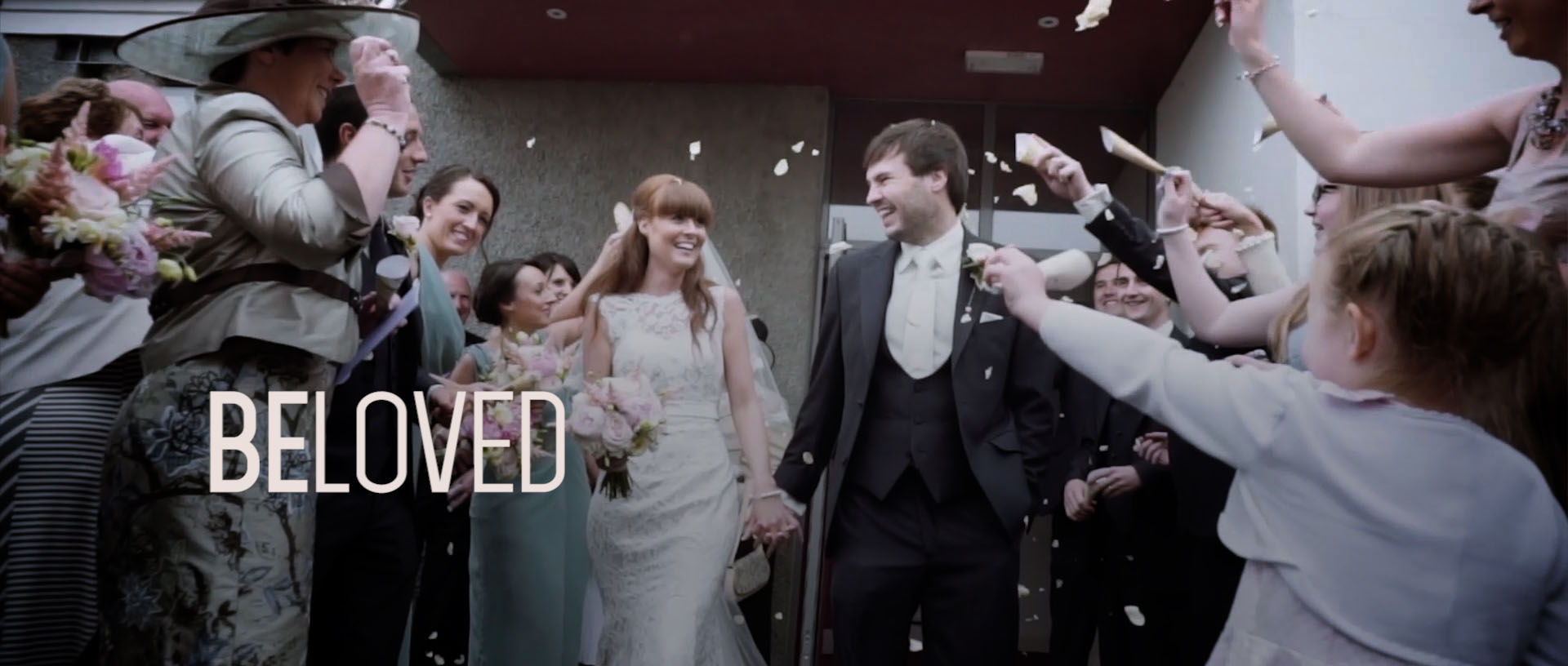
It's the fairy tale we all believe in - connection, completion, love without parting. The merest glimpse of it captures our hearts. But is the fairy tale real? Is there such a thing as endless bliss, unconquered love and a happily ever after?

Countless failed relationships and a beckoning grave cry out No. Love does not seem to have the last word in our lives - decay, disease, divorce, depression and death does. Can we really believe in love?

The answer is Yes, but only because there is a love despite our deserving, a love stronger than death, a love beyond this world. Jesus makes the fairy tale true - not just for bright-eyed young couples on their wedding day. Because of his blood-earnest, death-defying love, Jesus can bring us all into the ultimate romance. Whatever your relationship history or status, this bliss is for you!

WORDS

You

beside me.

Me: beside myself with you.

Beyond myself in you,

Become myself anew,

Belongs, this self, to you.


You

behold me.

Me: behold the world in you.

Besotted with the view,

Bewitched by all you do,

Beguiled by guileless you.


We

believe this:

This bedtime tale

Though countless fail

Though pride derail

Though death curtail

We believe this.

This bliss

Beseiged by hatred’s hiss

Beset by graves' abyss

Betrayed despite our kiss

We believe this.


But is this bliss true?

Or only for the few

And then sinks from view

Is it true?

Beneath the tale,

Before we fail,

Beside what’s frail,

Beyond death’s vale?

Is it true?

Not only for the few

And then sinks from view

Is it true?


He

Beheld me.

Me: deep held in my disgrace.

He bends now face to face,

Becomes me in His grace,

Befriends me, takes my place.


He

Betrothed me.

Me: bestowed the world for free.

Bequeathed by royal decree,

Beloved eternally,

Become as one: He with me.


This, beneath all other glories

This, beyond the bedtime stories

This, beside your marital station

This, love’s sweetest consummation.

This is true.

Never to sink from view.

Not only for the few.

This bliss is for you.


tep-podcastcover-1024x1024When questions about our faith come, sometimes we look for a ‘silver bullet’ response or we try to 'crowbar' Jesus into our conversations. But is that they best way? Perhaps, instead of 'spiritualising' the odd conversation, we need to be 'humanising' all our connections with non-Christians.
This episode - the first in our new series called "Power Evangelism" - is about being a witness for Jesus in the context of ordinary life?

SUBSCRIBE

DOWNLOAD


2

They look fresh, bright and lively, surrounded by family, fun and festivities - Christmas trees are a great picture of our human condition. We too may dress ourselves up in achievements and surround ourselves with great experiences, but we're perishing - cut off from our true Life-source in God. Thankfully, Christmas gives us the answer. Real life has been born into our world. In connection with Jesus we "may not perish but have eternal life."

Please share the video and offer true hope this Christmas.

See our previous Christmas videos here.

7

evangelism

True Story: I once did some evangelism training where I asked participants to list all the things they loved about being a Christian. I put the participants into discussion groups. The one nearest to the front sat there in stunned silence. No-one seemed able to share anything they enjoyed about their Christianity.

At the end of the session, a member of that group came up to me very perturbed. "This is not what I was expecting! People need to be able to turn conversations to spiritual matters. How are you training us to do that?" She mentioned some elderly friends of hers who have failing health. "How do we turn a conversation about a dodgy knee into a gospel conversation?"

I suggested that one of the things we might enjoy about being a Christian was that, when ill health strikes, we have a God who knows what it's like to be weak. We also have a promise that everything happens for a good purpose, etc, etc. I encouraged her to share times when her Christianity has helped her through bad health.

The penny dropped. It was almost as though she had never considered evangelism as a matter of sharing something personal and attractive. I'm guessing, but it sounded to me like she thought of evangelism as responding to arguments and switching conversational tracks to a set of truths. If that's the mentality then discussing what you like about being a Christian is one thing, evangelism is something else. Unfortunately such a view is all too common.

Recently I spoke with a friend about online ministry. Why do we create evangelistic content for online dissemination? I think it boils down to the question: Do we think the gospel is shareable? When we phrase it like that, the social media connotations become very helpful. Something shareable is something we like. And what we really like we share. What is evangelism? Surely it's sharing some eminently shareable news. And if we're not sharing it, maybe we need to stop, look and listen once again. Perhaps if we want to share it we should refresh ourselves with what we like about it.

Broken BreadThe adultery bomb goes off in a marriage. What next? It's the cross or hell. Either there is the giving up of rights - in repentance and forgiveness - or there is the standing on rights, and it's hell.

Nation wars against nation. What next? Either there's surrender / reconciliation or a never-ending cycle of violence. It's the cross or hell.

An argument starts: harsh words stir up anger. What next? Either a gentle word turns away wrath or the wrath spirals on. Proverbs 15:1.

It's the cross or hell.

This is not a feature of certain conservative theologies - it's a fact of everyday existence. In every walk of life the making of peace involves a swallowing of pride - a wrath-bearing sacrifice if you will. Without this "cross", it's "hell". If we are at all aware of a sin problem, we become aware of the desperate need for costly atonement.

Some Christians shy away from the language of hell, wrath and sacrifice. Who believes in such things these days? Well, sinners do. People who understand the world and who understand their hearts - they get the need for blood and fire. If we ditch those concepts we become less able to reach the culture, not more.

A new paper for Union Theology: Intimacy With God.

My other resources for Union Theology

.

Some 2 minute answers to questions about evangelism

.

A longer seminar about Gospel-Shaped Gospelling

.

Two evangelistic talks for St Nick's Sevenoaks

John 1:1-18

John 10:11

.

My talk on John 1:1-18 for students in the South East starts around the 10 minute mark...

Twitter widget by Rimon Habib - BuddyPress Expert Developer