Adapted from a previous post...
What does it mean to be God-centred?
Three answers:
As a description of theology, it's inescapable.
As a method of theology, it's indispensible.
As a doctrine of God, it's incorrect.
First, as a description of theology...
Simone Weil put our inescapable theo-centricity like this:
"No human being escapes the necessity of conceiving some good outside himself towards which his thought turns in a movement of desire, supplication, and hope. Consequently, the only choice is between worshipping the true God or an idol."
Or Luther in his larger catechism had this to say regarding the first commandment:
What does it mean to have a god? or, what is God? Answer: A god means that from which we are to expect all good and to which we are to take refuge in all distress, so that to have a God is nothing else than to trust and believe Him from the whole heart… That now, I say, upon which you set your heart and put your trust is properly your god.
We're all God-centred. The question is, which God?
It always bothers me when one Christian claims a superiority over another because they are 'God-centred'. As a description of someone's theology, that's a plain tautology. Trying to shout "God" most loudly is not the way forward in assessing the merits of various theologies. "God" is central. But we should be much more interested in the question: "Who is this God who is central to our theology?" Since we're inescapably centred on this vision of ultimate reality, the identity of this God is the vital question.
But before we jettison the term "theo-centric", let's acknowledge a realm in which the term is useful. As a theological method, theo-centricity is indispensible. That is to say, as a way of knowing God, we must be God-centred.
Jesus said that the Father and Son are bound together in an eternal Family Secret (Matthew 11:27). Only the Father knows the Son and only the Son knows the Father. If the verse ended there only God would know God. But wonderfully the verse continues:
No-one knows the Father except the Son and those to whom the Son chooses to reveal him. (Matthew 11:27)
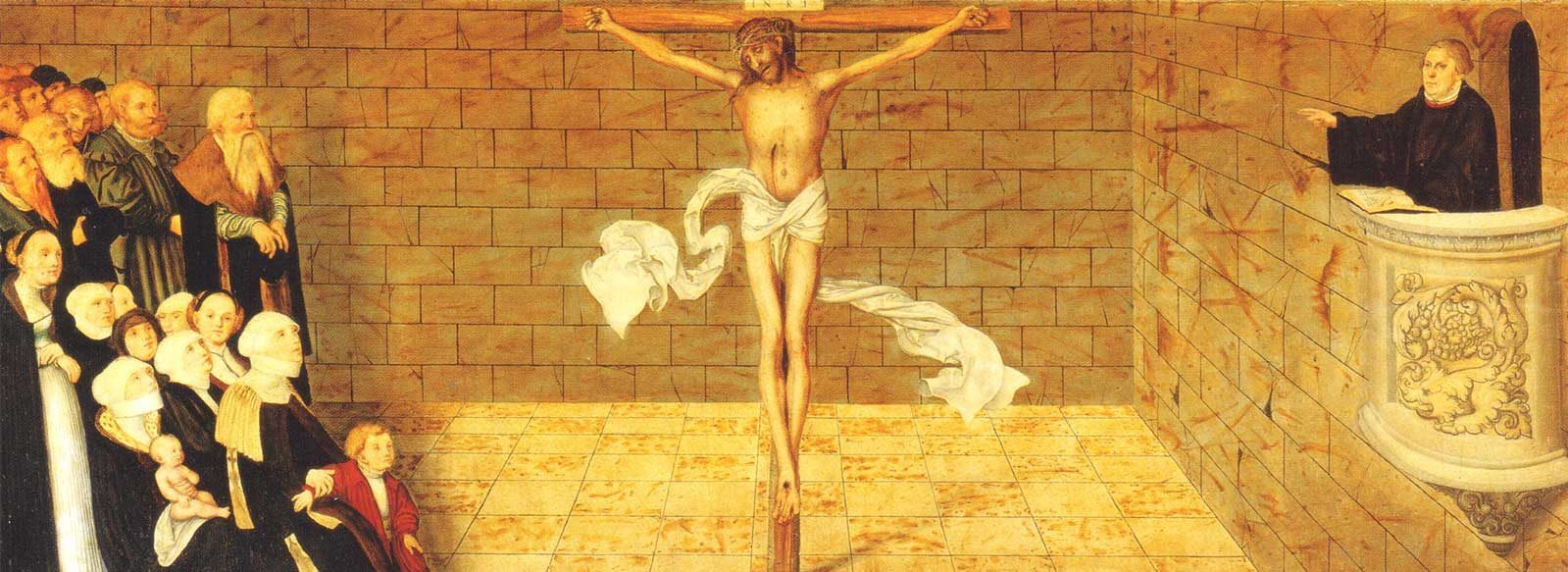
There is a way into knowledge of God. But it's not our way to God, it's His way to us. We do not know God, but God reveals Himself, through His Son and by His Spirit. The trajectory is downwards.
When the Spirit reveals Christ as Word of the Father then we know God through God and by God. And this is the only way to know God. Therefore our method of theology must be theo-centric. We must centre ourselves on where God has revealed Himself - in God the Word and by God the Spirit.
So theo-centrism is a useful term.
But... it can be a very misleading idea if we think of it as a doctrine of God.
You see we might grant that all people are focussed on some vision of God. And we might determine to focus ourselves on God's revelation of God. But it's an entirely different question to enquire whether God Himself is likewise consumed by Himself.
Of course we should have our hearts and minds fixed on the living God, and of course if we fixed our ultimate affections elsewhere that would be idolatry. But I have heard philosophical arguments from Christians to say that God must fix His affections on Himself lest He be an idolater too.
Do you see how theo-centrism as a theological method gets confused with theo-centrism as a doctrine of God?
And, more dangerously, do you see how such a method is in fact anthropocentric? It's an argument that says 'We would be idolaters to set our affections on lesser beings, so God must be an idolater if He did that.' It's a theology from below. And yet I find it on the lips of the very people who want to accuse all around them of man-centredness.
So let's be clear - everyone is already God-centred in their theology. The real issue is what kind of God we're talking about. And the question of theo-centric method does not at all settle the question of God's own being. While we must be theo-centric, we have to admit that God Himself is higher than the 'musts' that apply to us. The theologian who says God "must" love Himself higher than the creature has actually followed a theo-logic that is less than God-centred.
God has actually revealed Himself in the Word who became flesh for all time. If this God was the God we centred on, and if this revelation was the one to which we listened, we'd find no room for the self-centred God.
In this sense then, to be truly theo-centric means extolling the truly other-centred God.