Preached on Revelation 19 tonight. Really enjoyed it. Jesus is always more than we can grasp...
He has a name written on Him that no-one knows but He Himself (Rev 19:12)
Here's the sermon (audio now uploaded).
.
Jesus is the Word of God
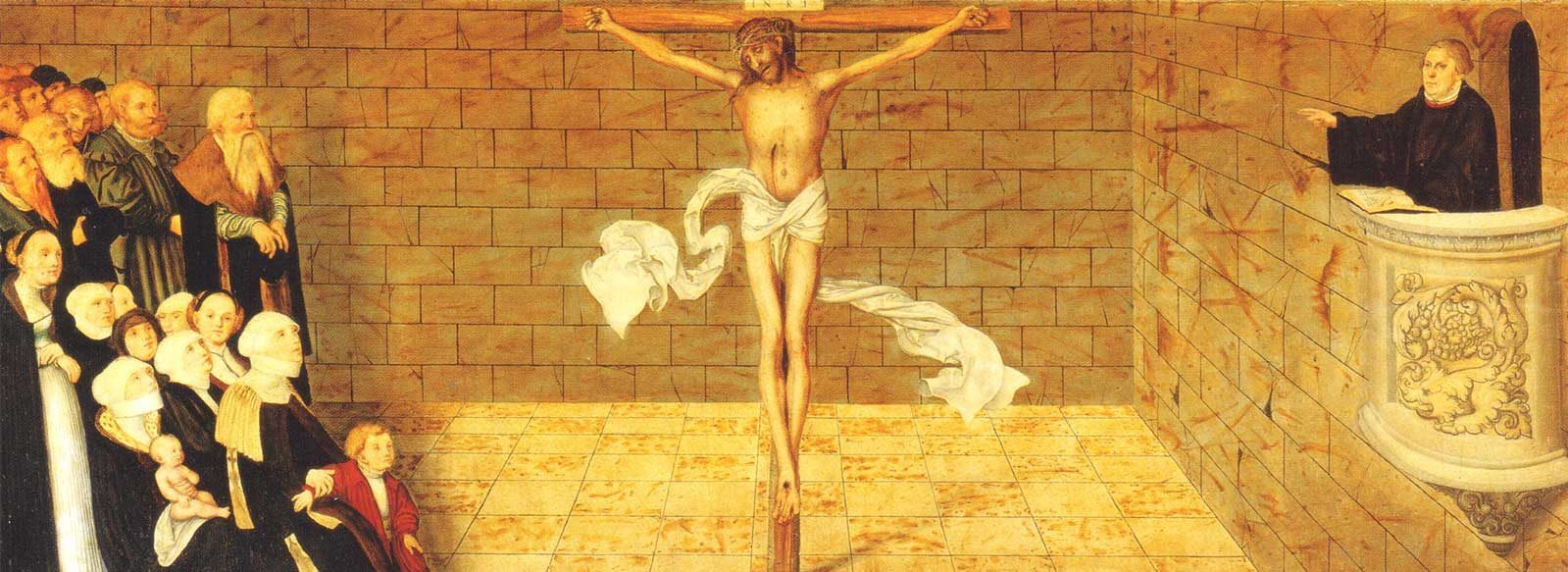
Preached on Revelation 19 tonight. Really enjoyed it. Jesus is always more than we can grasp...
He has a name written on Him that no-one knows but He Himself (Rev 19:12)
Here's the sermon (audio now uploaded).
.
My wife has long taught Sunday school children that sin is a power called the 'Me Me Monster.' But I've never seen it expounded so hilariously...
[youtube=http://www.youtube.com/watch?v=4ogZo9YreQ4&hl=en]
The End?
Ok time to bring these thoughts to a close (for now).
For links to the 14 posts in this series go here.
For the full text of the 14 posts go here.
Let me finish with a plea from the heart of true doctrine... Jesus is the Word of God. He is not the best Word. He is not the ultimate Word. He is not the seal of series of improving words. He is the Word. There is no knowledge of God that is not mediated through the Son. Please consider these foundational verses.
In the beginning was the Word, and the Word was with God, and the Word was God. He was with God in the beginning. Through Him all things were made; without Him nothing was made that has been made. (John 1:1-2)
No-one has ever seen God, but God the One and Only, who is at the Father's side, has made Him known. (John 1:18)
He is the Image of the invisible God, the Firstborn over all creation. For by Him all things were created (Col 1:15-16)
The context for these verses is not incarnation. The Word became flesh long after the Word was. The Son has been the revelation of God from before the creation of the world. Incarnation does not make Jesus the Word, rather the pre-existing Word became flesh. At the risk of sledge-hammer repetition: Jesus is the Word and Image of God prior to incarnation. He has always been the one Way, Truth and Life. To be ignorant of the Son pre or post-incarnation is to be ignorant of God.
Consider additionally these crucial passages:
Jesus answered, "I am the way and the truth and the life. No-one comes to the Father except through me. (John 14:6)
"All things have been committed to me by my Father. No-one knows the Son except the Father, and no-one knows the Father except the Son and those to whom the Son chooses to reveal him." (Matt 11:27)
Christ in the OT is not an irritating hobby horse that some people ride and we wish they didn't and would let us alone 'cos we all get to Jesus in the end'. It's about the identity of Jesus. Is He the revelation of God or is He something less?
Is solus Christus true in revelation just as it is in salvation or is it a case of 'Jesus and...'? Are there other ways? Other truths? Or does Jesus retain for Himself all the glory?
Ok so what are your thoughts on this issue? Boring? Irrelevant? Untrue? Are my arguments overstated? Unworkable? Old hat? Garbage? What?
Over to you...
.
Here are some more Revelation sermons I've preached recently.
Revelation 13-14 (recorded afterwards at home)
I'm preaching the last four chapters in the next month (So all you pre and post millers have about a week to convince me before I preach chapter 20!)
Preached on money on Sunday. Here's the sermon - Matt 6:19-24 was the text.
Here are some other sermons on money that have helped me. Check them out, but be warned:
These sermons could seriously harm your wealth (i.e. your earthly treasure !)
.
Mark Prentice on Matt 6:19-24 (seriously awesome)
John Piper on Matthew 6:19-34 - part one and part two.
Tim Keller on Radical Generosity (2 Cor 9:6-15), Treasure vs Money (Matt 6:19-34), Grace and Money (Acts 4:32-37), Two Men with Money (2 Kings 5:13-19; Luke 19:5-10)
Anything by KP Yohannan (Update: links now work!). Why not start with Christ's Call part one and part two. Or how about Investing Your Life in the Harvest part one and part two
And once convicted - why not give to Gospel for Asia. I dare you to find a better kingdom investment!
Baptism strikes me as a good instance of how we all need to have a rich and deep theology. To answer the question 'Should I baptize my child?' will require some pretty serious considerations of the nature of faith and salvation and church and covenant and OT/NT relations etc. I hazard to suggest that those who say "You have your theology, I just have my bible" simply couldn't come up with an argument for paedo or credo baptism without some kind of systematic considerations.
You might have guessed (being an Anglican and a covenant theologian) that I believe in baptizing infants in Christian households. I digress into this issue here in a sermon on Genesis 17. To put it briefly I believe that OT saints were to circumcize all in their households (on the 8th day) as an entrance into the covenant community. They were meant to grow up from within that covenant community as full members. But for that very reason they were urged to inwardly own the outward sign of their belonging and to have a circumcized heart (Deut 10:16; 30:6; Jer 4:4). Without this they forgo all the benefits of the outward sign and will in the end be treated as not simply uncircumcised but as covenant-breakers - a fearful position to be in. In this sense I believe in baptizing infants in Christian households. I do think Col 2:11-12 makes the link between circumcision and baptism though not directly but through Christ. I believe it is the NT sign of belonging to the covenant people. In this sense it is appropriate to baptize youngsters, to proclaim the gospel promises over them, to treat them as full members of the church and to urge them as they grow up to own the meaning of their baptism inwardly (a baptism of the heart). That kinda thing.
Anyway, there's a guy in our congregation who wants to talk through who we should baptize. Anyone got any suggestions for some good books we could look at? (From any perspective)
Ok, let's continue with this issue of the NT's handling of the Old.
If we take the reformation cry of sola Scriptura at all seriously we must allow the Bible to interpret the Bible. Historical-grammatical hermeneutics, archaeology, even the most careful exegesis conducted by the best scholarship must all bow to God's own word. He determines His meaning. He is the only fit witness to Himself.
Yet, in contemporary Biblical studies it is commonly said of New Testament writers that they re-interpret the meaning of Old Testament Scripture. Thus, it is asserted that an Old Testament passage can be shown conclusively to mean one thing via a thorough application of historical-grammatical hermeneutics, and then when Jesus or an Apostle quote from it they invest it with a new Christological meaning. Diligent exegesis yields one reading, the New Testament gives another. Yet rather than bow to the Apostles and re-think their methods of exegesis, these Bible students assert without any New Testament support that these two meanings co-exist in the text. Thus it is routinely suggested that Jesus and the Apostles did not faithfully exegete the Hebrew Scriptures (defined by contemporary models) but rather, with special license from the Holy Spirit, made Christological assertions that are not derived from exegesis itself. Their treatment of the Old Testament is therefore not to be emulated. What we primarily learn from their handling is the audacious apostolic authority invested in them.
But what if we were to take Jesus and the Apostles as our models in the Christian life? (radical thought!). If we do that we'll see that the New Testament does not model a two-level exegesis of the kind: ‘David said ‘X', but now we can re-read this through Christian eyes as ‘Y''. The New Testament simply says Abraham met Christ (John 8:56). It states boldly that Isaiah saw Jesus (John 12:41). It asserts that David looked ahead to the resurrection and spoke explicitly of Christ (Acts 2:31). It declares that Christ saved the people out of Egypt and accompanied them in the wilderness (1 Cor 10:4,9; Heb 11:26; Jude 5). The New Testament does not say ‘Abraham had an experience which we can now re-interpret as ‘meeting Christ''. It does not say ‘Isaiah saw a vision which Christian eyes know to be Jesus'. It does not say, ‘David looked to types of Christ later fulfilled in His Person'. It does not say, ‘retrospectively we can see signs and types of Jesus of which the Israelites were unaware but which manifested a Christ-like presence in their midst.' Yet how often is the OT handles in this way?
If you continue, I've listed a number of New Testament texts which handle the Old Testament. Just see the way New Testament writers read the Old. Only the Bible can teach us to handle the Bible. If we do not read the Old Testament the way these men did - we are wrong. We must change. Let these examples challenge our own reading of the Scriptures.
By the way, I'm collecting all the posts in this series into one page - Christ in OT.
Now I'd like to share one more reason why I think this stuff matters . It's this:
When we see that the OT is already a witness to Christ before and even without the NT then we see that the prophets aren't idiots and the apostle's aren't weirdos!
It's important to counter this notion because I suspect it lurks just beneath the surface of all our thinking. So easily we think of the prophets as groping around in a sub-Christian darkness. And married to this idea is the one that the apostles, when interpreting the prophets as illuminated Christian witnesses, are doing something really weird. But no, the prophets aren't idiots and the apostle's aren't weirdos!
You will have noticed that I haven't really mentioned the NT at all in these posts. My argument is not that the Old Testament is truly Christian because Jesus and the Apostles give us a new hermeneutic with which to re-read the Hebrew Scriptures. My argument is that the Christian meaning (that is, the messianically focussed trinitarian meaning) is the intention of the original authors and the understanding of the faithful saints.
Thus when, for instance, Paul says: "That Rock was Christ" ( 1 Cor 10:4) it's not audacious apostolic authority that's allowing him to re-read the history of Israel!! It's the fact he's a believer who simply takes the Hebrew Scriptures seriously. When Jude says "Jesus saved the people out of Egypt" (v5) it's not some fancy telescoping of redemptive stories, it's just the plain fact that Jesus actually led the people out of Egypt. When John says "Isaiah saw Jesus' glory and spoke about Him." (John 12:41) it's not because he's retrospectively awarding to Isaiah an encounter with Jesus. He's just explaining the plain fact that Isaiah actually saw His glory (Isaiah 6!) and wrote the rest of his prophesies about this King who was high and lifted up (cf Isaiah 52:13).
New Testament handling of the Old is not a novel Christianization of an otherwise sub-Christian text. It's simply stating the obvious. Which means - thank GOD! - that the Apostles can actually teach us how to handle the bible. This is so important because many want to claim that Apostles are doing weird things which cannot be copied. The argument (much caricatured!) runs something like this:
Well let's look at those Scriptures:
19 For the Son of God, Jesus Christ, who was preached among you by me and Silas and Timothy, was not "Yes" and "No", but in him it has always been "Yes." 20 For no matter how many promises God has made, they are "Yes" in Christ. And so through him the "Amen" is spoken by us to the glory of God. (2 Cor 1:19-20)
Notice here that Paul claims "In Him it has always been Yes." I never see v19 quoted with v20 when used in these debates. The promises of God find their Yes in Jesus Christ - and always have!
Let's look at the other oft-quoted passage:
10 Concerning this salvation, the prophets, who spoke of the grace that was to come to you, searched intently and with the greatest care, 11 trying to find out the time and circumstances to which the Spirit of Christ in them was pointing when he predicted the sufferings of Christ and the glories that would follow. 12 It was revealed to them that they were not serving themselves but you, when they spoke of the things that have now been told you by those who have preached the gospel to you by the Holy Spirit sent from heaven. (1 Pet 1:10-12)
Astonishingly, people - intelligent godly people - can quote this verse to support the view that the prophets didn't know what they were talking about. But look at what these prophets knew. They knew the Spirit of Christ in them, they knew the sufferings of Christ and the glories that would follow, they knew that they weren't serving themselves - they weren't prophesying simply about contemporary events but knew they spoke of future gospel events. What did they not know? The time and circumstances. There they were, full of the Spirit, fixed on the coming Christ - His sufferings and glories - they just didn't know when it would happen. They would have been asking "Is this the time?" "Are these the circumstances into which the Messiah will come?" How on earth you get from this verse to "They didn't know what they were talking about" is truly beyond me.
So please let's see that the prophets weren't idiots and neither were the apostles weirdos. Jesus and the apostles are not weird examples of a specially mandated NT exegesis which is off limits for us. When we get this straight then they are seen truly as fellow exegetes with the prophets, laying bare the intended and understood meaning of the prior Scriptures and showing us how it's done. Because if Jesus and the apostles don't teach you how to do hermeneutics, who will??
I heard of a hermeneutics professor who told his students that the Apostle Paul would have failed his class. Well that's just backwards. It's Paul who should have been teaching him. But actually that's very typical of how many people think. They know how to do exegesis (the text critics have taught them well). Paul doesn't match up so he must be doing something weird - let's sideline him, claim that we mustn't follow the apostle and keep going with our own interpretive techniques before adding Paul's stuff as a weird extra. But no, we must be taught everything in the Christian life including and especially how to read the Scriptures. Let's not call them weird. The Scriptures never claim that Jesus or the apostles are specially mandated in their interpretations. They never ward us away from following them, quite the opposite. They never claim to be going beyond what Moses and the prophets were saying (Acts 26:22).
So please don't buy into "The prophets spoke better than they knew." What about this for a crazy idea - "They knew what they were talking about." Doesn't that make a bit more sense?! Doesn't that give you greater confidence in reading them!? The prophets were not idiots. And the apostles were not weirdos.
Quotes from Church History continued...
Genesis 3
… a revelation was made of a distinct person in the Deity, who in a peculiar manner did manage all the concernments of the church after the entrance of sin. (Works, vol 18, 216)
He by whom all things were made, and by whom all were to be renewed that were to be brought again unto God, did in an especial and glorious manner appear unto our first parents, as he in whom this whole dispensation centred, and unto whom it was committed. And as, after the promise given, he appeared ‘in human form’ to instruct the Church in the mystery of his future incarnation, and under the name of Angel, to shadow out his office as sent unto it and employed in it by the Father; so here, before the promise, he discovered his distinct glorious person, as the eternal Voice of the Father. (ibid, p220)
Genesis 18
Neither is there any ground for the late exposition of this and the like places, namely, that a created angel representing the person of God doth speak and act in his name, and is called Jehovah; an invention to evade the appearances of the Son of God under the old testament, contrary to the sense of all antiquity, nor is any reason or instance produced to make it good. (ibid, 225)
Genesis 19:24
…in this place it is Moses that speaketh of the Lord, and he had no occasion to repeat ‘The LORD’ were it not to intimate the distinct persons unto whom that name, denoting the nature and self-existence of God, was proper; one whereof then appeared on the earth, the other manifesting his glorious presence in heaven… There is therefore in this place an appearance of God in human shape, and that of one distinct person in the Godhead, who now represented himself unto Abraham in the form and shape wherein he would dwell amongst men, when of his seed he would be ‘made flesh’. This was one signal means whereby Abraham saw his day and rejoiced; which Himself lays upon His pre-existence unto His incarnation, and not upon the promise of His coming, John 8:56, 58. (ibid, 225)
Genesis 32:24-30
From what hath been spoken, it is evident that he who appeared unto Jacob, with whom he earnestly wrestled, by tears and supplications was God; and because he was sent as the angel of God, it must be some distinct person in the Deity condescending unto that office; and appearing in the form of a man, he represented his future assumption of our human nature. And by all this did God instruct the church in the mystery of the person of the Messiah, and who it was that they were to look for in the blessing of the promised Seed. (ibid, 225)
Exodus 3:1-6
He is expressly called an “Angel” Exod. 3:2 – namely, the Angel of the covenant, the great Angel of the presence of God, in whom was the name and nature of God. And he thus appeared that the Church might know and consider who it was that was to work out their spiritual and eternal salvation, whereof that deliverance which then he would effect was a type and pledge. Aben Ezra would have the Angel mentioned verse 2, to be another from him who is called ‘God’, verse 6: but the text will not give countenance unto any such distinction, but speaks of one and the same person throughout without any alteration; and this was no other but the Son of God. (ibid, 225)
That the faith of all believers, from the foundation of the world, had a respect unto him [Christ], I shall afterwards demonstrate; and to deny it, is to renounce both the Old Testament and the New. (Christologia, VIII)
From the giving of that promise [Genesis 3:15] the faith of the whole church was fixed on him whom God would send in our nature, to redeem and save them. Other way of acceptance with him there was none provided, none declared, but only by faith in this promise. The design of God in this promise--which was to reveal and propose the only way which in his wisdom and grace he had prepared for the deliverance of mankind from the state of sin and apostasy whereinto they were cast, with the nature of the faith and obedience of the church will not admit of any other way of salvation, but only faith in him who was thus promised to be a saviour. (ibid)
When we read in sacred history what God did, from time to time, towards His Church and people, and how He revealed Himself to them, we are to understand it especially of the Second Person of the Trinity. When we read of God appearing after the fall, in some visible form, we are ordinarily, if not universally, to understand it of the Second Person of the Trinity... John 1:18. He is therefore called the image of the invisible God - Col 1:15 - intimating that though God the Father be invisible, yet Christ is His image or representation, by which He is seen.
It is now revealed to Abraham, not only that Christ should come; but that he should be his seed; and promised, that all the families of the earth should be blessed in him.
Thus you see how much more fully the covenant of grace was revealed and confirmed in Abraham’s time than ever it had been before; by means of which Abraham seems to have had a clear view of Christ, the great Redeemer, and the future things that were to be accomplished by him.
The main subjects of these songs were the glorious things of the gospel; as is evident by the interpretation that is often put upon them in the New Testament: for there is no one book of the Old Testament that is so often quoted in the New, as the book of Psalms. … here Christ is spoken of by his ancestor David abundantly, in multitudes of songs, speaking of his incarnation, life, death, resurrection, ascension into heaven, his satisfaction, intercession; his prophetical, kingly, and priestly office; his glorious benefits in this life and that which is to come; his union with the church, and the blessedness of the church in him; the calling of the Gentiles and the future glory of the church near the end of the world, and Christ’s coming to the final judgment. All these things, and many more, concerning Christ and his redemption, are abundantly spoken of in the book of Psalms.
Quotes from Church History continued...
All the promises of God lead back to the first promise concerning Christ of Genesis 3:15. The faith of the fathers in the Old Testament era, and our faith in the New Testament are one and the same faith in Christ Jesus… The faith of the fathers was directed at Christ… Time does not change the object of true faith, or the Holy Spirit. There has always been and always will be one mind, one impression, one faith concerning Christ among true believers whether they live in times past, now, or in times to come. (Luther’s Commentary, Gal 3:6-7)
John Calvin’s three essentials to be borne in mind when reading the OT:
“First, we hold that earthly prosperity and happiness did not constitute the goal set before the Jews to which they were to aspire... Secondly, the covenant by which they were bound to the Lord was supported, not by their own merits, but solely by the mercy of the God who called them. Thirdly, they had and knew Christ as Mediator, through whom they were joined to God and were to share in His promises.” (II.10.2).
“Holy men of old knew God only by beholding Him in His Son as in a mirror. When I say this, I mean that God has never manifested Himself to men in any other way than through the Son, that is, His sole wisdom, light and truth. From this fountain Adam, Noah, Abraham, Isaac, Jacob, and others drank all that they had of heavenly teaching. From the same fountain, all the prophets have also drawn every heavenly oracle that they have given forth. (IV.8.5)
For Christ not only speaks of his own age, but comprehends all ages when he says: ‘This is eternal life, to know the Father to be the one true God, and Jesus Christ whom he has sent’ [John 17:3]… From this it follows that no worship has ever pleased God except that which looked to Christ. (II.6.1)
Even the Old Covenant declared that there is no faith in the gracious God apart from the Mediator… The law plainly and openly taught believers to seek salvation nowhere else than in the atonement that Christ alone carries out. I am only saying that the blessed and happy state of the church always had its foundation in the person of Christ… So, then, the original adoption of the chosen people depended upon the Mediator’s grace. Even if in Moses’ writings this was not yet expressed in clear words, still it sufficiently appears that it was commonly known to all the godly. For before a king had been established over the people, Hannah, the mother of Samuel, describing the happiness of the godly, already says in her song: “God will give strength to his king and exalt the horn of his Messiah” [1 Samuel 2:10]… Therefore David proclaims: “Jehovah is the strength of his people, the saving power of his Christ” [Psalm 28:8]… From this it is now clear enough that, since God cannot without the Mediator be propitious towards the human race, under the law Christ was always set before the holy fathers as the end [objectum] to which they should direct their faith.(II.6.2)
The hope of all the godly has ever reposed in Christ alone.(II.6.3)
Faith in God is faith in Christ. God willed that the Jews should be so instructed by these prophecies that they might turn their eyes directly to Christ in order to seek deliverance… apart from Christ the saving knowledge of God does not stand. From the beginning of the world he had consequently been set before all the elect that they should look upon him and put their trust in him… God is comprehended in Christ alone… So today the Turks, although they proclaim at the top of their lungs that the Creator of heaven and earth is God, still, while repudiating Christ, substitute an idol in place of the true God. (II.6.4)
The fathers, when they wished to behold God, always turned their eyes to Christ. I mean not only that they beheld God in his eternal Logos [sermone], but also they attended with their whole mind and the whole affection of their heart to the promised manifestation of Christ. (Commentary, John 1:18)
There is no other way in which God can be known but through Christ, who is the image and pattern of his substance… Although Jews, Turks, and other infidels boast that they worship God the Creator of heaven and earth, yet they worship an imaginary God: however obstinate they may be, they follow vague and uncertain opinions instead of truth; they grope in the dark and worship their own imagination instead of God. In short, outside of Christ, all religion is deceitful and transitory and every kind of worship ought to be abhorred and condemned. (Commentary, Isaiah 25:9)
Next post - Quotes from John Owen and Jonathan Edwards...
.