Skip to content

Blog

Isaiah's servant songs are:

  1. Isaiah 42:1-7
  2. Isaiah 49:1-6
  3. Isaiah 50:4-9
  4. Isaiah 52:13-53:12

Now in the songs, the servant is clearly a figure who acts on behalf of the people.  He is a covenant for the people (42:6).  He will bring Jacob and Israel back to the LORD (49:5,6).  His word is the word the people should fear (50:10). He is rejected by the people yet suffers on their behalf (all of chapter 53).

Yet "servant" is also mentioned in and around these songs:

Isaiah 41:8,9 (You O Israel are my servant)

Isaiah 42:19 (Who is blind like my servant)

Isaiah 43:10  (You are my witnesses and my servant)

Isaiah 44:1,2  (Jacob my servant)

Isaiah 44:21  (My servant O Israel)

Isaiah 45:4  (Jacob my servant)

Isaiah 48:20  (His servant Jacob)

Here 'servant' refers to Israel/Jacob. 

Actually this is nothing new in Isaiah.  Jerusalem for instance can stand either for the corrupt, faithless generation under the LORD's judgement or the centre of a new heavens and new earth that lies beyond the judgement.  Jerusalem is both the problem and the hope!

In a similar way the servant of the LORD is Israel.  The people really should be the LORD's faithful witness, judge, light, salvation etc.  Yet earthly Israel is a crushing disappointment.  Nonetheless the hope is not apart from Israel.  The hope is the TRUE ISRAEL.  This Ideal Israel is what the songs set before us.  He takes a hold of old Israel and sweeps it up into His own triumphant work as Witness, Judge, Light, Salvation etc.  Servants do that - they stand for the people - see Moses or Job for instance. In fact this Ideal Servant is spoken of as the King of Isaiah 6 (cf 52:13) - High and lifted up.  The true King sums up in Himself His people and acts on their behalf.  His victory is their victory. 

And so the people may lament the servant Israel, yet at the same time they sing about THE TRUE ISRAEL, the Ideal Servant, the KING who stands in their place and acts as Israel.  He is their hope and the Light for we Gentiles.

Anyway that seems to be the sort of interpretation of 'the Servant' which takes seriously both sets of verses - the songs and the surrounding references. 

The one interpretation we should laugh off is the one that says "Foolish ancient people only understood half of these verses and so had no idea that there would be an individual Ideal Servant to stand for blind Israel.  It takes a later re-reading to understand that there is an individual Ideal Servant, Jesus".   No, no. No need for such chronological snobbery thank you very much.

.

By the way - has anyone read or heard anything good on the Servant Songs??  Please do let me know in the comments.

.

2

... Interesting that the city clerk of Ephesus did not consider Paul to have blasphemed Artemis, their goddess. (Acts 19:37)  Along with strong and clear proclamation, Paul was obviously respectful in a way that gained the notice of the pagans.

Just something to bear in mind as we speak about other religions.

.

Thirteen thoughts on blasphemy:

  1. Comedy about Christian things is not at all the same as blasphemy.  (E.g. Life of Brian mainly makes fun of Christians not Christ, and much of what it says about Christians is on the money!).
  2. By the same token comedy is not the only nor even the main vehicle for blasphemy - it just happens to be a 'sharper' form of communication and so gets more press.  (E.g. A Muslim may consider it just as blasphemous for a book to link the life and teaching of Mohammed with modern terrorism.  But when the point is made via a comic, it becomes incendiary.)  'Comedy' should not be blamed for blasphemy just because it makes the same points more persuasively.
  3. Jesus died on a blasphemy charge.  The people of God, the religious establishment, the bible guys - they made the blasphemy charge.  But they were wrong.  Really, really wrong.  The heathen Pilate gave Jesus His proper title in death (King of Jews) and the centurion confessed Him rightly (Son of God).  But the religious conservatives, they truly blasphemed the LORD.  It takes the people of God to really blaspheme.  And yet, even in this act Jesus prays 'Father forgive them...'
  4. Heaven and hell depends on blasphemy.  Mark 3:28-39 "'I tell you the truth, all the sins and blasphemies of men will be forgiven them.  But whoever blasphemes against the Holy Spirit will never be forgiven; he is guilty of an eternal sin.'  Jesus said this because they were saying 'He has an evil spirit.'"   Every blasphemy will be forgiven a person, but if they continue to reject Jesus (as the Pharisees had been doing) then they blaspheme the Spirit Whose role is to testify to Christ.  This is the ultimate blasphemy.  Obviously you can blaspheme Christ and then repent (as Paul did, 1 Tim 1:13).  But there is an inveterate blaspheming of Christ that takes a person to hell.
  5. If there's one thing a non-Christian can do that should upset us it's blasphemy.  (A couple of times I've told friends they can swear all they like, but don't use mybest friend as a swear word.)  Correcting a non-Christian's moral code won't help a bit.  Correcting their view of Jesus, now that's worthwhile.  It could be a great gospel witness to let everything else slide except His Name.
  6. It's one thing to say blasphemy is wrong - it is!!  But the real question is what we should do when a non-Christian blasphemes Christ.
  7. Your view of the sword is key in this discussion.  By sword I mean the whole apparatus of statehood - the legislature, judiciary and law enforcement.  Should matters of faith be upheld or coerced by the sword?  I don't think so.  Ask yourself - why is blasphemy wrong?  Is it wrong because it's against the law of the land?  Surely we don't get at the evil of blasphemy by calling the cops!
  8. Romans 2:24 is an eye-opener.  Paul, reflecting on both Isaiah and Ezekiel says: "God's name is blasphemed among the Gentiles because of you."  Not because of them - those wicked heathen.  Because of you - the people of God!  Why isn't our first response to blasphemy to come before Jesus and confess our part in bringing dishonour to His name?
  9. The blasphemy we receive is a barometer of the gospel we preach.  What has the culture understood of what we reverence?  Wouldn't it be wonderful if today's church was ridiculed for worshipping the crucified God - as in the Alexamenos graffitt??  As it is the culture stumbles over entirely different stones we've placed in their way.  Shame on us.
  10. If it's the church that's ridiculed, the godly thing to do would be to own whatever is true about the accusations, and to seek to address them in contrition and repentance.
  11.  Turning the other cheek would be a radically Christian response - and what a witness.  Is it not what Jesus did on the cross as He is blasphemed, dying under the blasphemy charge!?  To apply this to today - Were there any Christians outside Jerry Springer: The Opera holding up "Jesus loves Lee and Herring"?  (Stewart Lee and Richard Herring wrote it).  Wouldn't that have answered their blasphemy against Christ with the true strength of Jesus?
  12. The whole world was waiting to see how the Muslim world would react to the Mohammed comics.  Those who reacted violently confirmed every fear the comic was based upon.  The whole world also looks to Christians to see how we will respond.  And there is, on some level, an expectation that we will react differently.  There is an expectation that forgiveness will be part of our response.  And that's a good thing.  But some Christians say "That's the problem, these comedians target Christianity because they know we'll put up with things the Muslims never would."  Well yes.  But that weakness is precisely our strength.  May we go on being the only group on the planet that can actually handle ridicule and answer with grace.
  13. Spurgeon's comment on apologetics is greatly applicable here:  "Defend Jesus??  Why I would rather defend a lion.  Let the Lion out of His cage, the Lion will defend Himself!"  We don't respond to blasphemy by calling the cops but by preaching the gospel - the gospel that every blasphemy will be forgiven in the Blasphemed One.

.

Here's a snippet from Watchman Nee, read the whole quote from Dev:

Now the breaking of the alabaster box and the anointing of the Lord filled the house with the odor, with the sweetest odor. Everyone could smell it. Whenever you meet someone who has really suffered; been limited, gone through things for the Lord, willing to be imprisoned by the Lord, just being satisfied with Him and nothing else, immediately you scent the fragrance.

There is a savor of the Lord. Something has been crushed, something has been broken, and there is a resulting odor of sweetness. The odor which filled the house that day still fills the Church; Mary's fragrance never passes away.

...We like to be always "on the go": the Lord would sometimes prefer to have us in prison. We think in terms of apostolic journeys: God dares to put His greatest ambassadors in chains. "But thanks be unto God, which always leadeth us in triumph in Christ, and maketh manifest through us the savor of his knowledge in every place" (2 Corinthians 2:14)


.

Here's a snippet from Watchman Nee, read the whole quote from Dev:

Now the breaking of the alabaster box and the anointing of the Lord filled the house with the odor, with the sweetest odor. Everyone could smell it. Whenever you meet someone who has really suffered; been limited, gone through things for the Lord, willing to be imprisoned by the Lord, just being satisfied with Him and nothing else, immediately you scent the fragrance.

There is a savor of the Lord. Something has been crushed, something has been broken, and there is a resulting odor of sweetness. The odor which filled the house that day still fills the Church; Mary's fragrance never passes away.

...We like to be always "on the go": the Lord would sometimes prefer to have us in prison. We think in terms of apostolic journeys: God dares to put His greatest ambassadors in chains. "But thanks be unto God, which always leadeth us in triumph in Christ, and maketh manifest through us the savor of his knowledge in every place" (2 Corinthians 2:14)


.

Nothing transforms my prayer life like quoting Matthew 18:3 to myself:

Unless you change and become like little children you will never enter the kingdom of heaven.

Here's Barth on coming to our Father in heaven as child-like beginners:

In invocation of God the Father everything depends on whether or not it is done in sheer need (not self-won competence), in sheer readiness to learn (not schooled erudition), and in sheer helplessness (not the application of a technique of self-help). This can be the work only of very weak and very little and very poor children, of those who in their littleness, weakness, and poverty can only get up and run with empty hands to their Father, appealing to him. Nor should we forget to add that it can only be the work only of naughty children of God who have wilfully run away again from their Father’s house, found themselves among swine in the far country, turned their thoughts back home, and then - if they could - returned to their Father … Christians who regard themselves as big and strong and rich and even dear and good children of God, Christian who refuse to sit with their Master at the table of publicans and sinners, are not Christians at all, have still to become so, and need not be surprised if heaven is gray above them and their calling upon God sounds hollow and finds no hearing. The glory, splendour, truth, and power of divine sonship, and of the freedom to invoke God as Father, and therefore the use of this freedom - the Christian ethos in big and little things alike - depends at every time and in every situation on whether or not Christians come before God as beginners, as people who cannot make anything very imposing out of their faith in Jesus Christ, who even with this faith of theirs - and how else could it be if it is faith in Jesus Christ? - venture to draw near to his presence only with the prayer: “Help my unbelief” (Mk. 9:24). Mark well that this has nothing to do with Christian defeatism. It describes Christians on their best side and not their worst, in their strength and not their weakness (2 Cor. 12:10).

Karl Barth, The Christian Life: Church Dogmatics IV.4: Lecture Fragments (trans. Geoffrey W. Bromiley; Edinburgh: T&T Clark, 1981), 80.

Source: Jason Goroncy

Have you ever heard a more heart-warming doctrine lecture??

.

16

I was at a meeting of local Anglican clergy yesterday and got talking to a local minister at the coffee break.  I offered to pour him a brew and he said, "Oh I've given up coffee for lent.  You'd better make it half a cup."

"Oh right.  Shall I make you a tea instead?" I offered, not wanting to lead a brother into sin.

"No, I think it'd be alright to have half a cup.  You see yesterday I allowed myself a coffee for the sake of St Patrick.  But actually it turned out to be a pretty awful brew, so I'll have half a cup today to make up for it."

"Oh" I said.

"That probably sounds ridiculous to you" he said...

.

12

...And so idolatry is not the way back to paradise, and neither is worldly success and neither even is biblical religion. All those ways are ridiculous. Here is the way back to paradise - it's the LORD Jesus Himself.And this is the very deepest irony of the bible - the very deepest irony of the universe. Jesus Himself is the way back to God.

Every other way to God assumes that humanity has to work salvation before a silent, watching, helpless god. And when you think that you tie yourself up in ridiculous knots and the bible laughs at you. But Jesus shockingly shifts our perspective. In Jesus it is God who works salvation before a silent, watching, helpless humanity. This is the ultimate shocking shift of perspective - we don't work our way to Him. He comes to us. It's not about us performing for Him. He performs FOR US. In our place. On our behalf. The LORD lives the life we should live. And then He dies the death we should die.

Jesus so enters into OUR predicament, He even takes on our suffering, our curse, our judgement, our death.

Think about the cross for a second. It is THE most serious thing ever and it is comedic. Thoroughly comedic.

There is Jesus, the Man who claimed to be God, nailed to a piece of wood. The Jewish authorities considered Him a blasphemer. The Romans executed Him as a common criminal. His friends and followers have abandoned Him. Even God His Father has abandoned Him on the cross. All is darkness as this Man in the prime of His life is cut off. And you know what His last words were? "I did it!" "I did it!" You could translate Jesus' last words as "Finished! Paid! Completed! Done!" Jesus' last words, dying a godforsaken death, were "I did it!"

What did He do? How does the cross accomplish anything? Friends, don't you get it? You can't climb into heaven to be with Him - and you only look ridiculous when you try. You don't climb up to heaven. He climbed down to be with you. He came and met us where we are - in the depths of darkness and wickedness and curse. So the LORD who cries out "I did it!" in the depths of our tragedy - He is the LORD who's done EVERYTHING to bring you into His presence. He's gone to hell and back to work your salvation. And He offers it to you right now - IN all your darkness. IN all your ridiculous idolatry, IN all your trying to make a success of yourself, IN all your attempts to be very religious. IN all your laughable stupidity and wilful evil - Jesus says "HERE, I've done it. I'VE done it." Will you stop your striving and receive it? Will you just get it? Don't you get it?

When Jesus rose three days later it was the ultimate shock, the ultimate Custard Pie in the face of humanity's greatest enemy. Death was dethroned. Which means Christians can now taunt death - where's your victory grave, where's your sting death? Jesus death swallowed up death.

It's the ultimate irony. Jesus wins us heaven, by going to hell. He kills death, by dying. He judges evil, by being judged. He gains victory through total surrender. He enters our tragedy - and through the most tragic event of all, brings a comedy. Isn't that ironic?! It's the deepest of all ironies. But when you get it, you'll have a shocking shift in perception. You'll see Jesus differently, yourself differently, life, death and eternity differently. It will be the most happy realization. It's what Christians call "faith", but really it just means getting the joke. Getting this central joke that unlocks all reality - How can Jesus the LORD die but in doing so shout out "I did it!"?

Do you get it? Do you get what Jesus did? If you don't get it, don't stop pestering every Christian you know until you get it. Don't stop coming to church, keep coming. Pick up a bible and read Jesus' life stories, pray that God would help you to get it. Because when you do, you'll rejoice, the angels in heaven will rejoice - there will be laughter all round when you get it.

If you don't get it - every laugh you'll ever have will ultimately be hollow.

You know my big problem with "The Life of Brian". It's not that it satirizes Christians - Jesus was a lot harsher to the religious of His own day. It's not even that it satirizes the Christian story - I don't expect non-Christians to reverence what we reverence. Here's my problem with "The Life of Brian" - the ending.

You see it's actually not a comedy - not in the classical sense. Actually, technically, the film is a tragedy. It ends with the hero crucified and there's no triumph, there's no "I did it!" - there's only failure and death in the end. And all they can do is whistle a wry little ditty as they choke to death on the cross. "Life is quite absurd and death's the final word." Now it's a fine film. A funny film. But in the end it's gallows humour. In the end, it's just a tragedy. The problem with the Life of Brian is not that it is a comedy. The problem is it's not a comedy. Without the victory of Jesus, without the resurrection of Jesus, the Life of Brian is just one more tragedy sprinkled with gallows humour. And if you don't get the Good News of Jesus, you may laugh, you may laugh loud - but you won't laugh long. If death's the final word then all your humour will be gallows humour. Only Christ can give you true comedy, joyful comedy, lasting comedy.
Comedy is serious. Christianity is comedic.


.

As I close let me highlight three ways the bible says we try to get back to paradise, all of which the bible ridicules.

First is we redefine God. It happened as soon as Adam and Eve disbelieved the LORD. The devil said ‘Are you really going to let the LORD be God?' And we constantly say no, and so we start to construct our own gods. The bible calls this idolatry and in many cultures it has meant literally chopping down a piece of wood and carving an idol. But we do it ourselves every day. If you've ever said "I like to think of god like this..." You've carved your own idol. If you've ever said "I'm not sure about this Jesus stuff, I think what's really important is..." You've carved your own idol. If you've ever thought "I know what the bible says, but this is really what I'm living for..." you've carved your own idol. And you worship and serve that thing. And it has the power of life or death over you. Because when that thing comes through it'll feel like life, when it fails, it'll feel like death. You've got your own god, your own heaven, your own hell. And the bible is constantly ridiculing this do-it-yourself way of life.

There's a hilarious passage in Isaiah 44 where the prophet is ridiculing idol makers who cut down a piece of wood and have the tremendous insight required to discern which end of the tree trunk is best for firewood and which is best to be worshipped as a deity. This bit - firewood. This bit - mt lord, my god, my all in all. How arbitrary! But that's how ridiculous it is to reject the living God and to live for anything else.

Or in 1 Kings 18 there is a wonderful passage where the prophet Elijah goes head to head with the prophets of the false god - Baal. Elijah says, you set up a sacrifice to your god, I'll set up a sacrifice to the LORD - the God who sends fire down on the sacrifice - He is really God.

26 So they took the bull given them and prepared it. Then they called on the name of Baal from morning till noon. "O Baal, answer us!" they shouted. But there was no response; no-one answered. And they danced around the altar they had made. 27 At noon Elijah began to taunt them. "Shout louder!" he said. "Surely he is a god! Perhaps he is deep in thought, or busy, or travelling. Maybe he is sleeping and must be awakened." 28 So they shouted louder and slashed themselves with swords and spears, as was their custom, until their blood flowed. 29 Midday passed, and they continued their frantic prophesying until the time for the evening sacrifice. But there was no response, no-one answered, no-one paid attention.

Isn't that tragic? Isn't it comic? You see Comedy is serious. And Christianity is comedic. But this is so common in the bible. People are always living for things that are not god. And we dance and we shout and we cut ourselves and we bleed for these things hoping they'll deliver - but there's no-one there. Baal's not there for you. All human religion has busy people working for a helpless god. It's tragic and it's comic. But Comedy is serious and Christianity is comedic.

So idolatry - re-defining God - is one response humanity has to being cast from the LORD's presence. A second, very much related, response is seeking to get out and make it in the world. Make the most of now. Be a success.

Jesus met a guy like this. The Gospels call him a rich young ruler. He was wealthy, he was powerful. By his own admission he was upright and moral. He was a success in the world and everyone present thought that this man was on the fast-track to eternal life. If anyone could earn entrance to the kingdom, this guy had it in the bag. He races up to Jesus to ask whether he's done enough to merit paradise. In response to this man Jesus utters some very famous and very funny words. He says "It'd be easier to get a camel through the eye of a needle than for a rich man to get into the kingdom of heaven." That is a seriously shocking thing to say. Everyone thought this successful rich, upright man was on heaven's A-list. Jesus says "That guy will be in heaven the day you get a camel through the eye of a needle." Jesus goes on to say - it's impossible. It is humanly impossible for any human being to be rich enough, successful enough, popular enough, upright enough to get into heaven. It's just that Jesus chose to say it in a funny way. Camel through the eye of a needle is ridiculous. Even if you grease the camel and push. Even with a blender - this is impossible. Jesus uses some serious comedy here because Christianity is serious.

The third way humanity tries to get back into the LORD's presence is of course religion. And you might think, well this is the right answer surely. Don't make up false gods, don't rely on wealth or success to get you in - but be religious. Join the right religious group - upright, biblical religion - follow the rules and work your way back into God's good books. Right? Wrong. And this might shock you but the bible ridicules the religious more than any other group. More than the idolaters, more than the worldly people - it ridicules bible-based, moral-looking religious types.

We often think that when comedians mock Christians they're being godless. I think often when comedians mock Christians they're being Christ-like. Jesus went after the bible-based, moral looking religious types more than any other group. There was a religious group in Jesus' day called the Pharisees. And Jesus went after them with unrelenting and devastating satire. And the people in Jesus' day were shocked.

-- Don't the Pharisees radiate purity Jesus?
-- Oh yeah - they dazzle like a white-washed tomb" Said Jesus, "Brilliant on the outside - rotting death on the inside."

Talk about corruscating wit!

Jesus never stopped ridiculing the religious types of His day. Throughout the Sermon on the Mount, the most sustained teaching that we have from Jesus in the bible, Jesus constantly refers to these hypocrites. He doesn't just tell His people the way of the kingdom, He engages in savage observational comedy about the hypocrites. When He speaks of how we should give He says: "Don't be like the hypocrites, they commission a trumpet fanfare [ta da!] "I'm giving." And when you pray, don't be like the hypocrites. They love to stand on street corners, so they get two lots of people to see them saying "I'm praying!" And when you fast, don't be like the hypocrites. They actually disfigure their faces. They walk around looking like they're sucking chilli off a thistle so people say ‘what's wrong'? "I'm fasting!" Jesus ridicules the religious.

He notices how judgemental they are. He says they're always pointing out the speck in other people's eyes - all the while they've got a tree trunk lodged in their own. That is a funny image. But it taps into the hypocrisy we all have. We all like pointing out the faults of others. We all feel better about ourselves by judging others - we all get a sense of moral high-ground by taking others down a peg or two. As George Carlin said - when you're driving, everyone who's slower than you is an idiot, everyone faster than you is a maniac. We're constantly justifying ourselves - pointing out the specks in other people's eyes. Jesus says You've got a plank of four by two protruding from your eye socket. Stop judging others to justify yourself. In fact - just stop justifying yourself. It's hypocrisy.

Because do you notice how similar the religious are to the idolaters? The idolaters were very busy working for a passive, silent, helpless god. Actually the bible guys were doing the same. They became very busy, very melodramatic supposedly working for the LORD - but actually their whole way of life was assuming that the LORD is a passive, silent, helpless god who needs us to perform.

Jesus came into the world to tell us He's not like that. He's the LORD who works salvation FOR US.

And so idolatry is not the way back to paradise, and neither is worldly success and neither even is biblical religion - all those ways are ridiculous. Here is the way back to paradise - it's the LORD Jesus Himself.

And this is the very deepest irony of the bible - the very deepest irony of the universe. Jesus Himself is the way back to God...

.

Final installment here.

.
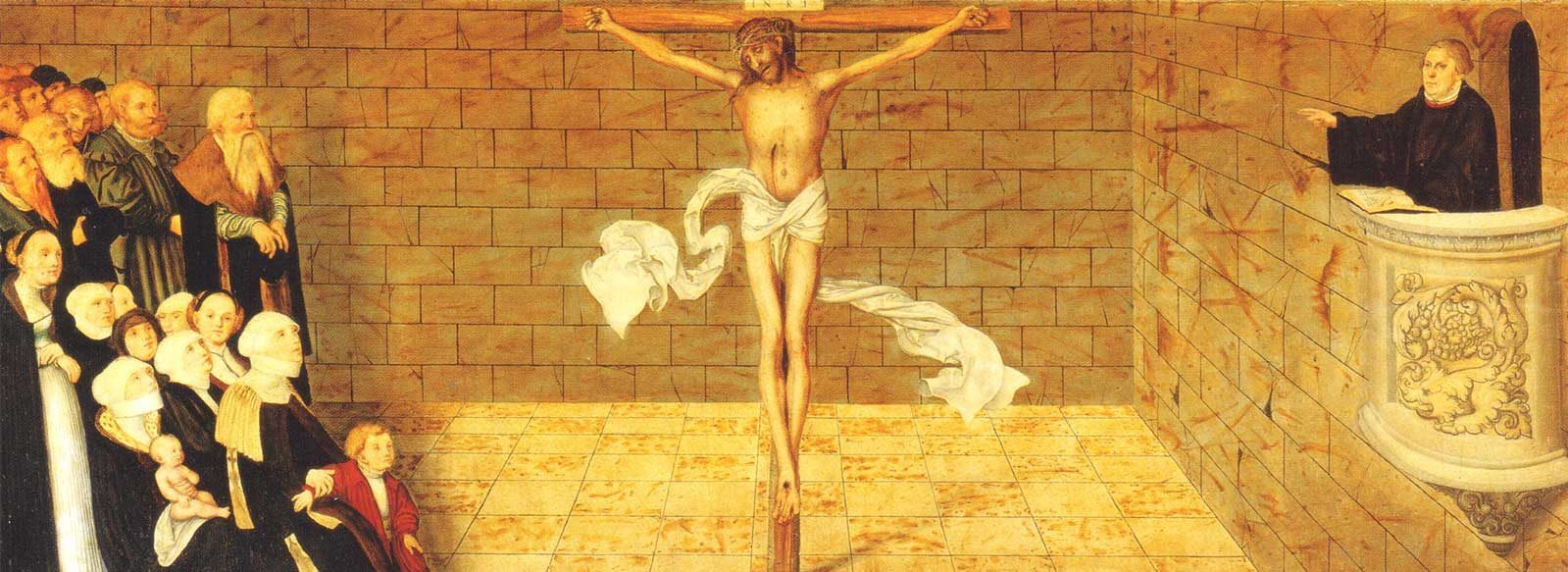
Here's my central contention:

Comedy is serious. And Christianity is comedic.

Now maybe that's a shocking shift in perception for you - in some ways I hope it is. But that's my contention: Comedy is serious. And Christianity is comedic. The bible is comedic. The Christian message is comedic:

I mean that in two senses.

In the classical sense the bible is a comedy. It is a comedy as opposed to a tragedy. In the classical use of the word, comedy refers to a certain genre of story in which people or cultures struggle and collide and through that struggle and collision you have a eu-catastrophe - a good catastrophe. A clash that resolves into a happy ending.

A modern example of the classic comedy genre would be the movie Shrek. Even if you haven't seen the film you'll recognize the happy ending - basically the good guys win, the bad guys gets their just deserts, there's a wedding and you finish with a song. That's the age-old recipe for a comedy. And the bible is the archetypal comedy. If you want to read the ultimate comedy ending, read Revelation 19 when you get home. There you see Jesus Christ riding into town on a white horse - the Victor over sin, death and every evil. You see the bad guys, the forces of darkness, the devil and all who follow him cast into the pit. You see the ultimate wedding - the wedding to which all other weddings point: the joyful union between Jesus and His people. And you see singing - the Hallelujah chorus is taken straight out of Revelation 19. Hallelujah. In biblical language even the rocks will cry out and the trees of the field will clap their hands. The whole creation will be released into noisy, joyful praise. The plotline of all history according to the bible is a comedy. Not everyone will get it. Nonetheless the Christian story is a comedy. It's called the Gospel which literally means GOOD NEWS. Christianity is the announcement of Good News - Jesus has triumphed, the bad guys lose, history is heading to praise and joyful relationship - Good News. Christianity is a comedy.

e.g. of Life of Brian - it topped channel 4's poll of the hundred greatest comedy films.  And it's very funny.  I've used clips from the first half of the film in sermons to illustrate many ridiculous truths about Christians.  The film does an excellent job of sending up religious people - not as good a job as Jesus does of sending up religious people.  But it's a pretty good effort.  My problem is the ending - it's actually not a comedy, it's a tragedy.  The finale has its hero whistling a wry ditty on the cross.  "Life is quite absurd and death's the final word."  Now it's a fine film.  A funny film.  But in the end it's gallows humour.  In the end, it's just a tragedy.  The problem with the Life of Brian is not that it is a comedy.  The problem is it's not a comedy. Without the resurrection truth of Christianity, the Life of Brian is just one more tragedy sprinkled with gallows humour.  And that's a pretty depressing prospect to be honest.

And Christian faith means hearing the Good News and getting it. Just like you get a joke, you need to get the Good News about Jesus. And faith is what happens when a person understands the Good News as Good News. They have a shocking shift in perceptions and they start to see Jesus in a different light, God in a different light, themselves in a different light, the world, the future, life and death in a different light. It's a shocking shift.

And so, in the bible the call to become a Christian is the word "repent." And literally the word repent means "change of mind". It is this shocking shift that happens when you GET the Good News. And the bible says whenever that happens the angels in heaven rejoice. There's laughter all round when people get the Good News. Christianity is comedic.

So the overall plotline of the bible is comedic. But what I want to do with our remaining time is show you how the bible tells this comedic story in a thoroughly comedic way.

Because some of you will be thinking - alright so laughter's allowed at the end, with the happily ever after. But what about now in our broken world full of death and wickedness. Is comedy really a spiritual, godly thing now? Yes. Absolutely.

We'll begin with the garden of Eden and the story of how all this death and wickedness came about. Christians call this event the Fall and it was the greatest Fall from grace there's ever been. Humanity fell away from God and were cast out of His presence. It was a dreadful event, the worst and most serious in human history. And yet - it is described in richly comedic terms.

Remember comedy is serious - there's no such thing as ‘only joking' and ‘laughing matters' are no less ‘serious matters' for all that. But the biblical story of the Fall is comedic.

You have Adam and Eve - before they disobey the LORD they are naked and feel no shame. Harmony, bliss, openness, beauty, freedom, satisfaction, joy. And Satan slides up to Eve and says "Can you believe the LORD, all these trees and He's forbidden you to eat from any of them!" And Eve says ‘No we can eat from any tree in the world - there's only one tree that's off limits.' The devil says ‘What a kill-joy! Are you really going to let this Miser tell you what to do?'

We hear this temptation from this side of the Fall and so it doesn't seem so ridiculous to us. But really that should seem like the most ridiculous suggestion ever put. Of course we should trust God to tell us what's what. Of course we should let Him set the agenda. Of course we should believe His words - He's the LORD. But we hear this temptation on this side of the Fall. And it's a mark of how deeply the Fall has settled into all our hearts that we understand Adam and Eve's sin. We commit it every day. It's the cry of every sinful human heart. If I were to ask you "Who's got the right to tell you what to do? Who's got the right to tell you what's what?" We naturally reply - No-one! No-one's going to forbid me what I want - not even you LORD. It's ridiculous, but it's exactly what Adam and Eve do. And immediately upon believing a ridiculous truth, they become ridiculous people. As soon as they eat the forbidden fruit they become fearful and ashamed. And they sew fig leaves together to cover their nakedness. An hour ago they had walked around paradise like kings and queens, naked and loving it. Now - fig leaves, sewn together. How the mighty have fallen. But of course the fall of the mighty is rich ground for comedy. And so Genesis tells this tragic story in deeply comedic terms.

The next thing that happens, the LORD God Himself comes to walk with His favourite couple in the cool of the day. And the bible says "They hid from the LORD God among the trees." They HID from the LORD God, behind some trees. It's tragic, but you can laugh, because comedy is also serious. And the LORD confronts Adam. Adam says "This woman you put here made me do it." This is brilliant comedy. Adam manages to blame both the LORD and the woman in a single sentence and we say "How ridiculous" and "How typical". And that's great comedy. Makes you laugh, makes you think. We laugh at him but we also see ourselves in him. Same with Eve. She gives the age old excuse "The devil made me do it." Again - ridiculous and typical. So Adam blames Eve, Eve blames the serpent and then the serpent doesn't have a leg to stand on. (boom, boom).

But here is the worst event in human history and the bible portrays it in thoroughly comedic terms. Comedy is serious. And Christianity is comedic. Because when people become ridiculous it is right to ridicule them.

Which is what the bible does from cover to cover. The bible takes the Fall seriously - which means it sees humanity as the ridiculous bundle of contradictions that we are. We have rejected the LORD who loves us. We're like a drowning cat clawing and scratching its Owner who's only trying to rescue it. We've been estranged from the LORD our Maker and all our efforts to get back to paradise are laughable...

.

More here and here..

Twitter widget by Rimon Habib - BuddyPress Expert Developer