Skip to content

Last time we saw that the triune God does everything for the glory of love.

This is different from the love of glory.  180 degrees different.

And so - you saw it coming a mile off - I want to argue that John Piper's popular teaching on this issue is both wrong and damaging.  (I've written previously on this here, here, here, here and here - and a few other places too!)

As I see it, Piper would have God to sing, "I did it all for the glory of me."

So, for instance, he begins his first appendix to Desiring God with the statement:

In chapter one I said God's ultimate goal in all that he does is to preserve and display his glory. I inferred from this that he is uppermost in his own affections. He prizes and delights in his own glory above all things. This appendix presents the biblical evidence for this statement.

First notice the complete lack of a trinitarian dynamic to any of his formulations.  I realize that he's also become aware of a deficiency here, but I still don't think he's carried out the revolution of 'glory' that's demanded by a thorough-going trinitarian re-formulation.

Second notice that this glory is the solitary, sedentary glory of the philosophical theist, not the other-centred, self-giving glory of the gospel God.

And so, before he launches into a bible over-view of glory, Piper makes an absolutely crucial move.  He seeks to define the "glory" that God is so zealous to pursue:

The term "glory of God" in the Bible generally refers to the visible splendor or moral beauty of God's manifold perfections. It is an attempt to put into words what cannot be contained in words-what God is like in his unveiled magnificence and excellence.

What do we make of this definition of 'glory'?  Again there is no hint of trinitarian love here.  There's no hint of cruciform sacrifice (cf glory in John).  No hint of redemption or saving activity.  In fact, no hint of activity at all.  Here is a solitary and sedentary glory.

But think of how the bible introduces 'glory' in the book of Exodus.  First, the Warrior LORD is 'glorified' through the defeat of Pharaoh and salvation of Israel (Ex 14:4,17,18).  In that redemptive act God is glorified - even glorified in/by Pharaoh.  This means that glory is not something behind the salvation of the LORD - a static divine splendour to be later enjoyed by the redeemed.  No His glory is in that very judging/redeeming.  It's a display of who He is, not something He gets once redemption is over.  On the other side of the Red Sea, the 'glory' the Israelites sing about is completely bound up in that deliverance, His wonder-working redemption (Exodus 15:10-13).  Then in Exodus 16:7 we meet a Person called "the Glory of the LORD".  And He appears to the Israelites again and again under this title.  When Moses asks the Unseen LORD to show him His Glory (Exodus 33:18), He declares His grace-filled name (Ex 34:6f; 23:20).  Only after this do we read about the Glory filling the tabernacle (Ex 40:34ff).  And even here it's not simply a shiny brilliance, but a Person we have come to know and He's accompanied by the Shekinah cloud which pledges the LORD's guiding and redeeming love.

Now let's consider Piper's far more philosophical language of perfections etc.  It makes me want to ask, Perfection?  God is perfect in what?  In magnificence?  What kind of magnificence?  What is this Godness of God that 'glory' describes?  The fact that Piper sets up a definition of 'glory' apart from trinitarian considerations or an examination of gospel events prejudices the whole scheme from the outset.

In this appendix (and virtually every time he makes these arguments) he will list an armful of Scriptures about God's pursuit of His glory.  (This is why I did my own biblical survey of God's motives).  But Piper only allows those verses to tell us that God pursues glory.  He doesn't allow those verses to tell us what the glory is.  He's let the philosophers do that job.

You see, if 'glory' is the 'excellence'  of a solitary, sedentry deity then pursuit of this glory will look a certain way.  But what if 'glory' was an active, redemptive, Personal, trinitarian, self-giving love?  What would God's pursuit of this glory look like?  It would look like the very opposite of a self-exalting glory.

Next I will look in more detail at what it means for God to act for the sake of this kind of glory.

.

An old post from my five part series on David and Goliath: Five Smooth Stones.  Through the lens of this story I looked at preachinggrace, faith and reward.  Here I look at the subject of election, trying as always to keep the Anointed King at the centre.

Israel did not elect David.  Not even his nearest and dearest wanted David as king.

In 1 Samuel 16 we see the choosing of this king.  Yet it is not man's choice but God's.

The LORD said... "I have chosen one of [Jesse's] sons to be king..."

Samuel saw Eliab and thought, "Surely the LORD's anointed stands here before the LORD." But the LORD said to Samuel, "Do not consider his appearance or his height, for I have rejected him. The LORD does not look at the things man looks at. Man looks at the outward appearance, but the LORD looks at the heart."...

Jesse made seven of his sons pass before Samuel, but Samuel said to him, "The LORD has not chosen these."...

Then the LORD said, "Rise and anoint [David]; he is the one." So Samuel took the horn of oil and anointed him in the presence of his brothers, and from that day on the Spirit of the LORD came upon David in power.

Here is the LORD's election.  Not the firstborn Eliab, whose name (My God is Father) was clearly very well suited to the post of Christ!  The LORD rejects what man chooses.

His choice always confounds human wisdom.  We choose the rich and powerful.  He chooses the lowly and lifts them up.  This is just what we have been taught by Hannah's prayer at the beginning of the book:

e.g. He raises the poor from the dust and lifts the needy from the ash heap; He seats them with princes and has them inherit a throne of honour. (1 Sam 2:8)

How does this work out?  Hannah goes on...

"It is not by strength that one prevails; those who oppose the LORD will be shattered. He will thunder against them from heaven; the LORD will judge the ends of the earth. "He will give strength to His King and exalt the horn of His Anointed." (1 Sam 2:10)

The LORD chooses His Anointed - His Messiah or Christ - and strengthens Him in order to shatter the proud and powerful.  And Chapter 16 has shown us that even this choice has been counter to human intuitions.  The Israelite electorate did not choose David, the greatest Israelite kingmaker, Samuel, did not choose David, his brothers did not choose David.  The LORD chose David.  And He anointed him "in the presence of his brothers."

This is both a judgement and a comfort for David's brothers.  It is a judgement - they are not the chosen ones.  They have been passed over by the LORD. He has searched their hearts and found them wanting.  This must have been a bitter disappointment to them.  But, at the same time, there is great comfort.  Immediately these brothers have been made royalty!  Though in themselves they are not chosen, in their brother they belong to the royal household.  This election has thrust them down and brought them back up.

Now if chapter 16 was the LORD's choice of David, chapter 17 shows David choosing himself for his people.  In chapter 17 David comes to the front lines but already his brothers have forgotten or dismissed his identity.  They were there when he was anointed and they must have known Hannah's song - the anointed one would shatter the enemy (1 Sam 2:10).  But again, David is not man's choice.  He is not even the choice of his own brothers. (1 Sam 17:28)

In the end David takes matters into his own hands.  On the basis of the LORD's election, David basically chooses himself for Israel.  He convinces Saul to let him fight (v33ff) and effectively goes in Saul's place (Saul being the Israelite's giant (1 Sam 9:10) and the natural human choice for Champion).

The chosen king chooses himself to the post of Champion, no thanks to any human support.  He even rejects the armour of Saul and single handedly defeats the enemy.  No Israelite could say on that day 'I knew David could do it!'  Not even his own brothers could say 'I cheered him on.'  His own arm worked salvation for him.  And it was not even for a willing people.  He went into battle for those who had rejected him.

The victors on that day in the valley of Elah were not those who had previously backed the right champion.  They couldn't even claim to have voted for David.  They were simply those who found themselves, contrary to all their previous doubts and denunciations, caught up in the victory of another.  Dismay had turned to praise as they saw the LORD's chosen king who had chosen himself for them.  The stone the builders had rejected had become the capstone and - suddenly, unexpectedly - it was marvellous in their eyes (Ps 118:22).

.

Previous posts in this series have looked through the lens of David & Goliath to consider preaching, grace and faith.  In each case we have seen the temptation to approach these subjects without the Anointed King at the centre.  In such a vision, the battle scene simply boils down to an anaemic vision of the sovereignty of God and the eventual victory of His people.  But without an explicit Christ-centred-ness, what are we left with?

Well, preaching becomes simply the rallying cry to soldier on.  Grace becomes simply God's sovereign empowerment for battle.  Faith becomes our work in trusting this sovereign God against all odds.  But all of this (ironically since this vision usually seeks to be ""God-centred"") focuses on ourselves.  For where do we look in this version of preaching?  To ourselves and our soldiering abilities - Are we faithful to His military briefings?  Where do we look in this version of grace?  To the (sovereignly empowered) works that God has wrought through us.  And so evidences of grace are found where?  In us.  And where do we look in this version of faith?  We test our own believing state, looking for this internal mental act within.   Without Christ-centred-ness at the heart of it, even ""God-centred-ness"" will turn us in on ourselves.

And this is also true in the realm of election.  Just as preaching, grace and faith should be turning us away from ourselves and explicitly to Christ, so election must be focused on Him.  I do not find grace or faith in me - I find it in Christ.  Similarly I do not find election in myself, I find it in Christ.

Election is God's choice of Christ (and His choice to fight for us) in spite of our doubts and denunciations.  Election is the gospel for Christ is the Elect One.

Election is the Father's choosing of Christ contra to all our rejection of Him (Is 28:16; 42:1; 1 Pet 1:20).  If I ask myself whether I am choice in God's eyes the answer can only be a resounding No.  In myself I am repugnant, reprehensible, reprobate.  But in Christ I share His chosen status - I share His royal name, I share His family relations, I share His victory.  Election focuses us on Christ and only on ourselves when considered in Him.

Election (like grace or faith) becomes a dark truth whenever we turn our eyes to ourselves.  How quickly faith evaporates when we examine it - for faith is essentially looking away to Christ.  Election is the same.  Election is neither hidden in myself, nor is it merely hidden in an inscrutible divine will - election is hidden (and therefore revealed) in Jesus.  Notice that phrase from 1 Samuel 16:13 - 'Samuel anointed David in the presence of his brothers.' Election does not simply occur in the divine counsels of eternity.  Election is disclosed as it really is in Jesus Christ.  The electing Father declares His eternal choice to all as He points us to the One who tabernacled among us:

"Here is My Servant, Whom I uphold, My Chosen One in Whom I delight; I will put My Spirit on Him and He will bring justice to the nations."  (Is 42:1)

Election is laid bare whenever we look to Jesus.  The eternal choice of God is on view in Christ.  To lay hold of this Elect One is to lay hold infallibly and eternally upon the election of God.  It lies outside ourselves, but precisely because of this it lies in the safest place for us.

So where do we fit in all this?  Well where did we fit in with 'grace' or 'faith'?  Simply put, we found ourselves the happy recipients of them.  We found ourselves rejoicing in the victory of Christ when we saw Him.  It's no different with election.  At one time we doubted and denounced Him, now we trust and exalt Him and find ourselves (like David's brothers) benefiting from His chosen status.  And so all those who look away from self, who look to Jesus and say a belated but grateful 'yes' to God's choice of king, they find themselves participating in the chosenness of their Champion.  Their choice has done nothing.  His choice has done everything.  They do not look to themselves to understand their election since it really doesn't reside there.  It resides in Christ - the Elect One of God.

It's been a lengthy post already but I don't think I can do better than to quote Spurgeon once again.  This is perhaps my favourite quotation on the whole topic:

“Many persons want to know their election before they look to Christ, but they cannot learn it thus, it is only to be discovered by ‘looking unto Jesus.’ If you desire to ascertain your own election; after the following manner shall you assure your heart before God.  Do you feel yourself to be a lost, guilty sinner? Go straightway to the cross of Christ and tell Jesus so, and tell Him that you have read in the Bible, ‘Him that cometh unto me, I will in no wise cast out.’  Tell Him that He has said, ‘This is a faithful saying, and worthy of all acceptation, that Christ Jesus came into the world to save sinners.’  Look to Jesus and believe on Him, and you shall make proof of your election directly, for so surely as thou believest, thou art elect.  If you will give yourself wholly up to Christ and trust Him, then you are one of God’s chosen ones; but if you stop and say, ‘I want to know first whether I am elect’, you ask what you do not know. Go to Jesus, be you never so guilty, just as you are.  Leave all curious inquiry about election alone.  Go straight to Christ and hide in His wounds, and you shall know your election. The assurance of the Holy Spirit shall be given to you, so that you shall be able to say, ‘I know whom I have believed, and I am persuaded that He is able to keep that which I have committed to Him.’  Christ was at the everlasting council: He can tell you whether you were chosen or not; but you cannot find it out any other way.  Go and put your trust in Him and His answer will be - ‘I have loved thee with an everlasting love, therefore with loving-kindness have I drawn thee.’ There will be no doubt about His having chosen you, when you have chosen Him.”  (‘Knowing, brethren beloved, your election of God.’ Morning and Evening, July 17.  1 Thess 1:4.)

.
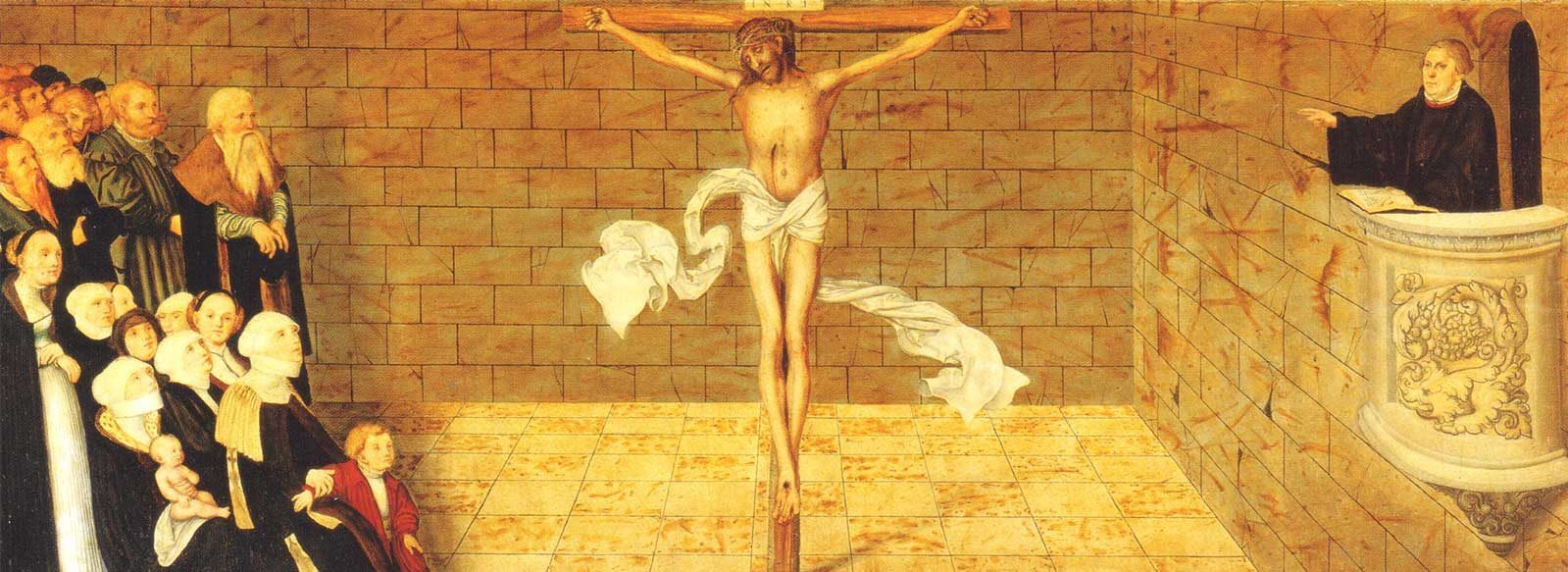
An old post from my five part series on David and Goliath: Five Smooth Stones.  Through the lens of this story I looked at preachinggrace, faith and reward.  Here I look at the subject of election, trying as always to keep the Anointed King at the centre.

Israel did not elect David.  Not even his nearest and dearest wanted David as king.

In 1 Samuel 16 we see the choosing of this king.  Yet it is not man's choice but God's.

The LORD said... "I have chosen one of [Jesse's] sons to be king..."

Samuel saw Eliab and thought, "Surely the LORD's anointed stands here before the LORD." But the LORD said to Samuel, "Do not consider his appearance or his height, for I have rejected him. The LORD does not look at the things man looks at. Man looks at the outward appearance, but the LORD looks at the heart."...

Jesse made seven of his sons pass before Samuel, but Samuel said to him, "The LORD has not chosen these."...

Then the LORD said, "Rise and anoint [David]; he is the one." So Samuel took the horn of oil and anointed him in the presence of his brothers, and from that day on the Spirit of the LORD came upon David in power.

Here is the LORD's election.  Not the firstborn Eliab, whose name (My God is Father) was clearly very well suited to the post of Christ!  The LORD rejects what man chooses.

His choice always confounds human wisdom.  We choose the rich and powerful.  He chooses the lowly and lifts them up.  This is just what we have been taught by Hannah's prayer at the beginning of the book:

e.g. He raises the poor from the dust and lifts the needy from the ash heap; He seats them with princes and has them inherit a throne of honour. (1 Sam 2:8)

How does this work out?  Hannah goes on...

"It is not by strength that one prevails; those who oppose the LORD will be shattered. He will thunder against them from heaven; the LORD will judge the ends of the earth. "He will give strength to His King and exalt the horn of His Anointed." (1 Sam 2:10)

The LORD chooses His Anointed - His Messiah or Christ - and strengthens Him in order to shatter the proud and powerful.  And Chapter 16 has shown us that even this choice has been counter to human intuitions.  The Israelite electorate did not choose David, the greatest Israelite kingmaker, Samuel, did not choose David, his brothers did not choose David.  The LORD chose David.  And He anointed him "in the presence of his brothers."

This is both a judgement and a comfort for David's brothers.  It is a judgement - they are not the chosen ones.  They have been passed over by the LORD. He has searched their hearts and found them wanting.  This must have been a bitter disappointment to them.  But, at the same time, there is great comfort.  Immediately these brothers have been made royalty!  Though in themselves they are not chosen, in their brother they belong to the royal household.  This election has thrust them down and brought them back up.

Now if chapter 16 was the LORD's choice of David, chapter 17 shows David choosing himself for his people.  In chapter 17 David comes to the front lines but already his brothers have forgotten or dismissed his identity.  They were there when he was anointed and they must have known Hannah's song - the anointed one would shatter the enemy (1 Sam 2:10).  But again, David is not man's choice.  He is not even the choice of his own brothers. (1 Sam 17:28)

In the end David takes matters into his own hands.  On the basis of the LORD's election, David basically chooses himself for Israel.  He convinces Saul to let him fight (v33ff) and effectively goes in Saul's place (Saul being the Israelite's giant (1 Sam 9:10) and the natural human choice for Champion).

The chosen king chooses himself to the post of Champion, no thanks to any human support.  He even rejects the armour of Saul and single handedly defeats the enemy.  No Israelite could say on that day 'I knew David could do it!'  Not even his own brothers could say 'I cheered him on.'  His own arm worked salvation for him.  And it was not even for a willing people.  He went into battle for those who had rejected him.

The victors on that day in the valley of Elah were not those who had previously backed the right champion.  They couldn't even claim to have voted for David.  They were simply those who found themselves, contrary to all their previous doubts and denunciations, caught up in the victory of another.  Dismay had turned to praise as they saw the LORD's chosen king who had chosen himself for them.  The stone the builders had rejected had become the capstone and - suddenly, unexpectedly - it was marvellous in their eyes (Ps 118:22).

.

Previous posts in this series have looked through the lens of David & Goliath to consider preaching, grace and faith.  In each case we have seen the temptation to approach these subjects without the Anointed King at the centre.  In such a vision, the battle scene simply boils down to an anaemic vision of the sovereignty of God and the eventual victory of His people.  But without an explicit Christ-centred-ness, what are we left with?

Well, preaching becomes simply the rallying cry to soldier on.  Grace becomes simply God's sovereign empowerment for battle.  Faith becomes our work in trusting this sovereign God against all odds.  But all of this (ironically since this vision usually seeks to be ""God-centred"") focuses on ourselves.  For where do we look in this version of preaching?  To ourselves and our soldiering abilities - Are we faithful to His military briefings?  Where do we look in this version of grace?  To the (sovereignly empowered) works that God has wrought through us.  And so evidences of grace are found where?  In us.  And where do we look in this version of faith?  We test our own believing state, looking for this internal mental act within.   Without Christ-centred-ness at the heart of it, even ""God-centred-ness"" will turn us in on ourselves.

And this is also true in the realm of election.  Just as preaching, grace and faith should be turning us away from ourselves and explicitly to Christ, so election must be focused on Him.  I do not find grace or faith in me - I find it in Christ.  Similarly I do not find election in myself, I find it in Christ.

Election is God's choice of Christ (and His choice to fight for us) in spite of our doubts and denunciations.  Election is the gospel for Christ is the Elect One.

Election is the Father's choosing of Christ contra to all our rejection of Him (Is 28:16; 42:1; 1 Pet 1:20).  If I ask myself whether I am choice in God's eyes the answer can only be a resounding No.  In myself I am repugnant, reprehensible, reprobate.  But in Christ I share His chosen status - I share His royal name, I share His family relations, I share His victory.  Election focuses us on Christ and only on ourselves when considered in Him.

Election (like grace or faith) becomes a dark truth whenever we turn our eyes to ourselves.  How quickly faith evaporates when we examine it - for faith is essentially looking away to Christ.  Election is the same.  Election is neither hidden in myself, nor is it merely hidden in an inscrutible divine will - election is hidden (and therefore revealed) in Jesus.  Notice that phrase from 1 Samuel 16:13 - 'Samuel anointed David in the presence of his brothers.' Election does not simply occur in the divine counsels of eternity.  Election is disclosed as it really is in Jesus Christ.  The electing Father declares His eternal choice to all as He points us to the One who tabernacled among us:

"Here is My Servant, Whom I uphold, My Chosen One in Whom I delight; I will put My Spirit on Him and He will bring justice to the nations."  (Is 42:1)

Election is laid bare whenever we look to Jesus.  The eternal choice of God is on view in Christ.  To lay hold of this Elect One is to lay hold infallibly and eternally upon the election of God.  It lies outside ourselves, but precisely because of this it lies in the safest place for us.

So where do we fit in all this?  Well where did we fit in with 'grace' or 'faith'?  Simply put, we found ourselves the happy recipients of them.  We found ourselves rejoicing in the victory of Christ when we saw Him.  It's no different with election.  At one time we doubted and denounced Him, now we trust and exalt Him and find ourselves (like David's brothers) benefiting from His chosen status.  And so all those who look away from self, who look to Jesus and say a belated but grateful 'yes' to God's choice of king, they find themselves participating in the chosenness of their Champion.  Their choice has done nothing.  His choice has done everything.  They do not look to themselves to understand their election since it really doesn't reside there.  It resides in Christ - the Elect One of God.

It's been a lengthy post already but I don't think I can do better than to quote Spurgeon once again.  This is perhaps my favourite quotation on the whole topic:

“Many persons want to know their election before they look to Christ, but they cannot learn it thus, it is only to be discovered by ‘looking unto Jesus.’ If you desire to ascertain your own election; after the following manner shall you assure your heart before God.  Do you feel yourself to be a lost, guilty sinner? Go straightway to the cross of Christ and tell Jesus so, and tell Him that you have read in the Bible, ‘Him that cometh unto me, I will in no wise cast out.’  Tell Him that He has said, ‘This is a faithful saying, and worthy of all acceptation, that Christ Jesus came into the world to save sinners.’  Look to Jesus and believe on Him, and you shall make proof of your election directly, for so surely as thou believest, thou art elect.  If you will give yourself wholly up to Christ and trust Him, then you are one of God’s chosen ones; but if you stop and say, ‘I want to know first whether I am elect’, you ask what you do not know. Go to Jesus, be you never so guilty, just as you are.  Leave all curious inquiry about election alone.  Go straight to Christ and hide in His wounds, and you shall know your election. The assurance of the Holy Spirit shall be given to you, so that you shall be able to say, ‘I know whom I have believed, and I am persuaded that He is able to keep that which I have committed to Him.’  Christ was at the everlasting council: He can tell you whether you were chosen or not; but you cannot find it out any other way.  Go and put your trust in Him and His answer will be - ‘I have loved thee with an everlasting love, therefore with loving-kindness have I drawn thee.’ There will be no doubt about His having chosen you, when you have chosen Him.”  (‘Knowing, brethren beloved, your election of God.’ Morning and Evening, July 17.  1 Thess 1:4.)

.

4 Sing praises to the LORD, O you His saints, and give thanks to His holy name. 5 For His anger is but for a moment, and His favour is for a lifetime. Weeping may tarry for the night, but joy comes with the morning. (Psalm 30:4-5)

What is night time?  Verse 5 tells us: Judgement for sins and sorrow for suffering.

What is morning?  Verse 5 proclaims it: Grace for sinners and joy for sufferers.

When you're really going through the mill, morning can seem oppressive.  Not another day to face.  All you want to do is put your pillow over your head, pull the blankets up around your shoulders and snooze your way through the encroaching burdens.

But what is sunrise telling you?  Every morning it's proclaiming the gospel to you.  This darkness is only a passing shadow (as Samwise Gamgee would say).  The Light of the world triumphs.  And He chases away the gloom like the sun in all its brilliance.  Darkness cannot stand up to Him.  It must depart forever.

Every day He pledges cleansing from sin and the defeat of evil.  Far above and beyond you and your circumstances, the LORD God declares to the world that sin and suffering will be conquered by the Sun of righteousness.  Which means your sin and suffering will be conquered.  Grace and cleansing, joy and new life is more certain than the sunrise.

And if you can't feel the truth of that, that's ok.  Allow the sun simply to rise once more.  Allow it to pledge to you what you cannot imagine right now - all gloom and shadow and darkness will be swallowed up by the Light.

Joy comes in the morning.

When One rules over men in righteousness, when He rules in the fear of God, 4 He is like the light of morning at sunrise on a cloudless morning, like the brightness after rain that brings the grass from the earth.'   (2 Sam 23:3-4)

.

13

Yes I want that song infecting your brain.

We'll live forever, knowing together that we did it all for the glory of love

Now there's a line fit for the triune God!  As I'll try to show below, it's a pretty good summary of God's motives in creation and redemption.  God's life and work is an other-centred, outward-focussed, spreading goodness.  The Father, Son and Spirit do all things for the glory of love.  This is starkly different from 'the love of glory' - especially where 'glory' is defined apart from love!

So in this post I want to show that "the glory of love" is God's motivation in all things.  Later I'll show why "the love of glory" is not God's motivation according to the bible - at least not how it's popularly framed.  Our God does not sing: "I did it all for the glory of me!"

But first, here's just a little survey of love as the centre of God's life and action in Scripture (notice number four!):

.

God's being is love

1 John 4:8,16

The Father loves the Son

Matthew 3:17; 17:5; Mark 12:6; John 3:35; 15:9; 17:24; Ephesians 1:6; Colossians 1:13

The Father hands everything to the Son because of love

Psalm 2:7f; Isaiah 42:1; John 3:35; 5:20

The Father glorifies the Son because He loves Him

John 17:24

The Father predestines and elects us in Christ because of love

Ephesians 1:4f; Isaiah 55:3

The Father creates out of love

Colossians 1:16

He chooses the patriarchs out of love

Deuteronomy 10:15

He makes and keeps covenant with His people because of love

Ezekiel 16:8; Isaiah 54:10

He redeems Israel out of love

Deuteronomy 7:8; Isaiah 63:9; Jeremiah 31:3; Hosea 11:1

He leads Israel because He loves her

Exodus 15:13

He plants them in the land because He loves them

Psalm 44:3

He relents from judging time and again because of love

Numbers 14:19; Ps 51:1; 106:45; Hosea 11:1-9; Jonah 4:2

He will provide future redemption from all sins because of love

Psalm 130:7f

He saves because He loves

John 3:16; Titus 3:4f

The Son is given to us because of love

John 3:16; Galatians 2:20; Ephesians 5:2,25; 1 John 4:8-10

We're adopted because of love

Ephesians 1:5f; 1 John 3:1

We're regenerated because of love

Ephesians 2:4f

We're forgiven because of love

Revelation 1:5

.

Part 2

Part 3

Part 4

Part 5

.

Some friends preparing for marriage asked for advice on money and giving as a couple.  Looking at the Scriptures together - e.g. Exodus 35-36; 2 Cor 8-9; Ephesians 5 - we came up with three principles.  A couple's giving should be generous, joyful and joint.

All giving should be generous and joyful (God loves a cheerful giver, He does not want your grudging sacrifice!).  But there's an added dimension in marriage.  If she's joyful and he's grudging it's not joint.  You need to be jointly generous and jointly joyful in it.

For the partner who wants to give more, this calls for a patient trust in the grace of Jesus.  Trust that He is your justification (not your level of sacrifice), and trust that only His grace can motivate the joyful generosity you long to see.  The more generous spouse will be tempted to lay down the law in this situation.  But on the contrary, this is a great opportunity to model the grace of Jesus and to see a real gospel motivation grow in their partner.

After discussing these three principles I wonder whether they can apply to many different areas of married life. Sex life, use of time, moving for gospel service...

.

8

Audio here

Hebrews 7.  It’s a rump steak of a chapter.  Chewy, rich, dense, meaty.  Melchizedek, my goodness, the choicest of choice cuts, Melchizedek.  But... it’s a shame isn’t it?  Shame you guys aren’t really up to digesting this kind of material are you?  I mean, you’re sweet and I love you, you should know that.

But – you’re not really ready for meat are you? You like your bible to be vanilla milkshake.  Sweet and frothy and bland and pre-digested.  That’s you guys isn’t it?  “Ooh – you’re bible is too chewy.  Can you mush up the bible and put some sugar on it.  I can't handle your heavy bible study.”  That’s you guys isn’t it?  Shame because, Melchizedek, wow – the complicated splendour, the rich mystery, the deep profundity.  Never mind.  I can tell you’re not ready.  I shouldn’t have mentioned it.  In fact, why don’t we just skip over chapter 7.  Let’s forget the sermon this week.  Musicians, let’s get back and sing some choruses.  “Jesus wants me for a sunbeam” – that should suit you bland, milky milk-loving children.

But it’s just a shame, cos Melchizedek.  I mean, that’s some of the good stuff...  What’s that?  You want to study Melchizedek?  All right.  Strap in, because we’re about to go on a wild and crazy ride.

Ladies and Gentleman, that was my impression of the writer to the Hebrews.  Check out Hebrews 5 from v11.  You’ll notice that in v6 and v10 he’s mentioned Melchizedek.  And you can just tell, he’s weighing up whether he should explain the whole Melchizedek thing.  And from v11 he seems to decide that Melchizedek is a bit beyond these Christians.

11 We have much to say about this, but it is hard to explain because you are slow to learn. 12 In fact, though by this time you ought to be teachers, you need someone to teach you the elementary truths of God's word all over again. You need milk, not solid food! 13 Anyone who lives on milk, being still an infant, is not acquainted with the teaching about righteousness. 14 But solid food is for the mature, who by constant use have trained themselves to distinguish good from evil.

Do you see what he’s doing?  He’s laid Melchizedek out there and said – I got a lot of stuff on Melchizedek.  Meaty stuff.  But... nah... you won’t want to hear that.  You’re milky, bland, frothy, milky milk-lovers.  You’re not ready for steak.

And so chapter 6 talks about their maturity (verses 1-3) and how they’re not as bad as those apostates over there (verses 4-9) and from verse 10 he concedes that they are growing and bearing fruit in their Christian walk.  And so by the time he gets to chapter 6, verse 19 he feels he can drop Melchizedek back into the discussion:

19 We have this hope as an anchor for the soul, firm and secure. It enters the inner sanctuary behind the curtain, 20 where Jesus, who went before us, has entered on our behalf. He has become a high priest for ever, in the order of Melchizedek.

And so now he’s mentioned Melchizedek three times.  He’s teased them long enough and so from chapter 7 he decides to give up the good stuff on Melchizedek.  He’s going to serve up a sirloin steak of a chapter.

Are we ready for sirloin steak?  Or do you want your vanilla milkshake?  Meat or milk?

Let the record show – meat is what you want.  Meat is what you will get.

...continue reading "Hebrews 7 sermon"

7

Far and away the best Australian comedy ever made, The Castle is a must-see movie.  Brilliantly observed, funny, heart-warming and if you're not punching the air at the triumphant ending I fear for the state of your soul.

The Kerrigan family are threatened with eviction by a nasty corporation.  But 'a man's home is his castle' so they fight it through the courts and... (last second spoiler alert!)... win.

It taps into some deeply felt Australian myths.  It's about home and land - with overt references to aboriginal land rights.  It's about family and mateship and a fair go. Most of all it's the myth of the little Aussie battler winning through.

Or is it?

In the story, Darryl Kerrigan (right) is completely helpless.  He's all at sea in a legal world far beyond his understanding.  As much as he wants to protect his family, he's absolutely powerless.  His fate, and the fate of his household, lies with one of two advocates.

First, Dennis Denuto (left) makes terrible representation (see below).  All is lost.

But a saviour is found in Lawrence Hammill QC (centre).  Everything changes the minute 'Lawrie' utters those words, "I'd like to appear on your behalf - gratis... free!"

To the court, Darryl Kerrigan only looked as good as his representative.  When his representative was poor, his case was thrown out.  When his representative was good, he was utterly vindicated.  His destiny lay in the hands of his advocate.

As an audience, we have a soft spot for the Kerrigans.  But Lawrie wins our hearts.  Only the emotionally constipated could watch his final speech (not shown above) with dry eyes.

The Castle's not about a working class hero who never gave up.  This is not the story of one man standing against the powers that be - much as we love that myth.  It's about the powerful one stepping down for the weak.  It's the strong advocate who graciously intercedes.

Therefore - two things.  1)  Go and see The Castle if you haven't already!

And 2) realise this:  You are not the determined little guy who'll make good in the end.  You're facing trial - powerless and guilty.  But you have a brilliant Advocate.  He says, "I'd like to appear on your behalf - gratis!"  And He makes faultless representation to the court of heaven.  You stand in Him completely vindicated.  What kind of Advocate is this!

24 Because Jesus lives for ever, He has a permanent priesthood. 25 Therefore He is able to save completely those who come to God through Him, because He always lives to intercede for them. 26 Such a high priest meets our need--one who is holy, blameless, pure, set apart from sinners, exalted above the heavens.   (Heb 7:24-26)

19 Even now my Witness is in heaven; my Advocate is on high. 20 My Intercessor is my Friend as my eyes pour out tears to God; 21 on behalf of a man He pleads with God as a man pleads for his friend.  (Job 16:19-21)

.

Twitter widget by Rimon Habib - BuddyPress Expert Developer