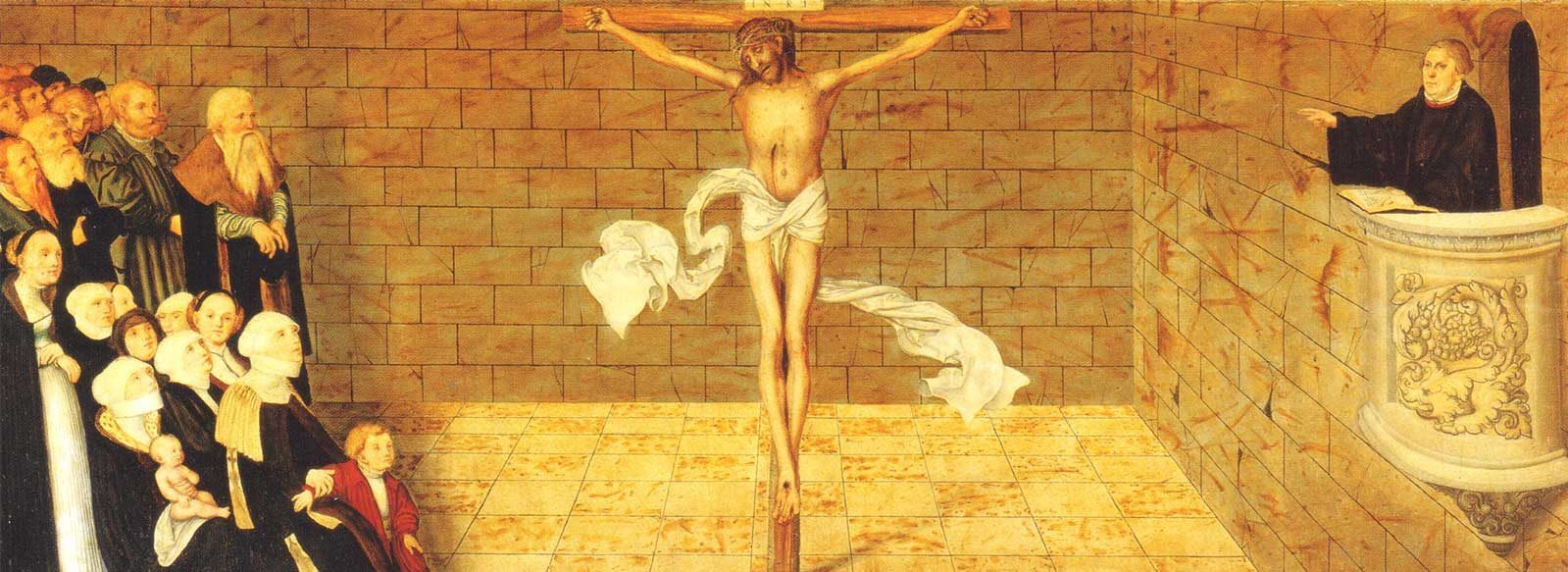
We have been thinking about mission grounded in God's own life. God is the Sending God, His Sent Son and the Reconciling Spirit - this is not simply something He does but who He is.
So it is with the Church. We have inherited our mission from the Sent One and we too find ourselves not simply doing mission, but being His sent ones to the ends of the earth.
There is discontinuity between God's mission and ours in that Christ has saved the world therefore we do not. Instead we point to His once for all saving.
But there is also continuity between God's mission and ours. Therefore, just as the eternal Father's concern has ever been the exaltation of His Son in His Spirit-empowered word, so too our mission must be thoroughly evangelistic.
At this point people will often ask, does social justice or care for the environment have a place within such an evangel? The answer is Yes, but we must emphasize that such concerns find their place within the gospel. Not instead of it. And not alongside of it. God does not have one goal for social, political, cultural and environmental well-being and another goal for the salvation of souls. Such a dualism has plagued the church's understanding of mission for too long.
There are some who have simply privileged one side of the dualism. So on the one hand there have been the evangelists like D.L. Moody who famously said: "I look upon this world as a wrecked vessel. God has given me a lifeboat and said to me, 'Moody, save all you can.'" Such a view divorces creation and redemption and privileges the latter. On the other hand there has been the 'social gospel' of Walter Rauschenbusch in which mission is "transforming life on earth into the harmony of heaven." This makes the same divorce but privileges creation instead.
In fact both fall into a dualism in which heaven and earth, time and eternity, the spiritual and the physical are pitted against one another. This cannot be the outlook of the Christian who has accepted mission from the hand of the risen Christ. In Him heaven and earth, time and eternity, the spiritual and the physical are united at the deepest level.
But there is yet another mistake to be resisted. We have not solved this dualism by accepting these two concerns for creation and redemption and simply determining to give them equal emphasis. A well balanced two-pronged approach to mission is not the solution, as though some cultural mandate lies side-by-side together with a gospel mandate for the world. Such a view seems to be that of the very influential Lausanne Committee for World Evangelization. Here is a key statement from them in 1982:
In addition to worldwide evangelization, the people of God should become deeply involved in relief, aid, development and the quest for justice and peace.
It is the phrase 'in addition to' that is so problematic. The authors liken the relation of these two concerns to 'two blades of a pair of scissors or the two wings of a bird.' Yet to accept this two-pronged approach is still to put asunder what God has joined together. These are not unco-ordinated concerns in God's mission. The Father does not have one desire for the lifting up of humanity and another for the glorification of His Son. There is not one will for creation and a separate will for redemption. Yet this seems to be precisely the assumption of Lausanne's authors.
John Stott (the driving force behind the Lausanne declaration) said this in a sermon given the morning before the 1975 Assembly in Nairobi of the Central Committee of the World Council of Church:
"[There are two freedoms and two unities for which Jesus Christ is concerned] On the one hand there is socio-political liberation and the unity of all mankind, for these things are the good will of God the Creator, while on the other there is the redemptive work of Christ who sets his people free from sin and guilt, and unites them in his new community. To muddle these two things (creation and redemption, common grace and saving grace, liberation and salvation, justice and justification) is to plunge oneself into all kinds of confusion." (quoted in Timothy Dudley Smith, John Stott: A Global Ministry, IVP, 2001, p204
With the greatest respect for John Stott, I don't think that's right. Creation and redemption are not separately addressed by the Lord and they shouldn't be separately addressed by His church. No, the Father has one almighty gospel passion that lifts up humanity and the world precisely in the gospel of His Son. So it is with God, so it must be with us. Whatever cultural mandate there is, it is included in and dependent upon the gospel mandate to make disciples of all nations.
Authentic social, political, economic, cultural and environmental renewal happens within the gospel. It occurs within the sphere of Christ's explicit Lordship. This means, minimally, where the word of Christ is proclaimed as authoritative on its own terms (for instance where the church speaks prophetically into the issues of the day). But more usually and concretely it occurs where this word of Christ is received in faith and His Lordship is lived out first in the body and, then, spilling over into the world.
In this way the most radically political, social and environmental revolutions can occur. Yet they occur as gospel revolutions where King Jesus is reigning by the power of His Spirit-anointed word.
More to follow...
.


