Not...
.
But...
.

Got it?
.
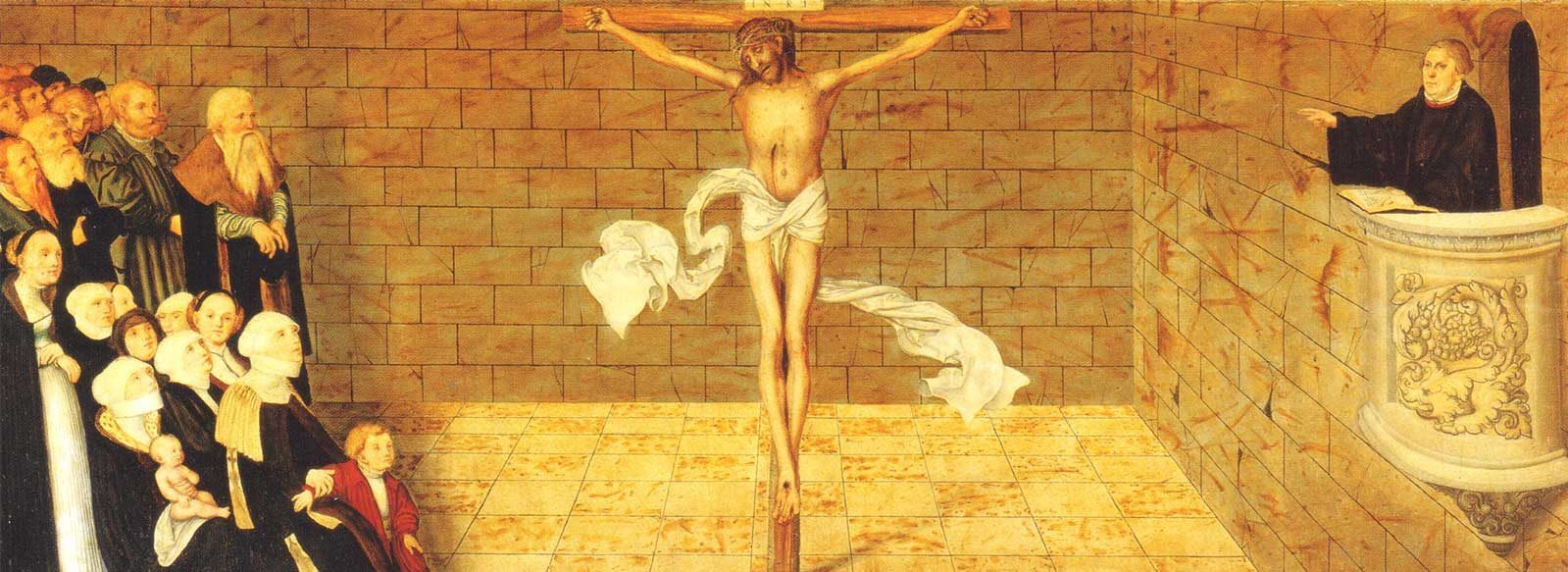
Jesus is the Word of God
Not...
.
But...
.
Got it?
.
Here's a beef of mine - when people almost completely reverse Gregory of Nazianzus's famous trinity quote while expressing admiration for it. You know the one...
"I cannot think on the one without quickly being encircled by the splendor of the three nor can I discern the three without being straightway carried back to the one.".
I too love the quote. But many times this is what the quotation is wheeled out to mean:
When I spend 600 pages of my systematic theology expounding a simple divine essence I then force myself to examine the Persons and when I've had enough of discussing the Persons I gleefully return to the omnibeing.
or
After I've thought of the god of monotheism for a bit I make sure I spend at least as long thinking about the gospel. And once I'm done thinking about the gospel, then I make sure I think about that other idea - you know, god's oneness.
Here's how I reckon the reversal happens. First people take Gregory to be saying something very basic - i.e. the One and the Three are 'equally ultimate' (or, if you're really posh, equiprimordial!). Then you run away with the 'equally ultimate' thought and think of it as some kind of 'equal air time' agreement between competing political parties.
But first of all, Gregory is saying something much more than that basic thought. Look again at the 'cannot', the 'being encircled' and the 'carried back.' Gregory is not forcing himself to give equal air time to One and Three. Gregory says that the Oneness of God actually gives him the Three. And the Three give Him the Oneness. It's not that he's ensuring equal treatment, he doesn't need to turn from a consideration of Oneness to a consideration of Threeness. It's a right contemplation of the Oneness of God itself that presents him with the Three. And the Three simply present to him as the One God.
This is how the One and the Three are related. The One God simply is the loving unity of those Three Persons. And those Three Persons simply are without remainder who this One God is.
Trinity simply means 'unity of three'. That's how the One and the Three are co-ordinated. They are not separate topics to be separately studied. You cannot talk about the One God if you're not talking about the Three Persons who are the One God. That's the radical importance of Gregory's insight.
Now go and re-write those 600 pages.
Rant over.
.
For thawed-out Thursdays. First posted in Jan 2008...
How should we attain humility? Determine to think low thoughts of yourself? You'd be defeated before you began. Self-deprecation is still self-deprecation. No, to be humble we need to be humbled.
Daniel 4 gives us a great picture of this. Nebuchadnezzar, the most powerful man in the world, is humbled by the triune God who is 'able to humble' 'those who walk in pride.' (Dan 4:37).
As a young(ish) Australian male I know a little something about walking in pride. What can I learn from Daniel 4 about humility?
First, the hero of the piece, Daniel, accomplishes his work only in the power of the Holy Spirit.
"I know that the spirit of the holy gods is in you and that no mystery is too difficult for you." Dan 4:9 (LXX has 'Holy Spirit of God' - translating the plural 'gods' as elsewhere in Scripture)
"None of the wise men in my kingdom can interpret it for me. But you can, because the spirit of the holy gods is in you." Dan 4:18. See also 5:11,14 (LXX translates them all as Holy Spirit of God)
Without the Spirit, Daniel has nothing to offer. With the Spirit, Daniel is wiser than the wisest men on earth.
Second, the promised King of God's Kingdom is described as the Lowliest of Men.
"the Most High is sovereign over the kingdoms of men and gives them to anyone He wishes and sets over them the Lowliest of men." (Dan 4:17)
In the great inversion of all our human expectations, God's choice for King is not simply a lowly man, but the Lowliest of men. The King of all kings is the One who says "I am gentle and humble in heart." (Matt 11:29) How can Nebuchadnezzar exalt himself when the Chosen One of the Most High is the Servant of all?
Third, Nebuchadnezzar learns humility when he worships the Most High God:
34 At the end of that time, I, Nebuchadnezzar, raised my eyes towards heaven, and my sanity was restored. Then I praised the Most High; I honoured and glorified Him Who lives for ever. His dominion is an eternal dominion; His kingdom endures from generation to generation. 35 All the peoples of the earth are regarded as nothing. He does as He pleases with the powers of heaven and the peoples of the earth. No-one can hold back His hand or say to him: "What have you done?" 36 At the same time that my sanity was restored, my honour and splendour were returned to me for the glory of my kingdom.
With his eyes turned upwards, Nebuchadnezzar praises Him Who lives forever. The sovereign glory of the Omnipotent Father draws out of him awed worship. I'm told (and I can believe it) that the Grand Canyon will take your breath away - no-one stands on the rim with high thoughts of themselves. And no-one can confess the majesty of our Father and not be correspondingly humbled in the process.
So how do I fight pride? The doctrine of the trinity of course. I need to know that anything I have of worth in God's service is a gift of the Spirit - "What do you have that you did not receive? And if you did receive it, why do you boast as though you did not?" (1 Cor 4:7).
I need to know that the Lord of Glory is Himself the Lowliest of men. His glory is His service. So how can I exalt myself above Christ?
I need to know that the Most High Father is awe-inspiring in His heavenly power. As I worship Him I find a grateful 'nothingness' by comparison which is, at that very moment, my restoration to honour.
To be enfolded in the life of these Three is to be well and truly humbled.
.
For Thawed-out Thursdays - this one from 18 months ago
Three pictures of how we are loved from the upper room. The waterfall, promotion, God's compass. They all deserve reflection as we immerse ourselves in the love of the triune God.
.
First, the waterfall:
"As the Father has loved me, so have I loved you." (John 15:9)
Here the love of the Father for His Son cascades over to us. We stand in a beginningless, limitless torrent of love. Think about it. Take the word 'as' with utmost seriousness.
.
Then there's promotion to Jesus' side:
The Father Himself loves you because you have loved me and have believed that I came from God. (John 16:27)
Here, in loving Christ we are raised shoulder to shoulder with the Son. Think how highly we have been raised. Anointed ones alongside the Anointed One. Sons and daughters alongside the Son. Receiving the same love from the Father that Jesus does. Promoted into the Godhead!
.
Then there's God's compass placed within us:
...in order that the love You [Father] have for Me may be in them and that I myself may be in them. (John 17:26)
The Father's own 'true north' of love for His Son is placed within the Christian. Now we have the Father's love for His Son in us. The Christian loves the Son with the love the Father has placed within us. That beginningless, limitless waterfall is not only something we receive, it's something that now flows from within us (John 7:38f).
.
How He has loved us! How He has caught us up in His love! Meditate on these things
.
. . . There is no such thing as a non-dogmatic or non-theological engagement of the biblical text, or of any text or language for that matter. Moreover, anti-Trinitarian frames of reference lead to fundamental problems for approaching the Bible and revelation. To illustrate by way of a historical parallel, the early Socinians, whose orientation was supposedly non-dogmatic, advocated an inspired and trustworthy Scripture, yet were closed to a Trinitarian perspective. They sought to divorce Scripture from its Trinitarian frame of reference. Their Unitarian view of God had repercussions for Scripture’s authority and inspiration. Perhaps it is the case that the seed of liberalism is sown on orthodoxy’s soil. That is to say, an over-objectified view of the Bible leads ultimately to radical objections to the Bible. A Trinitarian frame of reference is important for developing a doctrine of revelation, including Scripture’s status in the revelational framework, for God reveals God by God through Scripture in the life of the church. Scripture’s content, even the means through which Scripture is mediated, is ultimately Trinitarian. Once this view is lost, the radical objectification process is bound to begin. (Paul Metzger, ed., “Trinitarian Soundings in Systematic Theology: Chpt. 2 The Relational Dynamic of Revelation, A Trinitarian Perspective,” 23-24)
h/t Bobby
This reminded me of an old post called 'Theology - the end of the process?' So here it is for Thawed-out Thursday...
Is “systematic theology... the end process of exegesis and biblical theology"?? Ben Myers writes persuasively against this idea. To imagine that a pure biblical scholar can dispassionately read off the meaning of the Bible through the use of objective interpretive tools is ludicrous. To imagine that then the systematic theologian comes to co-ordinate these propositions into a logically cogent order is similarly misguided. As Myers says 'It's theology all the way down.' Theological pre-suppositions and commitments necessarily guide and shape all Christian activity from exegesis to exposition to pastoral work, to evangelism to hospitality to everything.
And yet the idea that the Bible can be neutrally read is so tempting. We would love to conceive of revelation as propositions deposited in a handy compendium simply to be extracted and applied. Yet the Word is a Person. And His book is Personal (John 5:39). It's not something we judge with our double edged swords - the Word judges us. (Heb 4:12)
Now Jesus thought the Scriptures were absolutely clear. He never made excuses for theological error. He never gave even the slightest bit of latitude by conceding a certain obscurity to the Bible. He never assumes that His theological opponents have just mis-applied an interpretive paradigm. If they get it wrong He assumes they've never read the Scriptures (e.g. Matt 21:16,42; Mark 2:25)! So the perspicuity of the Bible is not in dispute.
But Jesus tells the Pharisees why they get it wrong - "You are in error because you do not know the Scriptures or the power of God." (Matt 22:29) And, again, "You diligently study the Scriptures because you think that by them you possess eternal life. These are the Scriptures that testify about me, yet you refuse to come to me to have life." (John 5:39-40) They are wrongly oriented to the Power of God and the One of Whom the Scriptures testify - Jesus. This is not simply a wrong orientation of the intepreter but of the interpretation. Scripture reading must be oriented by the Power of God to the Son of God. Within this paradigm - a paradigm which the Scriptures themselves give us - the Bible makes itself abundantly clear.
But this paradigm is an unashamedly and irreducibly theological one. It is the result of exegesis (e.g. studying the verses given above) but it is also the pre-supposition of such exegesis. Theology is not the end of the process from exegesis to biblical studies and then to the systematician!
And yet, I have often been in discussions regarding the Old Testament where theologians will claim an obvious meaning to the OT text which is one not oriented by the Power of God to the Son of God. They will claim that this first level meaning is the literal meaning - one that is simply read off the text by a process of sound exegesis. And then they claim that the second meaning (it's sensus plenior - usually the christocentric meaning) is achieved by going back to the text but this time applying some extrinsic theological commitments.
What do we say to this? Well hopefully we see that whatever 'level' of meaning we assign to the biblical text it is not an obvious, literal meaning to be read off the Scriptures like a bar-code! Whatever you think that first-level meaning to be, such a meaning is inextricably linked to a whole web of theological pre-suppositions. The step from first level to second is not a step from exegesis to a theological re-reading. It is to view the text first through one set of pre-suppositions and then through another.
And that changes the direction of the conversation doesn't it? Because then we all admit that 'I have theological pre-suppositions at every level of my interpretation.' And we all come clean and say 'Even the basic, first-level meaning assigned to an OT text comes from some quite developed theological pre-commitments - pre-commitments that would never be universally endorsed by every Christian interpreter, let alone every Jewish one!' And then we ask 'Well why begin with pre-suppositions which you know to be inadequate? Why begin with pre-suppositions that are anything short of 'the Power of God' and 'the Son of God'? And if this is so, then why on earth do we waste our time with a first-level paradigm that left even the post-incarnation Pharisees completely ignorant of the Word? In short, why don't we work out the implications of a biblical theology that is trinitarian all the way down? Why don't we, at all times, read the OT as inherently and irreducibly a trinitarian revelation of the Son?
.
The dumb thing about blogging is that you're always burying your old stuff with whatever nonsense occured to you in the shower that morning. Almost 500 posts on it occurs to me that newer is not necessarily better and, apart from Bobby, I'm not sure how many of you were following the blog from the beginning. So because of that (and because I'm lazy!), I'll repost some older stuff. Probably not every Thursday, but getting old stuff out of the freezer on Thawsdays appeals to me. Anyway, here's my third ever post. It's called:
God is not revealed in His Twin
This should be very obvious, but we easily forget it. Even in the verses that most directly uphold the full and complete revelation of the Father in the Son, the differentiation of Father and Son are also prominently in view:
"Anyone who has seen me has seen the Father" (John 14:9)
"The Son is the radiance of God's glory and the exact representation of his being, sustaining all things by his powerful word. After he had provided purification for sins, he sat down at the right hand of the Majesty in heaven." (Heb 1:3)
"He is the image of the invisible God, the firstborn over all creation." (Col 1:15)
"...see the light of the gospel of the glory of Christ, who is the image of God... For God, who said, "Let light shine out of darkness," made his light shine in our hearts to give us the light of the knowledge of the glory of God in the face of Christ." (2 Cor 4:4-6)
The Father is perfectly revealed, not by His Twin, not by a Clone, but by Someone who is His Complement. The Father is revealed in His Son, the Firstborn, His Image, His right-hand Man-Priest. Self-differentiation is at the heart of God's revelation. Jesus is not the same as His Father and yet fully reveals Him. More than this - this difference is of the essence of the divine self-disclosure. Self-differentiation in communion is the being of God - all of this is perfectly revealed in, by and through Jesus of Nazareth.
Now to say that Jesus is other to His Father is not an Arian position. On the contrary this is a determination to see Jesus' revelation as a full disclosure of the life of God. It was Arius who would leave us short of full revelation in Jesus. Here we are embracing the otherness of Father and Son as the very deepest revelation of the divine nature. It is because of His equality with the Father that Christ's otherness must be taken as part and parcel of the divine revelation. Because Jesus fully reveals the divine life by speaking of Another, thus He is not obstructing our view of this Other. Rather the interplay of He and the Other are constitutive of the divine life which He reveals. Arius is refuted at the deepest level, and all by heeding this simple truth: God is not revealed in His Twin but in His Son.
This should be so obvious and plain and yet so many take their opposition of Arius in precisely the opposite direction. Their first and fatal move is to maintain that homo-ousios commits us to three-fold repetition. They assume Father and Son are identical from the outset - all in the name of Nicene orthodoxy (of course ignoring 'God from God...'). Now when they approach the eating, sleeping, dying, rising Jesus they must account for these differences while upholding that the Father and Son possess identical CVs. What to do with the discrepancies? Simple. Ignore the fact that Nicea pronounced the homo-ousios on Jesus of Nazareth and instead attribute all discrepancies to a human nature that is distanced from His divine nature.
The cost of such a move? Immediately, the otherness of Jesus is not revelatory of the divine nature, in fact it impedes our view of God. Now to see Jesus is not to see divine life, but merely human. We have in fact lost the one Image, Word, Representative and Mediator of God. Jesus of Nazareth has become, to all intents and purposes, homoi-ousios with the Father. Question marks hover over everything we see in Jesus as to whether or not this reveals the divine life. We have returned to Arius's problem via another route - we are left short of full revelation in Jesus.
Now if we took seriously the fact that God is not revealed in His Twin but in His Son we would be saved from all of this. Christ's humanity neither commits us to an eating, sleeping, dying, rising Father, but nor does it distance us from a true revelation of God. Instead Christ's eating reveals a Father who provides in our frailties, His sleeping reveals a Father who protects in our weakness, His death reveals a living, judging Father, His resurrection reveals a justifying, reconciling Father. We see into the very heart-beat of the eternal trinity when we see Jesus of Nazareth in all His glorious humanity.
And all because we have remembered the simple adage: God is not revealed in His Twin, but in His Son!
.
'Now, now Glen we need balance. It's not just about the Three, we also must remember the One.' They say.
'Oh' I say, concerned. 'You don't think I speak about the One?'
'Well perhaps not as much as you should. You're always going on about the Trinity see. Which is great. Hey, I'm all for Trinity. But we've also got to balance that by a proper emphasis on the One God.'
'Hmmm' I say, mentally de-barbing my next sentence against all the inclinations of my flesh. 'This 'One God'... I should keep Him in 'balance' with the Trinity?'
'I think so...'
'The Three Persons kept in balance with the One God??'
'Now you're getting it. Yeah... It's the whole Gregory of Nazianzus thing, you know "I can't think about the One without being surrounded by the Three, I can't think of the Three without being carried to the One." I'm sure you know about it. I'm just encouraging you to bring up the One a bit more.'
'Hmmm.' I realize I'm frowning. I try to turn it into a smile. Now I'm certain I look mad. I wince at the thought. It doesn't help. 'So I'm not speaking about the One because I spend all my time talking about the Three?'
'Exactly.'
Barbs spring up like claws on a cat. 'So Gregory should have said "I can quite happily consider the One just as long as later I spend equal time on the Three. And I can do some independent study on the Three just so long as I promise to think about the One afterwards."?'
'Now, now Glen. I'm just talking about a healthy balance.'
'I thought trinity was the healthy balance. You know - tri-unity. Isn't thorough-going trinitarianism already integrating the Three and the One?'
'Why yes it is. And we love to explore this mystery. We just have to keep it in balance with proper focus on the One God.'
'So considering the Three-in-One isn't balanced. We need to balance the Three-in-One with the One.'
'Exactly.'
'So you're saying we need to balance trinitarianism with unitarianism?'
'I didn't say that.'
'No, you said everything but.'
On one hand I've never actually had this conversation. On the other hand it's bubbled away behind a thousand of them.
.
John Owen's masterpiece On Communion with God the Father, Son and Holy Ghost was written at a time when Socinianism (a form of Unitarianism) was infiltrating England. Their belief (as expressed in the Racovian Catechism) was that Jesus was essential for salvation. He was manifestly predicted and prophesied in the OT. The Hebrew Scriptures were indeed a word about Christ. But, for the Socinians, Christ existed before his birth only inasmuch as God always had a plan (or 'word') which Christ fulfilled in the NT ('was made flesh'). Christ's pre-existence then was not as a distinct, concrete Person in the Godhead, but as a saving/revealing disposition belonging to the one God of Israel. Thus Jesus was not the eternal word/wisdom/revelation of God but only the ultimate word/wisdom/revelation of God.
John Owen considered this to be a foul assault on the divine Person of Christ. This was a re-incarnation of Arianism - the great heresy of heresies. Perhaps his major response was Christologia in which one of his key arguments is that the OT also reveals Christ as a 'distinct Person within the deity.' (a repeated phrase). Perhaps we'll look at that book another time. But for now let's look at Communion with God penned 20 years earlier.
His main premise is that there is a distinct and distinguishable communication of grace coming from each Person of the Trinity. The saints should therefore have distinct communion with each Person of the Trinity individually. The rest of the book unfolds the ways in which we hold communion with the Father, the Son and the Spirit.
What's interesting for our current purposes is that Owen argues for this distinct experience of each Person from both testaments. According to Owen the OT also reveals the distinct Persons in their distinct roles.
I will list his OT Scriptures regarding the distinct Person of the Son. I am not including his verses on the Song of Songs or verses teaching more general truths about God's character. But these, according to Owen, are specific verses about the Son :
Gen 3:15
Gen 49:8-12
Psalm 2
Psalm 21:5,6
Psalm 22:1
Psalm 25:14
Psalm 40:7,8
Psalm 45
Psalm 110
Prov 1:22
Prov 3:13-15
Prov 8:22-31
Prov 9:1-5
Isaiah 4:2
Isaiah 6:2
Isaiah 11
Isaiah 28:5
Isaiah 35:8
Isaiah 40:11
Isaiah 42:16
Isaiah 45:22
Isaiah 49:15-16
Isaiah 53
Isaiah 54:5
Isaiah 61:1,2,10
Isaiah 62:3,5
Isaiah 63:3,4,9
Jeremiah 23:6
Ezekiel 16
Daniel 2:44
Daniel 7:9,27
Daniel 9:24
Hosea 2:19-20
Zephaniah 3:17
Micah 5:4,7,8
Zechariah 3:9
Zechariah 6:13
Zechariah 13:7
Malachi 3:1
Malachi 4:2
I hope you see the importance of these verses. Owen uses these as proof texts that the Son is distinct and known as distinct from the Father and Spirit. Owen's argument doesn't work if they're just verses about 'God' in general and 'hey, Jesus happens to be God too!' It's about proving from all of Scripture that the Son is revealed in His deity and distinction.
I maintain that it's this kind of biblical theology that will protect us from unitarian pressures in our own day.
.
The OT is not functionally unitarian
Christian revelation cannot be functionally unitarian
God simply is trinity
Functional unitarianism can in no sense be a preparation for trinitarianism
The oneness of the triune God is nothing like the oneness of the unitarian god.
Trinity is not a nuance
There is no way to shove 'Trinity' in a corner while we discuss 'God'
Whatever 'God' we discuss at that point ceases to be the living God.
Jesus is not the cherry on top - He's the Rock, the Foundation
Jesus cannot be fitted into a pre-existing system but must from the outset define all things.
Jesus is not the Seal of a series of improving revelations - He is THE Word.
There is no concept of mediation which Jesus then fulfils. There is only The Mediator who mediates.
Mediation is by definition two-way. If the Mediator of knowledge is Himself unknown, mediation is not happening.
Knowing Jesus is essential.
'Progress towards Jesus' is not the unifying concept of the bible
Jesus Himself is the unifying Person of the bible.
Strictly the Person of Jesus is the object of saving faith, not the promises. Christ always comes clothed in the promises, but trust in the clothes doesn't save.
That'll do for now...
.
I've been involved in a blog discussion about the Angel of the LORD. 94 comments and still going strong.
I'd like to clarify a couple of things about the Angel of the LORD:
The Angel of the LORD is not by any means the only title under which Christ appears in the OT. He also appears simply as 'the LORD' or as 'the Word of the LORD' or 'the Commander of the LORD's host'. Christ has many names.
I don't believe that actual appearances are the only meaningful ways of talking about Christ in the OT (there's also the promises and types).
When you hear "Angel" don't automatically think 'creature'. Literally the name means 'Sent One' and it has come to mean 'Messenger' (good titles for Christ!)
There are lots of other angels in Scripture. But just as there are many 'sent ones' from God - THE ONE Sent from God is a divine title.
Now. Why bother talking about Him?
Let me just give one reason for now (I speak at great length here on the subject):
When you realize that both OT authors and OT saints appreciated the divine identity of the Angel it forces you to rethink a kind of default unitarianism innate to much of our OT understanding. Once you know that the Angel is both of the LORD and is the LORD, He is from God and is God, distinct and divine, you see that OT saints did have a conceptual framework which allowed for conscious faith in the distinct Person of the Sent Mediator.
If that all sounds like jargon, later on I'll post something much simpler.
.