Skip to content

This is a repost of Theology - the end of the process??

Is “systematic theology... the end process of exegesis and biblical theology"??  Ben Myers writes brilliantly against such a conception.  To imagine that a pure biblical scholar can dispassionately read off the meaning of the Bible through the use of objective interpretive tools is ludicrous.  To imagine that then the systematic theologian comes to co-ordinate these propositions into a logically cogent order is similarly misguided.  As Myers says 'It's theology all the way down.'  Theological pre-suppositions and commitments necessarily guide and shape all Christian activity from exegesis to exposition to pastoral work, to evangelism to hospitality to everything.

And yet the idea that the Bible can be neutrally read is so tempting.  We would love to conceive of revelation as propositions deposited in a handy compendium simply to be extracted and applied.  Yet the Word is a Person.  And His book is Personal (John 5:39).  It's not something we judge with our double edged swords - the Word judges us. (Heb 4:12)

Now Jesus thought the Scriptures were absolutely clear.  He never made excuses for theological error.  He never gave even the slightest bit of latitude by conceding a certain obscurity to the Bible.  He never assumes that His theological opponents have just mis-applied an interpretive paradigm.  If they get it wrong He assumes they've never read the Scriptures (e.g. Matt 21:16,42; Mark 2:25)!  So the perspicuity of the Bible is not in dispute. 

But Jesus tells the Pharisees why they get it wrong - "You are in error because you do not know the Scriptures or the power of God." (Matt 22:29)  And, again, "You diligently study the Scriptures because you think that by them you possess eternal life. These are the Scriptures that testify about me, yet you refuse to come to me to have life." (John 5:39-40)  They are wrongly oriented to the Power of God and the One of Whom the Scriptures testify - Jesus.  This is not simply a wrong orientation of the intepreter but of the interpretation.  Scripture reading must be oriented by the Power of God to the Son of God.  Within this paradigm - a paradigm which the Scriptures themselves give us - the Bible makes itself abundantly clear.

But this paradigm is an unashamedly and irreducibly theological one.  It is the result of exegesis (e.g. studying the verses given above) but it is also the pre-supposition of such exegesis.  Theology is not the end of the process from exegesis to biblical studies and then to the systematician! 

And yet, I have often been in discussions regarding the Old Testament where theologians will claim an obvious meaning to the OT text which is one not oriented by the Power of God to the Son of God.  They will claim that this first level meaning is the literal meaning - one that is simply read off the text by a process of sound exegesis.  And then they claim that the second meaning (it's sensus plenior - usually the christocentric meaning) is achieved by going back to the text but this time applying some extrinsic theological commitments.

What do we say to this?  Well hopefully we see that whatever 'level' of meaning we assign to the biblical text it is not an obvious, literal meaning to be read off the Scriptures like a bar-code!  Whatever you think that first-level meaning to be, such a meaning is inextricably linked to a whole web of theological pre-suppositions.  The step from first level to second is not a step from exegesis to a theological re-reading.  It is to view the text first through one set of pre-suppositions and then through another.

And that changes the direction of the conversation doesn't it?  Because then we all admit that 'I have theological pre-suppositions at every level of my interpretation.'  And we all come clean and say 'Even the basic, first-level meaning assigned to an OT text comes from some quite developed theological pre-commitments - pre-commitments that would never be universally endorsed by every Christian interpreter, let alone every Jewish one!'  And then we ask 'Well why begin with pre-suppositions which you know to be inadequate?  Why begin with pre-suppositions that are anything short of 'the Power of God' and 'the Son of God'?   And if this is so, then why on earth do we waste our time with a first-level paradigm that left even the post-incarnation Pharisees completely ignorant of the Word?  In short, why don't we work out the implications of a biblical theology that is trinitarian all the way down?  Why don't we, at all times, read the OT as inherently and irreducibly a trinitarian revelation of the Son?

.

Michael Spencer absolutely nails this one.  Go and read the whole thing here.  Here are some highlights:

“Anything that one imagines of God apart from Christ is only useless thinking and vain idolatry.”- Martin Luther

...

...It truly breaks my heart to hear, see or read anyone who is a Christian approaching the subject of God, God’s will, God’s guidance, God’s message—without going to Jesus and camping right there with no intention to move or be impressed with anything else.

There are dozens, hundreds of ways to avoid Jesus when talking about God. There are dozens, hundreds of ways to manipulate Jesus to a less than defining place.

Many of these are fun. Some have the approval of important and powerful people. Some are wrapped in scripture verses. Many are surrounded by books or endorsed by ministers.

But at bottom, Jesus isn’t defining the God conversation. So the conversation is on the wrong foot and making a wrong turn. It may not be worthless, but it isn’t reliable.

...

...Jesus will break our idols, complicate our assumptions, overturn our tables and put himself squarely in the center of every question. He is the way, the truth, the life. He is the answer. He is the one way we think about, know, love, worship and relate to God.

When you think about God, go to Jesus.

Don't let anyone tell you otherwise.

.

This is in response to Orange Mailman's question on my last post:

Creation preaches Christ.  Creation cannot save.  I definitely want to uphold both things.  And Romans 10 is a great place to highlight both. 

Verse 14: How can they hear without someone preaching? 

Verse 17-18: Psalm 19's Word of Christ goes out to the ends of the earth.

Perhaps we have trouble putting those two truths together because we tend to think like this:

  • We don't 'hear' creation speaking about Jesus
  • When our fallen (and very western) minds assess creation we just 'hear' some kind of unitarian revelation of a creator god.
  • Therefore we conclude that this is the sum total of what creation is actually saying. 
  • Then the Christians among us conclude: "Ah yes, so that's why creation doesn't save. It doesn't proclaim Christ."
  • Then we say, "So that's why we need special revelation.  Special revelation fills out the general revelation (which is silent about Christ) and adds to it extra information about Jesus. 
  • Ergo - That's the fundamental difference between general and special revelation - a difference of content.  General revelation is sub-Christian.  Special revelation is Christian.

But, as my last post was arguing, this is not how we should think.  The bible does not say that the sermon of creation is a minimal thing.  No, no, no.  It is an immensely wide, long, high and deep revelation of the Logos of God, the Logos of this world - the LORD Jesus.

If we don't see that, then it just shows how blind we really are.  In thinking these things through again yesterday it struck me just how estranged this world really is from the life of God, and yet how intimately related!  How completely insane it is that we are not living in the direct personal presence of Christ our LORD!  Once we were.  One day again we will be.  But how far have we fallen!!?  In Him all things hold together.  And yet...  how ignorant the unbeliever is, and how forgetful is the Christian most times.  He is the true Light that enlightens every man and yet we live in the midst of such darkness.

All of this is to say that the fall is HUGE!   MASSIVE!  Beyond our reckoning.  If I don't hear Jesus proclaimed in the creation my first reaction should be: "What a wretched person I am!  How blind to the Light of the world!"  What I should not do is conclude: "Creation is an indistinct and minimal word."  The bible never says that.  It says the very opposite.

If you asked the Hindu what creation is saying, they'll hear many gods.  If you ask the atheist what creation is saying, they'll hear nothing 'spiritual'.   And let's be honest, the only reason we think 'general revelation' speaks of some single creator deity is that we're conditioned by centuries of western philosophy, not to mention centuries of western theology that thinks of the one creator God separately from the triune God revealed in Jesus.

So really this is a plea to take the fall seriously.  And to say that only the proclamation of the church will pierce deaf ears and remove the scales from blind eyes.  Not because of a different content but because of a different mode.

Not sure if this illustration is helpful but perhaps we are a bit like Mary in the garden of the resurrection.  There is the risen Christ.  THE RISEN CHRIST!!!  It's not like she doesn't have all the information she needs.   It's not like she's only been presented with a minimal, indistinct word!  There is the very Glory of God shining at full strength.  And she thinks He's the gardener!!  But then she hears Him speak her name and suddenly what has been true all along comes home with living power.  That's a bit like the revelation of creation and the revelation through human proclamation.  Both are saying the same things, but only one awakens faith.

As for why creation doesn't save, I remember asking Richard Bewes that question (former Rector of All Souls Church, Langham Place).  He thought for a second and said "God's not enlisting individuals, He's building a family."  It's people-on-people contact that grows the church to bless the world.  I think that's the best answer I've heard to that question.

Feel free to come back to me on this stuff...

.

As we've been thinking about how to know God (and how not to) we're basically thinking about the subject of revelation.

It's common when speaking of revelation to treat two categories - general revelation (God made known through nature and conscience) and special revelation (usually meaning 'the bible').  Now of course such a distinction can be fruitfully and biblically made.  Psalm 19 for instance spends the first 6 verses describing the proclamation of the heavens but the last 8 verses speaking about 'the law/testimony/precepts/commandments of the LORD.'   And while creation's voice is not said to revive the soul - the bible does in fact give us life (v7ff).  And so, often, the difference between general and special revelation is imagined to be something like this...

gen-revelation-1


Such a presentation protects the fact that general revelation cannot save.  Well that's a good thing.  But here are four things that I think are really problematic with such a view:

1) It works off the assumption that salvation is a matter of accumulating stuff - in this case knowledge.  And it imagines that God works salvation by adding to our natural stash a supernatural donation and together it gets us over the line. 

I hope alarm bells are going off.  I mean let me just switch the terms from epistemology (knowledge of God) to soteriology (salvation by God).  As we've seen in previous posts, these are parallel concepts.  Hopefully you'll see the problem immediately...

gen-revelation-3


That's no way to conceive of salvation.  Not this side of the reformation anyway!  It's not a matter of God's grace bridging the gap between my good works and God's standard.  God's grace in Christ judges even my righteousness.  In fact - especially my righteousness.  You see, because salvation is a gift, any imagined journey towards salvation via works is proved to be completely backwards.  Only receiving in faith is the proper response to a gracious salvation.  Works don't advance me towards this salvation at all.  Now of course, at the same time there are such things as Christian good works.  Yet those works flow from faith and do not lead to faith.

In just the same way we mustn't think of general revelation (knowledge of God that which we piece together from observing nature) as advancing us towards the truth that is in Jesus.  By all means there is a Christian knowledge to be had in observing the creation.  But because of point 2 below, observing the creation does not by itself lead to Christian knowledge.  Rather from the knowledge we have in 'special revelation' we perceive the creation rightly.

In short - the problem with general revelation is not its lack of content in getting us over the line.  The problem is any idea of 'getting over the line' in the first place.  Knowledge, like salvation, must be received.  Where it is not received, attempts to grasp it don't just 'leave us short' they are travelling in entirely the wrong direction.

2) Let me re-assert my reformed credentials and drop some shibboleth terms like 'total depravity' and 'the noetic effects of sin.'  I believe in these.  More to the point, I think the bible teaches them:

 For the mind that is set on the flesh is hostile to God (Rom 8:7)

In their case the god of this world has blinded the minds of the unbelievers, to keep them from seeing the light of the gospel of the glory of Christ, who is the image of God. (2 Cor 4:4)

You... once were alienated and hostile in mind, doing evil deeds (Col 1:21)

Straight after Paul tells us that "what may be known about God" has been made plain to all people through creation he says that men "suppress the truth." (Rom 1:18,19).  Humanity once knew God (aorist tense, v21) but something has happened.  Humankind "became futile in their thinking" (v21) - a reference, I believe, to the fall.  Our foolish hearts have been darkened and we have become fools (v21-22).  We have exchanged the truth for a lie (v25).   Our epistemological depravity is every bit as deep as our moral depravity - and in fact the two are inextricable.  Just as there is no-one righteous, not even one (Rom 3:10), so there is no-one who understands (Rom 3:11). 

In short - the reason general revelation doesn't save is not because its content is supposedly sub-Christian.  The problem is sin.  Humanity is blind to the bleeding obvious - ie Jesus is LORD.

3) I just don't see the bible teaching that the content of general revelation is sub-Christian.   In fact I see the opposite.  Psalm 19 tells us one prominent example of how the heavens proclaim the Glory of God (hint hint!).  Verse 5 goes into detail about the light of the world that is like a Bridegroom Champion (cf Psalm 45).  And Paul specifically calls this Scripture 'the word of Christ.' (Romans 10:17-18) 

We've already noted how Paul says "what may be known about God" is made plain in creation (Rom 1:19).  Do we really imagine that "what may be known about God" should be understood to be some minimal information about how big and clever the creator deity is?  Is that really "what may be known about God"??  Don't we know a wee tad more than that?

I believe Revelation 5:13 to be a present reality - all creation sings about the Lamb.

Colossian 1:23!  The gospel has been proclaimed in all creation under heaven.  That statement makes perfect sense in the context of Colossians 1.  To say that creation preaches the gospel is simply what you'd expect if you take the previous 8 verses seriously!  Col 1:23 is no more hyperbole than Col 1:15-22!  The creation that was made by and for Christ and holds together in Him - that creation proclaims Him.  Of course it proclaims Him.  Who else is it going to speak about?

In short - I do not think the biblical evidence supports a 'sub-Christian' content for general revelation.  In fact I think the bible tells us that Jesus is being proclaimed in manifold ways, at all times and in all places. 

4) What kind of knowledge of God is there that's sub-Christian?  I just don't get it.  Are we to imagine that creation proclaims a basically unitarian creator deity - a kind of Allah-lite?  Please no!  And please don't tell me that this basically unitarian creator deity is a foundational revelation that can set me up for true knowledge of the Father, Son and Spirit! 

I remember speaking to a lecturer at bible college about these things.  Incredulously he spluttered out, "So you think that tree out the window is preaching Christ to you right now?!"  I'm sure I'm remembering my response with a few coats of gloss but I said something like: "Of course it's preaching Christ, who else would it speak about??"

Ok.  Enough ranting.

I can say all I want to say with the old hymn:

Jesus is LORD, creation's voice proclaims it.

The difference between the proclamation of creation and the proclamation of Scripture is not basically one of content (though obviously there are differences).  Both of them preach the triune God, Christ as Mediator, His life, death, resurrection, ascension, the church, etc, etc.  

Perhaps this diagram gets at what I'm trying to say.

gen-revelation-2 

The difference in size between the two boxes is immaterial.  (In some ways I could have drawn the General Revelation box bigger - after all, the data available in everything from the horsehead nebula to sub-atomic particles seriously outstrips the bible!).   But really the difference is in the way that true knowledge comes.  No-one becomes a Christian through creation because all are blinded in sin and no-one can earn knowledge of God.  Just like salvation, it must be received.  Which is why the gospel must be specially revealed.  But once it is, we are equipped (and more so as we study the Scriptures) to hear the profoundly Christian sermon of creation.

Sorry.  A lot of words to say not very much...

,

As we've been thinking about how to know God (and how not to) we're basically thinking about the subject of revelation.

It's common when speaking of revelation to treat two categories - general revelation (God made known through nature and conscience) and special revelation (usually meaning 'the bible').  Now of course such a distinction can be fruitfully and biblically made.  Psalm 19 for instance spends the first 6 verses describing the proclamation of the heavens but the last 8 verses speaking about 'the law/testimony/precepts/commandments of the LORD.'   And while creation's voice is not said to revive the soul - the bible does in fact give us life (v7ff).  And so, often, the difference between general and special revelation is imagined to be something like this...

gen-revelation-1


Such a presentation protects the fact that general revelation cannot save.  Well that's a good thing.  But here are four things that I think are really problematic with such a view:

1) It works off the assumption that salvation is a matter of accumulating stuff - in this case knowledge.  And it imagines that God works salvation by adding to our natural stash a supernatural donation and together it gets us over the line. 

I hope alarm bells are going off.  I mean let me just switch the terms from epistemology (knowledge of God) to soteriology (salvation by God).  As we've seen in previous posts, these are parallel concepts.  Hopefully you'll see the problem immediately...

gen-revelation-3


That's no way to conceive of salvation.  Not this side of the reformation anyway!  It's not a matter of God's grace bridging the gap between my good works and God's standard.  God's grace in Christ judges even my righteousness.  In fact - especially my righteousness.  You see, because salvation is a gift, any imagined journey towards salvation via works is proved to be completely backwards.  Only receiving in faith is the proper response to a gracious salvation.  Works don't advance me towards this salvation at all.  Now of course, at the same time there are such things as Christian good works.  Yet those works flow from faith and do not lead to faith.

In just the same way we mustn't think of general revelation (knowledge of God that which we piece together from observing nature) as advancing us towards the truth that is in Jesus.  By all means there is a Christian knowledge to be had in observing the creation.  But because of point 2 below, observing the creation does not by itself lead to Christian knowledge.  Rather from the knowledge we have in 'special revelation' we perceive the creation rightly.

In short - the problem with general revelation is not its lack of content in getting us over the line.  The problem is any idea of 'getting over the line' in the first place.  Knowledge, like salvation, must be received.  Where it is not received, attempts to grasp it don't just 'leave us short' they are travelling in entirely the wrong direction.

2) Let me re-assert my reformed credentials and drop some shibboleth terms like 'total depravity' and 'the noetic effects of sin.'  I believe in these.  More to the point, I think the bible teaches them:

 For the mind that is set on the flesh is hostile to God (Rom 8:7)

In their case the god of this world has blinded the minds of the unbelievers, to keep them from seeing the light of the gospel of the glory of Christ, who is the image of God. (2 Cor 4:4)

You... once were alienated and hostile in mind, doing evil deeds (Col 1:21)

Straight after Paul tells us that "what may be known about God" has been made plain to all people through creation he says that men "suppress the truth." (Rom 1:18,19).  Humanity once knew God (aorist tense, v21) but something has happened.  Humankind "became futile in their thinking" (v21) - a reference, I believe, to the fall.  Our foolish hearts have been darkened and we have become fools (v21-22).  We have exchanged the truth for a lie (v25).   Our epistemological depravity is every bit as deep as our moral depravity - and in fact the two are inextricable.  Just as there is no-one righteous, not even one (Rom 3:10), so there is no-one who understands (Rom 3:11). 

In short - the reason general revelation doesn't save is not because its content is supposedly sub-Christian.  The problem is sin.  Humanity is blind to the bleeding obvious - ie Jesus is LORD.

3) I just don't see the bible teaching that the content of general revelation is sub-Christian.   In fact I see the opposite.  Psalm 19 tells us one prominent example of how the heavens proclaim the Glory of God (hint hint!).  Verse 5 goes into detail about the light of the world that is like a Bridegroom Champion (cf Psalm 45).  And Paul specifically calls this Scripture 'the word of Christ.' (Romans 10:17-18) 

We've already noted how Paul says "what may be known about God" is made plain in creation (Rom 1:19).  Do we really imagine that "what may be known about God" should be understood to be some minimal information about how big and clever the creator deity is?  Is that really "what may be known about God"??  Don't we know a wee tad more than that?

I believe Revelation 5:13 to be a present reality - all creation sings about the Lamb.

Colossian 1:23!  The gospel has been proclaimed in all creation under heaven.  That statement makes perfect sense in the context of Colossians 1.  To say that creation preaches the gospel is simply what you'd expect if you take the previous 8 verses seriously!  Col 1:23 is no more hyperbole than Col 1:15-22!  The creation that was made by and for Christ and holds together in Him - that creation proclaims Him.  Of course it proclaims Him.  Who else is it going to speak about?

In short - I do not think the biblical evidence supports a 'sub-Christian' content for general revelation.  In fact I think the bible tells us that Jesus is being proclaimed in manifold ways, at all times and in all places. 

4) What kind of knowledge of God is there that's sub-Christian?  I just don't get it.  Are we to imagine that creation proclaims a basically unitarian creator deity - a kind of Allah-lite?  Please no!  And please don't tell me that this basically unitarian creator deity is a foundational revelation that can set me up for true knowledge of the Father, Son and Spirit! 

I remember speaking to a lecturer at bible college about these things.  Incredulously he spluttered out, "So you think that tree out the window is preaching Christ to you right now?!"  I'm sure I'm remembering my response with a few coats of gloss but I said something like: "Of course it's preaching Christ, who else would it speak about??"

Ok.  Enough ranting.

I can say all I want to say with the old hymn:

Jesus is LORD, creation's voice proclaims it.

The difference between the proclamation of creation and the proclamation of Scripture is not basically one of content (though obviously there are differences).  Both of them preach the triune God, Christ as Mediator, His life, death, resurrection, ascension, the church, etc, etc.  

Perhaps this diagram gets at what I'm trying to say.

gen-revelation-2 

The difference in size between the two boxes is immaterial.  (In some ways I could have drawn the General Revelation box bigger - after all, the data available in everything from the horsehead nebula to sub-atomic particles seriously outstrips the bible!).   But really the difference is in the way that true knowledge comes.  No-one becomes a Christian through creation because all are blinded in sin and no-one can earn knowledge of God.  Just like salvation, it must be received.  Which is why the gospel must be specially revealed.  But once it is, we are equipped (and more so as we study the Scriptures) to hear the profoundly Christian sermon of creation.

Sorry.  A lot of words to say not very much...

,

So then, Christ, the Image of the invisible God must be our starting point if we want to know God.  We can't begin with reason, we can't begin with religion, we can't begin with creation.  It is simply not the case that these things provide us with a sub-Christian starting point to which can be added Christian revelation. 

Now there is Christian reason (eg see this post on faith seeking understanding).  There is Christian religion (eg see this post on Jesus' new wineskins).  There is Christian knowledge of God to be had from creation (eg see this post on the sermon of creation).  But we can only do any of this on the basis of Jesus - the Word of God. 

And that's something I'm determined to take very seriously.  Jesus is THE Word.  Whatever other words there are (even if they be written by prophets and apostles!) cannot be allowed to speak over this Word.  Rather they must be strictly co-ordinated with THE Word and understood as expressions of that one Image of the otherwise invisible God.  If these others words do not point us to the one Word then they cannot be considered true words.

Jesus is THE revelation of God.  He is not simply the best revelation of God or the seal of a series of improving revelations. He is THE image of the invisible God. No-one has ever seen God, BUT Jesus - God the One and Only - has made Him known. There is no presentation of God that is not a presentation in and through Jesus. If we try to think about God without thinking about Jesus we are sure to fall into idolatry.

In John 14:6 we see Jesus explaining His exclusivity to His followers:

"I am the way and the truth and the life. No-one comes to the Father except through Me."

Imagine if a Christian friend came to us saying they thought there were other valid 'ways' of salvation. Or that there were other Christ-ignorant ways that were a beneficial preparation for Jesus - what would we say?  Or what if someone claimed there was life outside Jesus (remembering the meaning of "life" in John's gospel!) or that there were other Christ-ignorant 'life's that were helpful stepping-stones to Jesus - how would we react??  Yet I think we are tolerant of claims within the church that there is 'truth' that is available to all regardless of whether the person has come to Christ - the Truth.

So the question is - Is Jesus just as much 'the Truth' as He is 'the Way' and 'the Life'?  One of the main points of this blog is to keep answering Yes to this question and to think through its implications.

I think this is a worthwhile task because so often people talk of 'the wisdom of the world' in positive terms - as though Paul had never written 1 Cor 1:17-2:14!  Truth is in Jesus (Eph 4:21) it is a property which no human has by nature but is only grasped in Him. To know any truth whatsoever about God we must come to Jesus. To continue to grow in knowledge about God we must enquire of Jesus.

It is significant that, following Jesus' magnificent proclamation in John 14:6, Philip asks Jesus to show them the Father. Now perhaps we think Philip ought to be commended for such a Christ-centred request - after all he's not asking Mohammed to show him the Father! Yet Jesus does not consider Philip's question to be Christ-centred enough, not by half:

Jesus answered: "Don't you know Me, Philip, even after I have been among you such a long time? Anyone who has seen Me has seen the Father. How can you say, 'Show us the Father'? Don't you believe that I am in the Father, and that the Father is in Me? The words I say to you are not just my own. Rather, it is the Father, living in Me, who is doing His work."

Christ does not lead us by the hand to a place where we can see the Father! If we want to see the Father we look at Christ. Jesus will not have His followers avert their gaze from Him for a second. There is nowhere else that Jesus would have us look except to Himself. The Father is not a reality which we can consider outside of Christ - the Father is IN Christ. Therefore to see the Father we focus all our seeing and thinking on Jesus. Whatever is true of Jesus will be foundational for our understanding of God. Whatever is not true of Jesus cannot form our view of God - such 'truth' has clearly come from elsewhere.

The challenge for us is this: Is our view of Jesus this big?

Is Jesus the Image of the Invisible God, the Creator and Purpose of the Universe?
Or is He just a tour guide who's brought us to the Father (the real God)?

Is Jesus the height and breadth and length and depth of the fullness of deity?
Or do you think of Him as somehow smaller or narrower than 'God'?

Have we made peace in our thinking/praying/worship with a picture of God which is not revealed in Jesus? The answer for all of us is almost certainly "yes." Therefore we must repent. Continually. And resolve to shape our vision of God, of life, of ourselves, solely in Christ - the Truth.

.

5

Previously on Christ the Truth:

We must begin all theology with the Word of God - Jesus.

This means ruling out other starting points, such as...

Reason

and

Religion

Now we consider creation as another false foundation for theology.  Not, of course, that the heavens are silent about God - they pour forth speech day after day! (Psalm 19).  What I am opposing here is the idea that creation gives us a sub-Christian witness that is a kind of stepping stone to Christian knowledge. 

I turn to this issue now because it is just so common for people to argue that revelation cannot be solely mediated in Jesus since 'general revelation' is not a specific witness to Jesus.  If this were true then I would have to give up my claim that all revelation of God is in and through Jesus.

So then let us then apply ourselves to the question 'Does the creation tell us general things about God without Jesus?'

Well the Scripture has a very high view of the creation. The heavens and the earth were created very good and though the universe is now fallen due to human sin, the Father is committed to redeeming it through the Son and making planet earth His eternal home. In Romans 8, creation itself groans in its longing for this time and cannot wait for its liberation from the bondage to decay. Throughout the Psalms the personality of the creation is proclaimed again and again. A famous example is Psalm 19:

"The heavens declare the glory of God; the skies proclaim the work of his hands. Day after day they pour forth speech; night after night they display knowledge. There is no speech or language where their voice is not heard. Their voice goes out into all the earth, their words to the ends of the world." (vv1-4)

The creation is an evangelist - it declares continually and universally the Glory of God. And notice, this is intentional evangelism. It is declaring, proclaiming, speaking and displaying. The creation is not concealing special clues in odd places. It is not that creation has simply left marks of design that point to some kind of god. This is proclamation. This is the pouring forth of speech. And there is no speech or language where this proclamation is not heard.

So, many claim "there it is!" The creation reveals general truths about God but without the need for Jesus." Not so fast! Let's see how the Apostle Paul understands the Psalm:

"Not all Israel accepted the good news. For Isaiah says, 'LORD, who has believed our message?' Consequently faith comes from hearing the message, and the message is heard through the word of Christ. But I ask: Did they not hear? Of course they did:

'Their voice has gone out into all the earth,
their words to the ends of the world.'" (Romans 10:16-18)

Paul makes it abundantly clear that Psalm 19 is not declaring general truths about some kind of god. Psalm 19 declares message of the 'good news. The heavens of Psalm 19 are declaring "the word of Christ."

We may ask, 'how are they declaring the word of Christ?' Well let's note, first of all, that verse 1 of the Psalm tells us the heavens are declaring the Glory of God. The Glory of God is not primarily a shininess of character- the Glory of God is fundamentally His Son.

From verse 4, the Psalmist develops the way in which the Creation proclaims the 'word of Christ' - he gives us one small illustration - the sun:

"In the heavens he has pitched a tent for the sun, which is like a bridegroom coming forth from his pavilion, like a champion rejoicing to run his course. It rises at one end of the heavens and makes its circuit to the other; nothing is hidden from its heat."

 So the sun, which is the light of the whole world (nothing is hidden from its heat) - is like a Bridegroom who is also a Champion as He moves from east to west across the sky (east is estrangement from God, west is His presence.  Note that the High Priest travels east to west on day of atonement to enter into the presence of God)

What is the sun trying to tell us? Well it represents One who is both Bridegroom and Victor and the Light of the World . Who could this be but Christ? The Apostle Paul agrees! (Rom 10:17) The creation does not mutter general truths about God but boldly proclaims the word of Christ.

What about Romans 1?

Perhaps the most frequently cited passage used to establish a Christ-free revelation of God is Romans chapter 1. It is asserted that these words from Paul prove that creation reveals God in a non-Trinitarian, non-Christ-centred way. If this were true then Christ would not be the sole mediator of revelation. Let's look at the verses:

"I am not ashamed of the gospel, because it is the power of God for the salvation of everyone who believes: first for the Jew, then for the Gentile. For in the gospel a righteousness from God is revealed, a righteousness that is by faith from first to last, just as it is written: "The righteous will live by faith." [For] the wrath of God is being revealed from heaven against all the godlessness and wickedness of men who suppress the truth by their wickedness, since what may be known about God is plain to them, because God has made it plain to them. For since the creation of the world God's invisible qualities --his eternal power and divine nature --have been clearly seen, being understood from what has been made, so that men are without excuse." (Romans 1:16-20)

Here we have a simultaneous revelation of the righteousness from God and the wrath of God from heaven to earth. This revelation is (v17) in the gospel. It is in the gospel that we see God's anger at sin when the Father metes it out on the Son at the cross. It is also in the gospel that we see God's offer of righteousness as Christ rises again to offer us His righteous status before the Father. Both those things, the righteousness from God and the wrath of God, are revealed in the gospel. Unfortunately, v18, we suppress the truth of the gospel by our wickedness.

But this does not deter the Living God from revealing Himself. No - He continues to reveal these truths whether we suppress them or not! Verse 19 shows that God reveals an incredibly vast amount about Himself in the creation. "What may be known" about God is made plain to every human being. This is very similar to what we saw in Psalm 19. In the creation - if we have eyes to see it - God is revealing Himself in depth and in deliberate universality. Verse 20 tells us that this revelation could not be more full - even God's invisible qualities can be clearly seen. (We've already noted from Colossians 1:15 that the invisible God is only made visible in Christ). We are told that this revelation explicitly includes the power of God (which has helpfully been defined in v16 as the gospel) and His divine nature.

All of this plain revelation of 'what may be known' about God renders every single human being without excuse on judgement day. No-one will be able to stand in front of Jesus, the Judge of the World, and say "Who are you? The creation said nothing of You".

The heavens declare daily, deliberately and universally the Jesus Christ, who IS righteousness FROM God. That is why all humanity is without excuse. The only excuse on judgement day IS the gospel of Jesus Christ. Yet Paul says no-one can claim ignorance of this 'excuse'. The creation proclaims the word of Christ day after day, night after night.  Thus the creation removes from people any excuse that they are ignorant of Christ since it proclaims Him, every day, in every detail of His world.

It may seem like an odd idea to us that the creation speaks specifically of Jesus (rather than just 'some kind of god'). Most western people think that if the creation is saying anything spiritual at all it is proclaiming the god of western philosophy. However, if we asked a Hindu they might say that the creation tells of many different gods. The atheist claims that the creation says nothing spiritual. It is clear that we only ever hear what we want to hear. That is the point of v18 - "we suppress the truth by our wickedness." Though the gospel is trumpeted into our ears day after day, we pursue our own agendas in wilful ignorance of the Truth. Verse 16 gives us the remedy though: ONLY as the church does its work of evangelism, is the power of God unleashed to open blind eyes, unstop deaf ears, and bring salvation to the world.

When Jesus picked up a seed to demonstrate some spiritual truth, He didn't say "Hey look how cool seeds are, they're incredibly complex and well designed, isn't God a powerful and intelligent Creator?!" When Jesus looked at a seed He saw a picture of His own death and resurrection and from it the new life made possible for many! (John 12:24) When the Apostle John is given ears to hear the song of creation in Revelation 5:13 it is explicitly about the Father and the Son who is the slain Lamb! The creation does not reveal some kind of Unitarian non-Christ-centred god who may as well be Allah. The creation is an evangelist - it tells the Trinitarian gospel.

The Apostle Paul said it best in Colossian 1:23. Having told us that Jesus is the image of the invisible God in v15, he tells us in v16 that He is the Creator of all things - the Father made everything through Jesus and for Jesus. In v17 Paul writes that Jesus is the operating system in which all things hold together. In v19 we see that all the fullness of God dwells in Jesus. In v20 He is shown to be the universal reconciler of all things in heaven and on earth. It is therefore no surprise when we get to v23 that Paul says this:

"This is the gospel that you heard and that has been proclaimed to every creature under heaven, and of which I, Paul, have become a servant."

Paul proclaims the same gospel that the heavens proclaim. Day after day the non-Christian is confronted with Jesus Christ the image of the invisible God, the Creator and Purpose of all life.

To summarize

The proclamation of general revelation is, according to the Apostle, the same as the proclamation of special revelation. And humanity is equally blind to both in our wicked truth suppression. Only through the preached word of Christ (Romans 10:17) are people able to see what is most manifestly true about the universe - Jesus is LORD.

The pagan looking up into the night sky sees everything yet sees nothing. He ought to know everything yet he knows nothing. He is without excuse for Christ is proclaimed in every way possible. He is ignorant exactly because he rejects Christ in every way possible.

In all this, it should be clear that Jesus is not incidental to the question of revelation. Not a speck of the knowledge of God can be credited to the one who rejects Christ. Yet it is Christ who the unbeliever rejects, in every aspect of their being. For this they will be judged - judged by the One who they have actively and wilfully resisted all the days of their life.

.
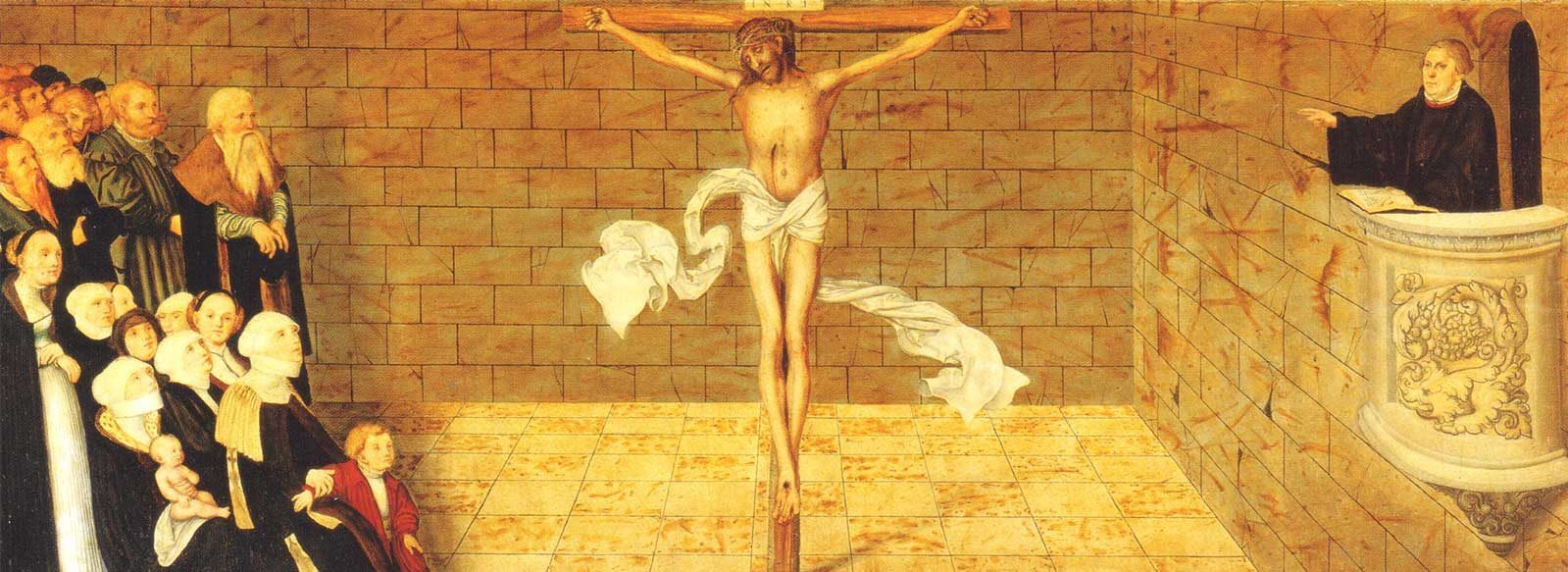
So God is known in Jesus alone.

This means He is not known through human reason.

It also means He is not known through human religion.

The Bible often engages with other religions. Never does it assume that such religions have any revelatory insights to offer.

Numbers 33:50-53; Deut 7:1-6; 12:1-3; 29:16-18; 32:15-21; Psalm 96:4-5; 106:35-40; Isaiah 41:21-24; 44:6-26; Jeremiah 16:19-21; Romans 1:23-25; 1 Corinthians 8:4-6; 10:20.

We know that an idol is nothing at all in the world and that there is no God but one. For even if there are so-called gods, whether in heaven or on earth (as indeed there are many "gods" and many "lords"), yet for us there is but one God, the Father, from whom all things came and for whom we live; and there is but one Lord, Jesus Christ, through whom all things came and through whom we live. (1 Corinthians 8:4-6)

  1. A religious person may speak eloquently about their "lords" and their "gods" - aspects may seem similar to the Living God, yet they are not speaking of the God who has made Jesus Christ the point of contact. They are speaking about something else - not the Father, Son and Holy Spirit.  For more on this see my posts on Allah.

It is instructive that none of the prophets ever speak with Assyrians, Moabites, Baal worshippers etc and say "Yeah, Yahweh - He's like a cross between Asherah and Baal - but, like, bigger."  Or "Of course you know El Elyon through the primitive religious spark latent within you.  But let me now introduce to you the Son of the Most High, His name is Yahweh.  If you like Elyon, you'll love the LORD!"  Yet how many Christian apologists function with just this kind of methodology.  Anyway, mustn't get side tracked...

Big point: human religion is not a stepping stone to the living God.  It does not yield partial knowledge that can then be built upon towards a knowledge of Jesus.

Biblical religion

Ok, maybe world religions don't have an angle on God. But surely there is one religion in the world that does. Don't the Jews have revelation of the Living God? They share our Scriptures (three quarters of them!!). Don't they know at least some truth about the One True God?

Well, what did Jesus think about that? Let's look at John 5:37-46:

The Father who sent me has Himself testified concerning Me. You have never heard His voice nor seen His form, nor does His word dwell in you, for you do not believe the One He sent. You diligently study the Scriptures because you think that by them you possess eternal life. These are the Scriptures that testify about Me, yet you refuse to come to Me to have life...
..."But do not think I will accuse you before the Father. Your accuser is Moses, on whom your hopes are set. If you believed Moses, you would believe Me, for he wrote about Me. But since you do not believe what he wrote, how are you going to believe what I say?"

Jesus acknowledges these men's diligent study of the Scriptures. Yet He denies outright that they have any knowledge of the Father or the Son. They have sought to by-pass revelation in Christ and their very means of attempting this will be their damnation.

To the person who does not come to Christ, the Scriptures leave them utterly ignorant of the Living God. Even 'diligent' study of the Bible leaves a person utterly lost unless they are drawn to the central character of the Bible - Jesus. No part of the Bible - not Moses, not the Prophets, nothing - reveals God outside of Jesus.

This of course has many implications for how we read the Old Testament.  If you've read my blog for any length of time you'll know my position on Christ in the Old Testament.  To put it in John 5 terms, Moses believed in and proclaimed Christ.  Whatever you believe about such things, it is enough presently to note that Jesus does not consider the Bible, in any part, to be a Christ-less revelation of God.

Now none of this is to be construed as an anti-Jewish sentiment.  Nor is it some chronological snobbery against the ancient world.  It's not something that Christians can laugh off as an error belonging to another people or another time.  If any human action towards God could lay hold of true salvation or knowledge - then surely it would be Jewish religion and Jewish Scripture.  Their privileges are "much in every way." (Rom 3:2)  Yet the failure of Jewish religion should serve as a stark warning for those who would seek to grasp the things of God through some supposed Christian religion.  Doesn't the experience of the Pharisees in John 5 warn us too?  Shouldn't we too be wary of our diligent study?  Their error is repeated in Christians time and again.  We have these witnesses to Christ (Scripture and also sacraments etc).  Yet rather than receive them with empty hands and be led away from ourselves and to the One in Whom all salvation and all knowledge of God is complete, we attempt to use them as building blocks towards our own salvation and our own synthesized theology.

To know God we must abandon the attempt to build, to strive, to ascend.  It is all a given in Christ.  Human religion, even biblical religion - when used rather than received - will produce only ignorance.  We must begin again with Jesus at the foundation.

So we've rejected reason and religion.  Next time we'll see how creation is not the way to a true knowledge of God either.

.

Last time we made the claim that knowledge of God and salvation by God go hand in hand.  Only those who have been saved by God know God.  At the same time, coming to know God is another way of describing being saved by God.

Therefore all those truths we hold so dear about salvation are equally true for knowledge of God.  Knowledge of God is by God's grace alone.  It is received by faith alone.  And it is given to us in Christ alone (the Christ of Scripture alone!).  We must receive the freely given truth about God by faith - that truth is in Jesus.  Christ alone reveals to us the true and living God.

Now at this point people generally have a few objections.

Objections

People will often say: "Hang on. Don't people know lots of things about God? Aren't there billions of people who may not trust Jesus, but they have plenty to say about God?"

Well of course that is true. People have lots of things to say about some kind of higher being - and many of them may even use the word "God". But using the same name does not at all mean that they know the same person (or Persons)!

I share a name with my father which is very confusing for people who think they know Glen Scrivener. People may know my father very well indeed and be able to tell you all kinds of personal things about Glen Scrivener, some of them may even be true of me! But they are NOT describing me when they use those words. Any actual correspondence between their words about my father and my own situation would be utterly co-incidental. They do not know me at all.

The same is true of statements about "God". A non-Christian may have plenty to say about "God", yet however similar their descriptions may sound , they have no knowledge of the True God whatsoever.

Over the next few posts we'll look at four areas where people have attempted to by-pass revelation in Jesus and come up with a knowledge of God:-

  • Reason
  • Other religions
  • Biblical religion
  • Creation

Reason

Perhaps we can use reason and logic to build up for ourselves a true picture of God. Certainly we won't be able to get the whole picture - but basic truths about God as Creator, God as Intelligent, God as Powerful - surely these can be deduced without the need for revelation.

Descartes is a good example of someone who believed this. From the 'unshakeable' foundation of "I think therefore I am", Descartes set out to build a picture of reality. This picture was based not on external revelation - he doubted all external sensory experience - but trusted instead the powers of his own mind to bring him truth. He used an age-old philosophical argument for God's existence - the ontological argument - and came up with a definition of something he called "god". At heart, this "god" was a being of infinite perfections (whatever they are).

What do we make of all this? Is that the God we worship? Well Matthew 11 has made us pretty dubious about a wise and learned approach to God! Those famous verses from Proverbs 3 are an age-old warning:

Trust in the LORD with all your heart and lean not on your own understanding... Do not be wise in your own eyes. (Proverbs 3:5-7)

Combine this with three verses from Paul's epistles and we see that the human mind and its powers are not to be trusted:

Romans 8:7: the sinful mind is hostile to God. It does not submit to God's law, nor can it do so.

2 Corinthians 4:4: The god of this age has blinded the minds of unbelievers, so that they cannot see the light of the gospel of the glory of Christ, who is the image of God.

Colossians 1:21: Once you were alienated from God and were enemies in your minds because of your evil behaviour.

Our rebellion against God alienates us from God. This, we know. Yet Paul says, strikingly, that the focus of this rebellion is in our minds. Our minds are not dispassionate observers, collating data and building logical pictures from assured foundations. Our minds are weapons used against God. Reason will never come up with the truth about God, it will only yield idolatry. Descartes' so-called god is a philosophical idol constructed in opposition to the God who is Father, Son and Holy Spirit.

In Colossians 2:8, Paul warns us very sternly about the dangers of philosophy:

"See to it that no one takes you captive through hollow and deceptive philosophy, which depends on human tradition and the basic principles of this world rather than on Christ."

All our thinking must be based on Christ - built from His sure foundation. The people who say they can get part of the way through reason are utterly wrong. You can't even get off the ground without the foundation of Christ. We never reason our way towards Jesus, we must start with Him.

As the 4th century theologian Athanasius said:

"The only system of thought into which Jesus Christ will fit, is the one in which He is the starting point."

.

5

I've just realised I've never really posted on why my blog's called Christ the Truth.  That's a bit of an oversight.  So let me now begin a series on how Christ is the starting point for all true theology.  It's taken from this paper on my website.

.

Christians believe in revelation.

We know God, not through our efforts and ingenuity, but by the gracious gift of His self-revelation. The question of how God reveals Himself will, therefore, affect every aspect of our theology. If we get this issue wrong - everything else will go awry.

With this in mind let's turn to Matthew 11:25-30 and hear Jesus set us straight on the fundamentals of revelation.

At that time Jesus said, "I praise you, Father, Lord of heaven and earth, because you have hidden these things from the wise and learned, and revealed them to little children. Yes, Father, for this was your good pleasure. All things have been committed to me by my Father. No one knows the Son except the Father, and no one knows the Father except the Son and those to whom the Son chooses to reveal him.
Come to me, all you who are weary and burdened, and I will give you rest. Take my yoke upon you and learn from me, for I am gentle and humble in heart, and you will find rest for your souls. For my yoke is easy and my burden is light.

From this, a number of things can be said:

Firstly, revelation is a fact. It is not a possibility. Revelation of the things of God has happened. We must not waste any time wondering about the "possibility of revelation". We know that the infinite can communicate with the finite precisely because it has happened!

How has it happened? Well at first glance we may get the impression that God's revelation is grudging, indistinct or enigmatic. Verse 26 says the Father takes pleasure in hiding the truth from the wise and learned. Verse 27 seems to present an impenetrable union between Father and Son. The Father knows the Son and the Son knows the Father. The question is, how can we break into this intimate family secret? Is there a way into a knowledge of God?

Yes there is! The Son chooses to reveal the Father. In verse 27 we see the hiding place which the Father has chosen for all the things of God - all things are hidden in Jesus.

This must be a truth we live by as Christians. God the Father has chosen to mediate all His revelation through Jesus, God the Son. "No-one knows the Father except the Son and those to whom the Son chooses to reveal Him." To know God - we must come to Jesus. Jesus is the One to Whom the wise and learned refuse to come. Yet He is the One to whom all the little children can come in dependence and love. And when people come to Him to learn the truth - Jesus liberally reveals the very deepest things of God.

In verse 28, Jesus calls all people to come to Him, the great Revealer, and He presents this coming in terms of entering rest. The implication is clear - to come to true revelation is to come to true salvation. Both are offered freely in the Son.

Jesus makes the link between revelation and salvation even more explicitly in John 17:3. There He says: "This is eternal life: that they may know You, the only true God, and Jesus Christ whom You have sent." Coming to know God through Jesus is salvation. Revelation and salvation go together.

The Bible gives us both sides of this truth again and again:

Fallen humanity does not know God

1 Samuel 3:7; Psalm 14; Matthew 7:24-27; 11:25-26; John 1:5; 1:18; 5:37-38; 7:28-29; 8:19; 14:17; 15:21; 17:25-26; Romans 1:18; 3:10-18; 8:7; 1 Corinthians 1:21; 2:11-14; 3:18, 19; 2 Corinthians 4:4; Ephesians 4:17-19; Colossians 1:21; 2:6-8

To know God is to be saved by Him

Proverbs 1:7; Matthew 11:25-30; John 1:10-13, 18; 14:6-9; 17:3; Rom 10:14-17; 1 Corinthians 1:18-2:16; 2 Corinthians 4:1-6; Eph 4:17-21; 1 Tim 2:3-4

All that we know about God, we must learn from Jesus. Jesus is the point of contact between God and humanity. God can only be known in the place of His choosing. God chooses this place by committing all things into the hands of Jesus. We must come to Him or we remain without hope and without God in the world.

All Christian truth, all true statements about God, must be built upon, defined by and shaped after Jesus, the Word of the Father, for we have no other presentation of God.

The Apostles John and Paul agree:

John 1:18: No one has ever seen God, but God the One and Only, who is at the Father's side, has made Him known.

Colossians 1:15: He [Christ] is the Image of the invisible God

Jesus is not an optional extra in our theology - He is the foundation. He is the pole star that guides all our theological enquiries. Anything we want to know about God the Father or indeed God the Trinity, we must arrive at by thinking through 'who is Jesus?' The Father has chosen Jesus as the point of contact between Himself and us, we must always go to Jesus.

This post begins a series on theological method.  The other posts are here...

How not to know God - reason

How not to know God - religion

How not to know God - creation

Christ the Truth

Twitter widget by Rimon Habib - BuddyPress Expert Developer