Skip to content

3

OscarHow does porn impact a young girl who discovers her father's stash?  Michelle VanLoon writes about it in My Father The Porn Addict.  This sentence struck me more than any other:

Porn taught me that the single most important thing to grown-ups was this mysterious world of fantasy, pain, and animalistic impulses too powerful to ignore.

Porn peddles a lie that becomes "the single most important thing" for those who buy into it.  Actually it peddles many lies, but here's a prominent one: Porn tells us that love, respect and mutual honour are window dressing.  Behind closed doors it's "fantasy, pain and animalistic impulses."

Loving commitment and kindness are like mating calls.  The real business is mating.  People might talk about relationships and fidelity, actually it's about glands and groans.  On the surface it's love and trust, underneath it's power and gratification.  And that's what's basic, primal, bubbling away.

To believe the lie is to feed it, to participate in it, to grow connected to it and then to see the world through its lens.  Porn sacramentally reinforces the worshipper in that creed and the cycle spirals down.

When a Christian is embroiled in this other religion, what happens when they are told to 'clean up their private world'?  It will likely be heard as the demand to 'put a lid on what's real.'  Renouncing porn will be like agreeing to deny the truth, simply because the truth is too dangerous or shameful or powerful to acknowledge or indulge.  And so the determined porn-denier will commit to living in the unreality of kindness, mutual service and self-control.  All the while power and gratification throb away in heart and mind.

Combatting the lie will take more than a resolve to label pornography as 'harmful' or 'bad.'  We need to know that it's also 'untrue.'  And why is it untrue?  Let's cut to the chase:  God is as He is towards us.  God is not different 'behind closed doors.'  He does not display sacrificial love as window dressing.  The Lamb is at the centre of the throne (Revelation 7:17).    Push through to the deepest depths of God and you will find a faithful marital love that gives itself for the other.  His gracious gospel offers are not mating calls to woo us while back at home He's all about power and gratification.  No!  He is love 'all the way down.'

Not every god will help you to conquer porn.  There are many gods who are power and gratification pure and simple.  And there are many Christian doctrines of God that offer a split-personality God - sacrificial in public, selfish in private.

But just imagine... what if, actually, the primeval passions that determine us are intimate, committed, self-denying deferrals to the other?  What if it's respect and mutual love that are really bubbling away underneath?  What if it's serving the other that drives this world, not using.  What if giving and not getting is ultimate?

And I don't just mean, Let's escape mystically into some godly sphere where that love stuff is true.  I don't mean, Let's affirm these religious truths (all the while knowing that 'the real world aint like that.')  No, let's fling wide those doors that we're always closing because we imagine that darkness rules the roost.  Let's declare that Jesus really is Lord.  This really is Christ's universe.  Light really is this world's driving force, not darkness.   And all that other stuff is parasitic, corrupted, ugly, unnatural, ephemeral and passing away.

The lie of pornography will be unmasked and the bedrooms of Christians, both single and married, will be revolutionized when we see God aright.  Behind closed doors there's not a throbbing, coercive power too dangerous to name.  The primal urge is not grunting but grace.

hurricane 2Part of the covenant curses...

I will make their hearts so fearful in the lands of their enemies that the sound of a wind-blown leaf will put them to flight. They will run as though fleeing from the sword, and they will fall, even though no one is pursuing them. (Leviticus 26:36)

Astraphobia (fear of thunderstorms) is the third most prevalent phobia in the US.

Emporer Caligula would hide under his bed during thunderstorms.

Horace, the poet, was reclaimed from atheism by the terror of thunder and lightning.

Mohammed was famously afraid of strong winds, fearing Allah's judgement.

Pre-conversion, Martin Luther, in fear for his life, vowed to enter a monastry during a storm.

22 Immediately Jesus made the disciples get into the boat and go on ahead of him to the other side, while he dismissed the crowd. 23 After he had dismissed them, he went up on a mountainside by himself to pray. Later that night, he was there alone, 24 and the boat was already a considerable distance from land, buffeted by the waves because the wind was against it.

25 Shortly before dawn Jesus went out to them, walking on the lake. 26 When the disciples saw him walking on the lake, they were terrified. ‘It’s a ghost,’ they said, and cried out in fear.

27 But Jesus immediately said to them: ‘Take courage! It is I. Don’t be afraid.’

28 ‘Lord, if it’s you,’ Peter replied, ‘tell me to come to you on the water.’

29 ‘Come,’ he said.

Then Peter got down out of the boat, walked on the water and came towards Jesus. 30 But when he saw the wind, he was afraid and, beginning to sink, cried out, ‘Lord, save me!’

31 Immediately Jesus reached out his hand and caught him. ‘You of little faith,’ he said, ‘why did you doubt?’

32 And when they climbed into the boat, the wind died down. 33 Then those who were in the boat worshipped him, saying, ‘Truly you are the Son of God.’  (Matthew 14:22-33)


13

TFTEmma's written a great post on what people look for in conversion experiences.  It reminded me of this wonderful sermon by Tom Torrance on John 3.

Here he lays into the modern (20th century) notion of defining the new birth psychologically. Instead we must see regeneration - along with every other aspect of the Christian life - as something found in Christ.

We all know that our forgiveness, adoption, righteousness, election, holiness and redemption are found in Jesus. We ought to know that our new birth is found there too.  It is not a prior experience outside of Jesus which then brings us to Christ. It is the new life which Christ pioneered through His life, death and resurrection.  It is the begotten life of the Spirit which Christ eternally possessed and now shares with those who are His.

Therefore we do not find our conversion in ourselves but in Him. And we do not offer a conversion experience but a Christ who converts.

The implications of this for our discipleship and evangelism are far-reaching - perhaps I'll tease out more later - but for now let's just hear TFT...


Behind all that Jesus has been saying there lies the fact of His own birth and incarnation. All that Jesus has said in fact about the new birth refers ultimately to His own birth. He is the only begotten Son of God, and it is in Him that our humanity... is born again out of the old Adam into the new. In other words it is in Christ and through Christ only that we are born again.

...This is not very easy for us to understand today, because we have turned the new birth or conversion into a carnal experience of the soul, and have identified it with a psychological event in our lives. This makes it all the more imperative for us to listen carefully to Jesus here, and to look above and beyond our own historical or psychological experience and find the significance of our new birth in Christ Himself. Christ is the only one, strictly speaking, who is born of the Spirit from above, but He gives the right to all who receive and believe in Him or are baptised in His name to become sons of God - that is, not in their own name but in Christ's Name. Christ Himself is the truth and reality of our new birth...

We must learn to take refuge even from our experiences of conversion, or of new birth, in Christ and find in His birth and in His resurrection the truth and reality of ours...

...In Jesus Christ, from His birth to His death and resurrection, there took place the great "conversion" of our humanity, and its destiny, back to God.

...If we look into our hearts and lives we see how corrupt they still are, how desperately wicked we are, and indeed the nearer we get to Christ the more sinful we feel and know ourselves to be. No, we cannot see our new birth by examining our spiritual experience psychologically, by looking within. We must learn to look away from ourselves to Jesus the Author and Finisher of our faith, for we are dead, as St Paul says, and our life is hid with Christ in God.

This habit that modern people often have of thinking and speaking of the new birth as if it could be perceived in the soul and is something to be possessed in themselves is a great snare to many humble and earnest believers; it drives them to despair or turns them into hypocrites, for though they try to live up to "born again and converted" lived, they know secretly how sinful they are, and that considered in their deepest selves they are not new creatures. That is not the way of Jesus but the way of the Pharisees.
-- When Christ Comes, and Comes Again.

.

Here's a sermon of mine on John 3 which tries to make some of the same points in a more law-gospel kind of way. I.e. We must have this new birth. We can't conjure it up. But Jesus brings it down as a gift.


2

barth
Karl Barth

A grand title! And all I have are three little quotes. Still... enjoy...

Our Problem:

[Man] has turned his back on the salvation which actually comes to him. He does not find the fulfilment of his being in participation in the being of God by the gift of God. Instead he aims at another salvation which is to be found in the sphere of his creaturely being and attained by his own effort. His belief is that he can and should find self-fulfilment. He has himself become an eschaton. (IV.1, 8)


Christ’s Solution:

The man in whom God Himself intervenes for us, suffers and acts for us, closes the gap between Himself and us as our representative, in our name and on our behalf, this man is not merely the confirmation and guarantee of our salvation, but because He is God He is salvation, our salvation. He is not merely the redeemer of our being but as such the giver and Himself the gift of its fulfilment. (IV. 1, 11)


Our New Position

We are those whose place has been taken by another, who lives and suffers and acts for them, who for them makes good that which they have spoiled, who – for them, but also without them and even against them – is their salvation. (IV. 1, 12)

9

its-all-about-meWhen we hear a preacher talk about "our Jesus-shaped hole" we're sensitive to the dangers. It sounds instantly "me-centred" doesn't it? If a preacher goes on about our felt needs and how Jesus meets them, Jesus seems only as big as the hole that's in us. That can't be right.

Yet, while we may be able to spot that error, another kind of me-centredness can beset the soundest of pulpits. Let me pick on perhaps the three most popular topics preached on in the churches I visit. These days the Trendy Trifecta is Trinity, grace and idols. Everything now is Trinity, grace and idols. Thinking back to last Sunday, I touched on all three, and if you're a preacher I hope you covered at least two of those!

But here's the danger, we are so self-obsessed, we can even make these truths all about us. We psychologize them and turn them into anthropology not theology.  So,

We're interested in "Trinity" because it resonates with our need for love.

We love love, we think it's lovely. So we love that God is love. And we preach the Trinity because it accords with our prior proclivities. We don't preach Trinity as the nature of God, we preach it as wish-fulfillment.

We're interested in "Grace" to the degree that it's a motivator in our lives. 

It's all about which regime produces the better Christian life - carrot or stick. Well, because we're "grace" people, we say CARROT. Loudly! But what we mean is "we believe in a certain shape to the Christian life" - not "we believe in a certain shape to God's life." Again, we don't preach grace as God's very nature (quite apart from how we feel about it), we preach it as wish-fulfillment.

We're interested in "Idols" as a psychological explanation for our patterns of addiction.

Idols-speak provides us with a window onto our own desires and we need little encouragement to think about ourselves. Idols-speak can become like the online personality test to discover the real me: delicious! But in preaching there's a real danger that we don't consider idols theologically. I find it rare for a preacher to define idols (as Scripture does) as false conceptions of God. Instead we consider over-investment in the world and the flesh and how we can solve our idolatry problem by determining to worship the right thing. In all this, God Himself is quite dormant, waiting for us to switch our allegiances. We are centre-stage. (More on idolising idols here).

It might sound "God-centred" to talk about Trinity and grace and idols, but so easily we make it all about us.


12

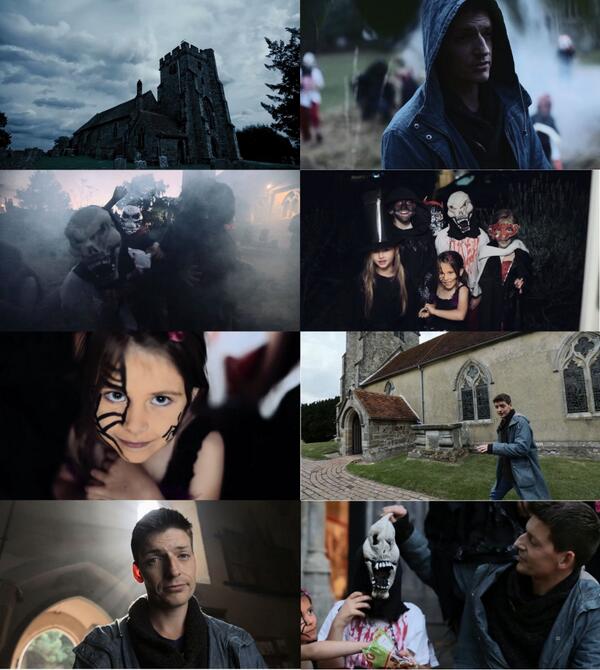
In the pageantry of All Hallows Eve (shortened to Halloween), the forces of darkness are given one final fling. This video reminds us of its Christian origins. The truth is: the Light is far stronger. (Here I explain the thinking behind the video.)

Thanks so much to 10 of those for suggesting the topic and making the video possible. Thanks to Sam at Cinematic Tide for directing, shooting and editing an absolute beaut. And thanks to Josh Lucas for an awesomely dramatic soundtrack (hear more of his stuff here).

Please do share the video on Twitter and Facebook etc. (You might like to wait until late October?) And please consider using the video in church, youth group or for Bright Parties etc.

Vast armies undead do tread through the night and
In hordes march towards hapless victims to frighten.
They stumble in step with glass-eyes on the prizes;
Bunched hither, hunched over in monstrous disguises;
In sizes not lofty but numb’ring a throng;
To unleash on their prey the dreaded DING DONG.
Small faces with traces of mother's eye-liner,
Peer up to the resident candy provider.

And there to intone ancient threats learnt verbatim;
They lisp "TRICK OR TREAT!" Tis their stark ultimatum.
Thus: region by region such legions take plunder.
Does this spector-full spectacle cause you to wonder?
Just how did our fair festive forebears conceive,
Of this primeval practice called All Hallows Eve?
The answer, if anyone cares to research,
Surprises, it rises from old mother church.

On the cusp of the customary All Saints Day
The Christ-i-an kinsfolk made mocking display.
These children of light both to tease and deride;
Don darkness, doll down as the sinister side.
In pre-post-er-ous pageants and dress diabolic,
They hand to the damned just one final frolick.
You see with the light of the dawn on the morrow,
The sunrise will swallow such darkness and sorrow.

The future is futile for forces of evil;
And so they did scorn them in times Medieval.
For this is the nature of shadow and gloom;
In the gleaming of glory there can be no room.
What force is resourced by the echoing black?
When the brightness ignites can the shadow push back?
These 'powers' of darkness, if such can be called,
Are banished by brilliance, by blazing enthralled.

So the bible begins with this fore-resolved fight;
For a moment the darkness.... then "Let there be Light!"
First grief in the gloom, then joy from the East.
First valley of shadow, then mountaintop feast.
First wait for Messiah, then long-promised Dawn.
First desolate Friday and then Easter Morn.
The armies of darkness when doing their worst,
Can never extinguish this Dazzling Sunburst.

So... ridicule rogues if you must play a role;
But beware getting lost in that bottomless hole.
The triumph is not with the forces of night.
It dawned with the One who said "I am the Light!"


not-feeling-it

A REPOST

To change internally through external acts can be flesh.

But to change externally through internal devotions can be just as flesh-ly.

Conversely, the external application of word and sacrament can have a wonderful effect internally.

And an internal resolve to look away to Christ can brilliantly impact your externals.

Neither outside-in nor inside-out is the right method for change.  The division the bible makes is between flesh and Spirit.

The real issue is whether the Spirit is leading us to Jesus and His finished work. It's the Spirit who takes us outside to Christ who offers up our true standing before the Father.

I talk about this here in a recent sermon on Romans 8 (audio here).

13For if you live according to the sinful nature, you will die; but if by the Spirit you put to death the misdeeds of the body, you will live,

What does it mean to put to death the misdeeds of the body by the Spirit.  Not by the law, not by the flesh, not by will power or human effort.  What does change look like that is by the Spirit?

Well, imagine you lie.  You lie to protect your reputation, you tell everyone you’ve done something that you haven’t done to sound like a big shot.  And afterwards you feel bad about lying.  And you want to stop lying like that because it’s getting to be a habit.

Now at that point – what is Christian about that resolve?  Non-Christians resolve to tell the truth too.  There’s nothing Christian about trying to be a better person.  There’s nothing Christian about putting sins to death.  It’s the WAY you put them to death that’s the real difference.

See, you could put it to death through the law.  You could say “The law says Thou shalt not lie.  I’ve broken the law.  I’ll punish myself and put myself under condemnation until I feel I’ve done my penance and then I’ll try really, really hard to be honest next time."

Two problems with the law approach.  First, it doesn’t work.  Second, I’ve just resolved to be my own Saviour.  I don’t need Jesus for this.  I don’t need the cross, I don’t need the Spirit.  I’m just trying to be more moral.  There’s nothing Christian about resolving to tell the truth.

But Paul tells me to put lying to death BY THE SPIRIT.

What’s that?  Well to figure out that, we need to figure out what the Spirit is up to in the world.  And verse 14 will tell us what we need to know.  Here’s what the Spirit is up to:

14 because those who are led by the Spirit of God are sons of God. 15 For you did not receive a spirit that makes you a slave again to fear, but you received the Spirit of sonship. And by him we cry, “Abba, Father.” 16 The Spirit himself testifies with our spirit that we are God’s children.

Verse 15 calls the Spirit "the Spirit of Sonship."  So the Spirit of the Son makes US sons and daughters of God.  The Spirit sweeps us up into Jesus so that we share Jesus’ relationship with God.  And what is Jesus’ relationship with God.  He is the Son, who calls out to God, “Abba, Father.”  And now, BY THE SPIRIT, so do we!

Abba is a word for Daddy in many middle eastern languages.  It’s intimate, it’s affectionate.  It’s also deeply respectful.  But here’s the question: Who on earth gets to call Almighty God, Abba?  Calling the Queen “Liz” is bad enough.  But at least calling her Liz doesn’t presume anything about your relationship to the Queen.  To call God “Daddy” you’re not only being incredibly intimate with God, you’re also making a claim on Him.  You’re saying “God, You are my Father and I am Your child.”  And children have certain rights.  In verse 17, Paul will tell us one of those rights – we have inheritance rights – as children of God we are heirs of the cosmos.

So that’s what the Spirit is up to – He’s communicating Christ to me, He’s testifying to me that I am in Jesus and in Him God is my Father, He’s communicating all that that means…

Now come back to verse 13 and ask “What does it mean to put to death the misdeeds of this Adamic body BY THE SPIRIT?”

Here’s what it means.  It means I open up my bible, I read the Spirit’s words and I allow Him to tell me:  “Glen, don’t you realize you HAVE the righteousness of Christ?!  You ARE God’s beloved child, unimprovably so.  So Glen, when you lied, who were you trying to impress?  Why lie?  You are dead to lying now, not because there’s an anti-lying law.  You’re dead to lying because, What need is there to lie?

The Spirit is constantly telling me, “I am a trillionaire walking around the millionaires club.”  And my lying exaggeration is like flashing around a counterfeit £50 note, trying to impress people.  That doesn’t impress people in the millionaires club.  And it completely forgets that I have a trillion pounds to my name?  What am I doing?

So put lying to death BY THE SPIRIT.

It works for all sins.

Put porn to death BY THE SPIRIT.  Why go after that counterfeit intimacy, when Jesus brings us into His eternal fellowship with the Father?

Put covetousness to death BY THE SPIRIT.  Do you really need the latest outfit or the latest gadget, when you’re about to inherit the universe?

Put anger and harsh words to death BY THE SPIRIT.  Don’t you realize you’re loved and appreciated and declared righteous in the heavenly realms?  Do you really need to assert your rights here and now?

Whatever the misdeeds of your Adam nature, put them to death BY THE SPIRIT.

To change by the Spirit means to have my gaze drawn to Christ who is my righteousness.  It means the Spirit re-reminding me that Christ is my standing before the Father.  All my sins spring from trying to live independently of Jesus and establishing my own standing in the world.  So look out to Christ who offers up the real you.  That's how Christian change occurs.

6

Luther PreachingRecently I taught on Luther's theology of the word. I spoke of the movement God's word makes with us - to kill and to make alive; to uproot and to plant; to tear down and to build.

Consider Genesis 1 - first darkness then light; first the seed then the fruit; first forming then filling.

Consider Genesis 2 - first the man goes into death-sleep then he's raised to unite with his bride.

Consider Genesis 3 - first Adam takes us into curse, then the promised Seed will bring deliverance.

Consider Abraham - first barrenness according to the flesh then life according to the promise.

Consider Moses - even before Israel enters the land he tells them of their inevitable exile and then the LORD will bring them home with an almighty atonement.

Consider Isaiah - he must proclaim the hacking down of Israel's tree until only the Holy Seed is left (Isaiah 6).

Consider Jeremiah - his word to the nation is first judgement then salvation (Jeremiah 1:4-10; cf Jeremiah 31)

Luther did not invent an arbitrary distinction with law and gospel. Rather, he named the pattern of the Word in evidence on every page. This patterns goes through death and, only in going through death, we then enter resurrection. (You'll notice how law-gospel preaching goes hand in hand with a theology of the cross).

Therefore our proclamation should take the same shape. We preach the inability of the flesh, of the will, of human effort when it comes to establishing the wondrously good life of God's kingdom. The law is good - really, fantastically good. But it reveals that we are bad - stinkingly, horrifyingly bad. We preach the reality of our own spiritual death and then we declare the life that comes from outside ourselves. We point to the Lamb of God who takes away the sins of the world. You could call that law-gospel preaching if you like, but Luther has no trademark on it. It's the kind of thing you have to preach if you believe salvation comes only from Christ and never from us.

Anyway... I was teaching these kinds of things recently and two people asked questions in quick succession. The first asked: "What about Leviticus 26-27 - that takes the pattern of blessings then curses." The second asked about Luke 6 - Jesus proclaims blessings then woes. If the shape of the word is law then gospel, why are these significant portions of Scripture proclaiming a 'positive message' and then a 'negative message'?

The answer is fairly straightforward - both blessings and curses are law! In fact they are the quintessence of law.

Law is: "If you... Then He'll..."

Gospel is "Since He... You are..."

Notice therefore that "If you... Then He'll..." is a message that could include curses or blessings. If you obey then He'll bless you. If you disobey, then He'll curse you. Whether the carrot is being dangled or the stick is being threatened the real issue is the phrase "If you...". What makes these messages law is not the curses or the carrots, it's the conditionality.

Both carrot and stick are law. And notice how Moses uses them. In Leviticus 26-27 (and in Deuteronomy) he outlines the potential blessings from Mount Gerazim and then the curses from Mount Ebal (of course he spends much longer on the curses!) By the time you get to Deuteronomy it becomes very obvious (see Deut 4 and Deut 30-34) that Israel will go into the curses of exile and only then attain to the blessings. Curses and blessings are not so much alternative possibilities but consecutive stages in their history.

Think how Jesus uses the blessings and woes in Luke 6. Blessed are those who have absolutely nothing. Cursed are those who think they have it made. Both sides of the coin uphold the one truth - we've got nothing, everything must come from heaven. In other words, it's all about the good law describing the good life that is entirely beyond us. Both the "positive message" of the blessings and the "negative message" of the woes are proclaiming our inability and God's all-sufficiency.

So let me draw a couple of points of application. First, there really is a shape to God's word. We know this supremely because God's Word is Jesus. And there's a shape to Jesus' life - down into the curses then rising into blessing. Certainly the little slice of Scripture we're reading might start with a "nice bit" and end with a "hard bit", but that slice of Scripture exists within a larger context. And if we're preaching, we're called to preach the larger context. We don't proclaim Luke 6:20-26, we proclaim Jesus from Luke 6:20-26. We never want to make the mistake of the Pharisees in John 5 - seeking life in the passage rather than the Person. If we preach the Person then we have to preach the pattern of that Person - a pattern that will be evidenced in the passage too, if we would only do our homework. But that pattern is down and then up, cross then resurrection, law then gospel.

Second, legalistic preaching (preaching law without gospel) is not always harsh-sounding preaching. It could be all about blessings, all about carrots, all about your best life now - if you.... If you only do this, or think that, or be the other - then you'll be blessed. Such a message might sound incredibly positive, but ultimately it's crushing because it's all about you.

Third, law-gospel preaching is not about balancing carrots and sticks. It's not about ensuring we play off the 'nice Scriptures' with the 'harsh ones' so that we're properly rounded. Some might be adept at sugar-coating some hard truths with some sweet verses. Others might temper their lovely promises with fearful warnings. But that is not law-gospel preaching - that is law-law preaching. "Christ is the end of the law that there may be righteousness for everyone who simply believes." (Romans 10:4)

Let's not leave our hearers in between Mount Gerazim and Mount Ebal. Let's take them on the journey that Scripture takes... through the curses into the blessings, through Golgotha and up to Zion. And let's make sure we preach Christ as the One who makes it happen.


5

salvation1) We are saved by God. (Jonah 2:9)

God does it all. He does not simply 'blaze a trail' or 'clear a path' or 'make it possible' to be saved. He saves. It's His work entirely.

2) We are saved from God. (Romans 3:25)

Our problem is not merely our disobedience, our problem is God's anger at our disobedience. We're not just saved from sin but from wrath. If our problem was "our sin" then "our righteousness" would be the (implied) solution. But no, the problem is out of our hands - just as the solution is.

3) We are saved for God. (Ephesians 2:18) 

Who cares if we simply receive a "not guilty verdict"? The good news is not that we escape hell. It's that we are reconciled to the Father, in the Son and by the Spirit.

4) Salvation is about our being. (2 Peter 1:4)

Our problem is not simply our behaviour but our being in Adam. God's solution is not simply "a clean slate" but a whole new nature in Christ. Atonement is not simply about scapegoats and blood sacrifices (though they are crucial). It's about our High Priest carrying His people into God's presence.

5) Jesus is God's salvation and perfectly reveals His saving will. (John 3:14-17)

Jesus means "The LORD is salvation." If we want to know God's will for salvation there is nowhere else to look. God is the God of Jesus - the God of the gospel.

6) God's love for Christ is primary. (John 3:35-36)

It's easy to get lost in debates about "God's love for the church" versus "God's love for the world." We might ask ourselves whether / how these loves might differ from each other. But we ought to begin further upstream. God loves His Son and He gives His Son to the world. Where Christ is received, that is the church. But the point is not so much about the church or the world (or the church versus the world). It's about Jesus.

7) Every blessing is in Jesus. (Ephesians 1:3-14)

As we've just noted, God saves by committing everything into the hands of Jesus and then offering Jesus to the world (John 3:35-36). All of salvation happens in Christ (i.e. forgiveness, new life, adoption, election, justification, etc, etc). God doesn't do any of these things to us outside of Christ - He works them all in His Son and offers them only in Him.

8) Judgement and Salvation are not parallel tracks. (1 Peter 4:17)

It's not really a matter of either curses or blessings. The world goes through 'paradise lost' to a new Jerusalem. Israel goes through exile and then returns. Christ goes through the cross to the resurrection.  We're baptised into His death and, through our co-crucifixion with Christ, we enter into salvation.

9) Saving faith is not a thing. (John 1:10-13)

Some think of faith as a thing and then argue about whether it belongs to man or to God. But faith is not a thing. Christ is the one saving thing, given to the world. Where He is received - that is called faith. But faith isn't the saving thing, Christ is.

10) The gospel is the power of salvation. (Romans 1:15-16)

The power of salvation - the Almighty Spirit of Christ - works in and through the word. We must not divorce word and Spirit. We must not imagine that the preaching of the gospel is one thing and saving power is something else - sometimes active, sometimes not. That would be to locate the power of salvation outside the gospel. But no, the gospel is God's power to save. Most discussions about salvation would be improved if we had a stronger theology of the word.

Slave-shackles-Does-the-Bible-condone-slavery"Forgive each other just as God, in Christ, forgave you." Ephesians 4:32

That's the flow - grace comes down to us for our sins and then it's meant to flow out to others for their sins.

If that's the pattern, what does it mean when we find another's sin "unforgiveable"? Well at that point we're accusing them of blasphemy. Why do I say that? Well that's what God calls the unforgiveable sin - blasphemy against the Holy Spirit. In Mark 3:28-30 we learn that rejection of Christ as Saviour is the blasphemy - it is the unforgiveable sin (for more on that, see here.)

But that language is interesting. When God says we've done something unforgiveable (i.e. finally and forever rejected Christ), He calls it a blasphemy. My point here is this: when we deem the sins of others to be "unforgiveable" we are saying that they have blasphemed.  They haven't blasphemed the Spirit, they've blasphemed our god.

I'll explain it like this. We might well find ourselves in the position of knowing:

1) Christ has forgiven me,

2) Christ commands me to forgive, and that...

3) the offences against me are minor - not only relative to Christ's forgiveness but even when compared to other atrocities in the world.

But, it can still feel impossible to forgive. At that point we're deeming the offender to have committed an unforgiveable sin.  In other words the offender has blasphemed our real god (our "functional saviour" to use a Tim Kellerism).

I might find countless offences to be "water off a ducks back" but if someone ruins my reputation, or if they harm my career or if they in any way hurt my children - that's unforgiveable.  At those moments it's good to be aware that "unforgiveable" is synonymous with "sacrilegious."  And it's good to identify the real god who we think is being blasphemed.

When the idol of "my reputation" or "my career" or "my family" is uncovered, it's actually a huge step forwards in forgiveness.  Because now I'm confronted with the reality of my own need. I must repent and seek forgiveness.  She may have ruined my reputation.  But worshipped it.  When I confront the ugliness of my own blasphemy, my eyes are taken off the horizontal and fixed on the vertical. I realize I'm not so much "offended party" as "offender".  In the language of Matthew 18, I start to realize the vastness of the ten thousand talent debt.  And the 100 denarii becomes instantly relativized - not just in theory, but hopefully as a felt reality.

So here's my contention - maybe I'm wrong, correct me in the comments - but I reckon...

If there's something "unforgiveable" in my eyes, there's something blasphemous in my heart.


Twitter widget by Rimon Habib - BuddyPress Expert Developer