Sermon audio here.
Text below.
...continue reading "Hebrews 3:7-19 – Don't harden your hearts"
Jesus is the Word of God
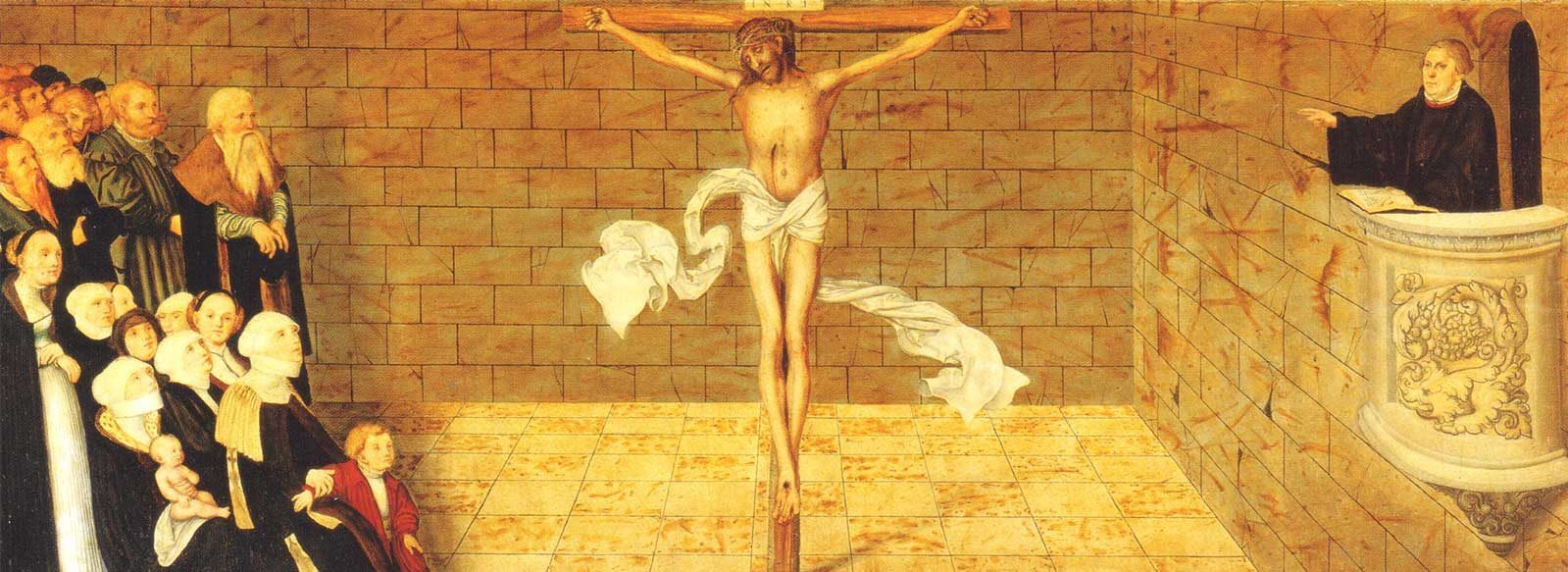
Here's a hurriedly written essay on repentance and evangelism. The basic point is this:
Unbelievers can't repent. Believers must - all the time.
One of the implications is that evangelism is calling sinners to come to Christ just as they are. Two men preaching in the 19th century grasped this very well indeed.
Here is Spurgeon calling sinners to repentance:
Do not attempt to touch yourself up and make yourself something other than you really are, but come as you are to Him who justifies the ungodly. ...The Gospel will receive you into its halls if you come as a sinner, not otherwise. Wait not for reformation, but come at once for salvation. God justifieth the ungodly, and that takes you up where you now are; it meets you in your worst estate. Come in your disorder. I mean, come to your heavenly Father in all your sin and sinfulness. Come to Jesus just as you are: filthy, naked, neither fit to live nor fit to die. Come, you that are the very sweepings of creation; come, though you hardly dare to hope for anything but death. Come, though despair is brooding over you, pressing upon your bosom like a horrible nightmare. Come and ask the Lord to justify another ungodly one. (From "Justification of the Ungodly" by C.H. Spurgeon. A sermon on Romans 4:5 - found in "All of Grace")
And this is from a wonderful piece called Evangelical Repentance by John Colquhoun (1748-1827)
Do you postpone the act of trusting in the Lord Jesus for all His salvation, till you first sit down and mourn awhile for your sins, or till your heart be so humbled that you may be welcome to Him, and so have from your own resources a warrant for trusting in Him? Do you object against coming to Christ because you are not certain that your conviction of sin and your repentance are of the right sort? Do you apply yourself to the exercise of repentance in order to be qualified for believing in Christ, or do you apply your conscience to the commands and curses of the broken law, in order so to repent as to be entitled to trust in Him? Know, I entreat you, that this preposterous and self-righteous course will but sink you the deeper in unbelief, impenitence, and enmity to God the longer you try in this manner to seek for evangelical repentance in your heart or life, the farther you will be from finding it... Do not try to wash yourself clean in order to come to the open fountain of redeeming blood; but come to it as you are, and, by the immediate exercise of direct confidence in the Lord Jesus, wash away all your sins (Ezek 36:25).
.
From a recent comment:
How does Christ's work and our faith relate?
What we don’t want to say is that Christ’s sacrifice brings 99 units of salvific merit and my faith brings 1 unit of salvific merit and between His contribution and mine I have accumulated the necessary 100 units.
Even if we say the blood of Christ is 999,999 units and ours is only 1 we have put our faith up where it doesn’t belong. We have made our faith into a work – a contribution towards salvation.
To say “faith alone” is another way of saying “Christ alone” – it is to say our salvation lies entirely outside of us (and therefore outside of our ‘works’). Instead salvation lies entirely in Christ. A ‘faith alone’ person rests in the fact that the blood of Jesus has done everything. But of course we’re not resting in the blood of Jesus alone if we have added our faith into the salvific equation. In that case we would be trusting in “Christ plus our trust.” We then become (to some degree) the objects of our saving faith and not Christ alone!
Let me reiterate. Faith is absolutely essential. A person is not saved if they are not resting in Jesus. But this ‘faith’, this ‘resting in Jesus’ is not our contribution to the equation. It’s a description of what happens when Jesus ’sweeps you off your feet.’ It’s falling in love. It’s being conquered by the gospel.
.
Isaiah warned us and Jesus repeated it - it's hypocritical to honour the Lord with your lips while your heart is far from Him (Isaiah 29:13; Mark 15:8). It's something I pray about every Sunday, "As I preach or pray or sing, may my lips and my heart be set on the Lord Jesus."
But there's another danger. We can react the other way and disdain anything 'external'. We say to the world: "I reject 'works', I'm all about the inward life." And so we're constantly taking our spiritual temperatures. We neglect ritual (as though it always leads to ritualism). And we start to think of faith as a thing - the one really meritorious work!
The faith-works polarity becomes, in our thinking, an internal-external polarity. Internal - good. External - bad. We start to imagine that mental acts are good old grace while physical acts are nasty old law.
But that's not how it is. There can be a crippling legalism of the heart (ever felt it?) and there can be a wonderful liberation in gospel rituals (ever experienced that?).
Take communion.
Please.
No but seriously, take it. Because here is a gospel ritual which, because it is external, brings home the grace of Jesus all the stronger.
We are not (or at least we should not be!) memorialists. Jesus has not left us a mental duty with the bread and wine as mere thought prompters. We have been left a meal. To chew. And to gulp down. There are motions to go through. And they are the same motions we performed last week. And the week before that.
But here's the thing - these motions are means of God's grace and not in spite of their externalism but because they are external. Here is a gift that comes to you from outside yourself. And it comes apart from your internal state. But nonetheless it is for you - sinner that you are.
So take it regardless of whether your heart is white-hot with religious zeal. Take it regardless of whether you are really, really mindful of the gravity of it all. And as the minister prays the prayer of consecration and your mind wanders... oh well. Don't ask him to start again. Go through the motions I say. Your heart is meant to catch up with the motions. That's why the motions were given. Because our hearts are weak and not to be trusted.
So allow the Word to come to you from beyond. Allow Him to love you first. Don't disdain 'going through the motions.' For many on a Sunday - those grieving or sick or gripped by depression - they need to be carried along by these motions. And for all of us - if we're going to be people of grace, we need these externals.
.
Isaiah warned us and Jesus repeated it - it's hypocritical to honour the Lord with your lips while your heart is far from Him (Isaiah 29:13; Mark 15:8). It's something I pray about every Sunday, "As I preach or pray or sing, may my lips and my heart be set on the Lord Jesus."
But there's another danger. We can react the other way and disdain anything 'external'. We say to the world: "I reject 'works', I'm all about the inward life." And so we're constantly taking our spiritual temperatures. We neglect ritual (as though it always leads to ritualism). And we start to think of faith as a thing - the one really meritorious work!
The faith-works polarity becomes, in our thinking, an internal-external polarity. Internal - good. External - bad. We start to imagine that mental acts are good old grace while physical acts are nasty old law.
But that's not how it is. There can be a crippling legalism of the heart (ever felt it?) and there can be a wonderful liberation in gospel rituals (ever experienced that?).
Take communion.
Please.
No but seriously, take it. Because here is a gospel ritual which, because it is external, brings home the grace of Jesus all the stronger.
We are not (or at least we should not be!) memorialists. Jesus has not left us a mental duty with the bread and wine as mere thought prompters. We have been left a meal. To chew. And to gulp down. There are motions to go through. And they are the same motions we performed last week. And the week before that.
But here's the thing - these motions are means of God's grace and not in spite of their externalism but because they are external. Here is a gift that comes to you from outside yourself. And it comes apart from your internal state. But nonetheless it is for you - sinner that you are.
So take it regardless of whether your heart is white-hot with religious zeal. Take it regardless of whether you are really, really mindful of the gravity of it all. And as the minister prays the prayer of consecration and your mind wanders... oh well. Don't ask him to start again. Go through the motions I say. Your heart is meant to catch up with the motions. That's why the motions were given. Because our hearts are weak and not to be trusted.
So allow the Word to come to you from beyond. Allow Him to love you first. Don't disdain 'going through the motions.' For many on a Sunday - those grieving or sick or gripped by depression - they need to be carried along by these motions. And for all of us - if we're going to be people of grace, we need these externals.
.
A while back Matt Jenson wrote a brilliant short essay entitled: Faith is nothing at all. Do read it if you haven't already, it won't take long.
We must constantly remind ourselves that faith is not a thing. It is not a possession by which we make claim to salvation. Faith is the absence of a thing - it is the confession of a complete lack. To even ask 'Am I having faith?' is already an unbelieving question for faith is looking away to Christ.
If you make faith into a thing you run into problems. Either you have to make it an imputed substance which God grants arbitrarily (in order to uphold sovereign grace). Or you make it a legitimate factor contributing to our salvation. Sounds quite like many Calvinist-Arminian debates right? In many (certainly not all, but in many) of these debates you can see both sides making this mistake: they begin by considering faith to be a thing. And from this premise, one side is in danger of making salvation a matter of divine caprice unrelated to Christ. The other side begins from the same premise and makes salvation a matter of self-effort (and again Christ's position is diminished). But both have begun down the wrong track. They've thought of faith as a thing and then they've got into trouble figuring out how a gracious salvation can be 'by' this thing. We must remember though: Faith is not a thing.
Alan Torrance is fond of pointing out that reformers like John Knox spoke very little about 'salvation by faith alone.' Instead he spoke of salvation 'by the blood of Christ alone.' Why? Because he didn't want anyone thinking that faith was the 'thing' that saved. 'Faith alone' makes sense only in the context of 'Christ alone.' 'Faith alone' is the subjective correlate of the objective salvation in Christ alone - it cannot be considered apart from it. To do so is to risk seeing faith as a thing.
Similarly Mike Reeves points out that Martin Luther's favourite phrase for declaring our gracious salvation was not salvation 'by faith alone' but salvation 'by God's Word' alone. Again, faith is not the 'thing' that saves and 'faith alone' is not possession of the single savingly significant substance. (I suspect Luther would have trouble saying this phrase - especially after his fifth Wittenberg ale!).
Faith is, in Anders Nygren's memorable phrase, 'being conquered by the gospel.' Note how passive this image is. Faith is a description of what has happened to the person who's been overwhelmed by Christ in His word. It is not a thing.
Anyway, check out Matt Jenson's article.
.

25 During the fourth watch of the night Jesus went out to them, walking on the lake. 26 When the disciples saw Him walking on the lake, they were terrified. "It's a ghost," they said, and cried out in fear. 27 But Jesus immediately said to them: "Take courage! It is I. Don't be afraid." 28 "Lord, if it's you," Peter replied, "tell me to come to you on the water." 29 "Come," He said. Then Peter got down out of the boat, walked on the water and came towards Jesus. 30 But when he saw the wind, he was afraid and, beginning to sink, cried out, "Lord, save me!" 31 Immediately Jesus reached out His hand and caught him. "You of little faith," He said, "why did you doubt?" 32 And when they climbed into the boat, the wind died down. 33 Then those who were in the boat worshipped Him, saying, "Truly you are the Son of God." (Matthew 14:23-33)
Here Jesus walks on water - He treads on the abyss. But Peter walks as Jesus walks (cf 1 John 2:6). How?
Notice he doesn't just step out. He asks for Jesus to command him. He's been in a storm with Jesus before (Matt 8:23-27). Peter knows the power of Jesus' word - His word is obeyed! So Peter wants a word from Jesus to command him. And the word is powerful to enable that which it commands (Jesus' word is like that). Peter does the impossible because Jesus commands it.
Of course he sinks (looking at the waves and not looking at Christ). But in His grace, Peter only ‘begins' to sink. This is not gravity acting on Peter or he'd sink like a stone. How slowly Jesus lets him down! But when Peter calls out, 'immediately' Jesus saves.
His words of rebuke tell us how we can walk like Jesus: ‘You of little faith, why did you doubt?' Now what is Jesus referring to here?
Peter did not doubt that Jesus could walk on water. And it wasn't self-belief that Jesus was recommending (Peter has no ability to walk on water!). Peter's problem was that he doubted Jesus' word to him. He doubted the word which both commands and enables what it commands. Peter doubted that he truly had been made into the person Jesus said He had - one who walks like He walks. That was Peter's problem.
When Christ speaks a word to us then trusting Him involves trusting that we are the people Christ says we've become. Jesus says to you:
"I tell you the truth, whoever hears my word and believes Him who sent me has eternal life and will not be condemned; he has crossed over from death to life." (John 5:24)
So, don't look at the wind and waves. Don't look at your heart and your abilities. Trust the word that Jesus has spoken to you. His word is powerful to make you who He says you are. You can't make yourself into this person, but neither can anyone or anything else prevent you from being it. The word of the LORD is supreme, you can trust Him. You will not be condemned. You have crossed over from death to life. And now, you can walk as He walked.
.

What controls you more - the firstfruits of your future hope, or the giants?
The seventh sermon in our Church in the Wilderness series. On Numbers 13-14.
Excerpt:
Joshua goes into the promised land with a man after his heart (Caleb) and those are the only ones who survive this wicked generation - the One called Jesus and the one after His heart. And chapter 14 is all about whether Israel would trust the one whose name is Jesus as he brings back the firstfruits of the promised land.
From v7 it’s his speech that is make or break for the Israelites – will they trust their forerunner? He comes to them with proof of the goodness of the future hope but they fail to trust Him and bring judgement on themselves.
Jesus Christ is the true Joshua who has gone into the promised hope ahead of us. And after His death, He came back from that future glory bearing the firstfruits of the new creation – that’s how 1 Corinthians 15 describes the resurrection. And we are in the position of Israel, assessing Jesus the Forerunner. Can we trust Him? Does He know what He’s talking about? Do His firstfruits look worth pursuing?
Text below...
...continue reading "Trusting our Forerunner Joshua and His Firstfruits"
A good and busy Sunday. I'll get around to answering comments and emails soon. Just wanted to blog this while it's still fresh.
This afternoon I had two very different meetings with a similar theme.
One person - a really great Christian - confessed to me that they'd prayed for God to enter their life many thousands of times but never got the answer they were looking for. I could relate - this describes the entirety of my teenage years. (See this talk for more)
The other meeting was with some Mormons who knocked on our door. They both told me they became convinced Mormons when they prayed for an experience of the Holy Ghost. This apparently confirmed to them the truth of the gospel as restored by Joseph Smith. As the little leaflet they gave me says: "The Holy Ghost confirms the truth through feelings, thoughts and impressions." Both of them described this as a private experience of peace and joy. It was unclear how this brief religious feeling related to the status of Joseph Smith as a prophet and priest, or the truth of the book of Mormon.
But apparently this is the way to become a Mormon. As with Smith himself, pray James 1:5 and something will happen. My leaflet tells me, "This knowledge can be miraculous and life changing [Smith met the Father and the Son personally!!] but it usually comes as a quiet assurance."

Clearly the missionaries I met were at the 'quiet assurance' end of Holy Ghost experiences. But it struck me after they left that they had found what my friend was after, and what I'd been seeking as a teenager. I wanted a private religious experience - shining lights, weak knees, woozy stomach. I wanted peace and joy as I perched on the end of my bed. I wanted some kind of numinous glow, wordless ecstasy, love and groovy vibes. Now that I think about it - I was very much into Lou Reed and the Velvet Underground at the time. I think I basically wanted spiritual heroin.
But again the question would have to be asked - what exactly is the link between this spiritual experience and the truth that is supposedly being authenticated? The Mormons had a spiritual high - but that doesn't answer the question, 'which spirit has produced it?' A Mars bar could give me warm fuzzies, what's that got to do with Jesus?
Perhaps this is another case where we need to reconsider faith in more biblical ways. We commonly think of faith as our work (a feeling to be generated) and as something related to religion in general. On this understanding, all kinds of people have 'faith' because they manage to work up generic religious sentiments.
In the bible, faith is simply our receiving Jesus. Not our work but God's. And its content is not 'religious feeling' in general, but 'Christ and Him crucified' in particular.
And how is Christ received? Not perched on the end of my bed. He is received in word and sacrament.
Ever noticed how parallel Ephesians 5 and Colossians 3 are? Well look in particular at Eph 5:18-20 and Col 3:16-17. Being filled with the Spirit is parallel with 'letting the word of Christ dwell in you richly.' Want to be filled with the Spirit? Be filled with His words. And these words are the words of Christ - He Himself is communicated in them.
So I don't say to my friend that spiritual experiences are unimportant. But neither do I advocate the Mormon route. God is found in Christ and Christ is found in His word. We ought never to stop short of a personal encounter with the living Christ. But we should never seek such encounters apart from where He Himself is given. And He is freely given in word and sacrament.
It's just interesting to me that a cult founded in mistrusting the word and trusting personal experience can foster spiritual understandings that are so close to home. Let's give up on looking for the spiritual heroin - it's such a sordid, selfish and unsatisfying fix. Let's instead receive fellowship with the living Christ, not because of our own quest for experience but on the basis of His prior and utter self-giving. The encounter is already real and true in the gospel - He is yours. "The Son of God loved you and gave Himself for you." (Gal 2:20) If you've believed that sentence, you have experienced the Holy Spirit's assurance. If you haven't received that word, then you must know that you'll receive Christ in no other way. Continue to ask, seek and knock by all means. But return continually to the place where He's already freely offered. Right there you already have Him.
.