Skip to content

Genesis 18:20-33

God is a Haggler.  He wants us to haggle.

What do we feel about that?

Here's a website offering to take the cringe factor out of your financial exchanges.  Instead of negotiating with a real, live human being, you can simply click a button in the privacy of our own home.

http://www.youtube.com/watch?v=7PfggfGIRP4

Are you from a haggling culture?

I wonder whether the way we shop and the way we pray are linked.  I'm used to fixed prices, no negotiations, no back and forth, no give and take, in and out in 18 seconds, the less chat the better.  And my prayers?  Are they just as clean and clinical?  Do I know what it is to haggle with God?

Here's audio from a 10 minute talk for our prayer meeting last night.

Click below for the rest of the text.

...continue reading "God is a Haggler"

Part 1

Part 2

Part 3

As we've noted, the temptations of the wilderness were a battle, not the whole war.  Luke 4:13 states, the devil left only to return at an opportune time.

What times were opportune?

Well in Matthew 16 we have another heavenly declaration of Jesus' identity.  This time it comes through the lips of Peter - "You are the Christ, the Son of the living God" (v16).  But as with the baptismal declaration, this would be immediately tested by the question, What sort of Christ?  What sort of Son of God will Jesus be?

Verse 21: From this time on Jesus begins to show His disciples that He must suffer and die.  As soon as His divine identity becomes clear like this, Jesus immediately seeks to combat our natural theology of glory.  He 'shows' them that He must suffer.  That's interesting isn't it?  He doesn't simply tell them, He shows them - obviously from Scripture.  For the bible has never revealed a theology of glory - it has always revealed the theology of the cross.  Jesus makes this plain.  And Peter, who one minute previously has been a mouthpiece of heaven (v17), is now a mouthpiece of hell.

Peter took Him aside and began to rebuke Him, saying, "Far be it from you, Lord! This shall never happen to you."

Immediately Jesus recognizes the devil's assault:

"Get behind me, Satan! You are a stumbling-block to me; you do not have in mind the things of God, but the things of men."

Peter thought the things of God were the things of power, prestige, safety and comfort.  Jesus says, No, those things are the things of men.  And, shockingly, the things of men are the things of Satan.

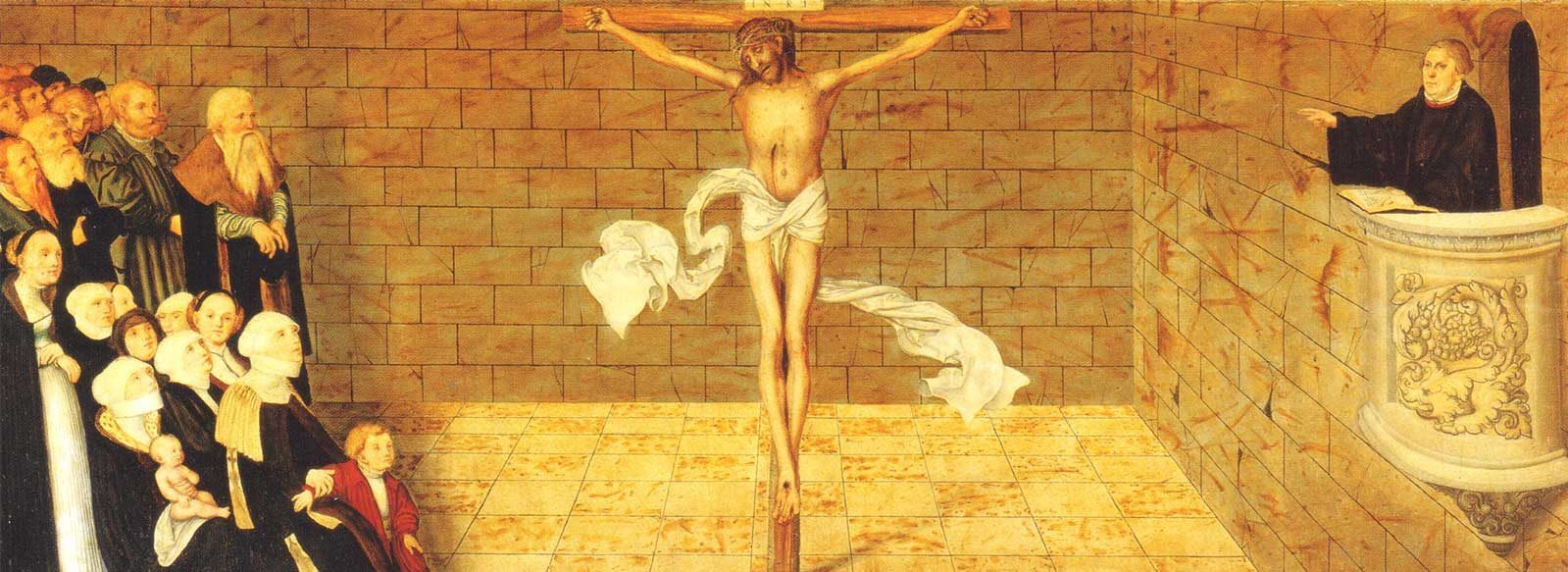
It couldn't be clearer could it?  Satan's way is the way of all men - the way of comfort, the way of self, the way of safety.  Christ's way (which is God's way) is the way of the cross, and He calls every follower to it (v24ff).

The next time 'temptation' is mentioned in Matthew is in the garden of Gethsemane (26:41).  Here again the way of the cross was brought into an agonizing contrast with the way of all flesh.  Would Jesus let the cup pass (v39)?  Would He save Himself or save us?  Again He resolved to let His Father's will be done.  This is not something different from His resolve to save us - it is precisely the same thing.

At His arrest, again the chance came for the angels to rescue Him (v53), but the Scriptures must be fulfilled (v54).  Both the Father and the Scriptures speak with one voice - the Christ, the Son of God must suffer and must die.  And Christ submits.

So as He pours out His life on that cross, here is the final 'opportune time'.  The religious leaders called out to Him:

Come down from the cross, if you are the Son of God!" 41 In the same way the chief priests, the teachers of the law and the elders mocked him. 42 "He saved others," they said, "but he can't save himself! He's the King of Israel! Let him come down now from the cross, and we will believe in him. 43 He trusts in God. Let God rescue him now if he wants him, for he said, `I am the Son of God.'"  (Matt 27:40-43)

Do you recognize those words?  "If you are the Son of God" began each of the wilderness temptations.  Here is Satan again using his mouthpieces to offer Jesus a way out.  Contrary to Martin Scorcese's imagination, the last temptation of Christ was not some lustful fantasy.  It was the much more seductive, much more truly carnal, temptation to save Himself.  Thank God He resisted.  For He did not come to be served but to serve and to give His life as a ransom for many.

And when He died, the most unlikely man of all suddenly got it.  A Roman centurion declares: "Truly this was the Son of God!" (v54)

That's been the issue ever since the baptism.  What does it mean to be the Son of God?  Satan threw everything at Jesus to make Him live like Adam, like Israel, like every other son in the history of the world.  But Jesus refuses to live for self.  Instead He dies for others and in this astonishing reversal a power is unleashed.  There's life from the dead (v51-53) and the man most likely to love vainglory and flesh and the way of Satan is turned around.  Even in the eyes of this Gentile, the wonder of the cross becomes the definition of true Sonship.  This is a power to overturn the world.

Satan is crushed.

Part 5

.
4

25 During the fourth watch of the night Jesus went out to them, walking on the lake. 26 When the disciples saw Him walking on the lake, they were terrified. "It's a ghost," they said, and cried out in fear. 27 But Jesus immediately said to them: "Take courage! It is I. Don't be afraid." 28 "Lord, if it's you," Peter replied, "tell me to come to you on the water." 29 "Come," He said. Then Peter got down out of the boat, walked on the water and came towards Jesus. 30 But when he saw the wind, he was afraid and, beginning to sink, cried out, "Lord, save me!" 31 Immediately Jesus reached out His hand and caught him. "You of little faith," He said, "why did you doubt?" 32 And when they climbed into the boat, the wind died down. 33 Then those who were in the boat worshipped Him, saying, "Truly you are the Son of God."  (Matthew 14:23-33)

Here Jesus walks on water - He treads on the abyss. But Peter walks as Jesus walks (cf 1 John 2:6). How?

Notice he doesn't just step out. He asks for Jesus to command him. He's been in a storm with Jesus before (Matt 8:23-27).  Peter knows the power of Jesus' word - His word is obeyed! So Peter wants a word from Jesus to command him. And the word is powerful to enable that which it commands (Jesus' word is like that). Peter does the impossible because Jesus commands it.

Of course he sinks (looking at the waves and not looking at Christ). But in His grace, Peter only ‘begins' to sink.  This is not gravity acting on Peter or he'd sink like a stone. How slowly Jesus lets him down!  But when Peter calls out, 'immediately' Jesus saves.

His words of rebuke tell us how we can walk like Jesus: ‘You of little faith, why did you doubt?'  Now what is Jesus referring to here?

Peter did not doubt that Jesus could walk on water.  And it wasn't self-belief that Jesus was recommending (Peter has no ability to walk on water!).  Peter's problem was that he doubted Jesus' word to him.  He doubted the word which both commands and enables what it commands. Peter doubted that he truly had been made into the person Jesus said He had - one who walks like He walks.  That was Peter's problem.

When Christ speaks a word to us then trusting Him involves trusting that we are the people Christ says we've become.  Jesus says to you:

"I tell you the truth, whoever hears my word and believes Him who sent me has eternal life and will not be condemned; he has crossed over from death to life." (John 5:24)

So, don't look at the wind and waves.  Don't look at your heart and your abilities.  Trust the word that Jesus has spoken to you.  His word is powerful to make you who He says you are.  You can't make yourself into this person, but neither can anyone or anything else prevent you from being it.  The word of the LORD is supreme, you can trust Him.  You will not be condemned.  You have crossed over from death to life.  And now, you can walk as He walked.

.

18

In Matthew 4:1-11, Christ is driven by the Spirit into the desert. In His battle with Satan, Christ is like Adam, like Israel and like David.

Like Adam, the devil confronts Him with audible temptations to doubt God's word and eat.  And like Adam the fate of humanity rests on His shoulders.

Like Israel, He is called 'Son of God', and goes through the waters straight into a wilderness trial.  Where they caved in to temptation over 40 years, Christ would be the true Israel, resisting temptation over 40 days.

Like David, He's just been anointed and now faces a giant, man-to-man, whose 40 days of taunts reproach the God of Heaven.  And like David, Christ's victory would mean victory for His people.

Adam failed.  Israel failed.  But Christ, the anointed King goes to battle for His people.  He steps up as Adam - the True Man.  As the Son of God - the True Israel.  As David - our Spirit-filled Champion.  And through apparent weakness He slays the giant who has dismayed and defeated us at every turn.  His triumph is our triumph.

Christ's temptations are not in Scripture to model for us a three point primer in spiritual warfare!  They narrate for us the actual victory of our Anointed Champion.  This is not Jesus your Example.  Not primarily.  This is Jesus who has taken your humanity to Himself, who has become Himself the true people of God and who has waged war on our behalf.

If you only see  'Jesus our Example' you lose the gospel and put yourself at centre stage.  If you see 'Jesus our Champion' you get the example thrown in.  But fundamentally your eyes are taken from yourself and fixed where they should be:

When Satan tempts me to despair

And tells me of the guilt within

Upward I look and see HIM there

Who made an end of all my sin

.

Christ in the Wilderness 2

Christ in the Wilderness 3

Christ in the Wilderness 4

Christ in the Wilderness 5

.

Self-pity is, for me, like a low-level virus, a background throb, a sapping sickness.  It heavies my bones and fizzies my blood.

But the other day I gained instant relief.  I was reading Psalm 103 in the King James version.  Verse 13 says:

Like as a father pitieth his children, so the LORD pitieth them that fear Him.

Could this be true?  Does the LORD Himself pity me?  Yes.  With fatherly affection and concern.  I provoke the heart-felt pity of the living God.

You might think this would confirm my dreadful indulgence.  After all, heaven seems to agree with my self-obsession.  Actually no.  He pities the fool who pities himself.  In spite of my wallowing, the LORD's pity is a great 'nonetheless.'

A father whose child cries only for attention may still choose to pick up the boy, spin him round and kiss him.  He is not caving into the child's manipulation.  Instead He is loving from his own free grace.  And the boy is weaned from self by the love of another.

In the same way our Father in heaven reaches down in His Son to self-pitying wretches.  And He lifts us up, not to confirm our self-centredness but to replace it.  Now that heaven pities me, I simply have no need.  What could my own self-preoccupation add to the divine pre-occupation of the LORD, who sets His affections on me?

And so this verse brought a tremendous release.  Just as the LORD's love frees us from self-love, His service frees us from self-service, so His pity frees us from self-pity.

.

Close your eyes.

Imagine yourself kneeling at the side of Christ's throne, head on His chest, His arm around your shoulder.

Christ is speaking.  He's addressing His Father.

And this is what He's saying: Psalm 119.

Listen in. This really is the one thing you must do.  Listen.

Add your Amens and your Thankyous as He speaks.

Find a verse or phrase to hide in your heart for today.

Pray the Lord's prayer.

Stand up and walk into your day.

.

Close your eyes.

Imagine yourself kneeling at the side of Christ's throne, head on His chest, His arm around your shoulder.

Christ is speaking.  He's addressing His Father.

And this is what He's saying: Psalm 119.

Listen in. This really is the one thing you must do.  Listen.

Add your Amens and your Thankyous as He speaks.

Find a verse or phrase to hide in your heart for today.

Pray the Lord's prayer.

Stand up and walk into your day.

.

33

From Doug Wilson:

I was talking to a woman one time... and she told me sheepishly about her first reaction to that great grace question hypothetically presented at the pearly gates -- "why should I let you into heaven?" The right answer of course is a variant of "because of the blood of Jesus Christ, plus nothing." She told me that her first instinctive reaction was, "Gee, I hope I remember to say that."

See how faith can so easily be turned into a work?

If you are going to ask and answer this question, I think this is a much better response (from De Regno Christi)

[When I'm asked 'Why should I let you into my heaven?']  I’ll bow and be silent. Then I’ll hear a voice,
“Father, he’s mine.”

Do you see?  It's not your faith that saves.  It's Christ.

Here's Spurgeon (read the whole magnificent devotion here):

Remember, therefore, it is not thy hold of Christ that saves thee–it is Christ; it is not thy joy in Christ that saves thee–it is Christ; it is not even faith in Christ, though that be the instrument–it is Christ’s blood and merits; therefore, look not so much to thy hand with which thou art grasping Christ, as to Christ; look not to thy hope, but to Jesus, the source of thy hope; look not to thy faith, but to Jesus, the author and finisher of thy faith. We shall never find happiness by looking at our prayers, our doings, or our feelings; it is what Jesus is, not what we are, that gives rest to the soul. If we would at once overcome Satan and have peace with God, it must be by “looking unto Jesus.”

.

A re-post

From Genesis 1, the way of the LORD has always been forming, then filling.

The filled-out reality is there by anticipation even in the forming. The intention for filling is included in the forming. But still the order is ‘form, then fill.':

  • In Gen 1:2 - a formless and empty creation is then formed (days 1-3) and filled (days 4-6) as the Word of God is revealed (Gen 1:3ff).
  • (This is similar to both the tabernacle and the temple where first it is formed, then filled by the Glory of the LORD).
  • Adam is formed (from dust) and then filled (by the breath of the LORD God).
  • Humanity as male and female is first formed in Adam and then filled out in Eve's creation and their consummation.
  • The first Adam is filled by the Last.
  • The people of Israel as the seed of Abraham are filled by Christ, the Seed of Abraham.
  • The law is the form of the covenant and is filled by the gospel events.

In all this we remember that the intention for filling is already anticipated in the forming. The very forming reveals a long-intended desire to fill. The forming sets everything on a trajectory towards something beyond itself.

Is it too much to suggest on this basis alone the supralapsarian tendencies of the Living God? I'll do it anyway!

Eden is not the point. Adam is not the point. Adamic humanity is not the point. Israel and its worship is not the point. All these things are forms, intended to be filled-out by realities to which the forms themselves point but which they do not themselves contain. The intention is always to move through Eden and beyond to the New Jerusalem; through Adam and beyond to the Heavenly Man; through Israel (and its worship) and beyond to the Church of Jesus Christ.

Tellingly, this movement goes through death and out the other side to resurrection.  Thus...

  • The day is not always bright (as it will be in the new creation). Instead it goes from darkness into light.
  • The tree is not first, first comes the seed (John 12:24; 1 Cor 15:37)
  • There are not blessings and curses for Israel as alternative present tense realities but rather the blessings come after the curse. (see Deut 4:23-31; Deut 28-29 culminating in 30:1ff).
  • The cross comes first and then resurrection.
  • The LORD makes the old covenant and then the covenant renewed. (though the new covenant reality is grasped by faith long before both old and new covenants purchased).
  • The LORD makes the old earth and then the earth renewed.
  • First comes my body of flesh and then my spiritual body. (1 Cor 15:44)

.

The Christian therefore knows two incontrovertible facts:

1. All things are forward-looking. The best is yet to come (let's never yearn for Adam, for Eden, for Israel, for old covenant).

2. The path to better things is through suffering: the road to resurrection blessing always goes through the cross.

Psalm 30:5 For his anger lasts only a moment, but his favour lasts a lifetime; weeping may remain for a night, but rejoicing comes in the morning.

Psalm 126:6 He who goes out weeping, carrying seed to sow, will return with songs of joy, carrying sheaves with him.

1 Peter 5:6 Humble yourselves, therefore, under God's mighty hand, that he may lift you up in due time.

.

Twitter widget by Rimon Habib - BuddyPress Expert Developer