Skip to content

2

John Richardson (whose excellent blog is here) adds his voice to this discussion on Stand Firm in Faith.  He writes about the place of repentance in the communion service.  It chimes with a lot of what I wrote here

I have long felt Anglicanism (specifically Thomas Cranmer) to be good at driving us to our knees in repentance, but not so good at letting us get up again.

In regard to this, I would point out the contrast between what the Book of Common Prayer says about our preparation to receive Holy Communion and what Luther said. The Exhortation in the BCP says in effect that if we are to receive Communion worthily we must first put ourselves right with God.

Contrast this with Luther. First, he says, “There must be faith to make the reception worthy and acceptable before God, otherwise it is nothing but sham and a mere external show.”

And what is this faith? It is “a firm trust that Christ, the Son of God, stands in our place and has taken all our sins upon his shoulders and that he is the eternal satisfaction for our sin and reconciles us with God the Father.”

But what does this mean for our ‘worthiness’? “This food demands a hungering and longing man, for it delights to enter a hungry soul, which is constantly battling with its sins and eager to be rid of them.”

Therefore those with the right faith are those, “who suffer tribulation, physical or spiritual ... spiritually through despair of conscience, outwardly or inwardly, when the devil causes your heart to be weak, timid, and discouraged, so that you do not know how you stand with God, and when he casts your sins into your face.” (emphasis added)

I don’t think the BCP reflects this. Rather, the BCP urges communicants first: “search and examine your own consciences ... that ye may come holy and clean to such a heavenly Feast, in the marriage-garment required by God in holy Scripture, and be received as worthy partakers of that holy Table” and so, “examine your lives and conversations by the rule of God’s commandments; and whereinsoever ye shall perceive yourselves to have offended, either by will, word, or deed, there to bewail your own sinfulness, and to confess yourselves to Almighty God, with full purpose of amendment of life” (emphasis added).

The Anglican way is ‘be cleansed, then come’. The Lutheran way is ‘come and be cleansed’.

For my view, go to this sermon called Eating with Jesus (listen here).  Just don't tell the bishop.


.

John Richardson (whose excellent blog is here) adds his voice to this discussion on Stand Firm in Faith.  He writes about the place of repentance in the communion service.  It chimes with a lot of what I wrote here

I have long felt Anglicanism (specifically Thomas Cranmer) to be good at driving us to our knees in repentance, but not so good at letting us get up again.

In regard to this, I would point out the contrast between what the Book of Common Prayer says about our preparation to receive Holy Communion and what Luther said. The Exhortation in the BCP says in effect that if we are to receive Communion worthily we must first put ourselves right with God.

Contrast this with Luther. First, he says, “There must be faith to make the reception worthy and acceptable before God, otherwise it is nothing but sham and a mere external show.”

And what is this faith? It is “a firm trust that Christ, the Son of God, stands in our place and has taken all our sins upon his shoulders and that he is the eternal satisfaction for our sin and reconciles us with God the Father.”

But what does this mean for our ‘worthiness’? “This food demands a hungering and longing man, for it delights to enter a hungry soul, which is constantly battling with its sins and eager to be rid of them.”

Therefore those with the right faith are those, “who suffer tribulation, physical or spiritual ... spiritually through despair of conscience, outwardly or inwardly, when the devil causes your heart to be weak, timid, and discouraged, so that you do not know how you stand with God, and when he casts your sins into your face.” (emphasis added)

I don’t think the BCP reflects this. Rather, the BCP urges communicants first: “search and examine your own consciences ... that ye may come holy and clean to such a heavenly Feast, in the marriage-garment required by God in holy Scripture, and be received as worthy partakers of that holy Table” and so, “examine your lives and conversations by the rule of God’s commandments; and whereinsoever ye shall perceive yourselves to have offended, either by will, word, or deed, there to bewail your own sinfulness, and to confess yourselves to Almighty God, with full purpose of amendment of life” (emphasis added).

The Anglican way is ‘be cleansed, then come’. The Lutheran way is ‘come and be cleansed’.

For my view, go to this sermon called Eating with Jesus (listen here).  Just don't tell the bishop.


.

Oh it's bad.  It's very bad.  It's murdering your Maker.  It's cheating on your Lover.  It's grieving His Spirit.  It's tearing apart your soul.  It's bad.  Bad, bad, bad.

But not receiving forgiveness is far worse.  Failure to accept the grace of Jesus dwarfs all other sins in its monstrosity.  To refuse the vulnerable humility of God; to trample on the Lamb and blaspheme His Spirit as they offer blood-bought mercy and cleansing - this is unspeakable evil.  It's the reason people perish eternally.

Don't believe me?  1 Thessalonians 2:10:

They perish because they refuse to love the truth and so be saved.

Those in hell are there for refusal to love the life-saving truth of the gospel.  To sin is one thing.  To refuse forgiveness is itself unforgivable.

Now we know this on a macro level.  We know that eternity does not depend on minimizing sin.  It depends on receiving forgiveness.  We believe it for that Day, but do we believe it this day?  Do I live today as though sinning (or not sinning) is the ultimate spiritual barometer?  Or is my spiritual barometer daily calibrated to the forgiveness of Christ?

Here's how I naturally assess my Christian walk.  I rate my 'performance' largely by how much distance I've managed to put between me and my last 'big sin.'  (Of course it's 'big sins' I'm interested in, if I worried about the little ones my holy-count would never get off the ground).  When the number of 'sin-free' days hits double figures I'm doing great.  In fact, once I'm talking in weeks rather than days it rockets me into the righteousness stratosphere.  Best of all, it finally allows me to minister to people from the safe distance of 'All-figured-out-holiness.' 

Of course when I sin it sucks.  Why?  Because I'm back to zero.  My functional righteousness is caput and I'll have to endure the hassle of a 'holy' fortnight before I can feel good again.  If I minister to people it will have to be out of broken messiness and a dependence on the grace of Jesus.  Ewww.

Now that's a stark way of putting it.  But I don't think there is a nice way of portraying this mindset.  While ever we pursue the Christian life as though sinning is the worst thing and 'not sinning is the most important thing' then such a foul system will develop.   But it's to entirely forget the gospel. 

So friends, perhaps you've really blown it recently.  Praise God this could be the opportunity to realize your profound and continual need for the blood of Jesus.  Allow this to teach you the truth - the person you showed yourself to be in your sin is the person you have always been.  It springs from a heart full of evil which you will carry to the grave.  Your only hope lies far above and beyond yourself at God's Right Hand.  He is your profound and continual need.

Perhaps you blew it a while ago but you just can't seem to get beyond it.  Friend - the Word of God forbids you to take your sin more seriously than Christ's forgiveness.  Is your sin great?  Yes.  But is it greater than the Lamb slain before the foundation of the world?   Is it beyond the redeeming value of God's own blood (Acts 20:28).  I think your sin has met its match in Calvary's cleansing flow, don't you?

Perhaps you haven't blown it for a while now but you're realizing you operate according to a functional righteousness.  You hate sin only because it spoils your 'holy count'.  You're proud and graceless.  Well meditate on Philippians 3:1-11.  Know that such 'righteousness' is dung and reckon it all as loss compared to the surpassing greatness of knowing Christ.  He alone is your life and peace.

Or perhaps you're a blogger who writes about grace.  You can dissect the sins of works-righteousness and see through latent Pharisaisms.  Well neither are you righteous for your pithy critiques of the flesh.  You haven't got it figured out.  If you know anything it's that you're ignorant.  If you have any strength it's only found in your helplessness.  There's no credit to your insight, there's only rest in His mercy.  You are nothing.  Jesus is everything.

.

Oh it's bad.  It's very bad.  It's murdering your Maker.  It's cheating on your Lover.  It's grieving His Spirit.  It's tearing apart your soul.  It's bad.  Bad, bad, bad.

But not receiving forgiveness is far worse.  Failure to accept the grace of Jesus dwarfs all other sins in its monstrosity.  To refuse the vulnerable humility of God; to trample on the Lamb and blaspheme His Spirit as they offer blood-bought mercy and cleansing - this is unspeakable evil.  It's the reason people perish eternally.

Don't believe me?  1 Thessalonians 2:10:

They perish because they refuse to love the truth and so be saved.

Those in hell are there for refusal to love the life-saving truth of the gospel.  To sin is one thing.  To refuse forgiveness is itself unforgivable.

Now we know this on a macro level.  We know that eternity does not depend on minimizing sin.  It depends on receiving forgiveness.  We believe it for that Day, but do we believe it this day?  Do I live today as though sinning (or not sinning) is the ultimate spiritual barometer?  Or is my spiritual barometer daily calibrated to the forgiveness of Christ?

Here's how I naturally assess my Christian walk.  I rate my 'performance' largely by how much distance I've managed to put between me and my last 'big sin.'  (Of course it's 'big sins' I'm interested in, if I worried about the little ones my holy-count would never get off the ground).  When the number of 'sin-free' days hits double figures I'm doing great.  In fact, once I'm talking in weeks rather than days it rockets me into the righteousness stratosphere.  Best of all, it finally allows me to minister to people from the safe distance of 'All-figured-out-holiness.' 

Of course when I sin it sucks.  Why?  Because I'm back to zero.  My functional righteousness is caput and I'll have to endure the hassle of a 'holy' fortnight before I can feel good again.  If I minister to people it will have to be out of broken messiness and a dependence on the grace of Jesus.  Ewww.

Now that's a stark way of putting it.  But I don't think there is a nice way of portraying this mindset.  While ever we pursue the Christian life as though sinning is the worst thing and 'not sinning is the most important thing' then such a foul system will develop.   But it's to entirely forget the gospel. 

So friends, perhaps you've really blown it recently.  Praise God this could be the opportunity to realize your profound and continual need for the blood of Jesus.  Allow this to teach you the truth - the person you showed yourself to be in your sin is the person you have always been.  It springs from a heart full of evil which you will carry to the grave.  Your only hope lies far above and beyond yourself at God's Right Hand.  He is your profound and continual need.

Perhaps you blew it a while ago but you just can't seem to get beyond it.  Friend - the Word of God forbids you to take your sin more seriously than Christ's forgiveness.  Is your sin great?  Yes.  But is it greater than the Lamb slain before the foundation of the world?   Is it beyond the redeeming value of God's own blood (Acts 20:28).  I think your sin has met its match in Calvary's cleansing flow, don't you?

Perhaps you haven't blown it for a while now but you're realizing you operate according to a functional righteousness.  You hate sin only because it spoils your 'holy count'.  You're proud and graceless.  Well meditate on Philippians 3:1-11.  Know that such 'righteousness' is dung and reckon it all as loss compared to the surpassing greatness of knowing Christ.  He alone is your life and peace.

Or perhaps you're a blogger who writes about grace.  You can dissect the sins of works-righteousness and see through latent Pharisaisms.  Well neither are you righteous for your pithy critiques of the flesh.  You haven't got it figured out.  If you know anything it's that you're ignorant.  If you have any strength it's only found in your helplessness.  There's no credit to your insight, there's only rest in His mercy.  You are nothing.  Jesus is everything.

.

Where's the turning point in the parable of the two sons?  (Yes, that again).

Is it 'coming to himself' in the pig-sty?

pig-sty

If that's the turning point in the son's life, repentance will look like weighing things up and choosing obedience.

What's wrong with that?  Well for one it effectively makes the prodigal his own saviour. 

But aside from this.  Let's think about how this paradigm would affect our understanding of ongoing repentance. 

Basically, if repentance happens in the sty, when we sin we will think, 'Darn it, I've left the Father's house, I'm away from His love.  But now I need to clean up my act, prepare my repentance speech and return to His service.'

But is that really the turning point of the story?  I'm not talking in terms of literary devices. I'm asking the question, What is the point that determines the prodigal's fate?  What is the decisive moment for his life?  Is it 'coming to himself' in the sty?

No.  Of course not.  He could have devised the greatest repentance plan known to man and still been rightly shunned by his father.  The true turning point was the father's embrace.


prodigal-son


The real change in the prodigal - both his change of status and of heart - truly happens in the arms of the father.  That's where repentance occurs.

Imagine yourself in those arms.  You may have been sorry before, now you loathe youself.  Yet you cannot escape his love.  You had thought you stank in the sty.  Now you feel your stench to the core.  Yet you are held close.   You had composed a repentance speech.  Now your awareness of sin is overwhelming.  But you're enfolded in grace.

This is true repentance - that which occurs in the Father's embrace.  And this is where our ongoing repentance occurs. 

When we sin, do we consider ourselves to be in the pig sty - the long journey back home stretches ahead of us?  Or do we consider ourselves to be already in the Father's arms?  There's a big difference.

I remember speaking with a Christian man about his extra-marital affair from years earlier.  As he spoke about the pain of those memories I said to him "You realise that in the midst of the very worst of that, Jesus was rejoicing over you as a Bridegroom rejoices over His bride."  He paused for a long time and said "That makes it a hundred times worse!"  I said "Yes it does.  A thousand times worse."  We think that we manage to sin away in a corner somewhere.  No, no, no.  Just read 1 Corinthians 6:15-20 to see that we are very much united to Christ in our sin! 

We stink of pig in the Father's arms.  That's a thousand times worse than stinking in the sty.  But it's a million times better too. 

The point of our turning - and our life of turning and turning again to the Father - is in His unchanging embrace.  When you sin don't imagine yourself alone in the sty.  You are there in His arms - reeking and held fast.  It's a thousand times worse.  A million times better.

.

23

Where's the turning point in the parable of the two sons?  (Yes, that again).

Is it 'coming to himself' in the pig-sty?

pig-sty

If that's the turning point in the son's life, repentance will look like weighing things up and choosing obedience.

What's wrong with that?  Well for one it effectively makes the prodigal his own saviour. 

But aside from this.  Let's think about how this paradigm would affect our understanding of ongoing repentance. 

Basically, if repentance happens in the sty, when we sin we will think, 'Darn it, I've left the Father's house, I'm away from His love.  But now I need to clean up my act, prepare my repentance speech and return to His service.'

But is that really the turning point of the story?  I'm not talking in terms of literary devices. I'm asking the question, What is the point that determines the prodigal's fate?  What is the decisive moment for his life?  Is it 'coming to himself' in the sty?

No.  Of course not.  He could have devised the greatest repentance plan known to man and still been rightly shunned by his father.  The true turning point was the father's embrace.


prodigal-son


The real change in the prodigal - both his change of status and of heart - truly happens in the arms of the father.  That's where repentance occurs.

Imagine yourself in those arms.  You may have been sorry before, now you loathe youself.  Yet you cannot escape his love.  You had thought you stank in the sty.  Now you feel your stench to the core.  Yet you are held close.   You had composed a repentance speech.  Now your awareness of sin is overwhelming.  But you're enfolded in grace.

This is true repentance - that which occurs in the Father's embrace.  And this is where our ongoing repentance occurs. 

When we sin, do we consider ourselves to be in the pig sty - the long journey back home stretches ahead of us?  Or do we consider ourselves to be already in the Father's arms?  There's a big difference.

I remember speaking with a Christian man about his extra-marital affair from years earlier.  As he spoke about the pain of those memories I said to him "You realise that in the midst of the very worst of that, Jesus was rejoicing over you as a Bridegroom rejoices over His bride."  He paused for a long time and said "That makes it a hundred times worse!"  I said "Yes it does.  A thousand times worse."  We think that we manage to sin away in a corner somewhere.  No, no, no.  Just read 1 Corinthians 6:15-20 to see that we are very much united to Christ in our sin! 

We stink of pig in the Father's arms.  That's a thousand times worse than stinking in the sty.  But it's a million times better too. 

The point of our turning - and our life of turning and turning again to the Father - is in His unchanging embrace.  When you sin don't imagine yourself alone in the sty.  You are there in His arms - reeking and held fast.  It's a thousand times worse.  A million times better.

.

This is in response to Orange Mailman's question on my last post:

Creation preaches Christ.  Creation cannot save.  I definitely want to uphold both things.  And Romans 10 is a great place to highlight both. 

Verse 14: How can they hear without someone preaching? 

Verse 17-18: Psalm 19's Word of Christ goes out to the ends of the earth.

Perhaps we have trouble putting those two truths together because we tend to think like this:

  • We don't 'hear' creation speaking about Jesus
  • When our fallen (and very western) minds assess creation we just 'hear' some kind of unitarian revelation of a creator god.
  • Therefore we conclude that this is the sum total of what creation is actually saying. 
  • Then the Christians among us conclude: "Ah yes, so that's why creation doesn't save. It doesn't proclaim Christ."
  • Then we say, "So that's why we need special revelation.  Special revelation fills out the general revelation (which is silent about Christ) and adds to it extra information about Jesus. 
  • Ergo - That's the fundamental difference between general and special revelation - a difference of content.  General revelation is sub-Christian.  Special revelation is Christian.

But, as my last post was arguing, this is not how we should think.  The bible does not say that the sermon of creation is a minimal thing.  No, no, no.  It is an immensely wide, long, high and deep revelation of the Logos of God, the Logos of this world - the LORD Jesus.

If we don't see that, then it just shows how blind we really are.  In thinking these things through again yesterday it struck me just how estranged this world really is from the life of God, and yet how intimately related!  How completely insane it is that we are not living in the direct personal presence of Christ our LORD!  Once we were.  One day again we will be.  But how far have we fallen!!?  In Him all things hold together.  And yet...  how ignorant the unbeliever is, and how forgetful is the Christian most times.  He is the true Light that enlightens every man and yet we live in the midst of such darkness.

All of this is to say that the fall is HUGE!   MASSIVE!  Beyond our reckoning.  If I don't hear Jesus proclaimed in the creation my first reaction should be: "What a wretched person I am!  How blind to the Light of the world!"  What I should not do is conclude: "Creation is an indistinct and minimal word."  The bible never says that.  It says the very opposite.

If you asked the Hindu what creation is saying, they'll hear many gods.  If you ask the atheist what creation is saying, they'll hear nothing 'spiritual'.   And let's be honest, the only reason we think 'general revelation' speaks of some single creator deity is that we're conditioned by centuries of western philosophy, not to mention centuries of western theology that thinks of the one creator God separately from the triune God revealed in Jesus.

So really this is a plea to take the fall seriously.  And to say that only the proclamation of the church will pierce deaf ears and remove the scales from blind eyes.  Not because of a different content but because of a different mode.

Not sure if this illustration is helpful but perhaps we are a bit like Mary in the garden of the resurrection.  There is the risen Christ.  THE RISEN CHRIST!!!  It's not like she doesn't have all the information she needs.   It's not like she's only been presented with a minimal, indistinct word!  There is the very Glory of God shining at full strength.  And she thinks He's the gardener!!  But then she hears Him speak her name and suddenly what has been true all along comes home with living power.  That's a bit like the revelation of creation and the revelation through human proclamation.  Both are saying the same things, but only one awakens faith.

As for why creation doesn't save, I remember asking Richard Bewes that question (former Rector of All Souls Church, Langham Place).  He thought for a second and said "God's not enlisting individuals, He's building a family."  It's people-on-people contact that grows the church to bless the world.  I think that's the best answer I've heard to that question.

Feel free to come back to me on this stuff...

.

3

Ok so the title's a lame attempt to get Google hits.  But really this post is about the results of our election.

In the first post on freedom we thought about the blasphemy and bondage of modern, individualistic accounts of freedom.

Next we considered Jesus - especially Jesus in Gethsemane - as the proper starting point for thinking about freedom.

Last time we examined our natural state - we are not born free, we become free by the redemption that is in Jesus.

In this post we'll think about how we live out our freedom day by day in the Christian walk.

Throughout our discussion, we've never been far from the paradox of freedom - i.e. Freedom to pursue the desires of my flesh is bondage, obedience to the will of the Father is freedom.  Martin Luther put it like this in The Freedom of a Christian.

A Christian man is the most free lord of all, and subject to none,

A Christian man is the most dutiful servant of all, and subject to every one.

Sound crazy?  Put it this way.  Ask yourself, ‘Am I free?' One answer: ‘Absolutely, "Free indeed!" Christians are released from slavery to sin, set on our feet by Jesus, brought to the Father in righteousness, equipped by the Spirit to move forwards in sanctification.'

Now ask the question again, ‘Am I free?' Another answer: ‘Absolutely not! I am ransomed, claimed, bought, owned, enslaved by Christ. I am entirely His possession - entirely at His disposal.' 

And yet His service is perfect freedom.  How can this be? 

Well we'll have to jettison the popular notion of freedom - doing what I want to do, any old time.  Freedom is worked out in the relational matrices that constitute my identity.  I'm not free by liberating myself from the claims of others upon me - those claims make me who I am.  Instead I am free when I responsibly use my will in expression of my relational, grace-given identity. 

Freedom means finding ouselves in obedience to God, in union with Christ, in being led by the Spirit, in serving the body.  Walking in line with this truth means abandoning ourselves to these absolute claims upon us which, whether we acknowledge it or not, are the very atmosphere of our being. 

We are like fish and we ought never to think we'll be more free if only we escape the tank.   We are free precisely in that environment.  To walk out of step with these realities is to renounce the responsible moral agency Jesus purchased with His own blood and to become a slave to the world, the flesh and the devil.  Anyone who calls such a choice 'freedom' hasn't yet grasped who they really are.

Now what does this truth do to our hearts if we let it settle down deep?  Well here are two lies that are unmasked which, if left unchallenged, can be so damaging.

The first lie is this:  The devil always appears to us as our slave.  Temptation always offers to serve us.  We buy into it thinking 'I am the master of this sin.  This sin is getting me what I want.  I am in charge.'  Of course Jesus says the opposite.  "Whoever sins is a slave to sin." (John 8:34)  Right when we congratulate ourselves on mastering our own fate and negotiating a win-win for our flesh the shackles go on and we're bound. 

Here's the other lie and, for me, this one goes much deeper:  Your 'freedom' guarantees an unimpeachable core within you.  You are a choosing individual - you may choose to honour those claims upon you from without or you may choose not to.  Either way, there is a protected sphere deep down that is you - and it is beyond the claims of others. 

No, no, no!  Our Christ-shaped doctrine of freedom completely obliterates the notion of secret basements within myself.  There simply do not exist within me little safe-havens for self.  There's no such thing as me-time or me-space.  The real me, down to the very depths, is found in going outside myself.  I am in Christ - hidden in Him.  And He is in me - in all of me.  Your Father sees what is done in secret.  Where can we go from His Spirit?  We may descend into some imagined basement of ourselves, but we'll find Jesus right there.  And if we are in our right minds we'll rejoice, because who wants a Christless basement?

CS Lewis, looking back on his non-Christian days, said the word he hated more than all others was "interference".  And this is completely in line with the most cherished notions of our day - i.e. within myself, down beneath the claims of others, lies the real me.  Untouchable, independent, proud, responsible.  And we erect barriers to guard this precious sphere.

And of course whenever the lie is believed that we have such spheres it cultivates sin like nothing else.  Pride, lust, gossip, self-righteousness, entitlement, anger, self-serving - you name it, these sins thrive on the notion that there is a 'me' down here who then has the choice of how to use my will. 

We must hear the gospel again.  I am already and down to the very depths of me claimed, purchased, ransomed, possessed by Christ.  It's not a case of the real me now deciding to walk with Christ - as though I have some 'freedom' to follow or not.  Disobedience is not an option.  It happens to be sure.  But in another sense 'how can you live in sin any more.' (Rom 6:2). 

There is an impossibility to sin that we mustn't minimize just because we manage to do the impossible all the time.  To act out of step with my redeemed identity is not the rational choice of a free self for whom righteousness and wickedness lie open as equally valid options.  Read Romans 6 and 7 again to see Paul wrestling out loud with the impossibility and yet the absurd and horrific presence of sin in the Christian life.  Sin is not an option.  And though it happens it happens only in contradiction to our true selves and our true freedom.

The point of all this is that the Christian is not (in Barth's phrase) Hercules at the crossroads.  We're not the captains of our souls or masters of our fates.  No, Jesus has lifted us out of that position (which we called freedom and He called slavery) and united us to Himself.  The real me has been completely re-constituted by Christ and already claimed by Him.  We are already on the path.  There's nothing left for me to do except joyfully participate in this new humanity.  To keep in step with this reality is to find my true self and experience the freedom that is already mine in my Redeemer. 

.

1 O LORD, you have searched me and you know me. 2 You know when I sit and when I rise; you perceive my thoughts from afar. 3 You discern my going out and my lying down; you are familiar with all my ways. 4 Before a word is on my tongue you know it completely, O LORD. 5 You hem me in--behind and before; you have laid your hand upon me. 6 Such knowledge is too wonderful for me, too lofty for me to attain. 7 Where can I go from your Spirit? Where can I flee from your presence? 8 If I go up to the heavens, you are there; if I make my bed in the depths, you are there. 9 If I rise on the wings of the dawn, if I settle on the far side of the sea, 10 even there your hand will guide me, your right hand will hold me fast. 11 If I say, "Surely the darkness will hide me and the light become night around me," 12 even the darkness will not be dark to you; the night will shine like the day, for darkness is as light to you.  (Psalm 139:1-12)

.

I was crucified with Christ and I no longer live but Christ lives in me.  The life I live in the body I live by faith in the Son of God, who loved me and gave Himself for me.  (Galatians 2:20)

.
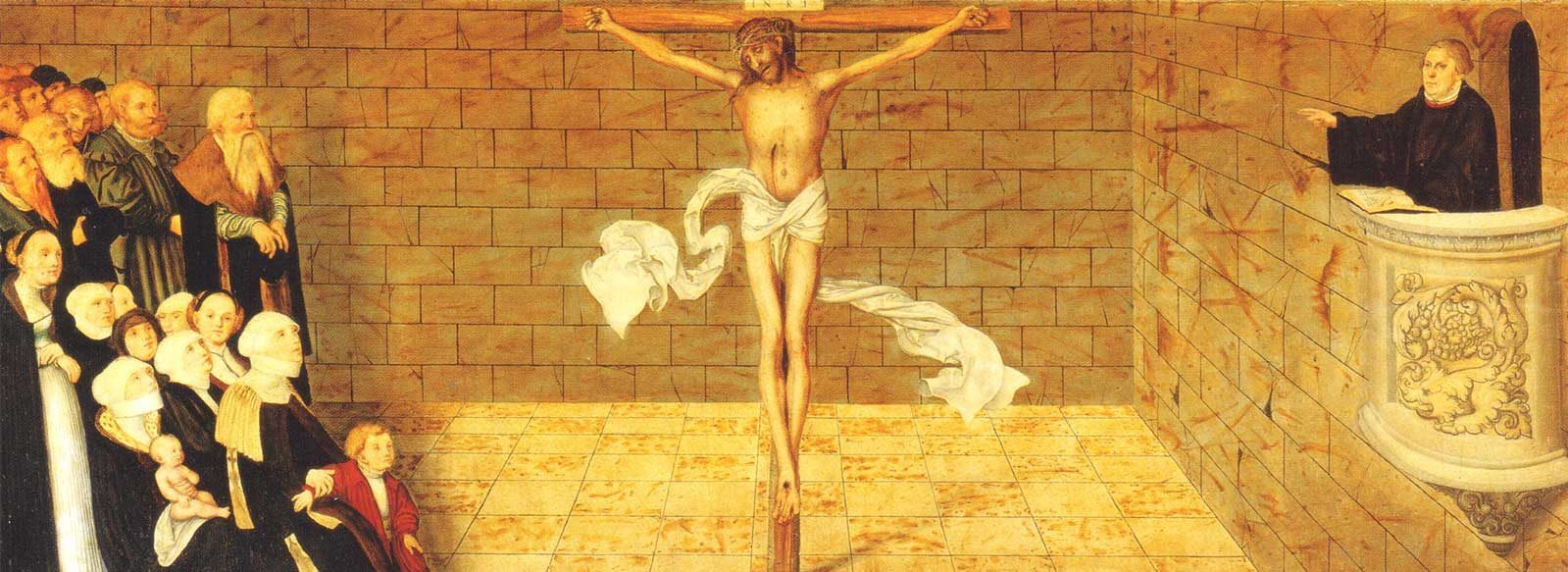
Previously on Christ the Truth...

We discussed the impossiblility of a humanistic account of freedom. To say 'I am who I am / I will be who I will be' is both idolatrous and, ironically, makes us slaves of our own desires.  Such "freedom" enthrones the self and simultaneously locks the self off from the claims of others in whom I find my true self.  Satan rules us precisely where we seek to rule ourselves.

So then, rather than begin with Adam in the garden exercising his will to disobey, we decided to think freedom from the perspective of Jesus - the Other Adam in the other garden. As the Son He is beloved, obedient and free.  And yet in Gethsemane He definitively proved that these things are not competing realities but perfectly expressed in Him.  The One who calls God 'Abba', submits Himself entirely to the unbound will of the Father and in so doing expresses supremely His identity as the Son.  The Son was never more gloriously Son-like than in this act of supreme obedience.  To have chosen disobedience would not have been the exercise of freedom but the abandonment of His own Self.  The decision for obedience was simultaneously the decision for freedom.

From this way of thinking we have a quite different definition of freedom.  Perhaps something like:  "The responsible use of the will in expression of ones true self."  Or perhaps "Keeping in step with your grace-given, relational identity."

When we have this kind of definition then the capacity for evil cannot create or increase freedom but only thwarts the responsible use of the will.  We realize that freedom is not expressed but forfeited in the choice of evil.  It is only mantained in obedience to God.

So then, "Am I free to sin?"  By no means!  Free to sin??  Such a statement should strike us as completely confused and confusing.  I'm free to be His slave, and in this way only is my freedom upheld!  (cf Romans 6!)

Once this understanding of freedom is in place then we can side-step a lot of unfruitful theological discussions.  We don't have to argue about the when, the how and the how much of our supposed 'freedom' to rebel against God.  How could we recognize disobedience as freedom or freedom in disobedience?  It can only ever be slavery.

And yet what does Ephesians 2 call us in our natural state?  'Sons of disobedience'  (Eph 2:2).  By nature our identity is given to us through our fallen head Adam.  We cannot please God (Rom 8:8) but can only live out our rebellious desires.

Into this situation Jesus comes as Redeemer.  And He purchases us for Himself.  More on that next time.

But here's the point for now: The Christian does not believe in free will.  Not in the abstract and certainly not by nature.  We believe in freed will.  (I got this phrase from Casey.)  We are not free to choose or not to choose Christ.  We are liberated by Christ now to be free in Him.  To walk in freedom we must begin from our redemption in Christ.  We simply cannot work towards this freedom but receive it from the outset.  Whatever else the doctrine of election is trying to uphold, this must be central - we do not choose ourselves into Christ but rather find ourselves chosen in Him.  We have not exercised our freedom to make Christ ours, He has accomplished our liberation to make us His.

So then Rousseau's famous statement, 'Man is born free but everywhere he is in chains' is exactly wrong.  Man is born a slave but everywhere he walks free since Jesus has loosed our chains.

Next time we'll consider what freedom means for the Christian.  How does this account of freedom help me to live out my discipleship day to day?

.

Seriously, Happy Creation Day everybody.  Hope you've been enjoying the festivities.

The other day I started talking about freedom: Beginning with ourselves will never get us to a sustainable or satisfying account of freedom.

When we say: "I am who I am / I will be who I will be", it is both blasphemous (Exodus 3:6) and the very expression of our bondage.  We become trapped by an identity that can allow no foreign claims.  We simply become identified as one with a capacity to choose.  And yet in maintaining that capacity as an absolute sovereignty we are defined in abstraction from the relationships that form and direct us as choosers.  I'm a slave to my desires.  Ephesians 2:1-3.  In the very act of gratifying the cravings of my flesh, right then I am enslaved.

We can't begin our thinking about freedom with ourselves.

So where should we begin it?

Well it's very popular to begin with man choosing in the garden.

Yet if we begin in Eden, what account of freedom results?  We effectively define freedom as the ability to choose or not to choose certain paths.  The ability to act otherwise is seen as the very 'freedom' which the LORD grants humanity.  And so of course the decision to eat the forbidden fruit becomes an expression of free will (defined as a power of self-direction).  On this account Adam exercised freedom in disobeying the LORD even though it was a freedom with a cosmically heavy price tag.  And so in this very popular telling of the freedom story, "Freedom" (which is now almost by definition the ability to disobey!) is some unquestioned Good that is traded off against the consequences of its exercise - "Heck, the fall was bad, but that's the price of freedom!"

Hmmm.

What kind of "freedom" is this?

Well let's ask - how does it compare to divine freedom?  Is the freedom of the Father, Son or Holy Spirit a freedom that would be expressed in choosing evil?  Well the Scriptures continually tell us that the Almighty, who can do whatever He pleases (e.g. Psalm 115:3), cannot sin, lie, deny Himself.  He who is free does not define His freedom as the ability to do evil.  For the divine Persons to choose any course of action contrary to their Personhood would be an expression of slavery not freedom.  For the Trinity, freedom is not the ability to do wrong, nor is it enhanced by such opportunities.

This holds also for humanity in the new creation.

In the New Jerusalem the forbidden fruit is gone, the tree of life alone takes centre stage. (Rev 22:1-3).  Not only will humanity never fall, there won't even be the option for us to do so.  That's a wonderful thought (unless you're eye-ball deep in the humanist version of freedom!).  But more than this, the bible calls this new creation state of affairs freedom.  Galatians 4:26 says the Jerusalem above is free.  The saints in glory now and the redeemed earth then will be characterized by mind-blowing freedom (cf Romans 8:19-21).  So for glorified humanity, freedom is not the ability to do wrong, nor is freedom enhanced by such opportunities.  Freedom flourishes even (and especially!) when there is no option but to continually serve the Father in the Son and by the Spirit.

So then, we're going to have to get a different definition of freedom.  Where from?  Well perhaps our initial instinct wasn't so bad after all.  Maybe we do need to begin with man choosing in the garden.

Gethsemane is the garden.  And Jesus is the Man.  He will show us what true freedom looks like.

Think first of who He is - the Son.

This speaks of many things - let's highlight three:

  1. Christ's Sonship means He is loved.  He is the eternal Son of His Father's love (Colossians 1:13).  He is the Object of the overflowing love of the Father - the Original recipient and goal of all the Father's omnipotent grace.
  2. Christ's Sonship means He is obedient.  As Son, Jesus always does His Father's will (John 5:17ff).
  3. Christ's Sonship means He is free.  Sonship is consistently contrasted with slavery by Jesus and Paul (e.g. John 8:31-36; Galatians 4).  He is the Liberator who is Himself the True Free Man.

These three aspects of His Person are perfectly coordinated in Jesus.  We can never play off grace, obedience and freedom.  In our thinking we may consider them to be opposed but when we trace these things back to their centre in Jesus we see that they perfectly inform and explain one another.

And so how does this Man in this garden show us true freedom?

Let's consider Mark 14:36:

"Abba, Father," he said, "everything is possible for you. Take this cup from me. Yet not what I will, but what you will."

First He acknowledges His filial relationship with God - 'Abba, Father'.  All the shades of sonship we've just discussed should be in the forefront of our minds.

Next He acknowledges 'everything is possible for You.'  The Son doesn't go to the cross because the Father is 'all out of options.'  No-one is holding a gun to the Father's head - not the Son, not some necessary logic of redemption, nothing.  What happens happens in the Father's will - a will unbound by any forces beyond Him.  The Father is indeed free from compulsion (though this is not our final definition of freedom).

But finally, when Jesus says 'Take this cup from me, yet not what I will but what you will' He confesses a different will to that of the Father.  In all of history, in all of theology this is unparalleled.  It is stunning, shocking, scandalizing... I could go on.  The Son, even if only for a moment, is considering an option other than obedience to His Father's will.  Even though He is the obedient Son, even though He is the Lamb slain from the foundation of the world (Rev 13:8) and the Son of Man who must die (Mark 8:31), He contemplates another way.  It seems like no-one is holding a gun to the Son's head either.  He must die, because He will die.  And He will die voluntarily.  In a reversal of Eden, the last Adam submits His will to the Father's and in this submission expresses true freedom.

It is not rebellion that demonstrates freedom but obedience.  This is the great difference between popular notions of freedom and Christ's.  Choosing does not make us free - choosing submission (paradoxically!) does.  When we view things in the Son we see that obedience and freedom, rebellion and slavery are inextricably linked.  The only free choice is the one for obedience.

Ans so where Adam chose self-rule and brought slavery, Christ chose submission and brought redemption.  It's at Gethsemane that we see true freedom for there we see the true Son, truly loved by His Abba, Father and truly obedient to His will.  "Everything is possible" is not the definition of freedom.  It's the use of these possibilities that demonstrates true freedom.  And this use is only a liberated use when it is obedient.

From this we get a different defintion of freedom.  It's not about options, it's about responsible use of the will in expression of your grace-given, relational identity.  The capacity for disobedience is not a criterion for freedom and choosing to disobey can only be slavery.  Instead true freedom is found in Christ and by the power of the Spirit, living out your blood-bought sonship (daughtership) in obedience to the Father's will.  To choose anything else is the bondage of the will.

In future posts I'll look at the implications of this for the non-Christian and the Christian.

.

Twitter widget by Rimon Habib - BuddyPress Expert Developer