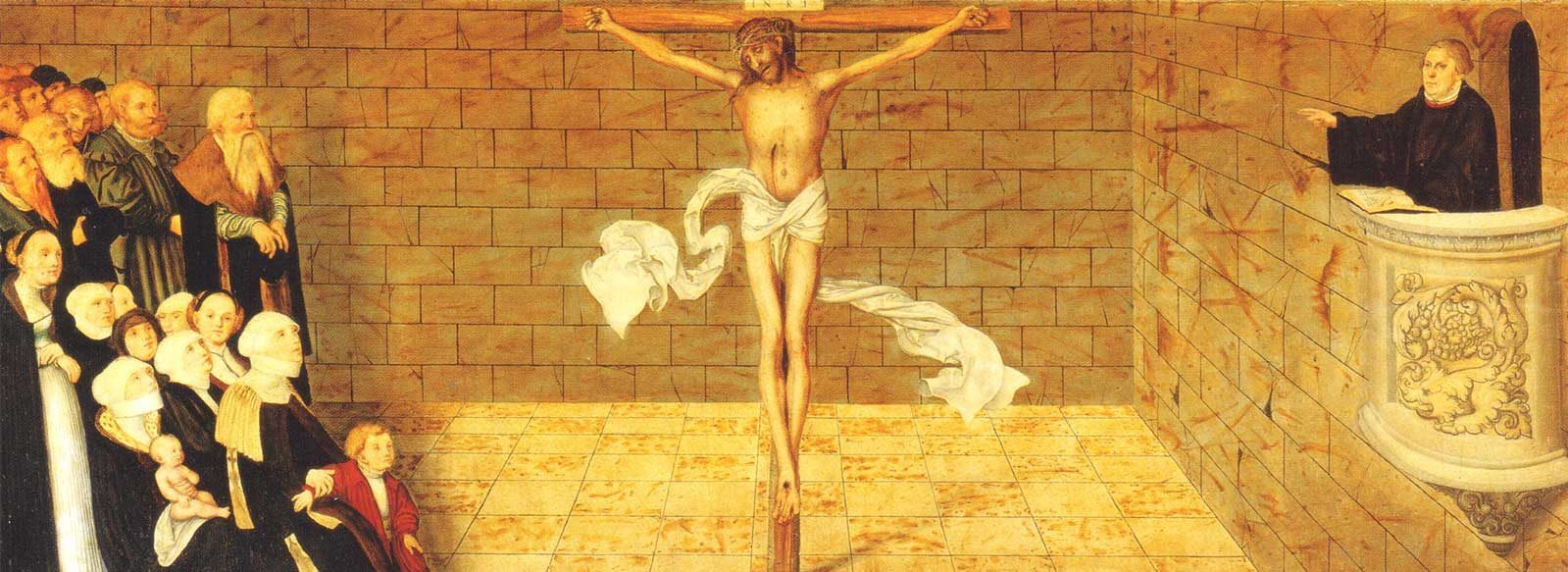
Recently I summed up the blog's thousand posts with a thousand words. Well this sermon could probably serve as a preached summary of Christ the Truth.
Before preaching it I asked the congregation to write down answers to these three questions:
1) When you picture God, what do you think of?
2) When you picture Jesus, what do you think of?
3) When God pictures you, what does He think of?
What's your gut reaction?
Well after thinking about our gut reaction, we opened up the passage and got God's glorious truth.
Sermon audio.
Full text below...
----------------------------------------------------------------------
When I lived in London, one of the things I loved to do on a Sunday was visit Speaker’s Corner. Every Sunday at Speaker’s Corner you have the right to go and proclaim whatever you want to proclaim about – could be true, could be a pack of lies, doesn’t matter – as long as you are 6 inches off the ground you have total freedom of speech and you can just let fly. So naturally enough this attracts any number of religious loons – like me – and you can wander the length of Speakers Corner and listen to every conceivable world view under the sun.
On a sunny day the speakers will get up on their soapbox and point to the wonder of creation and say – “Look what the God Ram has done.” A few metres down – “Look what Allah has created.” A few metres down – “look what I have made.” Everyone’s looking at the same sun shining on the same blades of grass, listening to the same birds. And yet, whatever creation is saying, we seem to be confused. There are as many gods and spiritualities and philosophies as there are people.
Why don’t we all have a clear picture of God? And why isn’t everyone’s the same? Well I wonder how you answered our first question: “What do you picture when you think of God?”
That’s a difficult question isn’t it? Look down at verse 15 and tell me why it might be difficult to picture God. He’s invisible. Difficult to picture someone who’s invisible. And that’s not just a conceptual difficulty. It’s not just that He’d be a difficult Pictionary clue. In the Bible – seeing God is caught up with the idea of knowing Him. To see Him is to know Him and to be known by Him.
Here’s John 1:18
John 1:18 No-one has ever seen God, but God the One and Only, who is at the Father's side, has made him known.
Seeing and knowing are parallel terms do you see? And it’s God the One and Only – that is Jesus the Son – He makes known an otherwise unknown God.
Both John 1 and Colossians 1 insist that God is unknown and invisible apart from Jesus.
Why is He alien to us? Doesn’t He like us? No He loves us very much, the problem is entirely on our side of things. Verse 21 tells us why we don’t naturally know God. Verse 21.
21Once you were alienated from God and were enemies in your minds because of your evil behavior.
Here’s the problem. Not that God is unclear, but that we are alienated. And where is our alienation centred? We are enemies in our minds.
Human beings are not earnest spiritual enquirers according to the Bible. We are enemies of God who wage war in our minds. This is very serious because we can’t escape our minds. We can’t just get away for a few days to have a good clear think. We are held captive in our minds because of our evil behaviour– bound into patterns of thinking which simply cannot come up with the truth about God. Instead all our thinking will only ever yield idolatry.
It’s Reformation Day today and the great reformers of the 16th century, Martin Luther and John Calvin used to say that the mind is an endless factory of idols. When we try thinking about God, all we do is churn out false god after false god.
And that’s why at Speaker’s Corner there are so many different preachers. That’s why in the world there are so many different gods. It’s not that God is schizophrenic – sometimes one way, sometimes another. It’s not that He can’t express Himself properly. It’s that humanity has a serious listening problem.
It is willful ignorance, because the truth about God is on display for all to see. Verse 15 tells us what we ought to picture when we think of God. Have a look at verse 15, tell me – What should we picture when we think of God? Answer: Jesus – His image. That’s who the He refers to in v15.
God the Father is utterly invisible to us. Unknowable and infinitely beyond us BUT we have been given Jesus, the visible image of the invisible God.
It’s like humanity has been looking up in the heavens and imagining all kinds of fanciful gods. And Jesus shows up right under our noses and says Look at me. Jesus is THE Image of an otherwise Invisible God.
Now that’s a revolutionary thought. Because we kind of assume that God is obvious. God is out there, He’s in the public domain. People talk about God and have endless opinions about God and no-one feels like they have to justify them. No-one feels like they need to be an expert or to have studied or to have read *anything* in order to tell the world what they think about God. God’s obvious right. It’s Jesus we don’t know about. That’s how people think. And all the surveys show the same thing. The great majority of Britons today think there’s a God, but most of them aren’t too sure about Jesus. Maybe He’s the Son of God, maybe not, dunno. God they know, Jesus they’re uncertain of. That’s how we naturally think.
But verse 15 flips that around. God is unknown and invisible apart from Jesus. Jesus is the known entity – He’s the Image, He’s on show. The Father is invisible, unknown, unreachable, alien to us unless Jesus reveals Him.
That’s why when you’re talking to your friends about Christian things, and your friend says “Oh, I believe in God” – ask them “Which God do you believe in. Describe this God, who are they.” Because if they haven’tcome to Jesus THE Image of an otherwise invisible God, then it is CERTAIN that the God they believe in is NOT the God and Father of our Lord Jesus Christ. “Which God do you believe in?”
Usually we don’t ask that. Usually we rejoice that they know “God” and we imagine that they’re now half-way towards Christian faith. But the “God” they believe in is usually this Heavenly Giant. Some distant figure, high on power, low on personality. And foolishly we agree to this kind of definition of god and then try to convince our friend that Jesus IS this god.
Which is bizarre, because when you see Jesus you see laughing, crying, shouting, eating, drinking, loving, stooping, suffering, bleeding, dying. When you see Jesus you see something completely different to the heavenly giant. And our job is not to tell people that Jesus is the Heavenly Giant made visible. Our job is to say, forget the heavenly giant, forget everything you thought you knew about God. Look at Jesus– let HIM be our image of the invisible God.
Lord Byron the poet once said, “If God isn’t like Jesus, He ought to be.”
That’s absolutely right. If it turned out that God wasn’t exactly like Jesus I would be a protest atheist. If it turned out that there was a God but not the God of Jesus, I would be an anti-theist. If it turned out there was a God but they weren’t the God of Jesus I would write against, preach against, speak against such a god with all my heart, soul, mind and strength. I would protest the very idea of God if God was anything other than what we see when we look at Jesus. I have no commitment whatsoever to the idea of God. I have no love whatsoever for the heavenly giant. I love Jesus. My heart’s been captured by Jesus. The God I love is the God of Jesus, and none other.
By the way, that’s what I’d say to my atheist friends. If your friend believes in God ask them which God they believe in. If they say they don’t believe in God, ask them which God they don’t believe in. And almost without fail they’ll tell you – the heavenly giant, a distant individual, high on power, low on personality. And I say, me neither. I don’t believe in that God at all. If I thought that’s what God was like I’d join you as an atheist. But let me tell you about Jesus…
Well what do we tell them about Jesus? What was your answer to that second question: When you picture Jesus, what do you think of?
Well let’s read Paul’s answer. Verses 15-20:
15 He is the image of the invisible God, the firstborn over all creation. 16 For by him all things were created: things in heaven and on earth, visible and invisible, whether thrones or powers or rulers or authorities; all things were created by him and for him. 17 He is before all things, and in him all things hold together. 18 And he is the head of the body, the church; he is the beginning and the firstborn from among the dead, so that in everything he might have the supremacy. 19 For God was pleased to have all his fulness dwell in him, 20 and through him to reconcile to himself all things, whether things on earth or things in heaven, by making peace through his blood, shed on the cross.
Who is Jesus – He is, for one, the firstborn over all creation. The cults sometimes use this verse to say that Jesus is the first creature. As though God created Jesus first and then Jesus did the rest. But that wouldn’t work would it – verse 16, by Him all things were created. Jesus can’t be the Creator of all things if He’s one of the things that’s been created. No Jesus is not the first creature, He is the eternal Son of God. There was never a time when He didn’t exist along with His Father and the Holy Spirit.
No, in the Bible, the term “firstborn” refers to the heir – the one who inherits. And that makes sense – verse 16 tells us that everything in all of creation is FOR Him. Every particle in this universe belongs to Jesus. He is Firstborn over all of it. All of creation is a gift – from God the Father to Christ His eternal Son. The Father loves His Son so much He has given Him an incredible present, the universe. Heaven and Earth has a gift tag attached to it and it reads: “Dear Son, this is how much I love you, love your Father.”
When you see the beauty of the downs or the rigged coastline or the stars at night – this is not a display of power from the heavenly giant. The universe is a gift of love from the Father to His Son. And it’s not just that the universe it TO the Son – the universe has come THROUGH the Son.
Verse 16, Christ is the Creator of all things. Was this what you pictured when you thought of Jesus? Christ the Creator. The phrase “all things” is used repeatedly. It includes visible and invisible – that’s earthly and heavenly things – things of men and things of angels. Earthly rulers, spiritual rulers everything owes its existence to Jesus Christ. Reality is what it is because it was made by Him and for Him.
Kids often play the Why game, don’t they. You answer one question, and soon they’ll ask again, Why? Why? Why? Why’s the sky blue? Why are rocks hard? Why are hugs nice?
Ultimately those questions lead back to: Because the Father loves Jesus THAT much. Because THAT’s what reflects the character of Jesus best, Because Jesus is THAT lovely.
We live in a universe made by Jesus, shaped by Jesus, inherited by Jesus. Held together by Jesus. That’s verse 17.
We generally think so christlessly about the universe. If you ask me cold – “What’s before all things?” I’d probably think of a big black expanse of nothingness. If you asked me what holds all things together I’d probably say gravity or something. But no, the answer is Jesus.
But don’t you love v18:
18 And He is the Head of the body, the church;
Isn’t that great? He’s the creator of all AND He’s the head of the church. Now if I was the creator of the universe, being the head of the church wouldn’t thrill my heart. I’d be too pleased with myself about all my awesome power. But Jesus is different – for Him being creator of the world is nice, but here’s where His heart is – v18 “AND He’s the Head of the body, the church.” That’s His heart – a union with His people that is as close as Head is to body. Christ’s intimate union to His people – that’s the centre of all creation actually. Jesus ties Himself to His people so intimately that wherever Jesus goes, His body must follow. That is terrific news because, verse 18:
He is the beginning and the firstborn from among the dead,
Here’s what Jesus did as the Head of His people. He plunged down into death. He descended into everything that destroys and perverts His creation. He took all that stuff on Himself and plunged into hell itself on that cross SO THAT He could burst out through the other side into a new kind of resurrection life.
But here’s the good news – where our Head has gone, we the body will follow. He’s like a needle passing through thick black cloth and out the other side. He was the firstborn coming through, but we are like the thread, pulled along behind. And because of His death and resurrection, Jesus has conquered sin, Satan, death and hell. So that, v18, in everything He might have the supremacy.
Crown Him the Lord of life,
Who triumphed o’er the grave
And rose victorious in the strife
For those He came to save:
His glories now we sing,
Who died and rose on high,
Who died eternal life to bring
And lives that death may die.
In EVERYTHING He HAS the SUPREMACY. That means first place. First place in EVERYTHING.
You’d think Paul had had enough by now. But he goes on, v19:
19For God was pleased to have all his fullness dwell in him,
Again – what does the fullness of GOD look like? God in all His GODNESS – what does that look like? We are so prone to thinking about the heavenly giant. JESUS is what the fullness of God looks like. And in particular – Jesus on the cross. This is where this whole glorious paragraph climaxes. Verse 20:
20and through Him to reconcile to Himself all things, whether things on earth or things in heaven, by making peace through His blood, shed on the cross.
Here’s the cosmic creator in whom the fullness of God dwells – and He’s reconciling His creation back to God. How does He do it? Does He fight some massive special effect battle in the heavenly realms? No. Does He do it by coming to crush His enemies in a display of infinite power? No. He makes peace through His blood shed of the cross.
Imagine if you were Jesus Christ. Imagine if you made heaven and earth. Imagine if you were the operating system for the whole universe. Imagine if everything held together only because of you. And imagine if, as in v21, your creatures who you made out of sheer love, hated you, were at war with you and committed horrendous evil against you and against everything you loved. What would you do? I’d wipe them out. But that just shows you how very different the LORD Jesus is. He makes peace through His blood shed on the cross.
He descends into the war. He absorbs every blow of the enemy and NEVER retaliates. He gets met by hatred and derision and He submits to it. The world rejects and mocks Him, and He takes it. His back is pulped by flogging and the soldiers humiliate Him and punch Him and spit on Him, and He’s silent. Eight inches of iron are driven through each wrist, and one through His feet and Jesus prays “Father, forgive them.” He’s thrust up into the air – hated by earth, facing the judgement of heaven – lifted up between the two to die the death of the rejected. And the blood that pours down is reconciling the world.
The cross crucifies all the imaginary gods we might dream up. Here’s the real thing – and He’s nothing like what we imagined. The fullness of God does not look like overwhelming power and awe – it looks like a Saviour stripped and struggling for breath who loves us more than His own life. That’s the fullness of God – Jesus Christ, crucified for me.
We often think about the ‘what’ of the cross. Many times we concentrate on the mechanics of what happened at the cross. On how His death reconciles the world. But Paul’s emphasis here is on the Who question. Who is this corpse pinned to some wood with a spear thrust up into His heart?
It is the Image of the Invisible God, the Firstborn over all creation, the creator, the sustainer, the reconciler of heaven and earth in whom the FULLNESS of God dwells.
That’s the God I love. That’s the God who’s won my heart. All other gods can go to hell. If it turns the real God isn’t the God of Jesus, then send me to hell with this Jesus. Because with this Jesus, hell will be heaven for me.
What do you picture when you picture God. Verse 15 commands you to stop thinking of the heavenly giant, all power, no personality. Look again to the cross and realize this is our God, butchered for us so much does He love us.
Well how did you answer that final question: When God pictures you, what does He think of?
Well as we’ve seen tonight, we often picture the wrong God when we picture God and so when we picture the heavenly giant’s opinion of us it tends to sound exactly like our school reports, “Some promise, could do better.”
We think of our status with God as a bit like a dimmer switch. It’s on a sliding scale, sometimes it’s brighter, sometimes it’s murkier.
But the real God – the God who JESUS reveals is very different. It’s either on or off with Him. Look at verse 21. Here’s the before picture:
Once you were alienated from God and were enemies in your minds because of your evil behaviour.
Three descriptions: alienated, enemies, evil. When the whole universe is FOR JESUS and you are not FOR JESUS, you are living anti-life. You are spiritually dead. So when you’re not united to Jesus – the Firstborn from among the dead – that’s your status: you’re left in anti-life: evil, alienated, an enemy.
But, v22
22But now God has reconciled you by Christ's physical body through death to present you holy in His sight, without blemish and free from accusation—
What does God picture when He thinks of you?
Have a look at your answer? Now look at v22. Holy IN GOD’S SIGHT, without blemish, free from accusation. How does God’s word compare with your guess? It’s God’s word against yours – who are you going to believe. The God of Jesus Christ says to all who belong to His Son, You are Holy in my sight, you are spotless, without blemish, - the king james version says “unblameable” - you CANNOT be blames. You are free from any kind of accusation.
It’s not dimmer switch Christianity – some weeks you’re ok, some weeks you’re a bit gloomy. Remember verses 13 and 14 from last week:
For God has rescued us from the dominion of darkness and brought us into the kingdom of the Son He loves, 14 in Whom we have redemption, the forgiveness of sins.
You have been deposited INTO Jesus. And Jesus is the Beloved Son of the Father. If you belong to Jesus, you are loved by the Father with the same love He has for His Son. When He thinks of you, He pictures holy, unblameable, free from accusation.
You are at peace with the God of the universe and He loves you. And what’s even better – He’s not the heavenly giant, all power, no personality. He’s the God of Jesus, the bleeding dying rising Lover of your soul.
So, v23, continue in your faith, established and firm, not moved from the hope held out in the gospel.
In English the word IF there makes it sound like Paul’s trying to inject a bit of uncertainty. As though He’s saying “You’re sweet with God not but who knows about the future.” He couldn’t be saying that – look at the tense of v13 – God HAS RESCUED us and v22 – God HAS RECONCILED us. You can’t get unrescued or unreconciled. The word translated as “If” could just as well be translated as “Since”. You could say “Since you are continuing in the faith, having been established and made firm.” Paul is directing the Colossians to keep on looking to that same Gospel of Jesus, the Gospel that declares us irreversibly and immovably holy.
And verse 23 continues,
This is the gospel that you heard and that has been proclaimed to every creature under heaven, and of which I, Paul, have become a servant.
How massive is the gospel! All creation is proclaiming the gospel of Jesus.
Well of course it’s proclaiming the gospel of Jesus – what else is creation going to proclaim??
Jesus is the creator, sustainer, inheritor and reconciler of the universe. Of course Christ’s creation is all about Him. “Jesus is Lord, creation’s voice proclaims it.”
The universe is for Christ, and its message, if only we had ears to hear it would be telling us to be For Him as well. Unfortunately, v21, our minds are alienated and unable to grasp what the universe is saying. But the universe is not proclaiming some heavenly giant, big on power. Often Christians say – Ah, look at the creation, it speaks of a God who is big and clever and distant and awesome. Well, no, creation speaks of Christ – from the biggest element to the smallest.
Think of the sun. Psalm 19 says the Sun is like a Bridegroom who is the Champion over all and it’s the Light of the world defeating the darkness. What’s the Sun preaching to me? Jesus! Day after Day. Or think of a seed. John 12 says it dies and goes down into the ground and rises up to bring new life. Seeds don’t tell me about “an intelligent designer” – seeds proclaim to me the gospel of Jesus, His death and resurrection.
This is Christ’s world, made by Christ, sustained by Christ, inherited by Christ, reconciled by Christ, proclaiming Christ in every detail. Is my vision of Jesus this big? And is my vision of God this Christ-like?
I like to put it this way: Jesus is God-sized and God is Jesus-shaped. Jesus is completely God-sized – the fullness of deity dwells in Him bodily. Do you think highly enough of Jesus? But more than this, God is not the heavenly giant – God is entirely Jesus-shaped. Do you realize who our God is? Repent of the old god, the distant power-god – re-shape all your thinking and loving and direct it through the lens of Jesus, THE Image of the Invisible God.
Let’s take a minute and look at the answers we wrote to those questions. And let’s think through God’s answers…
.