

 This episode is part one of a three-part conversation with Paul Blackham about the good news and how to share it.
Category: evangelism
Podcast: Remembering World War One
On this episode we talk about opportunities related to the WW1 centenary.
Recently David Bourne and Andy Johnston put on a wonderful event in Hailsham to mark the centenary of the First World War (see here). It was held at the Parish Church and it seemed like the whole town came out.
First Andy spoke of the causes of the war. Then David spoke of the course of the war. After a refreshments break and act of remembrance, I spoke about Jesus, the Prince of Peace. It was a very successful event generating wonderful gospel conversations afterwards.
Could you put on something similar where you are?
Here Andy Brinkley and I talk about the opportunities of this year and then listen to my 20 minute talk...
For other resources concerning the WW1 celebrations:
https://www.10ofthose.com/products/12856/Remembrance-Day-Tract/
http://www.hopetogether.org.uk/greaterlove
https://www.youtube.com/watch?v=HLwVwyrWQGw
https://www.youtube.com/watch?v=VO-AYxsEqIk&feature=youtu.be
https://www.youtube.com/watch?v=zZUcOCl9kbU&feature=youtu.be
https://www.youtube.com/watch?v=9gZ1Rtk__TE&feature=youtu.be
Download My Talk by itself

In Conversation with Paul Blackham about 321
An extra from Book by Book's "Job" studies.
Here Paul Blackham interviews me about 321 - a gospel outline. We discuss the necessity of Trinity (THREE), Adam and Christ (TWO) and Union with Christ (ONE) for our evangelism and why the local church is crucial for our mission to the world.
From 00:00 - 21:29 we talk about THREE
From 21:30 - 37:54 we talk about TWO
From 37:55 - 1:01:00 we talk about ONE and our evangelistic methods
And here's a bit of fun from the "Job" studies:

Podcast: Interview with Barry Cooper
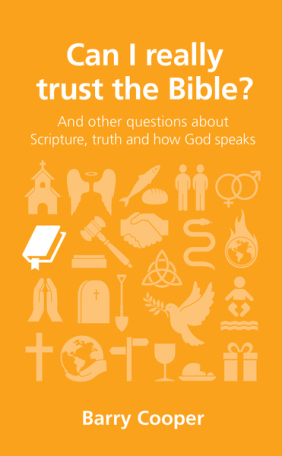 We talk with Barry Cooper about his new book Can I really trust the Bible? Also joining in the conversation is Nate Morgan Locke from Christianity Explored's Soul course.
We discuss Barry's book - out now - and then talk about various objections raised to the Bible, like...
Can we really trust the transmission of the Scriptures through the centuries?
Can we trust the Bible in a scientific age?
What do we do with passages about war?
How can we trust the Bible morally when it was written by bronze age peasants?

The People’s Republic of #1PUN
 Every now and then I have a go at #1PUN on Twitter. It was started by Juan Pun as a daily joke competition held at 1pm GMT. There were judges, a points system, spreadsheets and everything.
Recently, without warning or explanation, Juan Pun stopped overseeing 1PUN. Now no-one tweets out the reminders, no-one is judging our efforts and there are no official winners. But 1PUN continues. It seems like it's as popular as ever. And, in a way, the scoring does happen, but in the way it's always happened on Twitter: via favourites and retweets. It's the People's Republic of #1PUN and it's working.
Let's think about religion and morality. Could it be that the People's Republic of #1PUN gives us a model for how morality works after the death of God? Perhaps God is like a heavenly Juan Pun - a made-up figure who has now retreated from the scene. To begin with, his absence was disconcerting, but after a bit, we've just gotten on with it. Now people act pretty much the same way they ever did except that, under the new regime, they don't receive authoritarian pronouncements from on high, they are simply judged by their equals. Approval and disapproval has been democratized and we've all just gotten on with life without any noticeable outbreaks of apocalyptic evil.
What do we think? Is it the same thing?
Well here's one response you could make:
"Yeah but... Watch out for the democratization of values. A nasty pocket of racist tweeters could get hold of the hashtag and flood it with bigoted "humour". In just that way, whole people groups could decide on a new direction for a culture's morality and there'd be nothing to say they were wrong."
You could make that kind of argument. And there'd be truth to it. But I think we need to go deeper.
You see the analogy just doesn't hold. At all really. The triune God is not a heavenly Juan Pun trying to manage a little system within a much larger paradigm. The Father hasn't looked around at all the morality that's been going on and dreamt up a scoring system to administrate it. He is the Author of goodness, the Son is the Expression of goodness, the Spirit is the Perfecter of goodness. God is good - goodness itself.
The triune God does not relate to the world as Juan Pun to word-play but like Oscar Wilde to Algernon. In The Importance of Being Earnest, Algernon may be extremely funny while denying all knowledge of any authorship over his life. But on the deepest level, he cannot declare his independence from Wilde. He's only funny because of him.
We can deny God all we like. We can call him an out-dated construct but actually we are the constructs. And every concept we use - whether of goodness, truth, beauty, justice, even humour - is either borrowed capital or ultimately bankrupt. The people's republic of earth does not threaten the kingdom of heaven - actually it presupposes it. All the while there's a Father beckoning the world to something greater than abstract values like "goodness" - He's inviting us to Himself.
Podcast: Evangelism is not in your hands
Evangelism is high above our heads in the mission of Christ and it's far beneath our feet in service of others. Evangelism is not a technique to learn but a life of outgoing faith: looking up to Christ and looking out to our neighbours.
Andy and I talk about some recent evangelistic opportunities before playing a recent sermon of mine called "Outgoing God, Outgoing People" from Philippians 2:5-18.

Apologetics According to Peter
 It's the verse from which the word "apologetics" comes. We are to give an "answer" (an apologia) to those who ask us about our hope.
Here it is:
1 Peter 3:15 "But in your hearts set apart Christ as Lord. Always being prepared to give an answer to everyone who asks you to give the reason for the hope that is in you."
Let's break it down:
But... The context from v14 is a suffering church - both the suffering and the church elements are crucial. 1 Peter is written to a bedraggled mob of asylum seekers who are nonetheless choice in the Father's eyes, purchased and possessed by Christ and sanctified by the Spirit (1:1-2; 2:11). They are suffering under the authorities (2:13ff); suffering at work (2:17ff); suffering in difficult marriages (3:1ff); etc.
In your hearts... "Apologetics" - as Peter defines it - is heart driven.
Set apart Christ as Lord... Here is the imperative of the verse ("being prepared" is an adjective subordinate to this command). The thing we must do is "sanctify"Christ as Lord. We must set Him apart as special in our hearts. We see Peter doing this throughout the letter - consistently calling Christ "precious" (1:19; 2:4,6,7). When our hearts prize Christ as precious, we are ready for apologetics.
Always being prepared... We are not always to be answering but we are always to be prepared. And it's a plural adjective. This suffering community as a whole is to be prepared. Together we are a priesthood (2:9) and this community consists of differently gifted people - some gifted to speak, others to serve (4:10-11). I believe every Christian should be able to put words to their faith, but don't forget the communal aspects - we rely on one another in our answering.
To give an answer... This word - apologia - speaks of responding. Someone else has started this, and the word 'apologia' intimates quite a formal, adversarial situation. (Acts 22:1; 25:16; 1 Cor 9:3; 2 Cor 7:11; Phil 1:7,16; 2 Tim 4:16)
To everyone who asks you... Again, "you" is in the plural. Many people feel guilty that they have never personally been asked about their hope. But in the church body your hopeful suffering belongs to me, just as my answering belongs to you. As a church our suffering with hope will be the apologetic to the world. You can reasonably expect that once or twice in your lifetime a non-Christian will ask you "How did you get through that suffering?" but more generally this verse is fulfilled in the ongoing life of a church where members, (speakers in particular) can say "a couple in our church recently suffered a miscarriage, but the hope of Jesus got them through."
To give the reason for the hope... What's prompting the question is an evident hope - not an evident reason. The thing that's obvious about the Christian is their hope. The thing that's not obvious is the reason - that's why they need to articulate the reason.
That is in you... Notice that the hope to be articulated is in the Christians. It's not in a text book, it's in them. This is the hope that has actually sustained the Christians through their suffering. Therefore equipping Christians apologetically is not about giving people "reasons" they had never considered before the apologist had trained them. Giving an apologia is about putting words to a hope that is already heart-felt and already life-shaping.
Since this is so, a church living out 1 Peter 3:15 is a suffering congregation that prizes Christ as precious and clings to Him in future-looking hope. In this context they rely on one another to articulate such hope to all who ask.
This is what Peter means by apologetics. Is it what we mean?
Podcast: What about other faiths?
Podcast: Christianity and Science

Episode 57: Andy and I speak about science and how the truths of 3, 2 and 1 give us the strongest possible foundation for scientific enquiry.
For more on the issue of science:
Are You Sitting Comfortably? Then Let's Do Science!
We All Have Our Creation Stories
