I long for church communities that are Christ-centred, grace-filled, all-of-life and intentionally missional. I love the vision that Tim Chester casts for this and have benefited massively from the resources he's offered the wider church in this direction (see these superb talks for instance).
Let me raise one issue though - it's an issue that generated some good discussion on Tim's blog and I hope it will generate some more here - perhaps from Tim but from any others too.
Tim was writing about the imbalance of resources that many churches pour into "the Sunday morning event". Very true. I've heard people speak in hushed tones about some gold standard of sermon preparation - an hour in the study for every minute in the pulpit. Yowsers! If that's the cost of gathering around word and sacrament then I can well understand the desire to re-balance the expenditure of resources.
But there's something deeper to discuss than the re-allocation of resources or the degree of formality to our meetings. What I want to establish is the absolute necessity of the event for the life of church. Church is not just family, it is also an event and irreducibly so. I'll say it that starkly because I know how popular it is to speak of church as ongoing-missional-community in opposition to chuch as event.
In our discussions, Tim said this:
Church is not an event, but a Christ-centred community of people with a shared life.
I disagree. I’d say say church is also an event and irreducibly so.
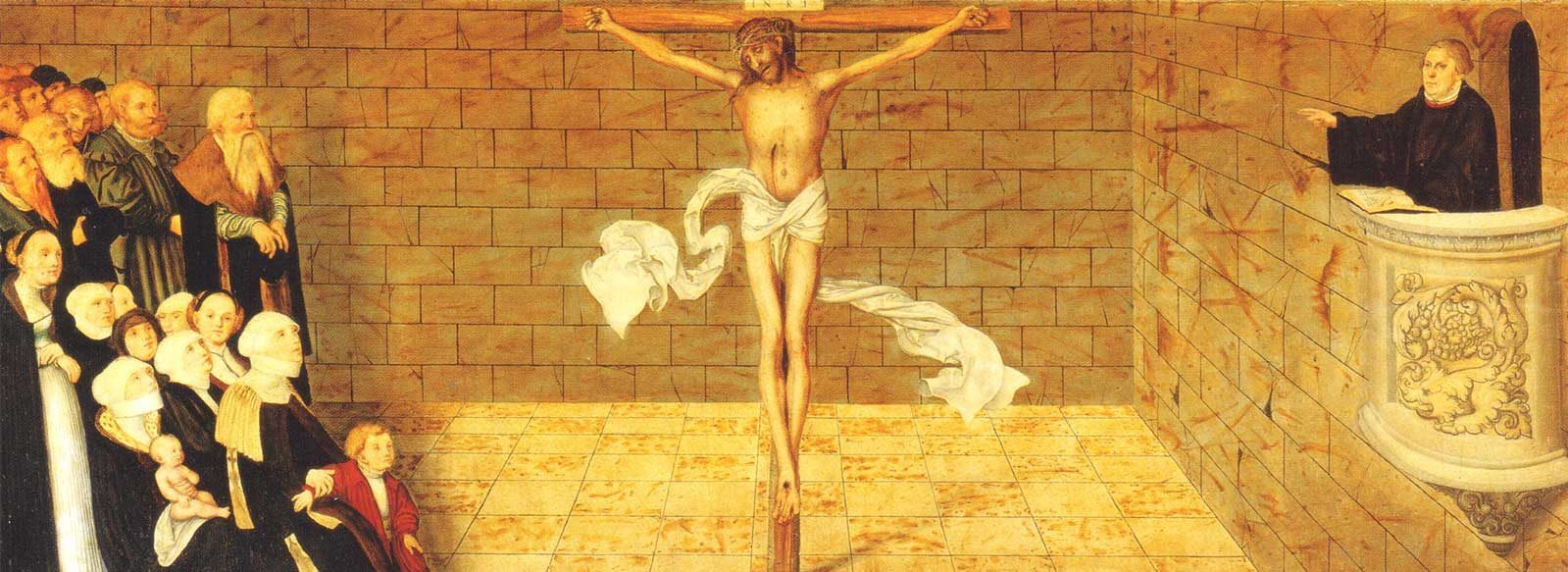
Church has its being in becoming. It ever becomes what it is as it hears God's word. In this way church is the community called out (ekklesia) to listen to its risen Lord in the proclamation of word and sacrament. This is the centre of the life of the community.
Let me just take one Scriptural example from Paul. We are one body because we all share in the one bread (1 Cor 10:17). That is pretty stunning language – and it’s very ‘eventist’. Here is a consummation of one-body-ness in which we become what we are. The event and the on-going life of the body are inter-dependent.
Think of marriage. The covenant reality is that husband and wife are one flesh. But there is an event in which they become one flesh (if you were Presbyterian you might even call it covenant renewal!).
It’s commanded in Scripture (cf 1 Cor 7) and it takes time and effort and a measure of ritual and it’s irreducibly an event. Of course the degree of ritual and cost and time-expenditure will vary according to many factors. But to imagine I can think of an ongoing covenant life without also thinking about the one-flesh event is a big danger in marriage.
And, by parallel, church life needs to be maintained by consciously enjoyed and anticipated and ritualised “events” in our church life together. We can't do without them. And however much it's necessary to speak of day-in, day-out community life we dare not lose language of event either. The old reformed ecclesiologies speak of gathering around word and sacrament. They didn't forget that we were family, but they did highlight that there were foundational "events" at the centre of church life.
So we say Yes to shared life, Yes to Christ-centred community. But the way in which our community is “centred” around Christ takes a certain form. The centre is an actual, concrete centre around which we orient ourselves. As Christ's community therefore we order ourselves around the place where Christ is given to us. And He is given to us supremely in word and sacrament.
Tim speaks of the community life of church in these terms:
There is nowhere else when grace is experienced. There is nowhere else where God is present by his Spirit.
I'd say that in word and sacrament there are certain promises attached of God’s special presence by His Spirit. I think therefore the language of ‘event’ needs to be held onto.
And primarily I think it needs to be maintained for the sake of up-holding two other concerns:
1) We are communities of grace. Tim is huge on this and I've been very blessed by his insights on this (e.g.). But if we want to be communities of grace we need to orient ourselves around where Christ is given to us, not primarily around what Christ would have us do.
2) We are communities of proclamation. Where we honour the “event” of Church, we honour “proclamation”. While our community life preaches to the world (John 13:35; 17:21) I'd want to co-ordinate this to a centre of verbal proclamation that constitutes and re-constitutes the community.
I'm very well aware that Tim and his churches manage to preserve what I'm seeking to preserve a thousand times better than I ever will. But I just wanted to raise a flag for the absolute importance of "event" in church life. I hope you can see why.
.


